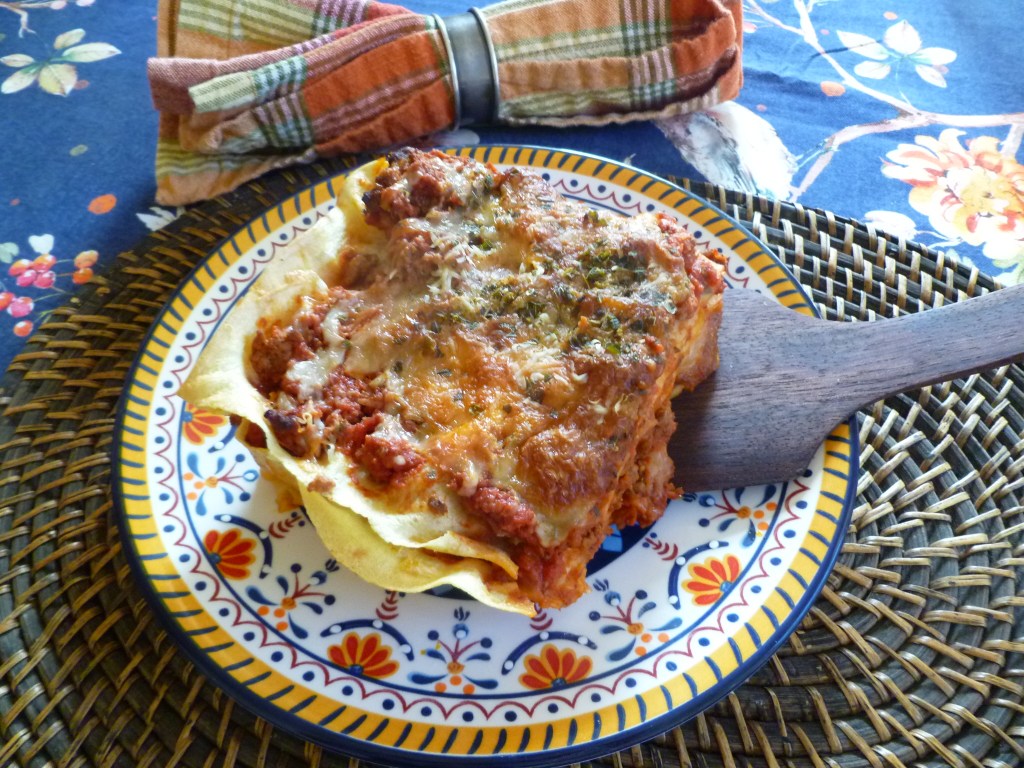
“Lasagna [is] the pasta which comes in broad sheets…The preferred way to cook lasagna is to bake it in the oven…Nowadays the layers of lasagna are not alternated simply with grated cheese, but with ragù, butter, and cheese (and sometimes béchamel sauce)… ‘The first person to add spinach to lasagna dough, Mario Sandri wrote in his Guida Gastronomica di Bologna ‘was undoubtedly a great man, a true benefactor of humanity.’ ” Waverly Root from The Food of Italy (1971).
“Properly made lasagne consists of several layers of delicate, nearly weightless pasta spaced by layers of savory, but not overbearing filling made of meat…or other fine mixtures. The only pasta suitable for lasagne is paper-thin dough freshly made at home…Using clunky, store-bought lasagne may save a litttle time, but you will be sadly shortchanged by the results.” Marcella Hazan from Essentials of Classic Italian Cooking (1992).
“Family recipes present certain caveats…they are not standardized…In terms of ingredients, almost all are less precise than those that fill today’s cookbooks. Embrace the flexibility and vary the ingredients based on your own taste, seasonality and availability.” from La Cucina (the 2009 English edition), a collective work by the Academia Italiana della Cucina.
thefoodlessprocessed combination of lasagne pasta and filling includes a slow-cooked meat sauce (or ragù) and two cheeses: mozarella and parmesan. As the observations above make clear, fillings vary according to availability of ingredients and personal taste. Not all include béchamel sauce, nor is ricotta invariably present, although both are common. Mrs. Hazan prefers to keep the filling light. But there are good substantial combinations as well.
While Mrs. Hazan comments on the importance of using homemade lasagne pasta, other Italian culinary guides like The Silver Spoon or La Cucina take its presence for granted. It is matter-of-factly included in their ingredient lists for the dish.
Neither the boxed nor the commercial fresh varieties can replicate the home cook’s lasagne al forno. Homemade pasta binds with the filling by absorbing its flavours and…any bare edges bordering the pan will bake to a delicate crispness.
The less processed ingredient choices for the filling are: Ground Beef, Preserved Tomatoes, Olive Oil, Tomato Paste, Oregano, Mozzarella, Parmigiano Reggiano PDO, and Parsley.
Click on this link to read about the less processed ingredient option for the pasta: Flour.
A suggestion for the order of preparation is to make the filling and, while it simmers, make the lasagne pasta. Pasta dough can be easier to roll through the machine if it has been refrigerated first. It may be made a day in advance and refrigerated if that is most convenient. But the dough may also be mixed, rolled, cut and cooked all in one continuous process.
The amounts given in the recipe will make a four-layer lasagne in an 8″ x 8″ (about 20 cm x 20 cm) baking dish (4 large portions). The amounts of filling and pasta may be easily increased for a baking dish of larger size.
Equipment for both Filling and Pasta
- a Large Heavy Pan with High Sides and a Lid. This recipe is made with a 12-inch (30.5 cm) Cast Iron Chicken Fryer with a 4.25 quart capacity (about 4 liters). A close European equivalent is a Sauteuse Haute, which has high sides and a long handle. It is deeper than a regular sauté pan.
- a Flame Tamer (aka Heat Diffuser, Simmering Plate). The pan does not sit directly over the heat source. The filling is less likely to scorch as it simmers and cooks down slowly. Some versions of flame tamers are compatible with a smooth-top burner.
- a Wooden Spoon or Spatula
- a Food Processor and Blade Attachment
- a Pasta Machine: thefoodlessprocessed uses a manually operated pasta machine.
- a Pastry Board
- a Pizza Cutter
- a Tape Measure
- a Ceramic Baking Dish: The one in the photos measures 8″ x 8″ (about 20 cm x 20 cm
- a Rimmed Pan lined with Parchment on which to bake the lasagne and catch any sauce that bubbles over
- a Box Grater
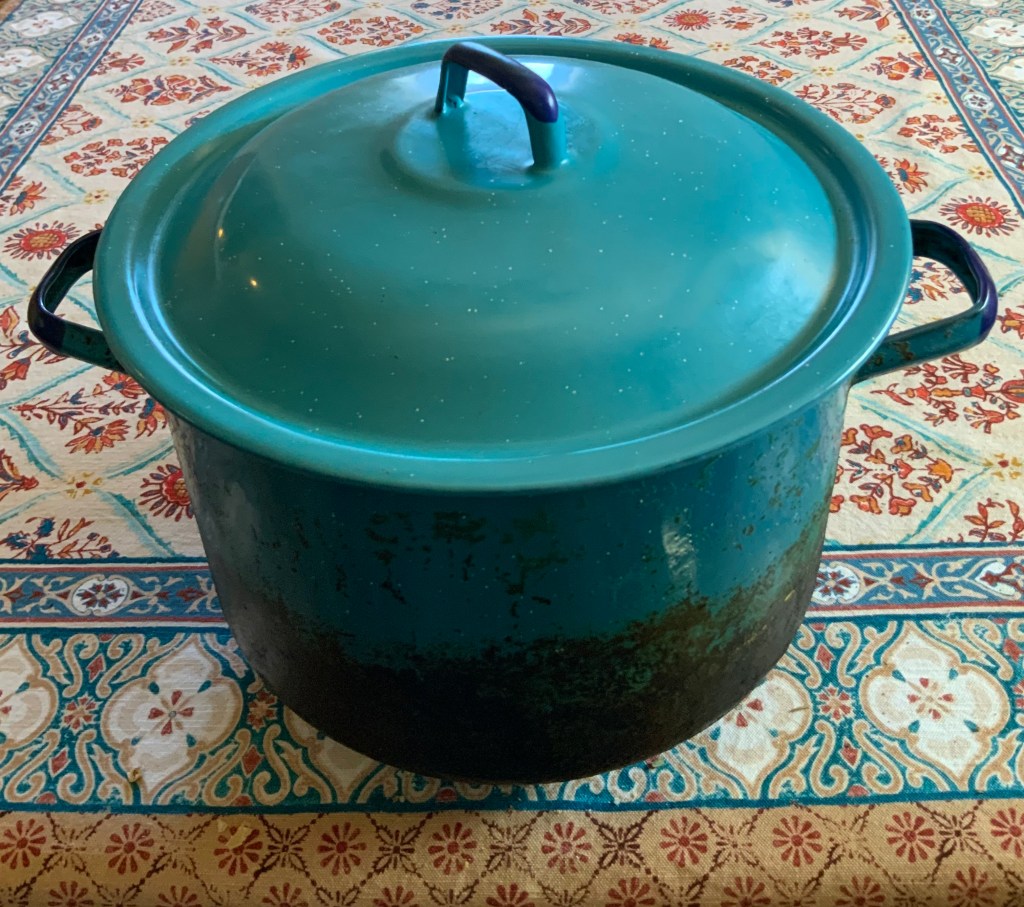
- a Large Pot (8 quarts/7.5 liters or thereabout) and Lid
- a Colander
- a Large Mesh Strainer
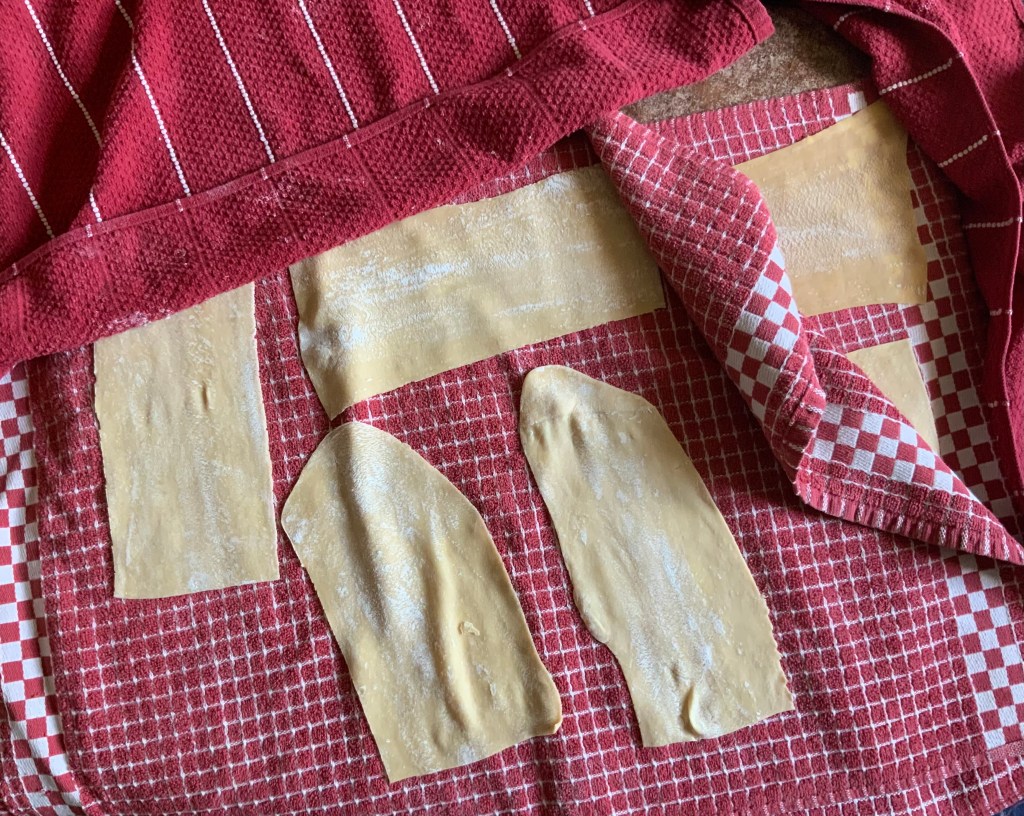
- Cotton Kitchen Towels on which to lay out the lasagne strips as they are cut and again after they are cooked:
Ingredients for the Filling
- 2 pounds (about 1 kg) of Ground Beef: 80% Lean/20% Fat with a level-4 Global Animal Welfare rating (Pasture -Centered)
- 3 or 4 Tablespoons of Extra-Virgin Olive Oil, depending on the size of the pan’s surface
- 4 ounces (115 g) of Yellow Onion, chopped: This will be equivalent to about 3/4 cup or 1 medium-sized Onion
- 4 Garlic Cloves, minced
- 1 box of Imported Italian Fine-Chopped Tomatoes (A box is 750 g or a little over 3 cups.)
- 1/2 cup (120 ml) of Dry White Wine
- 2 or 3 Tablespoons of Imported Italian Tomato Paste
- 1 teaspoon of Dried Cut-Leaf Oregano (not powdered), plus a little more to sprinkle over the top layer of the lasagne
- about a Tablespoon of Italian Flat-Leaf Parsley, chopped
- 1 pound (454 g) of Whole-Milk, Low-Moisture Mozzarella, grated over the large holes of a grater: The whole pound will probably not be needed for a baking dish of the size used here.
- A few Tablespoons of Parmigiano Reggiano DOP, finely grated, to sprinkle over the top layer of the dish
Making the Filling
- Heat the olive oil in the pan and add the onion and garlic. Cook, stirring occasionally, until the onions begin to brown at the edges.
- Add the ground beef and break it up finely with a wooden spoon as it sautés.
- When the meat is no longer pink, add the white wine and simmer the meat mixture until the wine has reduced to almost nothing and most of the liquid given off by the meat has cooked off.
- Add the tomatoes, the tomato paste and combine everything together well.
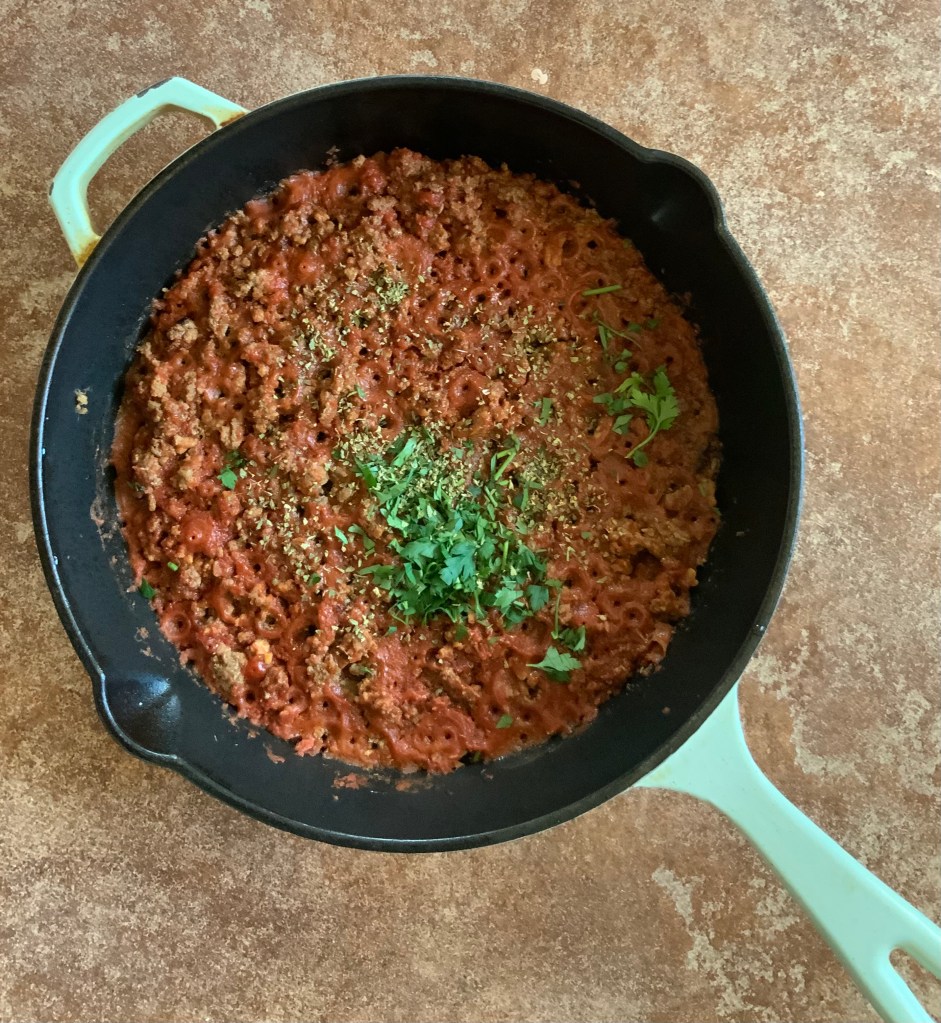
- Place the pan on the flame tamer over very low heat. Partially cover the pan and simmer the filling slowly until it is thick and little depressions mark its surface. Stir in the oregano and parsley. The filling is now ready to use in assembling the lasagne.
Making Lasagne Pasta
This link will take you to thefoodlessprocessed recipe for lasagne made with fresh pasta: Fresh Pasta for Spaghetti, Fettuccine, and Lasagne. The first section covers the general method for making pasta dough and rolling it out using a pasta machine. The second section specific to lasagne is: Cutting Lasagne Strips. The third section about lasagne is: Cooking Lasagne Strips.
Assembling the Lasagne and Filling and Baking
Gas or Convection Oven: thefoodlessprocessed uses a gas oven. The conversions from Fahrenheit to Celsius do not attempt to adjust for differences between baking in a gas or convection oven. I have no experience using a convection oven, and leave adjustments to the better judgement of you who do have.
Note: The recipe describes making a 4-layer dish.
- Preheat the oven to 400 F/200 C.
- Coat the baking dish lightly with olive oil, either with a pastry brush or a paper towel.
- Spread a very thin layer of filling over the bottom of the dish–just a bit to create a slight coating between the pasta and the baking dish. Begin making layers by placing lasagne strips side-by-side or slightly overlapping over the thin covering of filling. The strips may be irregular in width, some broad, others narrower. Standardization is not the goal. You might use, for example, one very wide strip and cut a second strip to complete the pasta layer.
- Spread filling over the pasta and sprinkle mozzarella over the filling.
- Add a second layer of pasta strips, then filling and mozzarella.
- Add a third layer in the same manner.
- Using the straight edge of a spatula or a dull knife, press down the pasta along the edges of the dish so the sides sit slightly lower than the center. Doing this allows for a fourth layer and guides sauce down into the dish rather than over the edges. (The edges that hang just over the dish or rise above the sauce covering the layers need not be trimmed off. They will bake to a delicate crisp.)
- Add a fourth layer of pasta strips:
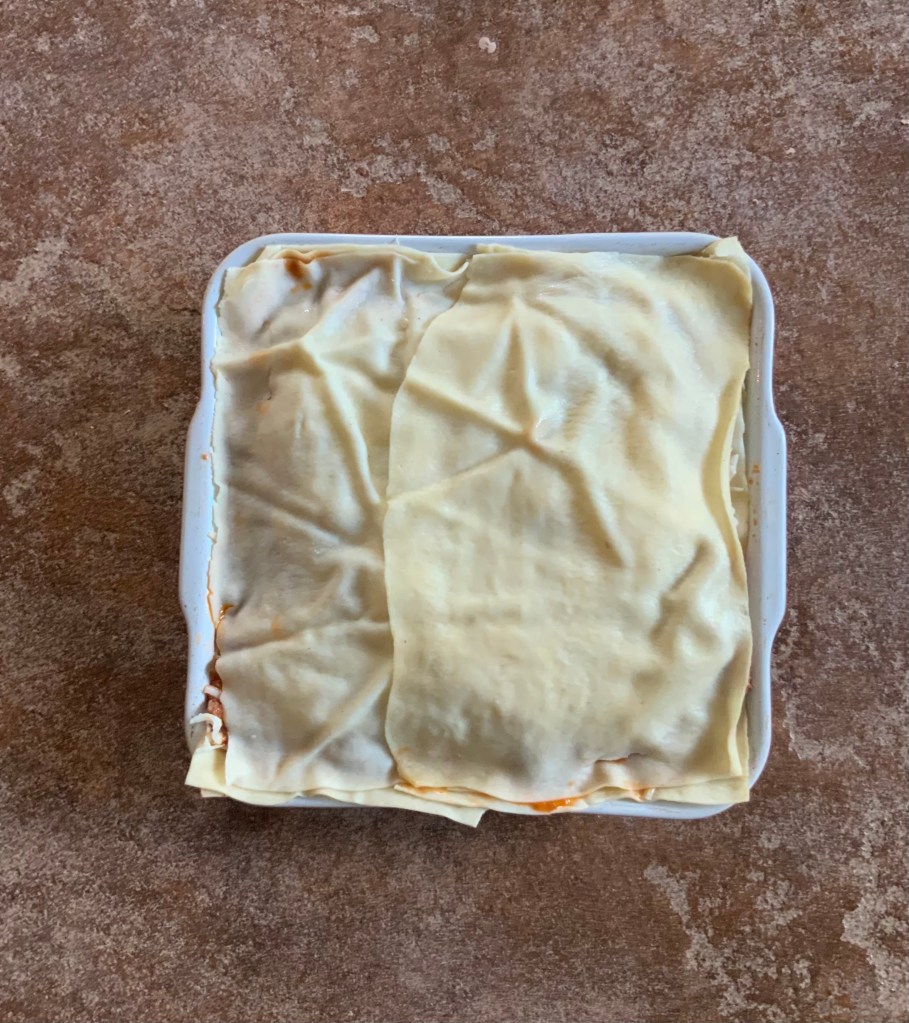
- Cover the fourth layer of pasta sheets with filling, a sprinkling of mozzarella and this time, also, of Parmesan. Sprinkle a little oregano over the top and place the dish on the rimmed pan lined with parchment.
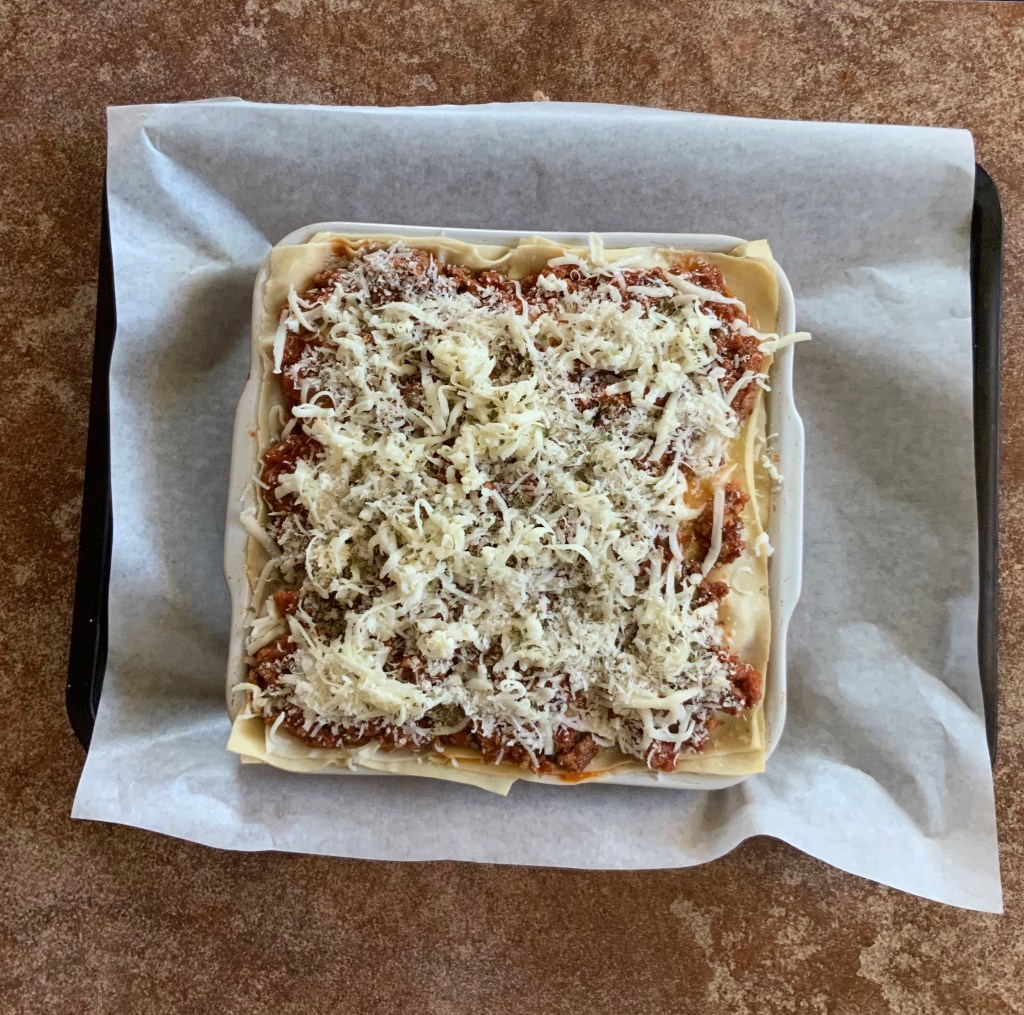
- Bake the lasagne on the middle rack of the oven for approximately 30 minutes, or until the top is golden and the sauce bubbles up a little along the edges.

 thefoodlessprocessed
Leave a comment