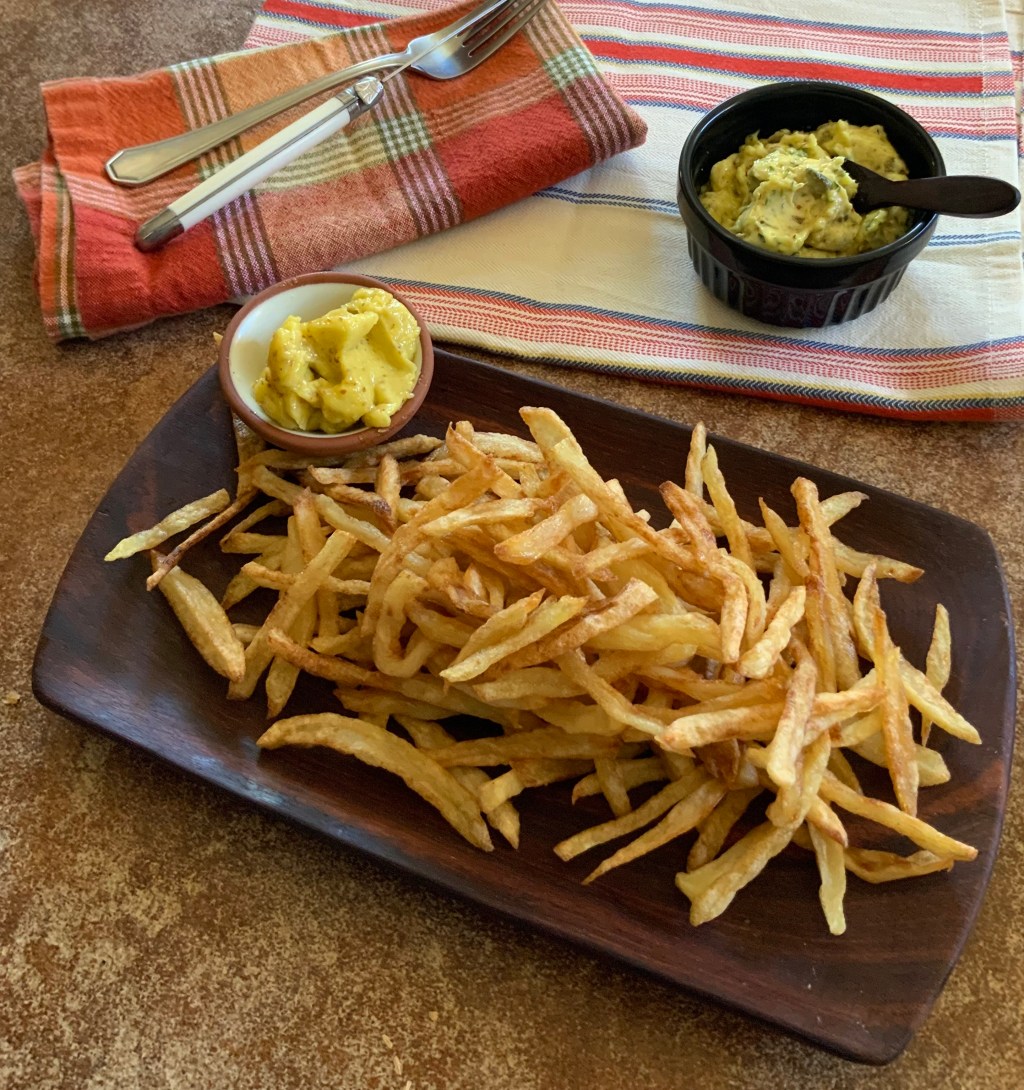
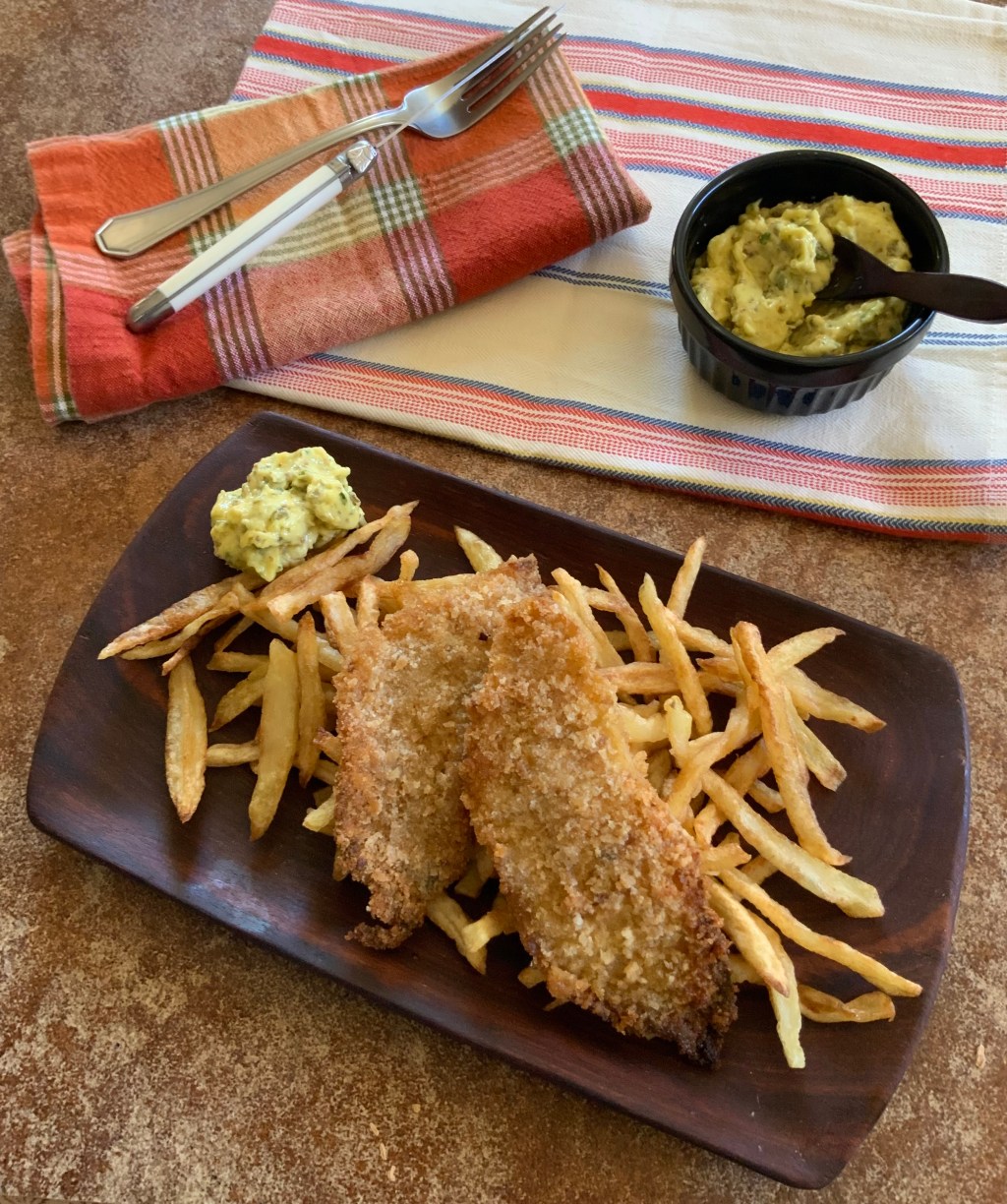
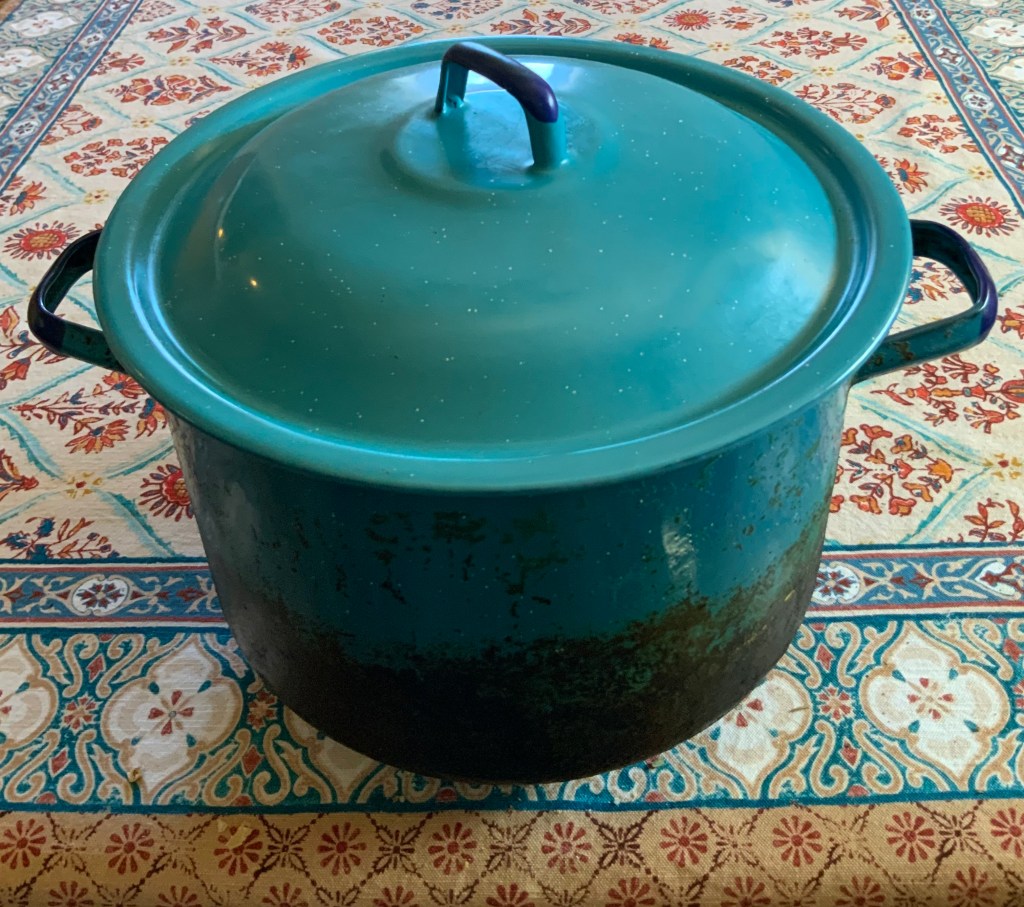
Three characteristics distinguish these french fries. They are made with fresh potatoes. Olive oil is the deep-frying medium. Visual cues indicate when the potatoes should be added to the oil, that is heated in an enamelware pot.
Deep-frying in enamelware is described in detail in a related post: Low-tech Deep- Frying.
Making french fries with this method offers a clear example of how to identify the cues. For french fries made in olive oil, the temperature range normally used for deep–frying is too high. Instead, the appearance of the oil as it heats indicates when to begin frying.
The less processed options for ingredients are: Olive Oil and Salt.
Equipment
- an Enamelware Canning Pot: The dimensions of a standard-sized pot are: Height: 9 to 10 inches (23–25 cm)/Inside diameter: 11.5 to 12.5 inches (29–32 cm)/Outside diameter (including rim): about 12.5 to 13 inches (32–33 cm)
- a Cutting Board and Straight-Edged Knife or any Knife with a Long Blade
- a Slotted Spoon
- a Large Bowl
- a couple of Cotton Dishtowels for draining the potatoes after cutting and soaking in water
- a Large Rimmed Baking Pan
- Absorbent Material: a suggestion is Untreated Brown Grocery Bags, cut open and turned inside out–several layers for each batch of french fries. The oil sinks down into the paper rather than pooling on the surface. It is a more breathable surface than paper toweling, which quickly becomes saturated with oil and prevents the fries from draining well.
Ingredients
- 3 pounds (1.4 kg) of Unpeeled Russet Potatoes or any variety with a dry texture– or around 8 Medium-sized Potatoes
- 2 Liters of Extra-Virgin Olive Oil: The oil may be reused multiple times for deep-frying. As long as the oil has not noticeably darkened and is still golden coloured and smells fresh, it may be reused. To store olive oil for reuse, pour it through a fine mesh sieve into a large bowl and transfer the sieved oil to a storage container. It does not require refrigeration and it’s preferable to store it in a cool, dark place.
- Sea Salt: Salt may be added after serving to suit individual preferences.
The Sauces
One recipe of mayonnaise will be enough to make both sauces–half for each sauce. For the aïoli, add the garlic paste after making the mayonnaise instead of including it along with the other ingredients when making the mayonnaise.
Making aïoli is described in this post: Mayonnaise and aïoli.
How to make the tartar sauce is described here: Tartar Sauce with Homemade Mayonnaise.
Preparing the Potatoes
- Peel the potatoes and place a large bowl of water nearby as you cut them for french fries.
- A suggested method for cutting the fries: Cut a peeled potato in half. Cut the halves into quarters. Cut each quarter lengthwise into several slices. Cut each slice lengthwise into sticks. Transfer the sticks to the bowl of water.
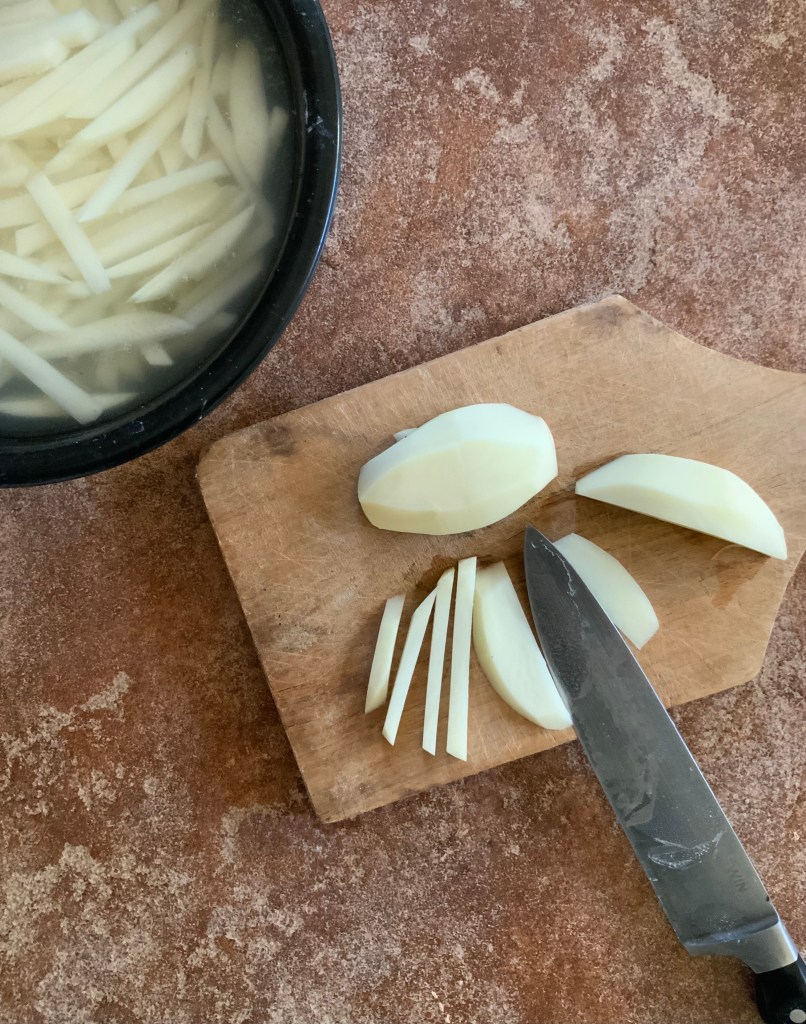
- Soak the cut potato sticks for a half hour or as long as is convenient. The soaking water becomes cloudy as starch washes off the cut potatoes. Less starch means crisper fries. If the bowl is quite full, place a piece of plastic down on the water’s surface to help prevent the potatoes from discoloring.
- Shortly before frying, spread the potato sticks out over one of the dishtowels to drain. Place the second towel over them to dry and protect them from discoloration. The potatoes do not need to be completely dry before they are fried.
Frying: First Fry of First Batch
Note: 3 pounds (1.4 kg) of potatoes will be fried in three batches. Each batch is fried twice. The first fry cooks the potatoes. The second, very short fry crisps and colors them.
- Pour two liters of olive oil into the pot. In a standard-sized canning pot the oil will reach halfway up the sides. Place the baking pan lined with several layers of paper nearby.
- Heat up the oil gradually over medium heat. As the oil approaches frying temperature, it will begin to make occasional popping sounds.
- Begin watching the oil’s surface. Slow currents will begin to appear on the surface, accompanied by a gentle shimmer. At this point, add a single fry. It should bob on the surface surrounded in energetic, bubbling oil. The oil is ready for the first fry of the first batch of potatoes.
- The potatoes will float and move freely in the bubbling oil and because the oil is deep they are not confined in a single layer. Occasionally give them a stir with a slotted spoon. The depth of the oil and the removal of starch prevent the fries from sticking together.
- The fries’ appearance will change from a smooth shiny white to a dull, slightly textured surface. A delicate yellow tint develops soon afterward. Transfer the first batch with a slotted spoon to drain on the paper. Set this batch aside. Multiple layers of paper will give them plenty of support.
First Fry of Second and Third Batches
- Bring the oil back to frying temperature over medium heat.
- As soon as the surface of the oil shimmers, add a test fry and look for the same signal that the oil is ready: the fry will bob on the surface surrounded in bubbling oil. Add the second batch. The oil will be hotter than it was before frying the first batch because the oil is now hot throughout, not just on the surface. The second batch may show the visible signs of being cooked slightly earlier than the first one.
- Transfer the batch to a second set of paper layers and repeat the same process with the third batch. By the third batch, the oil is usually fully heated, so it’s likely to be ready almost immediately.
Final Fry
Note: The final fry may be delayed if more convenient. Remove the oil from the heat and reheat it just before frying each of the three batches a final time.
- If the final fry isn’t delayed, the oil is probably already fully heated. It will shimmer and currents will appear to move over its surface. Test with a single fry as before.
- Place fresh layers of paper on the baking pan. Fry the first batch to a light, crisp, golden brown. This will occur very quickly. Transfer the fries to the paper to drain. The oil will probably not require reheating. Test with a single fry as before. Add the second batch and when they are colored and crisped, transfer them to the paper containing the first batch.
- Repeat the same steps with the third batch. Because the final fry only takes a short time, all batches can be drained together on the same paper layers.
- A suggestion: Salt after serving to suit individual preferences.

 thefoodlessprocessed
Leave a comment