“That which we call a rose
By any other word would smell as sweet;” William Shakespeare from Romeo and Juliet.
Pacific Dover sole, petrale sole, English sole, rex sole, rock sole– are all varieties of flounder marketed as “sole” in the United States. Flounder is a very good fish in its own right. It sautés well. The filets brown without breaking, despite their thinness. It is mild-flavoured and versatile, suited to many cooking methods.
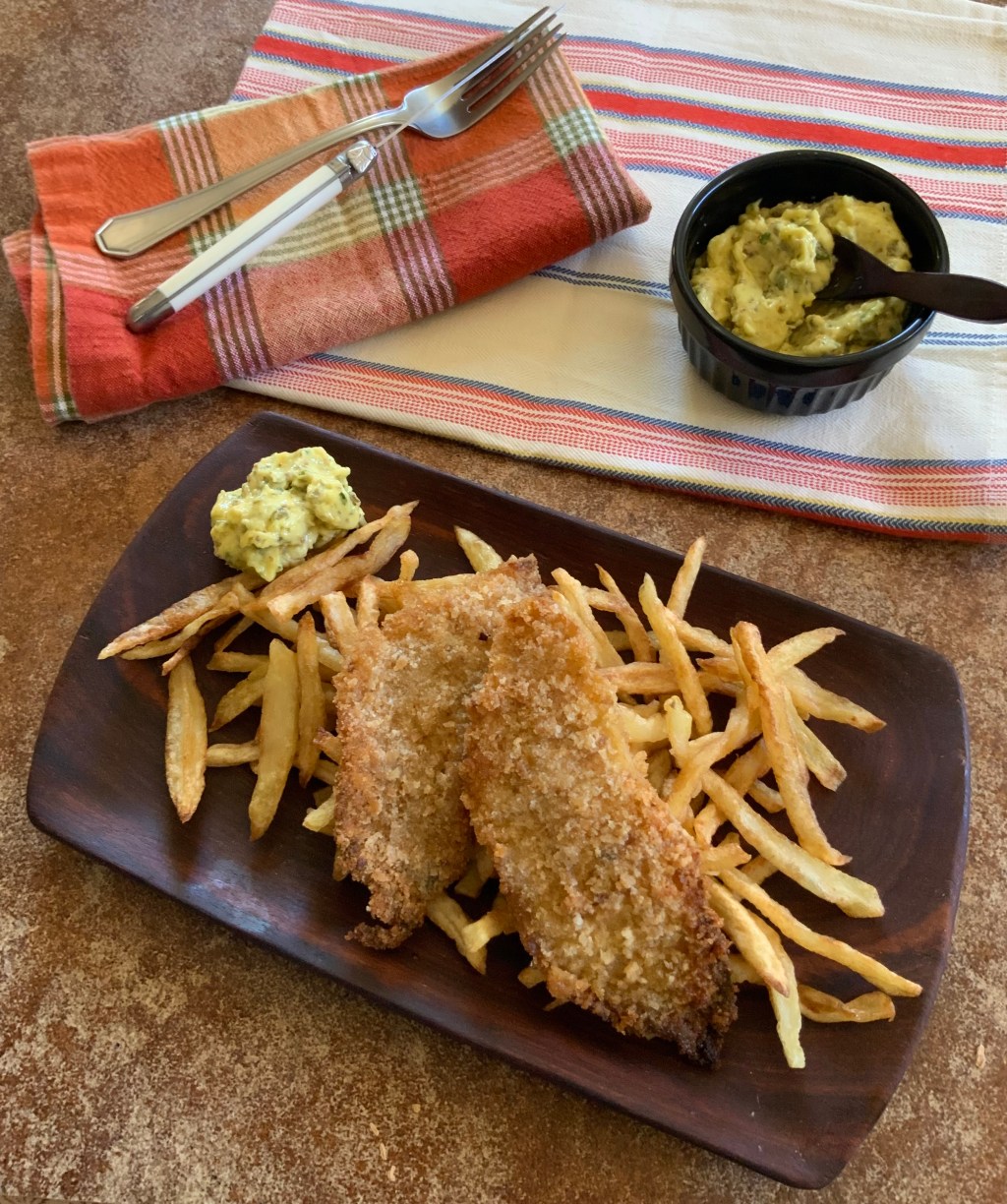
Flounder is excellent served à l’anglaise: lightly breaded in fine-textured chapelure (fine dried breadcrumbs) and fried to a golden crisp in clarified butter and olive oil.
The less processed ingredients in this recipe are: Pacific Dover Sole, Butter, Flour, Homemade Chapelure, and Olive Oil.
Equipment
- a Large Sauté Pan: for example, an enameled cast iron sauteuse with a black baked-on porcelain enamel interior. Pans with a white enameled interior will not brown as well.
- a Baking Dish for soaking the filets briefly before breading them
- 3 Small Pie Pans or other Rimmed-Containers for breading the filets
- a Rimmed Baking Pan to hold the breaded filets before sautéing them
- a Turner (aka Spatula)
- a Large Rimmed Baking Pan on which to drain the filets after sautéing them
- a Large Rimmed Baking Tray and Stainless Steel Rack (or any type that is ovenproof) for keeping the filets warm after draining them
- Absorbent Material: a suggestion is Untreated Brown Grocery Bags, cut open and turned inside out–several of them stacked one atop the other. The oil sinks down into the paper rather than pooling on the surface. It is a more breathable surface than paper toweling, which quickly becomes saturated with oil and prevents the filets from draining well.
Ingredients
- Flounder/Pacific Dover Sole Filets: Filets vary in size–2 or 3 per person makes a serving, for example, 2 large or 2 medium and 1 small
- Milk for soaking the filets
- Chapelure (aka French-style breadcrumbs): The recipe is here: Chapelure ~ a French way with Breadcrumbs.
- 3 Eggs, beaten
- White All-Purpose Unenriched Flour: Either European Soft Wheat or Organic Hard Wheat. European Soft Wheat Flour makes a finer coating.
- Butter for Clarifying: 8 Tablespoons of Organic European style Unsalted Butter (113 g)
- 1/4 cup (60 ml) of Extra-Virgin Olive Oil
Soaking the Filets
- Place the filets in a baking dish and pour milk over them to cover. Soak the fillets in the milk for 20 minutes. This mellows their smell and helps tenderize the flesh. Pat them dry before breading them.
Clarifying the Butter
A milky sediment separates out of melted butter. The sediment scorches easily, but once removed, the clarified butter will heat to a high temperature without burning.
- Heat the butter in the small pot until a froth bubbles up. Skim off the froth. Pour off the clear yellow butter into a bowl, leaving the sediment behind. Discard the sediment.
The Tartar Sauce
Making the mayonnaise for the tartar sauce is described in this post: Mayonnaise and aïoli.
How to make the tartar sauce is described here: Tartar Sauce with Homemade Mayonnaise.
French Fries
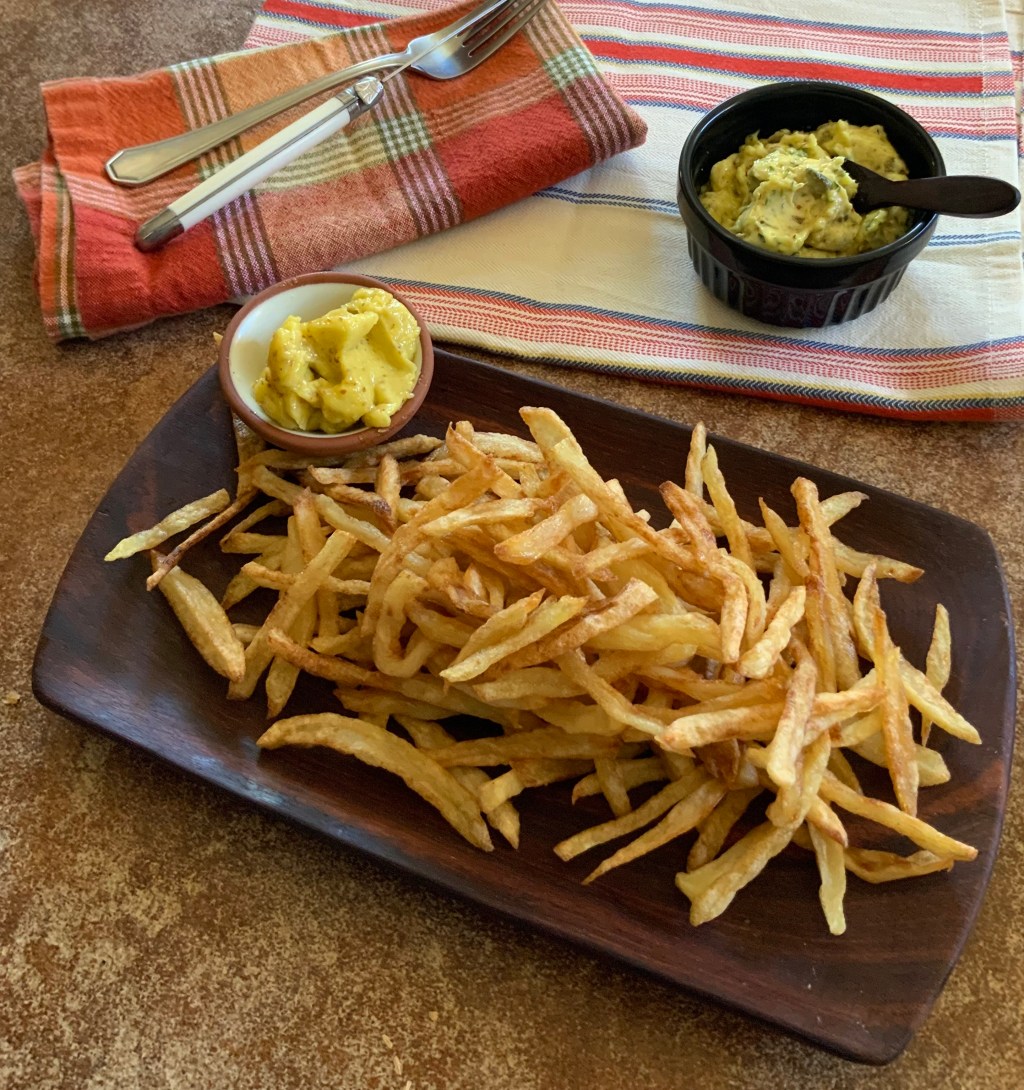
Making the french fries is described in this post: Pommes frites, aïoli ou sauce tartare ~ French fries, aïoli or tartar sauce
Breading and Sautéing the Filets
Note: The sautéed filets may be kept warm by transferring them to an ovenproof wire rack set over a baking tray in a low oven (200 F/95 C) after they are drained.
- Arrange the flour, beaten eggs, and chapelure in three separate rimmed pans, one ingredient in each pan.
- Dip each filet in the flour, then the eggs, and finally coat it in the chapelure. Transfer the filets to the rimmed baking pan. Arrange them in a single layer or in a double layer separated by a sheet of plastic wrap.
- Pour the clarified butter and the olive oil into the sauté pan. Heat the butter and oil over medium heat.
- When gentle ripples or a slight trembling appear on the surface of the fat, it is ready to use. A small breadcrumb dropped into the fat will create an immediate, gentle sizzle.
- Place the filets in the pan, leaving space between them so they do not touch. Sauté on one side until the they release easily from the pan. Turn and sauté the second side in the same way. Transfer them to the paper-lined baking tray. Once drained, they may be kept warm in a low oven, arranged on an ovenproof wire rack placed over a baking tray.
- Continue sautéing the fillets in batches, in the same manner.
- If the fat begins to foam actively or smoke, it has become too hot. Remove the pan from the heat and allow it to cool briefly. Return the fat to medium heat, adding a small amount of olive oil if necessary, before continuing.

 thefoodlessprocessed
Leave a comment