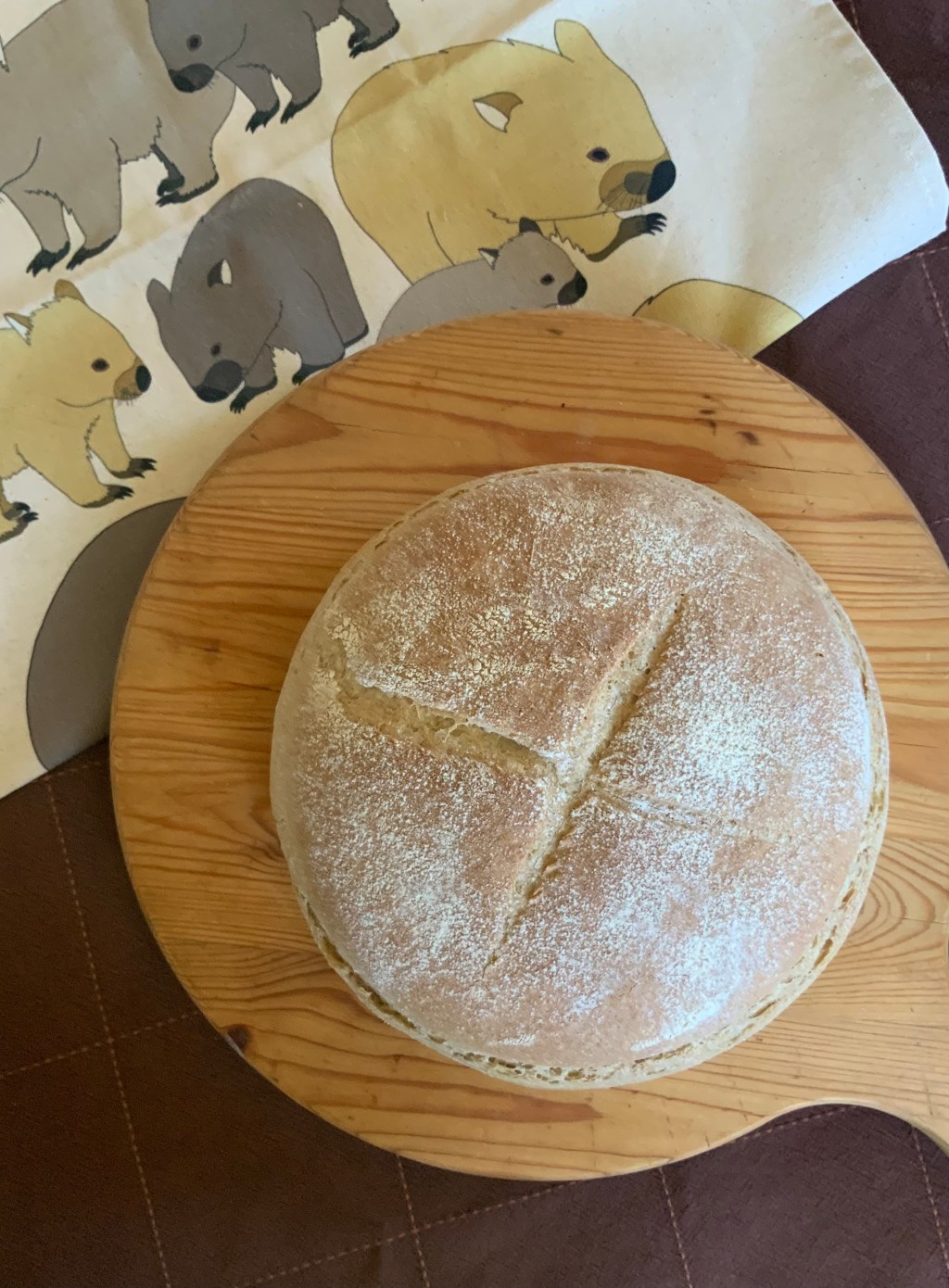
A Swiss bread from the Jura is one typical of breads made in the Jura mountain region. Usually it is made with a blend of white and rye flours, formed into a large round loaf, slashed with a cross cut and floured before baking. A sourdough starter is common, but this version includes a biga (an Italian preferment of flour, water, and yeast, mixed up the day before making the bread and fermented overnight).
The loaf is chewy, a little dense, a little moist. Both the rye flour and the biga help keep the loaf fresh for several days.
The less processed ingredients are described through these links: White Flour, Rye Flour, Butter, Salt and Water.
Equipment
- a Digital Scale
- a Medium Bowl for mixing the biga
- a Standing Mixer and Paddle Attachment–or, the dough may be mixed in a large bowl and kneaded by hand.
- a Pastry Board
- an 8-inch diameter (20 cm) Springform Pan, buttered and floured
- a Lame or Sharp Knife to score a cross in the dough before baking
- a Small Sieve
- a Pan of Water to create a bit of steam during baking
Ingredients for the Biga
- 50 g of White Unenriched All-Purpose European Soft Wheat Flour (or substitute Organic White Unenriched All-Purpose Hard Wheat Flour)
- 50 g of Organic Stoneground Dark Rye Flour
- 90 ml of Bottled Spring Water
- 1 g (about 1/8 teaspoon) of SAF Instant Yeast
Ingredients for the Bread
- 475 g of White Unenriched All-Purpose European Soft Wheat Flour (or Organic White Unenriched All-Purpose Hard Wheat Flour–the American standard variety is hard wheat.)…and some to sprinkle on the pastry board and over the loaf before baking
- 65 g of Organic Stoneground Dark Rye Flour
- 325 g of Bottled Spring Water
- 7 g of Sea Salt
- 3 g of SAF Instant Yeast
- Salted Butter to grease the Bowl in which the dough rises and some for the Pan in which the bread bakes
Making the Biga–the Day Before Making the Bread
- Mix together the flours and the yeast in a medium bowl.
- Add the water and stir to combine everything.
- Cover the bowl with plastic and leave it at room temperature overnight.
Making the Dough–the Following Day
- In the large bowl, or bowl of the mixer, add the flours and the yeast.
- Add the water and mix everything together. Let the mixture stand, covered at room temperature, for 30 minutes.
- Add the biga. Mix it in well and again cover the bowl and rest the mixture at room temperature for 30 minutes.
- Mix in the salt. (Adding the salt last improves the dough for a variety of reasons.)
- Either knead the dough by hand on a floured pastry board or in a standing mixer fitted with the paddle attachment.
- When the dough is sufficiently kneaded it will be soft, still a bit sticky, but will pull away from the sides of the bowl (or your hands) and feel elastic.
- Shape the dough into a ball. Place it in a lightly buttered bowl, covered with plastic or another large bowl, and leave it at room temperature until it doubles in size.
Forming and Creating the Loaf
- Form the dough into a boule shape, which means rounding the dough into a tight ball, creating surface tension across the top. Here is a YouTube video from the site Bake with Jack that may be useful on how to create surface tension.
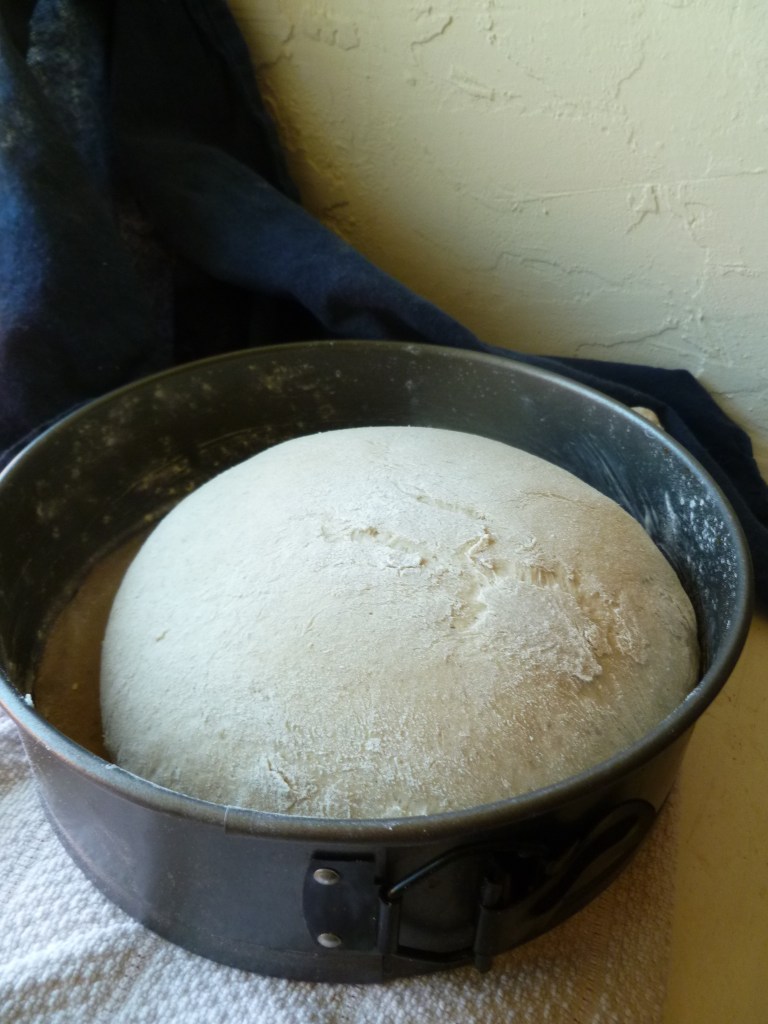
- Transfer the boule to the buttered and floured springform pan. Cover the pan lightly with a cotton towel and leave the dough at room temperature until the dough is rounded and risen to a point a bit below the rim of the pan.
Baking
Gas or Convection Oven: thefoodlessprocessed uses a gas oven. The conversions from Fahrenheit to Celsius do not attempt to adjust for differences between baking in a gas or convection oven. I have no experience using a convection oven, and leave adjustments to the better judgement of you who do have.
- Preheat the oven to 240 C/475 F.
- Slash a cross on the top of the loaf with a lame or sharp knife and sieve a little flour over it.
- Place a pan of water on the bottom rack of the oven.
- Put the loaf in the oven on the middle shelf and reduce the temperature to 220 C/425 F.
- Bake the loaf for 15 minutes. Then, remove the rim of the pan, lift the loaf off the base and place it directly back on the middle rack to bake for another 20 minutes.
- The bread will slice better if it is completely cool.

 thefoodlessprocessed
Leave a comment