“The language of truth is simple.” (variously attributed to Seneca and Euripides)
Anchovies
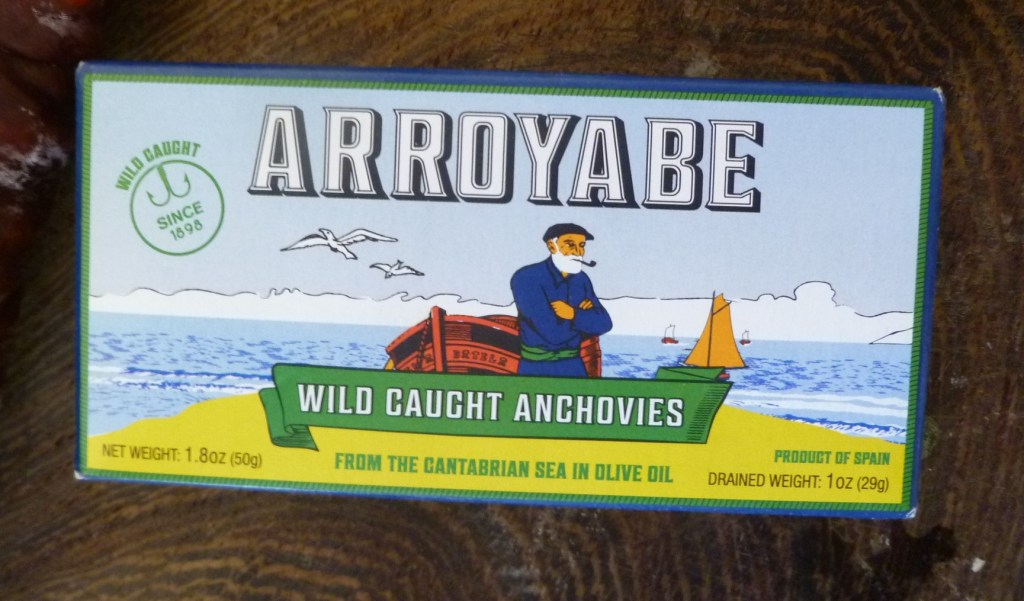
thefoodlessprocessed uses wild-caught anchovy filets. They thrive on a varied and natural diet. If these are not available, many brands contain only anchovies, olive oil, and salt.
Bacon
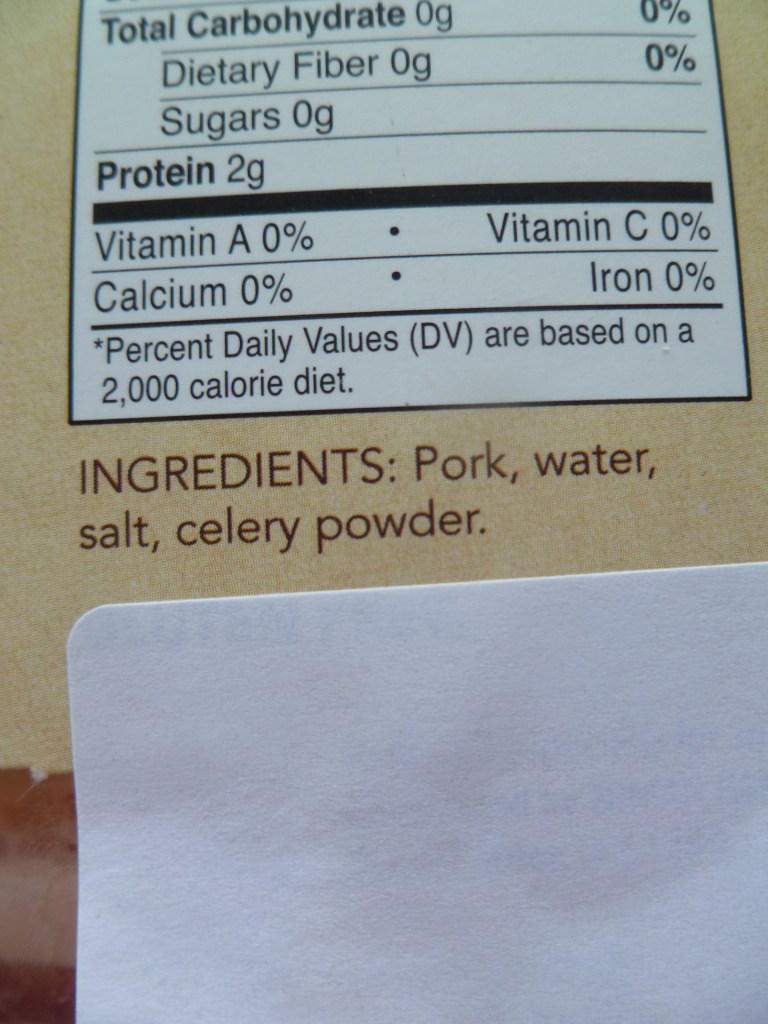
Bacon used in thefoodlessprocessed recipes contains no sugar, no extracts, no nitrates, nor any type of vegetable oil.
Beans and Legumes
In general, for all varieties of beans and legumes, it is preferable to choose organic ones. Fumigation of dried beans and legumes is used to kill insects during storage and before packaging. A toxic gas is released into a sealed space so it penetrates bulk grain or bagged legumes. Residual levels must “meet food safety regulations”, but are allowable. Maximum Residual Limit (MRL), is one of the standard regulatory phrases, denoting how much toxin may remain in the product bought by a consumer.
In most regulatory systems (USDA Organic, EU Organic, etc.), synthetic chemical fumigants are generally prohibited for routine use on organic pulses. There are emergency or quarantine exceptions, but they must be documented and are considered a last resort.
Split Green Peas: The peas are organic and contain one ingredient: Organic Split Green Peas.

Beef
Even without mandatory welfare labeling, the baseline legal standards for animal welfare are significantly stronger in the EU, Great Britain and Switzerland for their care and butchering. In the United States there is neither federal regulation for the humane treatment of animals raised for food, nor are there any labeling requirements. However, several independent certifying programs exist. Their certifications will appear on labels: Animal Welfare Approved (AWA), Certified Humane, Global Animal Partnership (GAP). All these programs use independent auditors and do annual farm inspections.
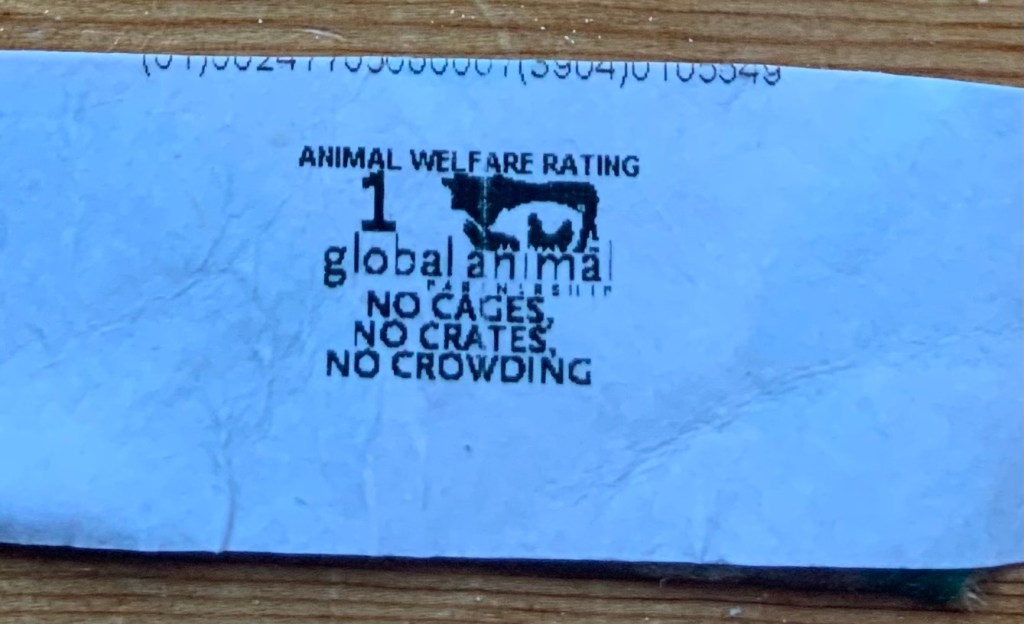
Here are two examples of an independent certification that may appear on a label. These, by the Global Animal Partnership, use a 4-tier ranking system. The highest welfare level is 4 to 5-plus. Level 1 does not include: Outdoor access or pasture grazing; freedom to roam beyond basic indoor space; assurance of organic or antibiotic-free feed; what is known as “high-level behavioral enrichment” that is more common in Steps 3 to 5-plus. “High-level behavioral enrichment” refers to practices that are intended to go beyond keeping the animals physically healthy, to address their overall well-being and natural behavior.

Two other third- party verifications are those of the American Grassfed Association (AGA) and the Audubon Society. The AGA certification focuses strongly on diet. The Audubon program describes its major concerns as: “habitat management, environmental sustainability, and animal welfare.”
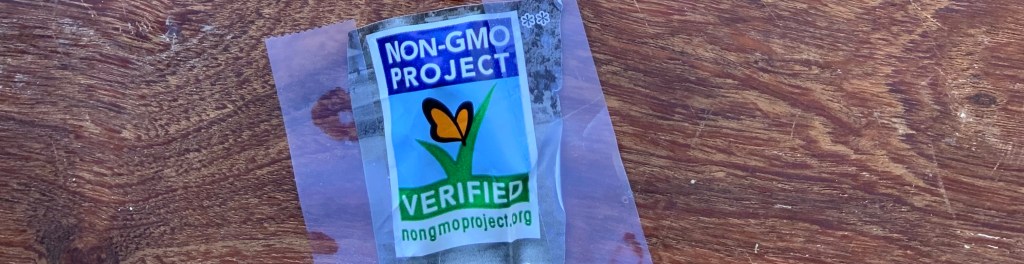
The Non-GMO Project third-party verification is strictly concerned with testing that a product is made “without genetically engineered organisms or ingredients derived from genetically engineered plants or animals”. The verification makes no guarantees about the nature of pesticides, herbicides, fertilizer use, or other environmental/agricultural practices. It does not assess humane animal welfare standards or butchering practices. To ensure that any of these other criteria are addressed, look for one of the other verifications described above or summarized below: Meat.
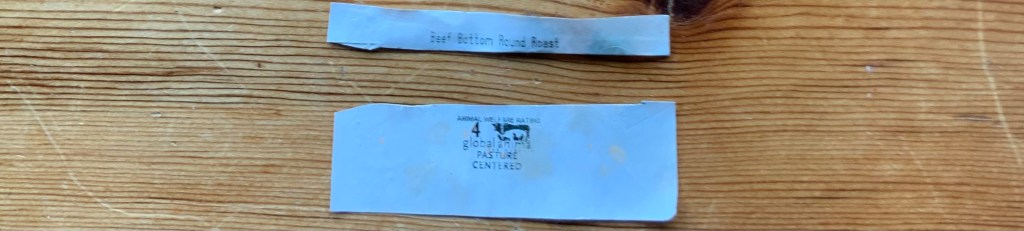
Bottom Round Roast: The label for this roast shows a GAP rating Level 4, Pasture-Centered. If you buy a product labeled GAP Step 4, Pasture-Centered, you can be reasonably confident that the animals had significant access to pasture (not just a token “outdoor access”). It also means farms are being audited and have to meet certain welfare benchmarks (not just marketing claims). See the general discussion above under “Beef” about humane standards for animal care and how they are verified.
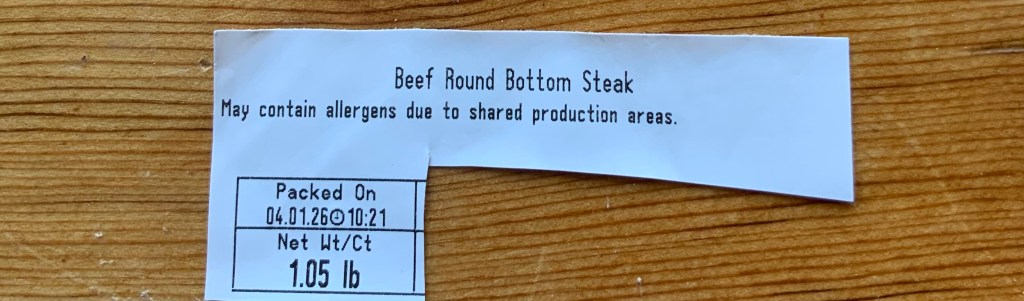
Bottom Round Beef Steak: Here is an example where the label on the package does not indicate a standard for the humane care of the creature, although the place of purchase does sell this cut with a GAP rating Level 4. (See above.) This may be because the store’s retail package label did not generate the information. It does not necessarily mean that the meat does not have a welfare rating. The butcher will know if the meat has a welfare certification and can trace it back to the box label (master case) which always includes the certification label.
Brisket: This brisket’s label is Step 1, the base level in GAP’s welfare rating program. It means that the farm meets minimum animal-welfare standards above typical commercial ones, including: no cages, crates, or extreme crowding — animals have more space than in conventional meat industry farms.
For brisket cooked by braising, one of less than premium quality may do very well, as long as the brisket is properly cooked. A good braising method matters most.

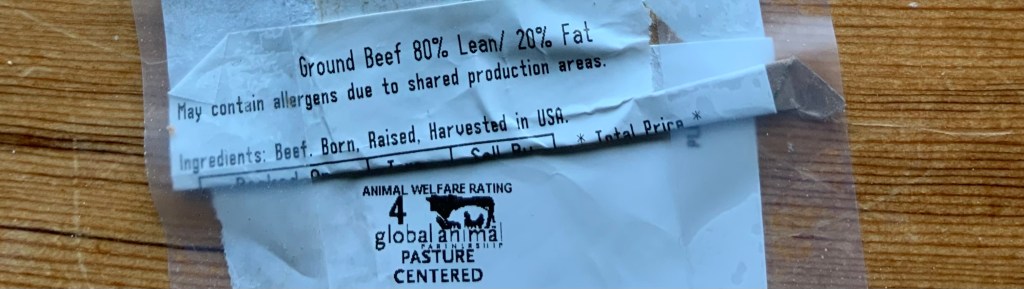
Ground Beef: thefoodlessprocessed generally uses ground beef with the level-4 Global Animal Welfare rating. (The description of this rating system is described above in the general category: Beef.
Filet Steak: Good filet steaks come from the center of the tenderloin. Ones cut from the large end (butt end, head, or bull nose) will be irregular–not smooth, steaks of an even thickness like those from the center cut. Ones from the narrow end (the tail) are too small and uneven. The steaks for these recipes are center cut with a level-4 Global Animal Welfare rating: Pasture Centered. The GAP rating system is described above in the general category: Beef.
Top Sirloin: The label on the package did not indicate a standard for the humane care of the creature, although the place of purchase does sell this cut with a GAP rating Level 4. (See above.) The store’s retail package labeling system no longer generates the information. It does not necessarily mean that the meat does not have a welfare rating, but the customer has lost the ability to verify that information at the point of purchase. The butcher will know if the meat has a welfare certification and can trace it back to the box label (master case) which always includes the certification label. We called the store and the butcher was able to check the box label and verify that this cut had a GAP rating Level 4.
Beer
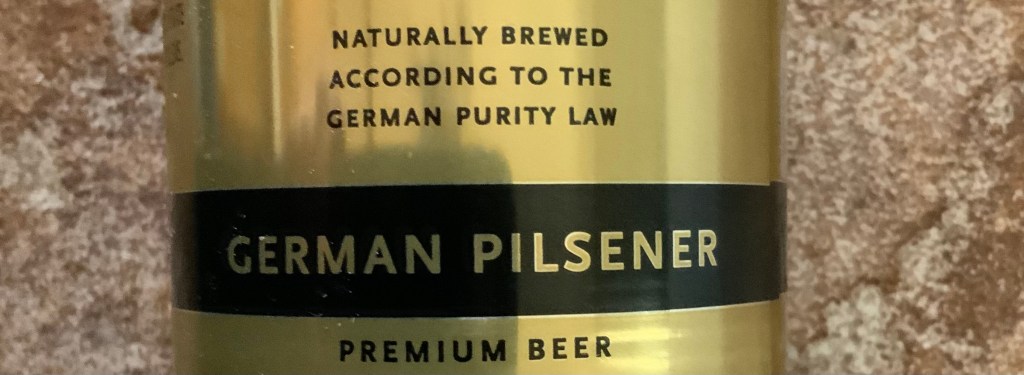
Pilsener and Lager: US beer regulation is more relaxed than in Europe. There are fewer ingredient restrictions. Any cereal grains, in addition to the conventional barley, are allowable, as well as sweeteners (such as sugar and syrups). EU standards may be described as generally flexible, with the notable exception of Germany’s regulations which are the strictest in Europe. German-made beer may only contain water, malted barley (or wheat in some styes), hops (or hops extract) and yeast. When baking with beer, it is better to avoid nontraditional ingredients. Our recipes contain an inexpensive German pilsener or a Dutch-made lager. Both are widely available in the United States. The lager’s ingredients are: Water, Barley Malt, Hops and Yeast. The pilsener ingredient list includes: Water, Barley Malt, Hops and Hop Extract:

The German Purity Law label ensures that only the four permitted ingredients have been used in the brewing of this beer:
Stout: The stout in these recipes contains 5 ingredients: Water, Malted Barley, Hops, Yeast and Irish Moss. It does not contain adjuncts, spices, or added flavorings. The term “adjuncts” refers to other grains (such as corn, rice or wheat) and sugars (for example, sugar, honey, or molasses).
Brandy
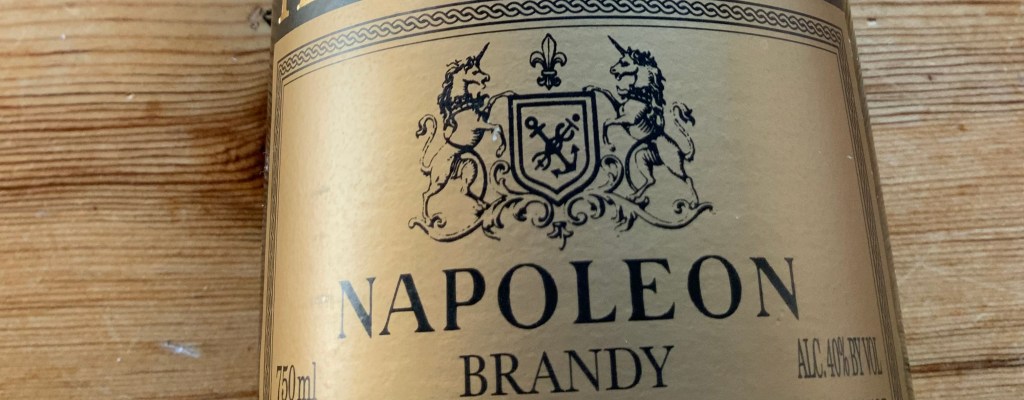
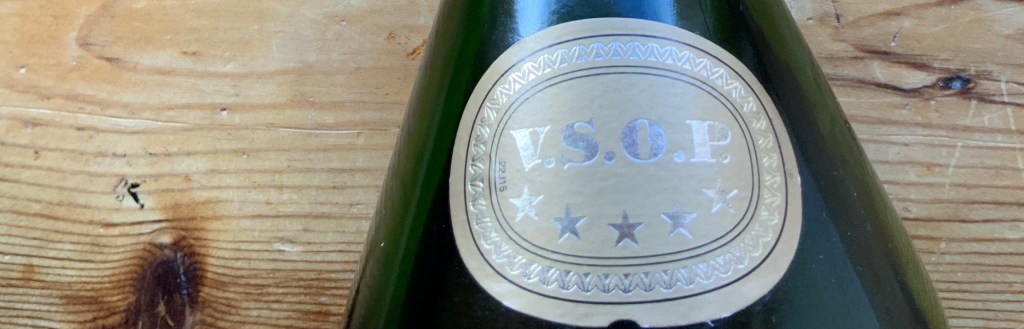
For cooking, imported French Brandy is preferable and it need not be an expensive one. When a bottle is labeled as ‘French Brandy’, it isn’t simply generic brandy made in France. It is subject to considerably more specific production requirements than the generic American category of brandy. Although the label will not list every ingredient used in making the brandy, French regulations give you much stronger guarantees about what the spirit can be and how it can be made. Flavoring chemicals such as vanillin, ethyl vanillin, artificial flavor compounds, or “natural” flavor extracts cannot be added to a product legally sold as French Brandy. They are permissible in the American product.
The terms: VSOP and Napoléon on the label of the inexpensive French Brandy shown below are not marketing terms. They indicate a minimum aging requirement.
Breadcrumbs
Homemade Bread that is no longer fresh provides less processed breadcrumbs. Chapelure is a French style of making very fine breadcrumbs. thefoodlessprocessed recipe for Chapelure is here.
Butter
A note: Neither margerine nor vegetable shortening are ever used in any of thefoodlessprocessed recipes.
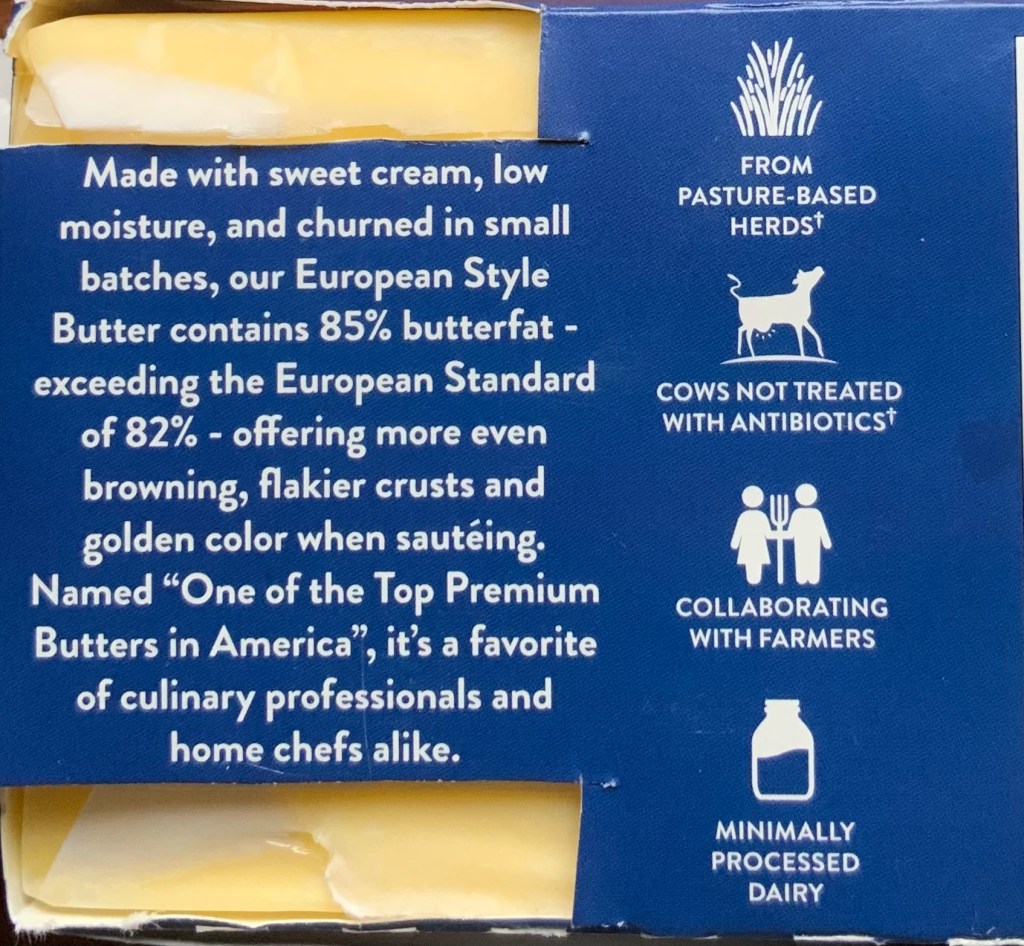
European-style Butter: The butter used in many of our recipes is a European-style butter. This means it reflects European standards for minimum butterfat content and legal moisture content. It is unsalted and contains 85% butterfat. In baking, in sauces, and in the butter dish, where butter quality is especially important, European style butter is preferable.
The legal minimum butterfat in American butter is 80%. In European Butter it is 82%, but the actual content is often higher.
The American legal moisture content is 20%, in contrast to the European standard of 14 to 16%. The higher moisture content in most American butter means that it is produced more cheaply. It has certain disadvantages for cooking. When frying and sautéing, butter with a lower moisture content spatters less and has a higher smoking point (the temperature at which the butter begins to smoke and break down chemically). For baking, butter with less moisture releases less steam and so gives more consistent results
Salted Butter: When using a standard American butter, the difference in the ingredients contained in salted and unsalted varieties is a point to consider. Unsalted Butter often contains “Natural Flavorings”. A Natural Flavoring is made from a product that was originally natural. Processing alters it from its natural state. The ingredient list must include any “Natural Flavor”, but does not have to list the chemicals used to alter the original natural product. The Natural Flavoring in Unsalted Butter is added as a preservative to increase its shelf life. Salt is a preservative and therefore Natural Flavoring is not usually added to American Salted Butter.
Many American brands of Salted Butter are cheaper than European style ones. In recipes where the quality of the butter is not going to affect the outcome significantly, thefoodlessprocessed uses Salted Butter. Ingredient lists in recipes will specify which butter is used. The Salted Butter we use contains two ingredients: Pasteurized Cream and Salt.
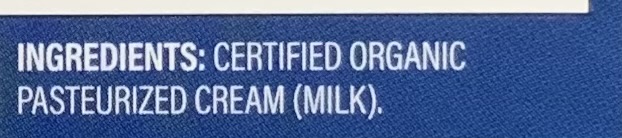
The European style butter we eat on our bread and cook with contains one ingredient: Certified Organic Pasteurized Cream.
Here is an example of a standard American Salted Butter label:

Buttermilk
Commercial buttermilk in the U.S. is a reconstituted product. It may contain milk that is modified with milk solids or cream, salt, stabilizers such as carrageenan, and added vitamins if the nutritional value of the milk has suffered under processing.
Homemade Buttermilk: A less processed form of buttermilk may be made with a commercial starter and heavy cream.
Buttermilk Substitute: 1 cup of Whole Milk and 1 teaspoon of Organic Unfiltered Apple Cider Vinegar is used in thefoodlessprocessed recipes as a substitute for buttermilk. Let the milk stand for a few minutes to thicken. Adjust the proportions accordingly: for example, for 3/4 cup of Whole Milk, 3/4 teaspoon of Organic Unfiltered Apple Cider Vinegar.
Capers
Capers used in these recipes are preserved in sea salt and vinegar. The ingredients include: Capers, Water, Sea Salt and Vinegar. There are many brands like this to choose from. There is no need to use one that includes citric acid.

Cheese
Animal Rennet is the only time-tested enzyme for making cheese. It is the oldest and most natural form of rennet, with the exception of some vegetable enzymes such as those derived from thistles and nettles. (Thistle rennet is used to make some Spanish and Portuguese cheeses.)
Animal rennet is a natural enzyme complex most usually obtained from the stomach linings of calves. It is a by-product of animals already butchered for meat. Its main role in cheesemaking is to coagulate the milk, turning it into a solid curd and liquid whey.
Enzymes from animal rennet influence the taste and texture of the cheese. It is a key element in the traditional flavour of a cheese and gives it a firmer texture that distinguishes it from cheeses made with rennets/coagulants originating in the laboratory. Substitutes for animal rennet are: microbial rennet, vegetable or plant rennet, and fermentation-produced chymosin (FPC). Cheeses made from animal-rennet-substitute enzymes are less stable when heated and may break down, becoming oily or grainy. This will be particularly noticeable when attempting to use one of them to make a fondue or any sauce that requires the cheese to combine seamlessly with other ingredients. These animal-rennet substitutes are cheaper to produce.
Cheese labels in the United States are not required to identify the enzyme in a cheese. Some, however, will further describe the enzyme used, for example, Microbial Enzyme, Plant Enzyme or Fermentation-Produced Chymosin (FPC). These are all produced in laboratories and have not been used long enough to know what the long-term effects of consuming them may be. If a label states that the cheese is “vegetarian friendly”, the enzyme used will be one created by a chemical process in a lab.
For this reason, thefoodlessprocessed uses primarily European cheeses with the AOP certification.
European cheese-making has a centuries-old tradition. Labeling regulations are stricter. An AOP label on a cheese indicates that the cheese is made according to traditional methods in a specific place. For example, Le Gruyère AOP is made only in the region of Gruyère in Switzerland. It uses animal rennet, typically made from calf’s rennet and is produced according to a traditional recipe that dates back to 1115 A.D. Because of the clarity in labeling and a respect for traditional cheesemaking methods that extends to the level of government regulation, we use AOP or PDO-designated cheeses when we have the option. Below you will find descriptions of the less processed options in cheeses used in thefoodlessprocessed recipes.
Traditional French Brie: These recipes use imported French Brie ( not “traditional-style Brie” which may be made in countries other than France). This Brie is made with animal rennet. The ingredients are: Pasteurized Cow’s Milk, Cheese Cultures, Salt, and Animal Rennet.

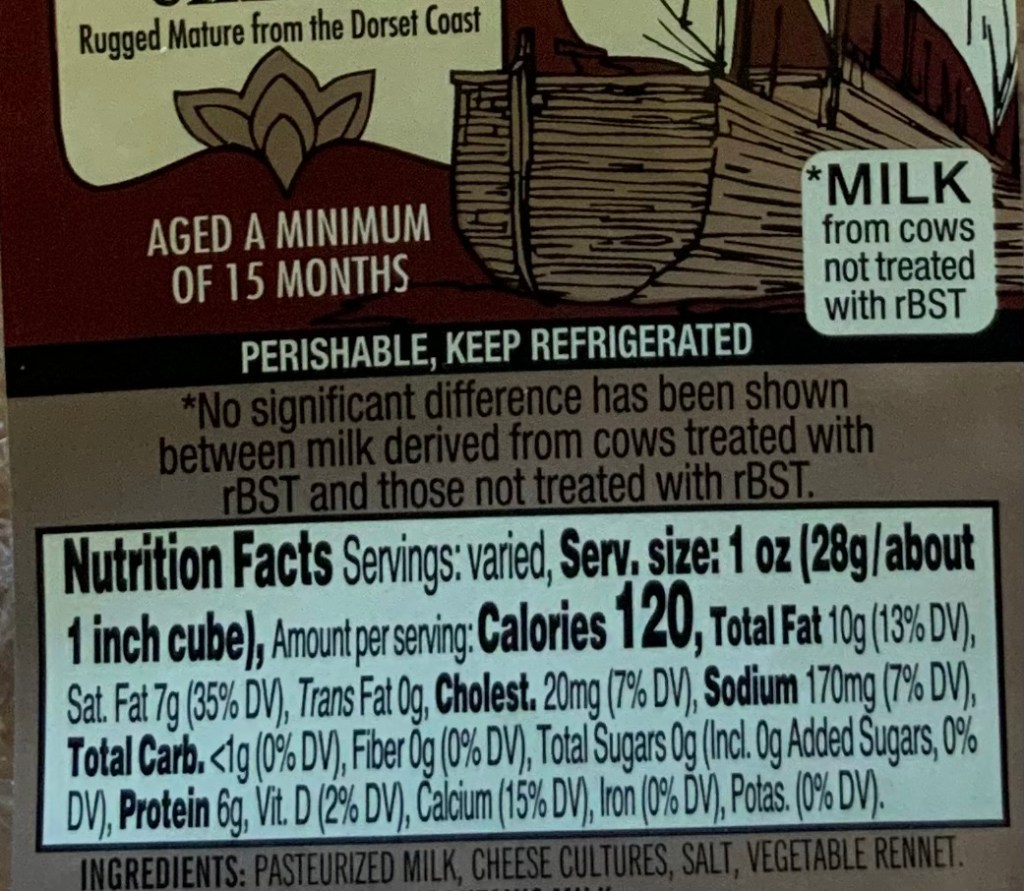
Aged Cheddar: A cheddar made with animal rennet is preferable. (See the discussion above of the various enzymes used for making cheese.) However, in the United States, domestic cheeses made with animal rennet are not widely available and one of the other enzymes is a “compromise alternative”.
Our experience has been more positive with aged cheddars from Great Britain than ones from the United States. There are less expensive imported British cheddars aged in large, airtight plastic blocks rather than traditional open-air cloth. These less expensive imports do not bear the West Country Farmhouse Cheddar Protected Designation of Origin (PDO) specification that guarantees the cheese is actually matured, not merely flavored to resemble aged cheddar. But we have found that they are still aged sufficiently to develop the characteristics of an aged cheddar and may be successfully melted without heavy reliance on stabilizers to prevent separation.
Sealing the pressed cheese in a multilayer food-grade plastic bag is the standard method used for aging most commercial cheddar in the United States. But the label “aged” on American cheddar is primarily a marketing term, not a legally defined one.
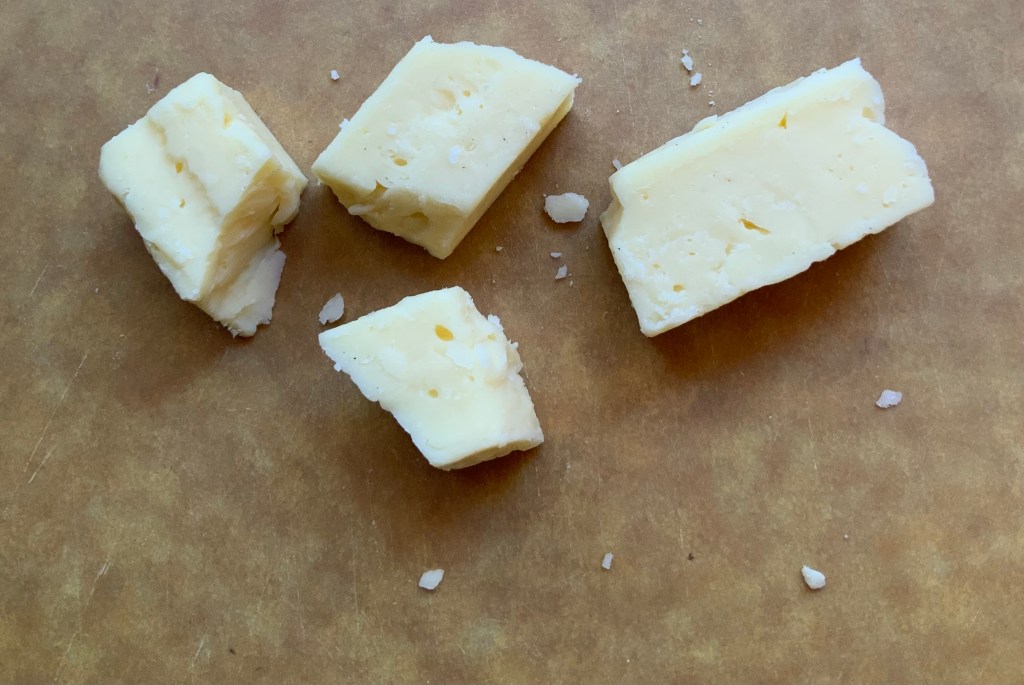
There are clear visible and tactile indicators of genuine aging. Clear signs include a crumbly, rather than a smooth, texture. When cut, it may break into irregular pieces instead of neat slices. Visible tiny white specks or crunchy bits are common in well-aged cheddar. The cut surface will not be glossy. Cracks may be visible on the surface and throughout the cheese and it will have a firm, dense feel. Here is a photo of a British imported cheddar that has no PDO assurance of aging, but which, nevertheless, bears true signs of aging:
In this second example of an aged British cheese without PDO aged status the small white crystals denoting an aged cheddar are visible:
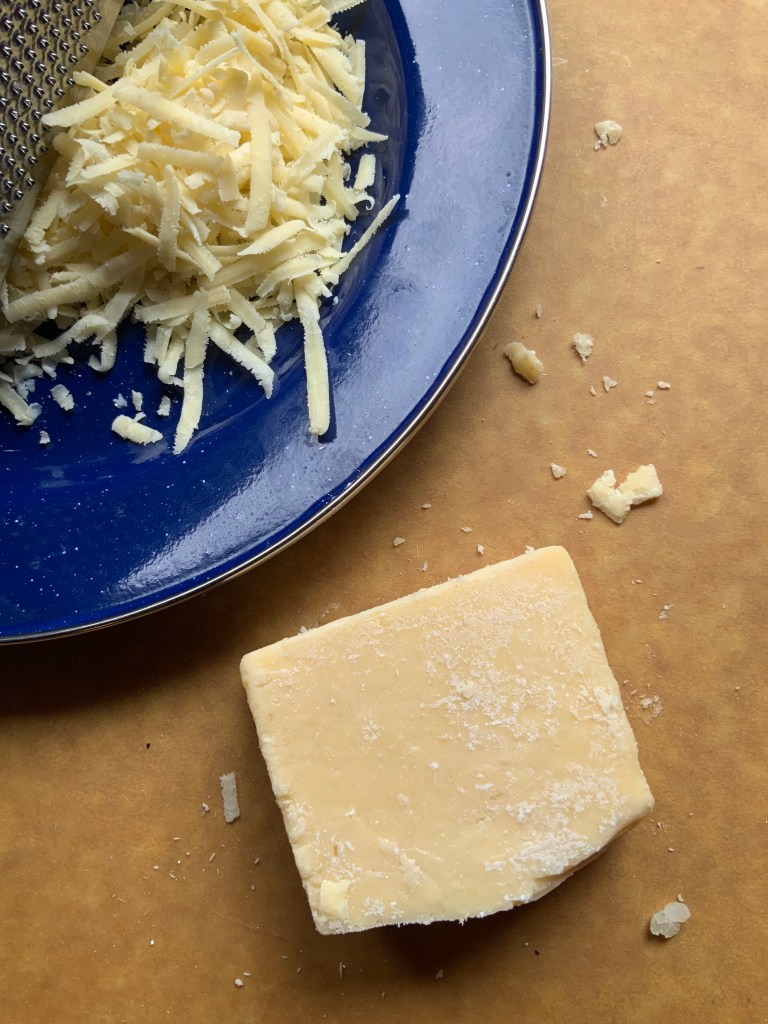
In choosing a less processed option, the color of the cheese is another consideration. To avoid more highly processed additives, uncloured (aka white) cheddar that contains no added annatto extract to colour it orange avoids this particular purely cosmetic additive.
Emmentaler AOP: Emmentaler with the AOP designation ensures that the cheese is made in a specific region of Switzerland using traditional methods and strict standards. It is made in the Emmental region of the canton of Bern and a few other approved areas in Switzerland. Its production dates back to at least the 13th century. It uses raw milk from cows fed only on grass or hay.
France produces Emmental. It is not the same as the Swiss AOP cheese.
The AOP designation is the key to ensure that a microbial enzyme or plant coagulant (aka plant or vegetable rennet) is not used instead of animal rennet. A Swiss producer of cheese labeled Emmentaler which is not labeled AOP will sometimes use an enzyme originating in the laboratory instead of animal rennet. The label below does not specifically designate the cheese as AOP. Therefore you cannot be certain about the identity of the enzyme:

Gruyère AOP: Gruyère AOP is a cheese from the Gruyère region of Switzerland. It is made from a recipe dating back to 1115. Government regulation and a Swiss support for keeping their traditions alive ensure that the traditional process is followed and traditional ingredients are used. The ingredients are: Cultured Raw Cow’s Milk, Salt, Animal Rennet.

Mozzarella Cheese: thefoodlessprocessed uses Whole Milk Low-Moisture Mozzarella Cheese. It is a U.S. product. The ingredients are: Pasteurized Milk, Cheese Cultures, Salt, and Enzymes. The nature of the enzyme is not described. We use it in preference to a Mozzarella that lists a Microbial, Plant or FPC Enzyme, but any one of these may be in the Mozzarella we use.
The cheese is never bought pre-grated. Pre-grated cheeses are typically dusted with an anti-caking agent. The most common of these is cellulose powder derived from wood pulp. Sometimes natamycin (a mold inhibitor) is added as well. Natamycin is a chemical compound that has not been proven safe for consumption–rather, regulatory agencies like the FDA have set use limits they consider below a level that is harmful to consumers, i.e. no ‘meaningful carcinogenic, mutagenic or reproductive risk.’

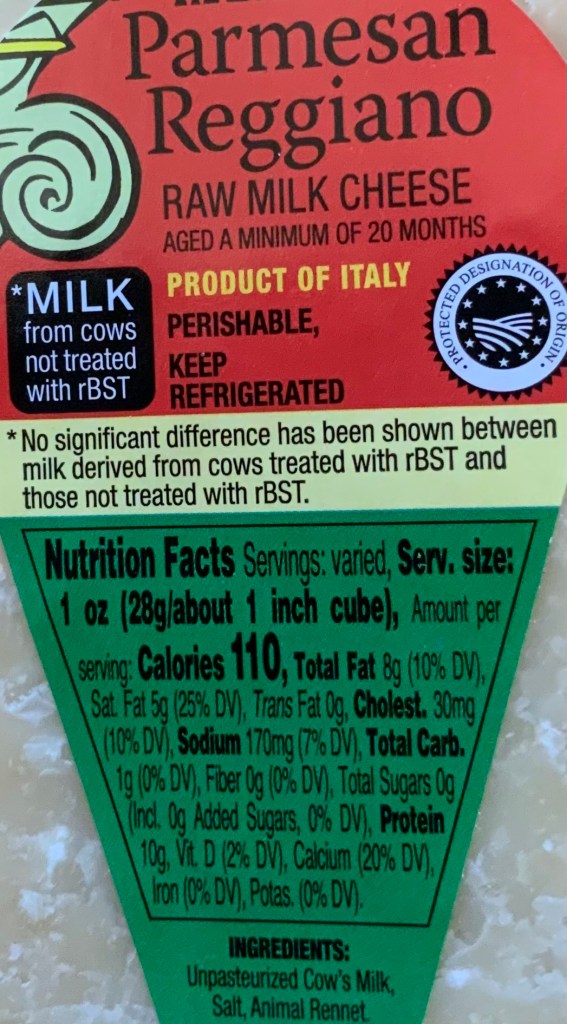
Parmigiano Reggiano PDO: This is the only type of Parmesan used in these recipes. It is Imported Italian Parmesan and bears the PDO certification that it is authentically made in a specific region by a traditional process with traditional ingredients of which there are three: Raw Milk, Animal Rennet and Salt.
The cheese is always bought in block form. Pre-grated cheeses are typically dusted with an anti-caking agent. The most common of these is cellulose powder derived from wood pulp. Sometimes natamycin (a mold inhibitor) is added as well. Natamycin is a chemical compound that has not been proven safe for consumption–rather, regulatory agencies like the FDA have set use limits they consider below a level that is harmful to consumers, i.e. no ‘meaningful carcinogenic, mutagenic or reproductive risk.’
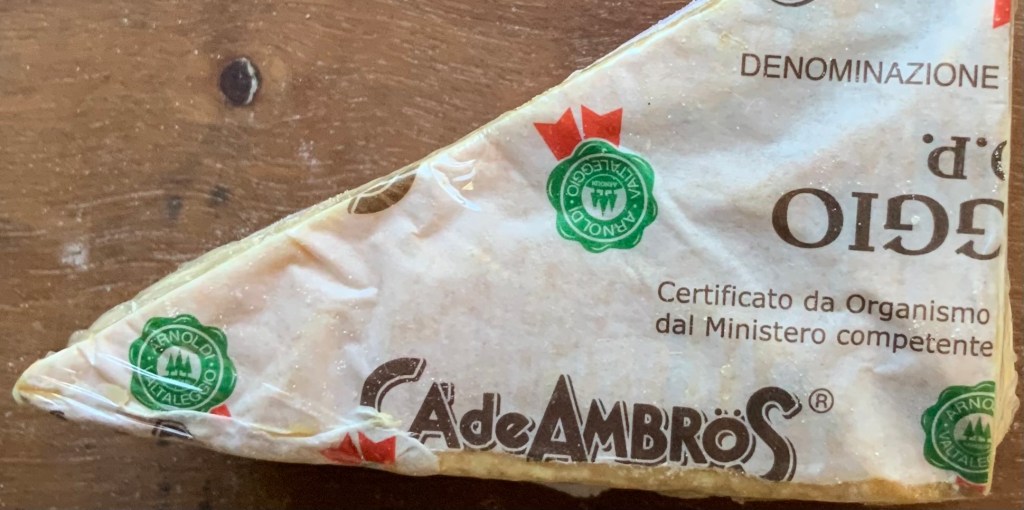
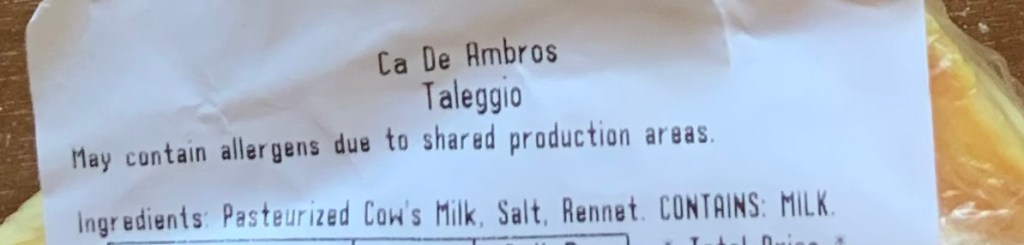
Taleggio Cheese: El Taleggio Ca’DeAmbros is an Italian cheese with the DOP (Protected Origin) certification. It guarantees that the cheese is made with cow’s milk in a specific geographical zone, according to traditional methods.
Chicken
Key points to understand when choosing less processed chicken are: heirloom, slow-growth, air-chilled and humanely raised. Three of these points are discussed below in the remarks about Heirloom Chicken.
You may read about the various programs that certify the humane treatment of all creatures raised for meat in the section below: Meat. The labeling to look for when buying meat is outlined there.
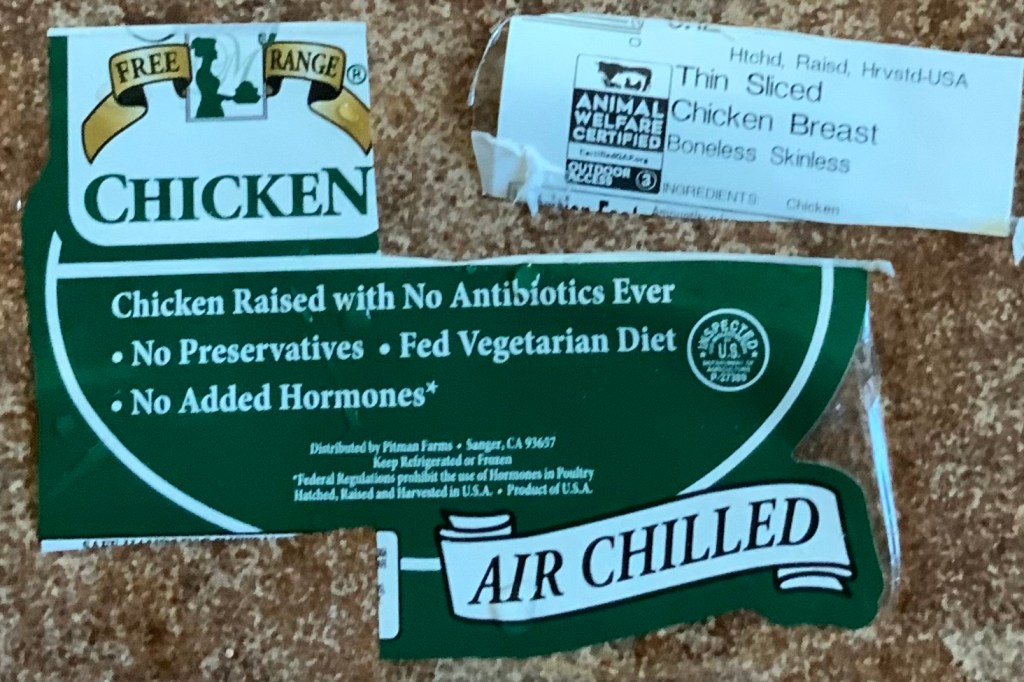
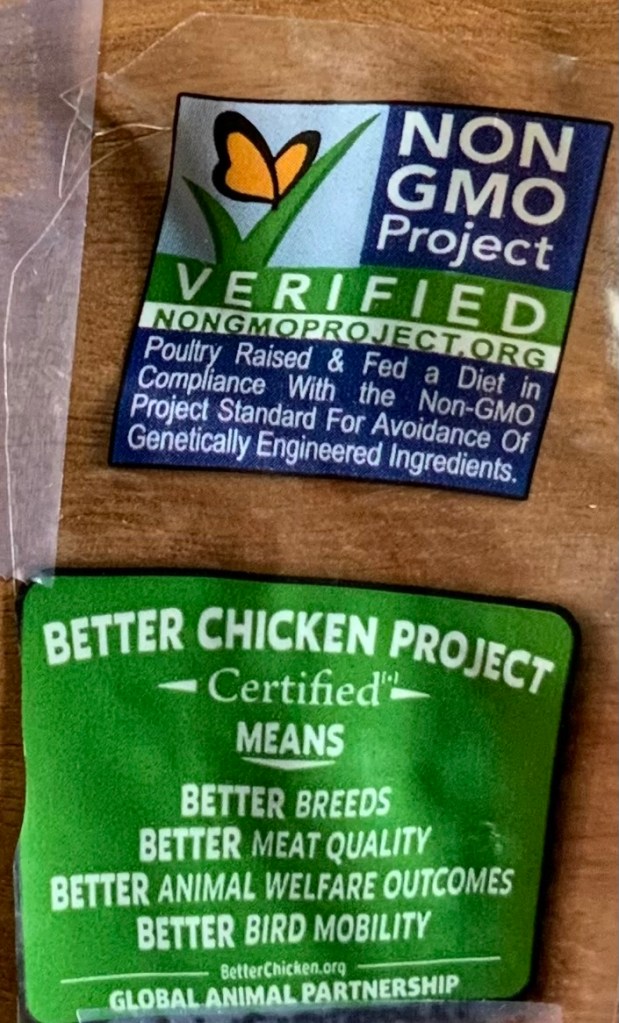
Chicken Breasts (boned): The boned chicken breasts for these recipes are a thin-sliced variety. They are free-range, GAP Animal Welfare certified, which means not only outdoor access during the day, but access to a space that encourages natural behavior/living. Animal Welfare has a 6-tier rating system. The label below shows a 3 rating which is defined as welfare standards higher than baseline, but not as high as pasture-raised (level 4 or above).
Another important feature is that the breasts are air-chilled after butchering to protect quality and freshness. This means the meat is cooled with cold, purified air rather than immersed in a cold, chlorinated water bath. There is no water absorption to dilute flavour and natural good quality.
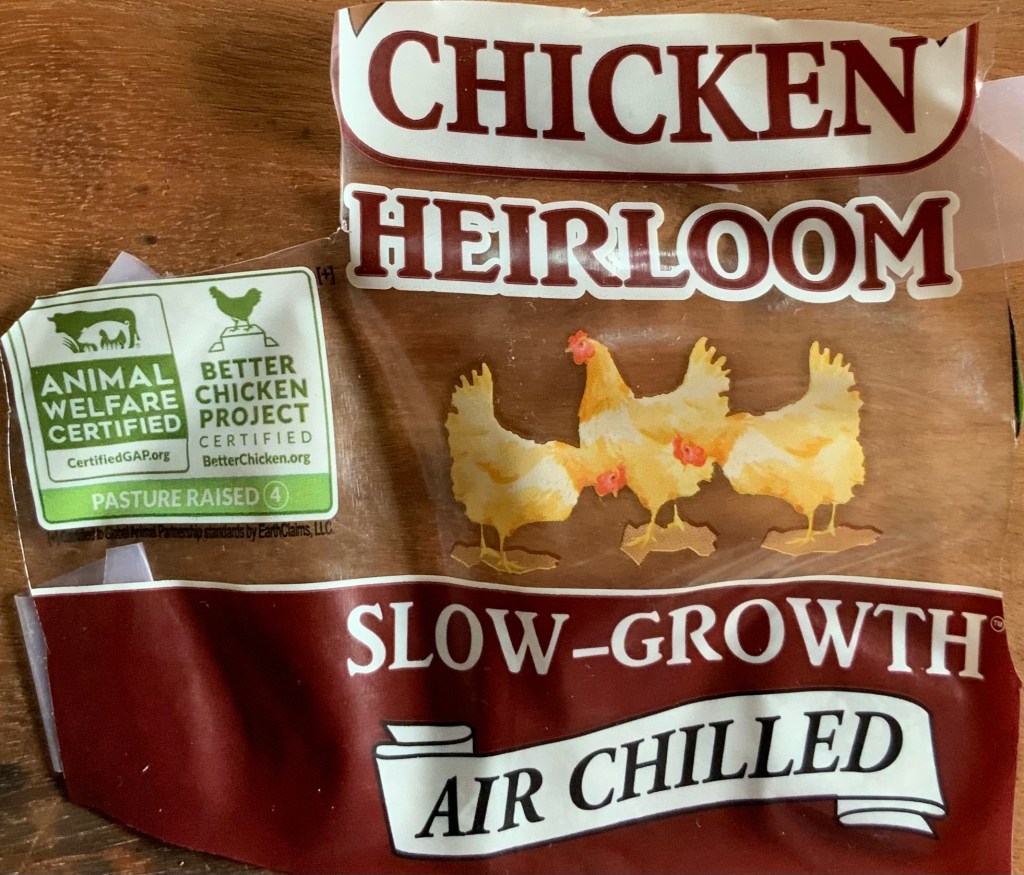
Heirloom Chicken: Heirloom refers to traditional, older chicken breeds. They are not hybrids, which are new crosses, not stable over generations. As “slow-growth” implies, these birds grow more slowly, at a natural rate. Unlike hybrids their diet is varied. Usually they are raised on pasture where they forage for plants, seeds, and insects. They will be fed whole grains (never formulated commercial feed) as well but are not pushed to gain weight unnaturally fast.
After they are butchered, heirlooms are air-chilled to protect their quality and freshness. The birds are cooled individually with cold, purified air. In the United States, supermarket chicken is generally immersed en masse in cold chlorinated water.
The results of these three characteristics of raising and processing are that heirlooms have a firmer texture and richer flavour. Their skin is crispier when roasted and, being air-cooled, there is no water absorption to dilute flavour and natural goodness.
An added point in favour of the heirloom is the high standard of the conditions under which they are raised.
France has a strong tradition of raising slow-growth, traditional breeds under humane conditions. Their Label Rouge is a national certification guaranteeing heirloom quality. There is no U.S. equivalent to the French national program. But fortunately there are farms in the U.S. raising heirloom birds and they are available in some supermarkets. Labeling of an heirloom bird will be very clear:
Chiles
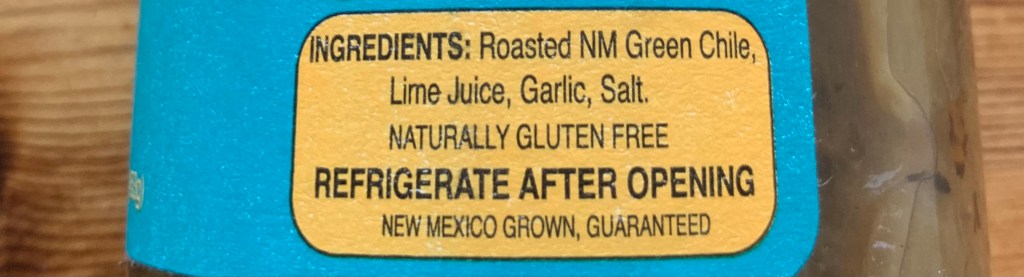
Preserved Roasted Hatch Green Chiles: The ingredients are Roasted New Mexico Chile, Lime Juice, Garlic, and Salt. There are no artificial/chemical preservatives such as Citric Acid.
Chocolate
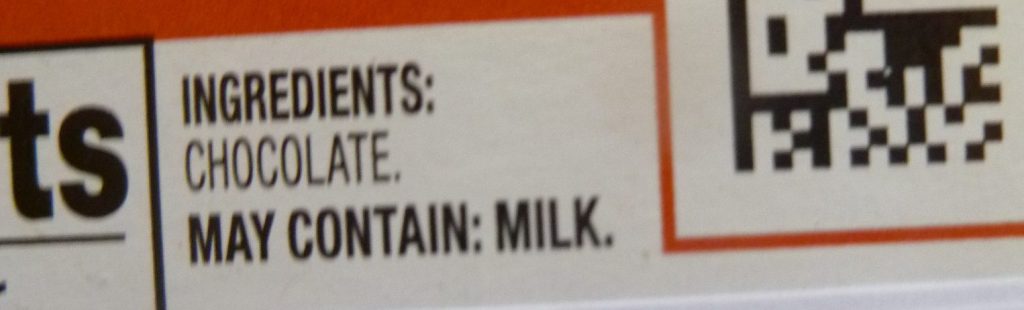
thefoodlessprocessed recipes use only Unsweetened Chocolate that contains only one ingredient: Chocolate.
Chorizo
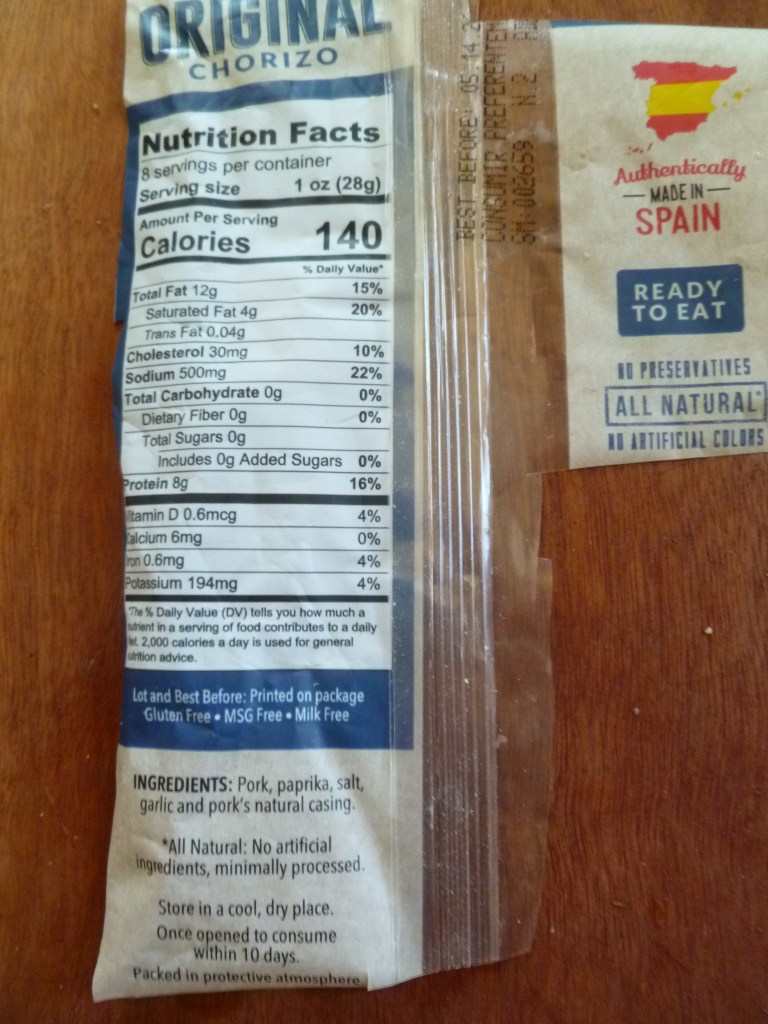
Imported Spanish Chorizo (mild or spicy) is a less processed option replacing Pepperoni. The ingredients are: Pork, Paprika, Garlic, Salt and Natural Pork Casing. The casing is paper-thin and peels away easily.
Cornichons
Including cornichons in some of the website’s recipes is an example of compromise. They are essential for some dishes–a raclette, for example, or for making tartar sauce. We have found no varieties that do not contain chemicals and natural flavors.
A natural flavor is made from a product that was originally natural. Processing alters it from its natural state. The ingredient list must include any “Natural Flavor” but does not have to list the chemicals used to alter the original natural product.
Calcium chloride is a chemical used to maintain firmness and crispness. The same chemical is used in de-icing roads, and has many industrial applications.

Cornmeal
We use Organic Cornmeal: medium or coarse grind, whole grain and stone ground. It contains one ingredient: Organic Whole Grain Corn.

Cream
Cream used in thefoodlessprocessed recipes contains one ingredient: Certified Organic Cream.
Crème fraîche
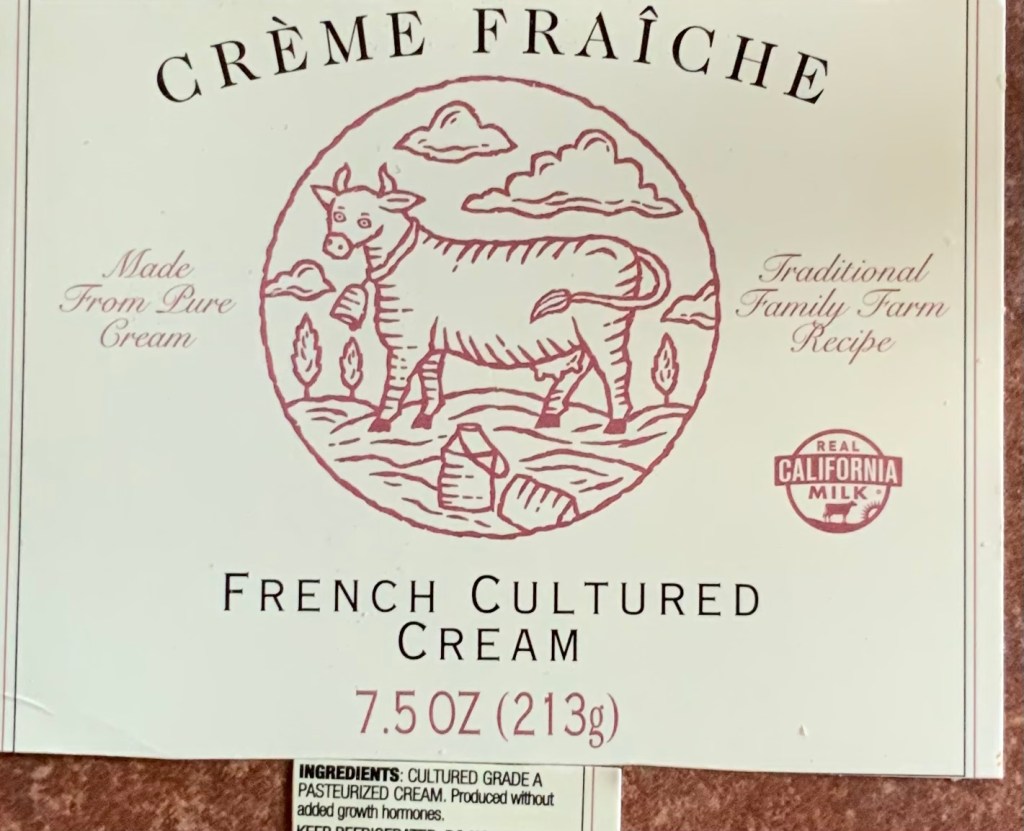
For several reasons, thefoodlessprocessed substitutes crème fraîche in recipes calling for sour cream. Sour cream is much less stable when heated, whereas crème fraîche will not curdle or break down even at a simmer. The unstable nature of sour cream is one of the reasons commercial brands often add stabilizers and thickeners. Another role of additives is to increase shelf life since sour cream is prone to separate. Even commercial sour cream that is traditional by virtue of using a culture rather than an enzyme for fermentation, may also add ingredients to stabilize, enhance the flavour and prolong its shelf life.
If you would like to make a less processed sour cream, see below: Homemade Sour Cream.
A good quality crème fraîche contains two ingredients: Cream and an active culture. Follow this link to thefoodlessprocessed recipe: Homemade Crème fraîche.
Cornstarch
Cornstarch is never used in thefoodlessprocessed recipes. The reasons for this are described below in the alternative we do use: Unmodified Potato Starch.
Duck
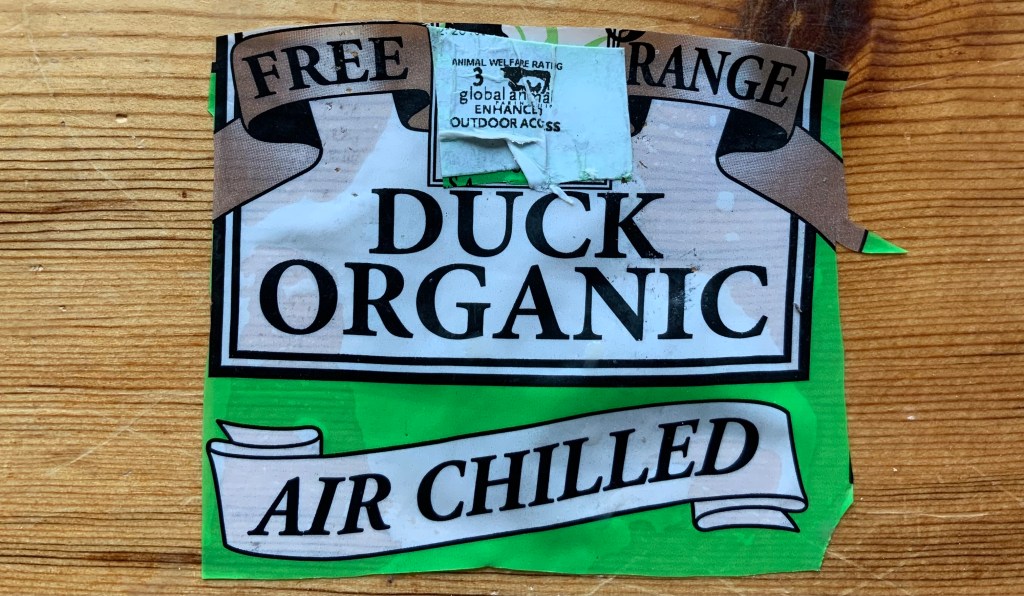
Whole Duck: The whole duck used in thefoodlessprocessed recipes is free-range, organic and air chilled. It has a Global Animal Welfare/Partnership (GAP) rating of 3 with enhanced outdoor access. These terms all have specific meanings. A free-range bird with a GAP 3 rating does not mean full pasture-raising. The bird has meaningful access to the outdoors, where there is shelter, shade, vegetation (not just bare dirt), and space to move around. Their indoor space must have good air quality and lighting and promote natural behaviors. Access to the outdoors cannot be a single small door that is access in name only. They are never confined in cages or crates.
If a duck is labeled “organic”, that means it is fed !00% USDA-certified organic feed. The feed ingredients are grown without synthetic pesticides and are vegetarian. Organic birds cannot be given antibiotics for disease prevention, and if treated, they lose their organic status.
Air chilled birds are cooled with cold air after they are butchered, as opposed to conventional supermarket ones which are cooled in a large tank of cold, chlorinated. water.
Fish
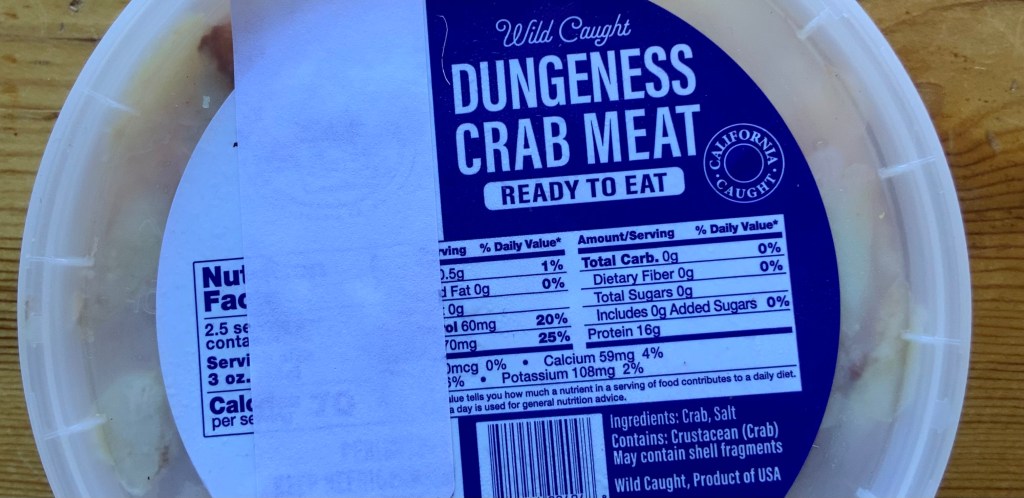
Crab: The shelled, cooked crabmeat in thefoodlessprocessed recipes contains two ingredients: Crab and Salt. There are no chemical preservatives, extracts or ‘natural’ flavourings added to it.
Pacific Dover Sole: The fish is wild-caught. The farmed fish’s diet of pelleted feeds, typically includes fish meal and fish oil of varying quality, plant oils and plant proteins, none of which are found in the fish’s natural marine diet. These ingredients negatively affect the fish’s physical composition. The result is a less healthy and less flavorful fish.

Swordfish: The fish is wild-caught. Most swordfish sold commercially has historically been wild. There is experimental and limited aquaculture research on swordfish, but large-scale commercial farming is extremely uncommon because swordfish are difficult to raise in captivity. In the U.S., if seafood is farm-raised, sellers are generally expected to disclose that. So unlabeled swordfish in a supermarket seafood case is very often wild harvest from places like the Atlantic or Pacific. Texture-wise, wild swordfish tends to have firmer muscle structure and lower fat than many farmed large fish species. That firmer texture is one reason it works well in long-simmered stews like Portuguese-style caldeirada without disintegrating.

Flour
Note: Most recipes that specify European Unenriched Soft Wheat White Flour may be made with Organic All-Purpose Unenriched Hard Wheat White Flour. Just as most recipes specifying Organic White All-Purpose Unenriched Hard Wheat White Flour may be made with European Unenriched Soft Wheat White Flour. The results will only be slightly different. The main key in choosing either flour for less processed baking with good results is to avoid enriched varieties. See the short written piece in thefoodlessprocessed section: Breadmaking.
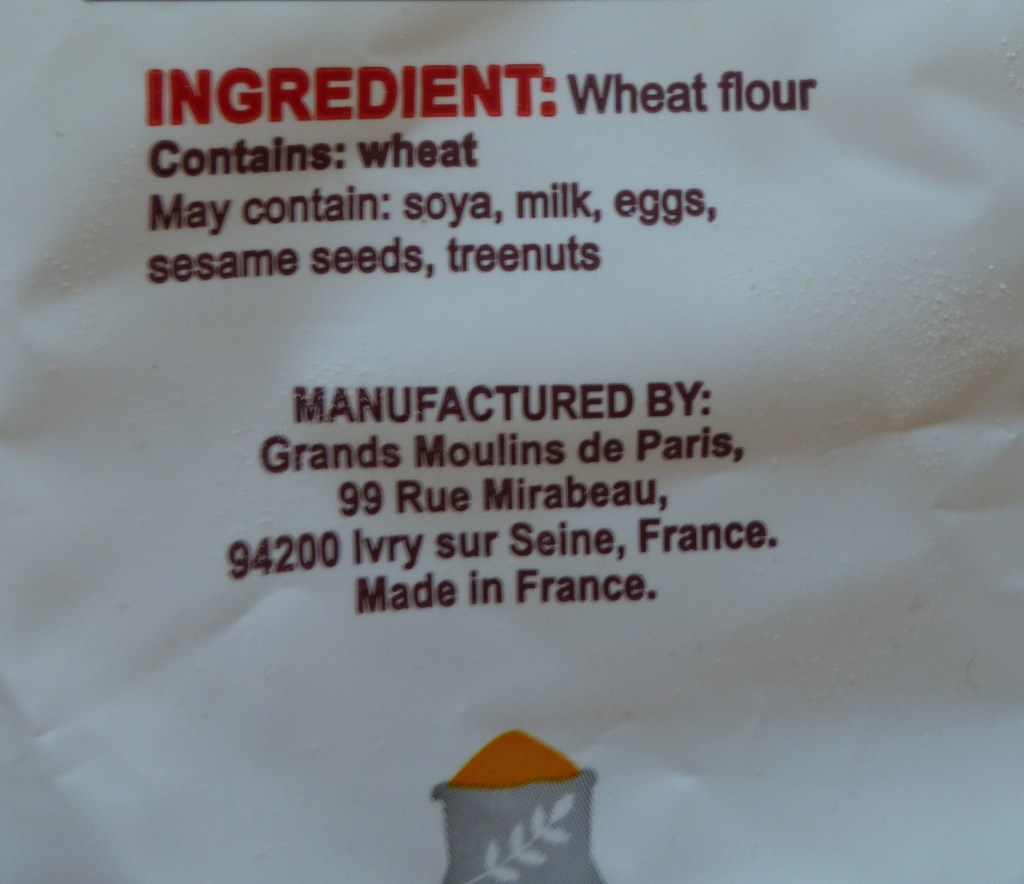
White Flour: European Unenriched Soft Wheat White Flour is sometimes recommended when a recipe calls for White Flour. For some recipes, it gets the best results. Recipes where this is the case list it as the preferred flour in the list of ingredients. It has only one ingredient: Wheat. Therefore, this flour is not enriched and contains no added nutrients and vitamins. We use French and Italian all-purpose flours, organic and non-organic, depending on what is available from our online source when we are restocking.
However, there are many times, which are noted in thefoodlessprocessed recipes, when hard wheat flour is preferable. There are organic, unenriched options for it as well. See the label below those for European White Flour. It contains one ingredient: Organic Hard Red Wheat. In the United States, unenriched white flour that is not organic may contain ascorbic acid (vitamin C, used as dough strengthener), enzymes, and oxidizing agents. Ascorbic acid may be included in organic unenriched white flour, but it will be listed on the label. Most oxidizing agents commonly used in conventional unenriched and enriched flours are not allowed in organic flour. U.S. organic flour may include enzymes, but they must appear on the label.
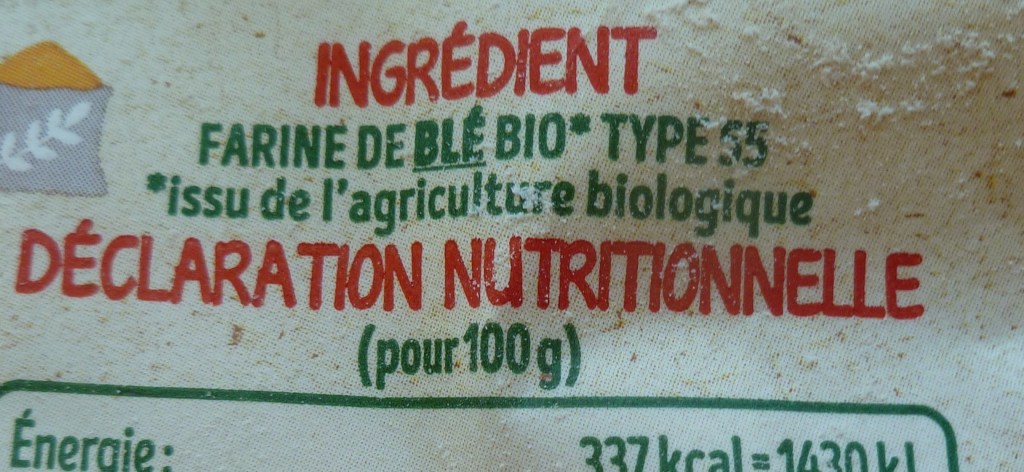

Whole Wheat Flour: thefoodlessprocessed uses an Organic Stoneground Whole Wheat Flour. It is not enriched and has only one ingredient: Wheat.

Rye Flour: Recipes use Organic Stoneground Dark Rye Flour. It is not enriched. It contains one ingredient: Organic Rye Grain.

Dried Fruit
Raisins: These recipes use organic raisins. They contain one ingredient: Organic Raisins.

Fresh Fruit
thefoodlessprocessed uses organic fruit when possible as part of our attempt to reduce pesticide residue in our food. An organic variety is especially desirable if the fruit’s peel is used–citrus zest being a prime example.
Tree-ripened fruit: Tree-ripened’ is not a legal or regulated term and sometimes is only a marketing claim. But not always–and when the description is genuine, the fruit promises to be of good quality. An example of fruit with this label and how to judge its authenticity is described in this post: Nectarine Pie.
Frozen Fruit
Mixed Berries: There are three ingredients in these frozen berries: Blackberries, Raspberries, and Bluberries.

Peaches: The brands of frozen peaches we have found all include the chemical food additives ascorbic acid and citric acid. thefoodlessprocessed uses fresh peaches instead. To read about how to ripen store-bought peaches at home, follow this link: Ripening Peaches at Home.
Raspberries: These berries are unsweetened and contain one ingredient: Raspberries.

Strawberries: The strawberries are unsweetened and contain only one ingredient: Strawberries.

Wild Boreal Blueberries: These berries grow naturally, not on farms. They are wild-harvested and free from chemical sprays. They are considered organic in practice.
Grains
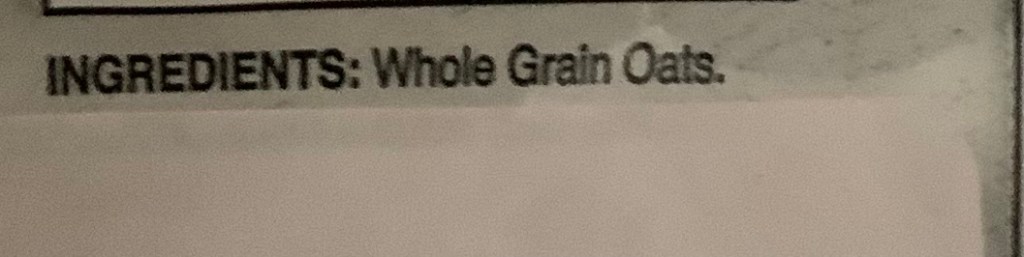
Steel Cut Oatmeal: One-Ingredient Irish Steel Cut Oatmeal is used.
Dried Herbs and Spices
All single dried herbs and spices have only the herb or spice as an ingredient. None contain an anti-caking agent, added salt or sugar in any form. Spice blends contain only the spices themselves.
Usually thefoodlessprocessed buys dried herbs and spices online. It is a convenient way to check the ingredient list and get exactly what and how much one wants.
Dried Crushed Red Pepper or Chilli Flakes: Crushed red pepper contains only one ingredient: Red Chilli.

Indian Organic Chilli Powder: Chilli powder may replace cayenne powder in recipes. It contains one ingredient: Organic Ground Chillies.

Cinnamon: This cinnamon is labeled “Organic Cinnamomum Verum”. The term “verum” on the label indicates that it is authentic Ceylon cinnamon. Labels that only say “cinnamon” are the cassia variety of the spice. Ceylon cinnamon will be labeled: “Ceylon”, “Cinnamomum verum” or “true cinnamon”. There is one ingredient: Cinnamon.

Coriander: The ground coriander in these recipes contains one ingredient: Coriander.

Herbes de Provence: Herbes de Provence is a blend of dried herbs. The type used in these recipes contains only the organic dried herbs.

Ginger: The type of ground ginger used in these recipes contains a single ingredient: Ginger.

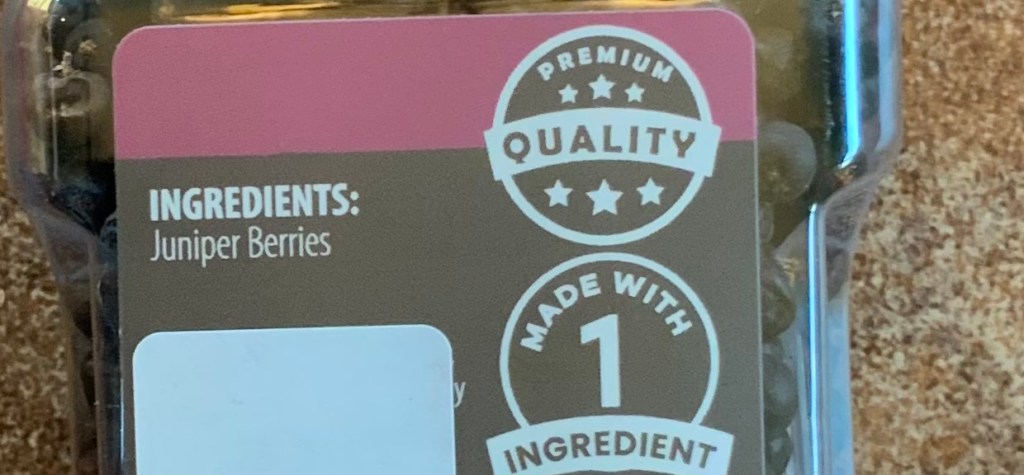
Juniper Berries: The berries contain one ingredient: Juniper Berries. Perhaps the fact that the label mentions this indicates that cooks are becoming aware that not all brands of spices are without additives.
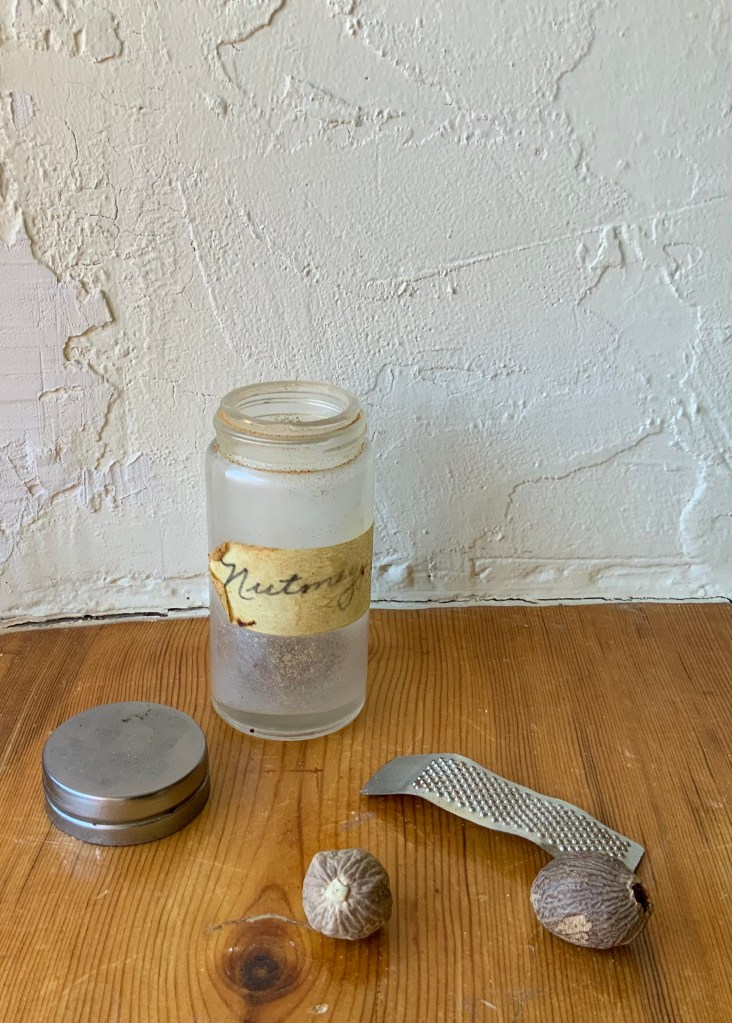
Nutmeg: Nutmeg is either single-ingredient organic powdered nutmeg. Or whole nutmeg freshly grated.

Oregano: Oregano in all recipes is cut-leaf, never powdered.

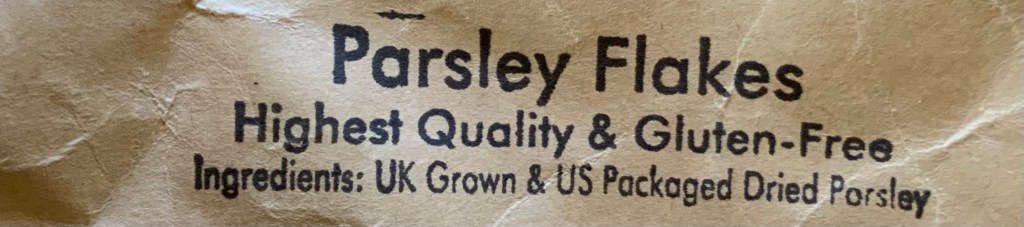
Parsley: When you have no fresh parsley, dried, cut-leaf parsley is a good substitute. A less processed one will be a single-ingredient variety, not powdered and it will have the fragrance of parsley. even though it is dried.
Paprika: Imported Hungarian Paprika is used in recipes that include sweet paprika. It contains one ingredient: Paprika. The label below is from a box of Szeged paprika. Szeged is one of the two more famous paprika-growing regions of Hungary.

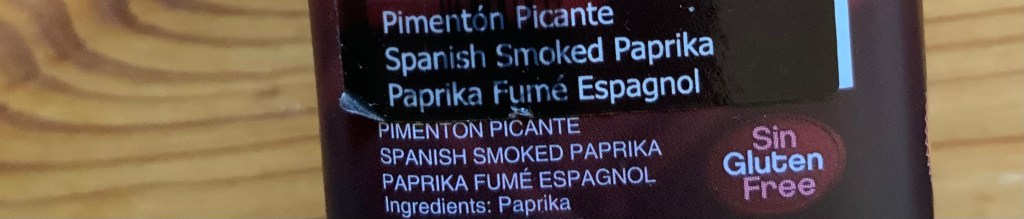
Imported Spanish Smoked Paprika is used in recipes calling for smoked paprika. It contains one ingredient: Paprika.
Quatre-épices: This is a traditional French spice blend of black pepper, nutmeg, cloves, and ginger. It may be included in either savoury or sweet dishes. thefoodlessprocessed recipe is here: Quatre-épices.
Fresh Herbs
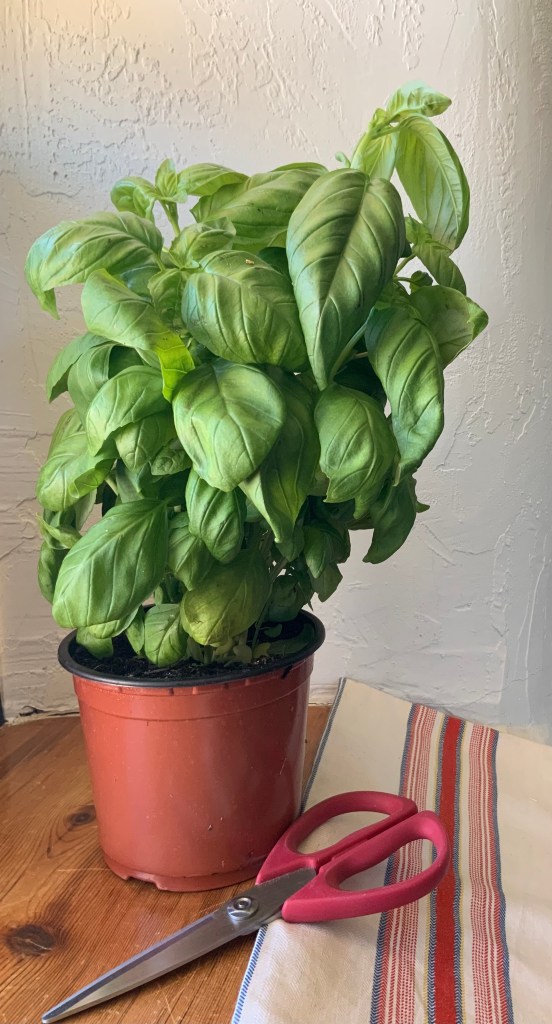
Fresh Basil: thefoodlessprocessed recipes use Genovese basil. It is available as a live potted plant. Bright-green, soft-leaf Genovese basil is the variety most often used for pesto and other Italian dishes. In the supermarket you may come across containers of basil that have large, darker leaves and thick stems. This, too, is often Genovese basil, but a commercial hybrid variety bred for sturdiness and longer shelf-life. It is less sensitive to refrigeration and is harvested later for a better yield. Its flavour is quite different from authentic Genovese basil.
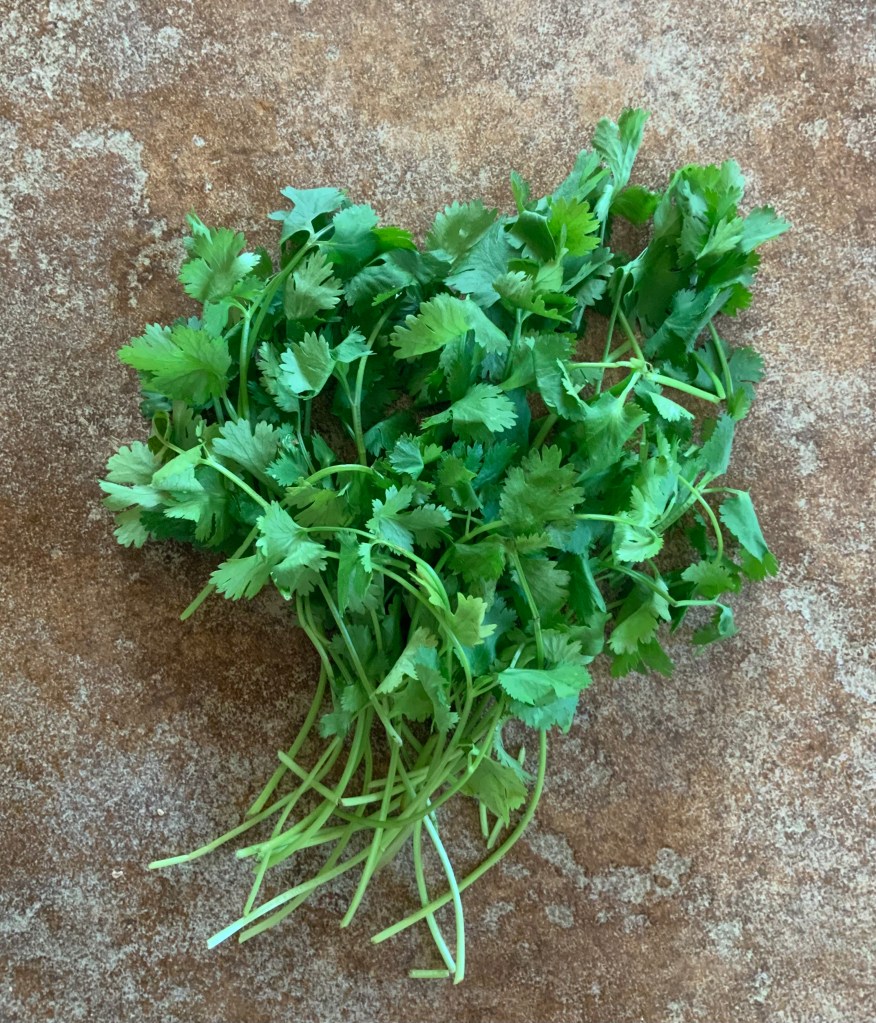
Cilantro/Fresh Coriander: Cilantro that has not been repeatedly sprayed with water in an attempt to keep it fresh is the best option for a fresh herb that will not spoil quickly. Farmers’ markets and Hispanic groceries are a good source for fresh, unsprayed bunches. Supermarket cilantro may be rolled up tightly in paper towels to dry, then, with fresh dry paper towels, stored in the refrigerator like any fresh cilantro: wrapped tightly in paper towels and stored in a polyethylene bag sealed with a twist.
To avoid chemical pesticide residue, organic cilantro is preferable.
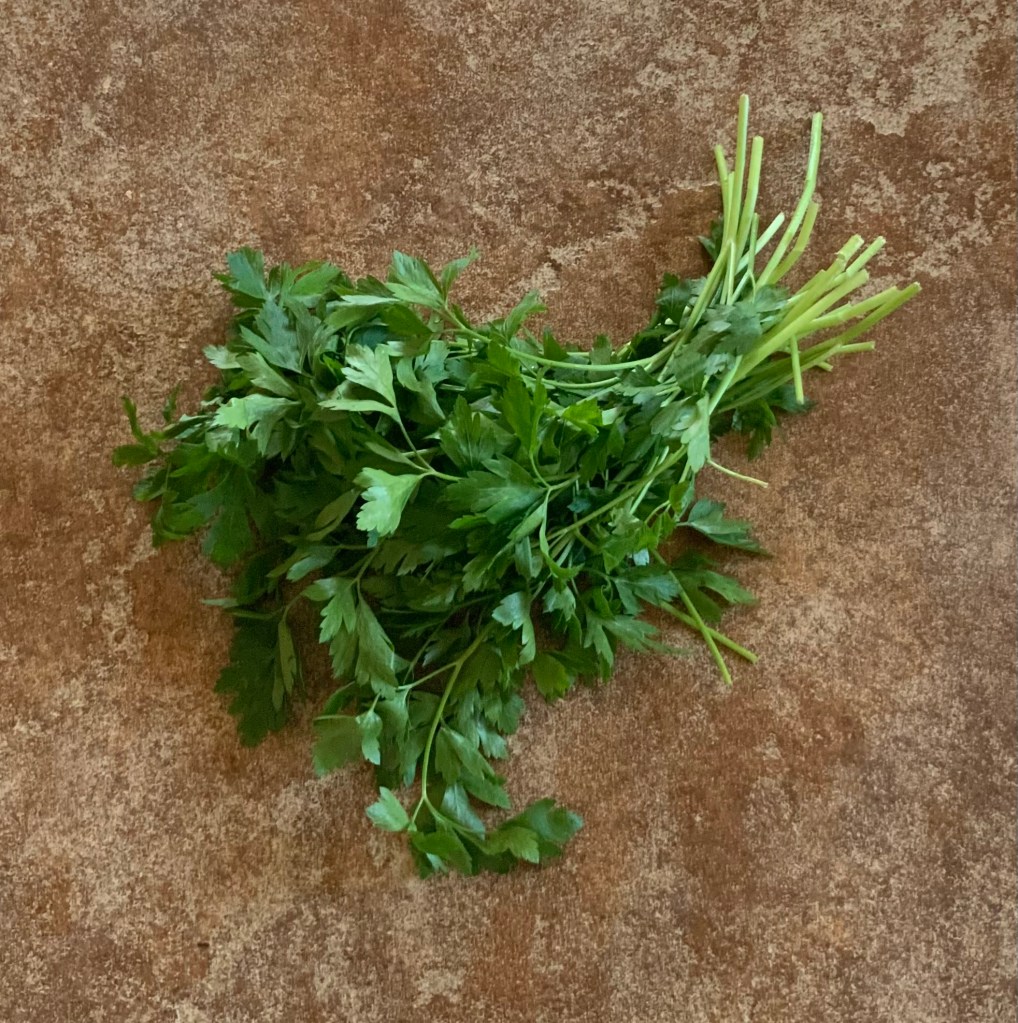
Fresh Parsley: thefoodlessprocessed prefers Italian flat-leaf parsley. It keeps well in the refrigerator wrapped tightly in paper towels and stored in a polyethylene bag sealed with a twist. The relative quality of the parsley available in the vegetable section determines whether or not we choose the organic one.
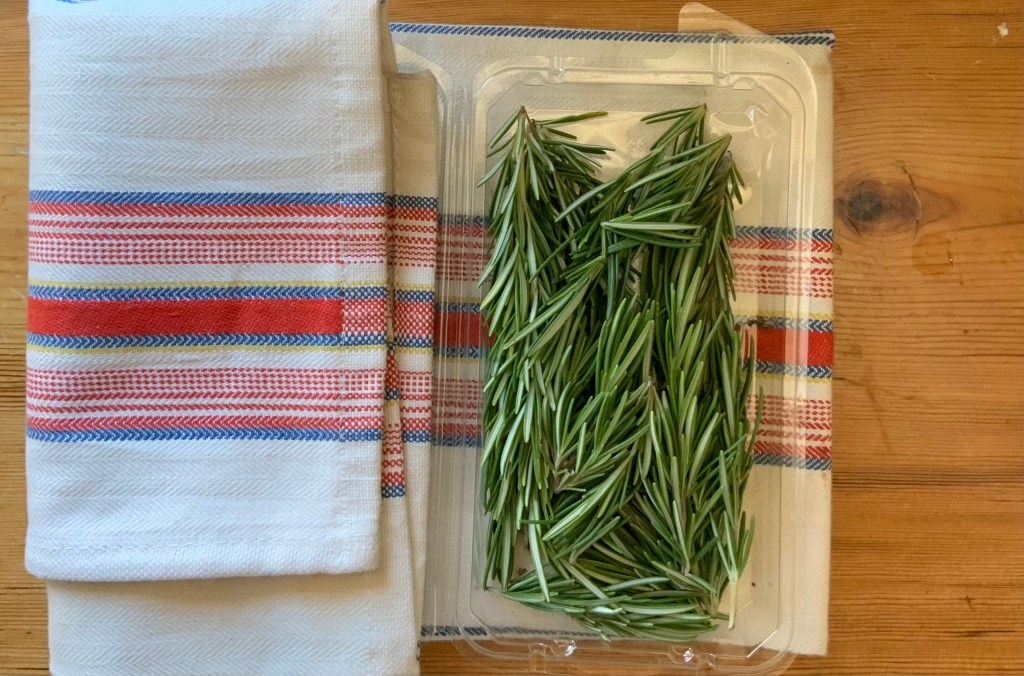
Fresh Rosemary: “Rosemary is more aromatic than flavoursome, so should be used like bay leaf–for the savour only; not to be eaten. Therefore, lay a bunch [down in whatever you are using it in], do not mince it up…It is the essential oil you want released, and not the flavour of the leaf.” (Dorothy Hartley from Food in England (1954).
The essential oil is mostly on the undersides of the leaves, not in the stem. If the oil can be released by tucking the rosemary down in whatever is cooked, there is no need to chop up the leaves and the sprig is removed before serving.
A packet of fresh rosemary freezes well. Use as many sprigs as you like and keep the rest frozen for later. Organic Rosemary is grown without synthetic chemical pesticides.
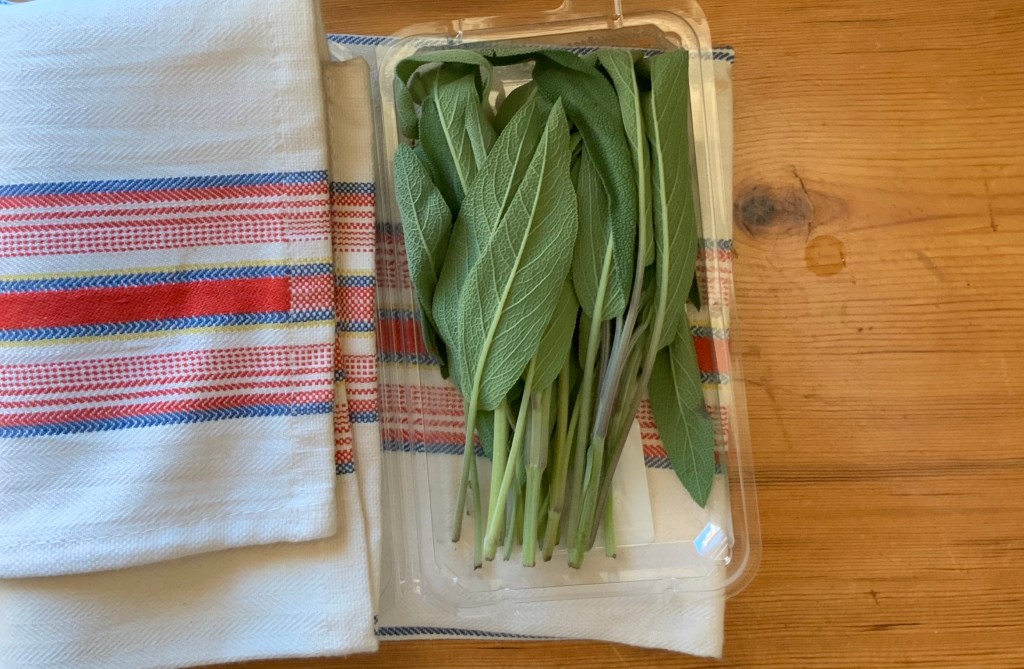
Fresh Sage: Fresh Sage has a deeper, more pronounced flavour than dried. If you do not possess an herb garden, it is still possible to have fresh sage anytime you want it. Not all fresh herbs freeze well, but sage does. When a packet of fresh leaves is stored in the freezer, the leaves become brittle and separate easily one from another. Remove the number you need and return the rest to the freezer. Their flavour in unimpaired and they may be used in the same manner as fresh ones. Organic Sage is preferable because it is grown without the use of synthetic chemical pesticides.
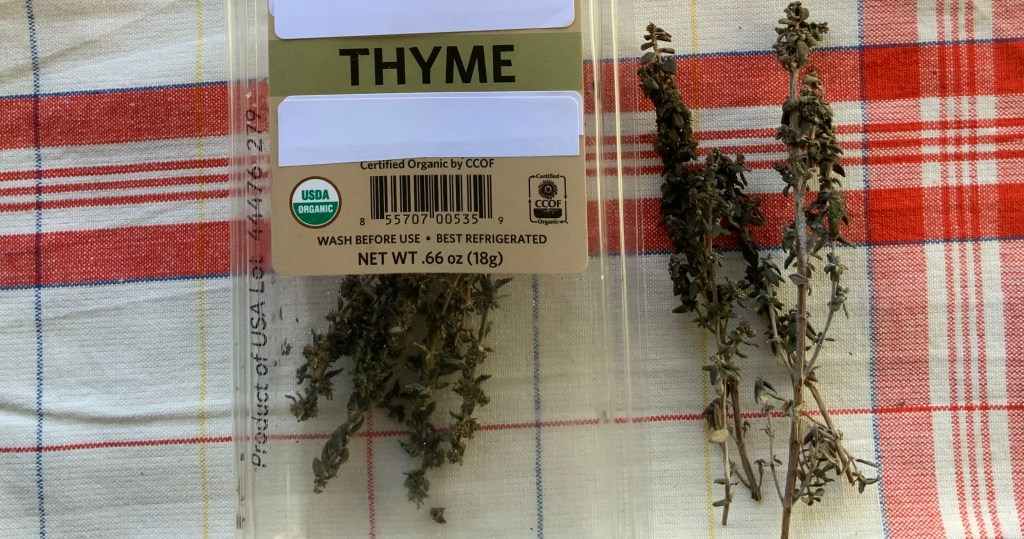
Fresh Thyme: A packet of fresh thyme may be frozen. Take out the number of branches you want and return the rest to the freezer. The frozen branches will be brittle and will separate without breaking. The leaves can be stripped off a branch easily. Organic Thyme is preferable since it is grown without the use of synthetic chemical pesticides.
Honey
Organic Unfiltered Honey: Honey in very small amounts is used for activating yeast in all dough recipes.. It is not used as a sweetener.
Labeling honey as ‘unfiltered’ is inaccurate. It actually means that the honey has not been fine-filtered. Pollen and other small natural particles are not removed. Officially, the term ‘unfiltered’ is considered ‘descriptive’ in the U. S. and its use relies on the honesty of the producer. Unfiltered honey naturally crystallizes, thickens and turns cloudy after purchase.
In the U S. the organic label requires third-party verification.


Juice
Apple Juice: The bottled apple juice used in these recipes is 100% apple juice not from concentrate. There are no added vitamins, synthetic or natural. Added natural vitamins have a natural source. However, “gentle” chemical treatment is common in the processes by which they are made. “Gentle” means the process has not transformed the vitamin into a synthetic. Acids, alcohol and enzymes may all be used to create a natural vitamin. Labeling does not require identifying the process, nor must the vitamin be identified on a label as synthetic or natural. We prefer vitamin sources found naturally in the less-processed foods of a traditional system.
It contains one ingredient: Unfiltered Juice from Certified Organic Apples.
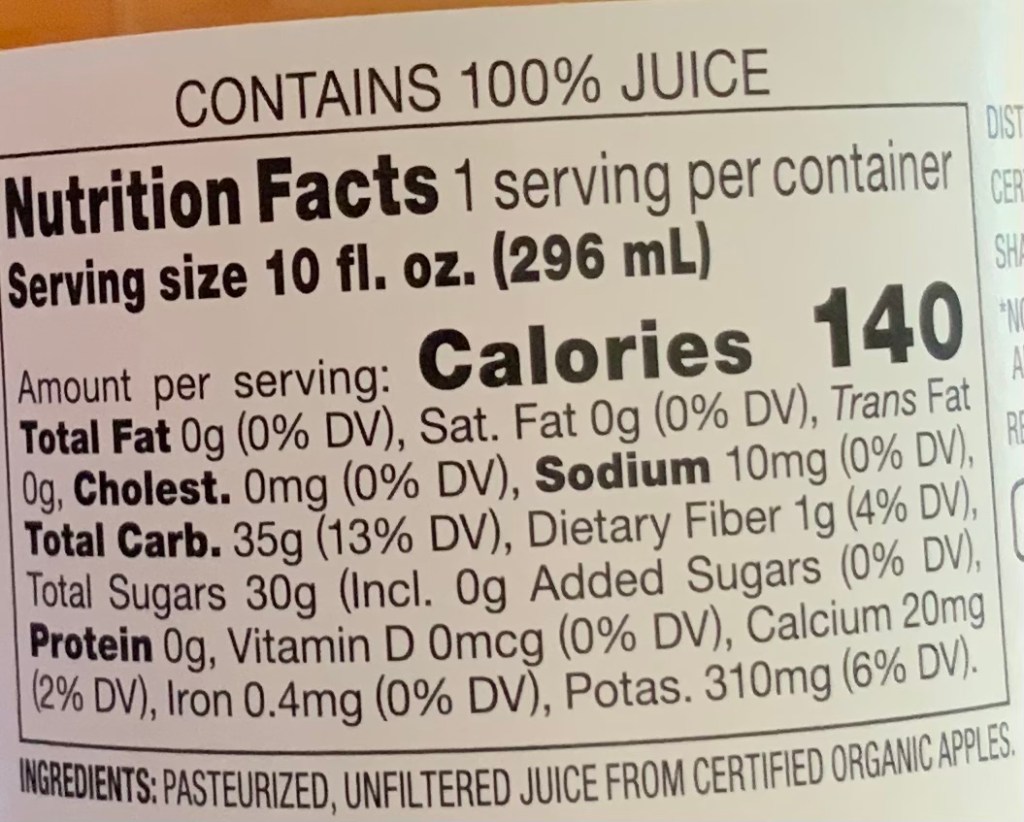
Fresh-pressed refrigerated apple juice is a second option for apple juice that contains only apples.

Both of these juices are used to make homemade apple juice concentrate. Below you may read about the difference between commercial frozen apple juice concentrate and the homemade variety.
The label pictured below illustrates why is it is necessary to look at the ingredient list if you are choosing a less-processed juice without additives:
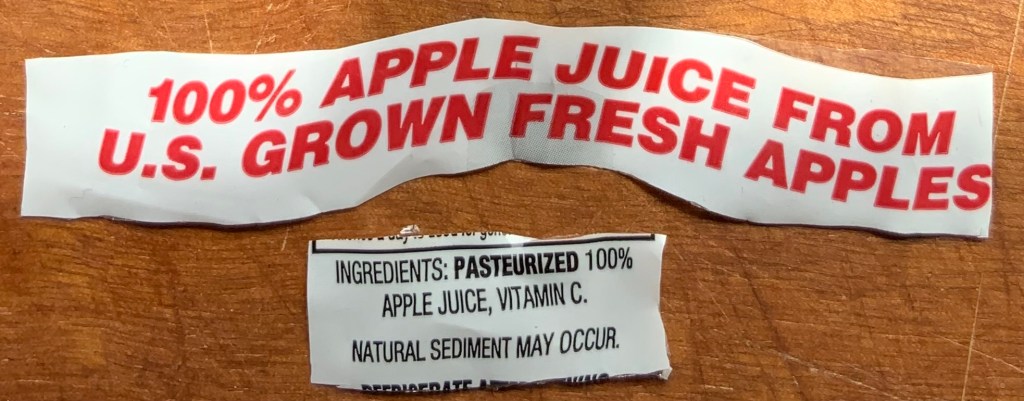
Apple Juice Concentrate: Frozen apple juice concentrate is an option in thefoodlessprocessed recipes. It is labeled: 100% Apple Juice. However, it contains malic acid and citric acid as well, and we have not found a frozen brand that does not include these additives. They function as preservatives, flavour enhancers, and to prevent browning. Another option is to make your own concentrate from bottled juice. See thefoodlessprocessed post: Apple Juice Concentrate. It is simple to do and the results are excellent. The concentration of sugar in homemade concentrate is significantly less than in commercial frozen ones. It is a subtler, gentler, yet effective sweetener.
Lamb
thefoodlessprocessed prefers New Zealand lamb. New Zealand lambs are not castrated nor raised longer to increase their size. They are completely grass-fed and pasture-raised.
American lamb is commonly from “wethers”, a term used to describe castrated male lambs. For a variety of reasons, this causes the lambs to grow fatter and bigger. They are raised longer than New Zealand lambs and are partially grain-fed to further enhance size and fat.
The certification programs that govern the humane treatment of all animals raised for meat are describe below in the Ingredients section: Meat. What constitutes meaningful labeling for the humane treatment of animals is outlined in that section as well.
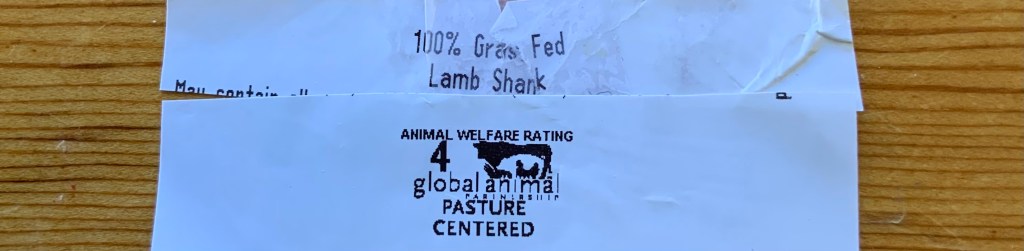
Bone-in Leg of Lamb: For a half leg of lamb, the sirloin (topside) end is the larger, leaner, more uniform portion and will roast more evenly and slice more cleanly than the shank end. The lamb is 100 % grass-fed and comes from New Zealand. It is GAP-certified, Step 4 (Pasture Centered). Programs providing meaningful certification of the humane treatment of animals raised for food are described here: Meat. Practices governing the raising of lambs for food in New Zealand and the United States are compared above in the general remarks on lamb.
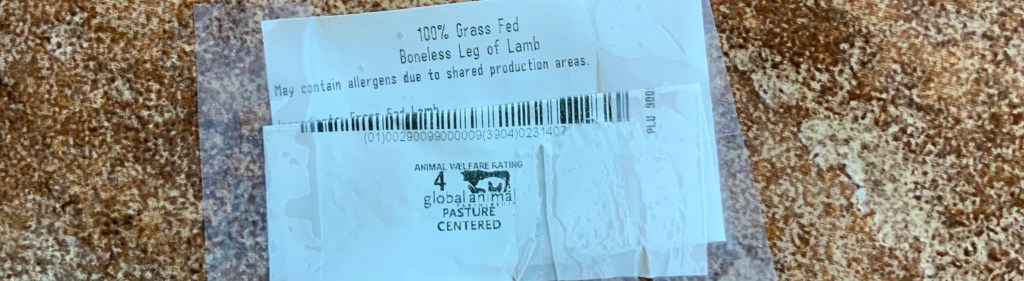
Boneless Leg of Lamb: The lamb is 100% grass- fed and comes from New Zealand. It is GAP-certified, Step 4 (Pasture-Centered). Programs providing meaningful certification of the humane treatment of animals raised for food are described here: Meat. Practices governing the raising of lambs for food in New Zealand and the United States are described above in the general remarks on lamb.
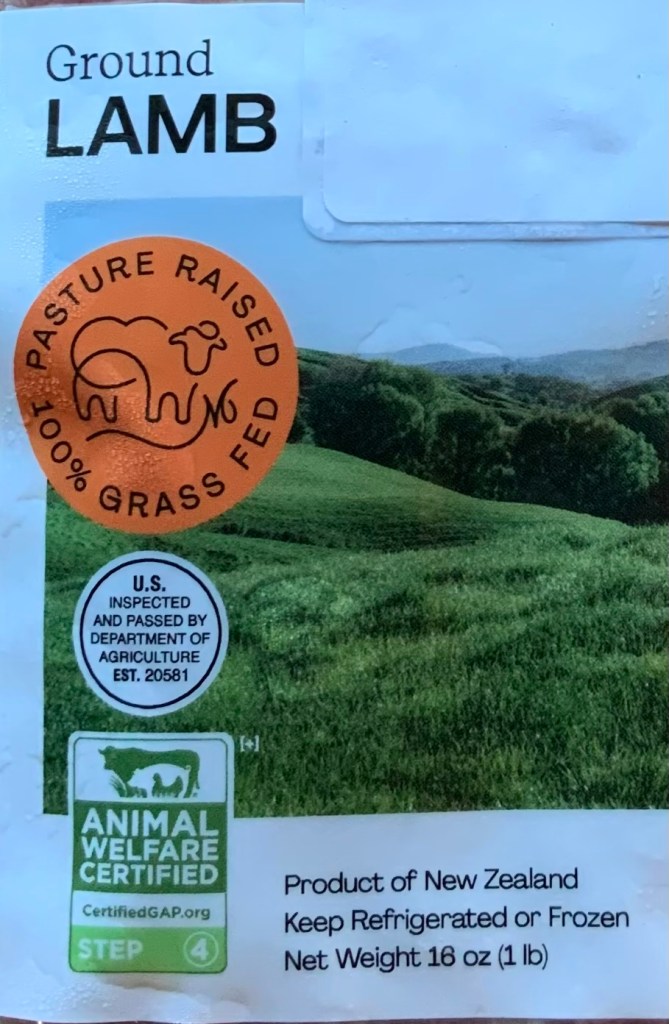
Ground Lamb: The New Zealand ground lamb in thefoodlessprocessed recipes is pasture-raised and 100% grass-fed. The example below is GAP-certified, Step 4. (Read about programs providing meaningful certification of the humane treatment of creatures raised for food below: Meat.
Lamb Shanks: The lamb shanks in these recipes are from New Zealand. They are 100% grass-fed. It is GAP-certified, Step 4 (Pasture-Centered). Programs providing meaningful certification of the humane treatment of animals raised for food are described here: Meat. Practices governing the raising of lambs for food in New Zealand and the United States are described above in the general remarks on lamb.
Leafy Greens
Butterhead Lettuce (aka butter lettuce, laitue beurre, Buttersalat, lattuga cappuccina, lechuga mantecosa): The lettuce is pesticide-free and greenhouse-grown. Some brands are grown in locations close to the stores they supply.

Marsala
Italian DOP Marsala: thefoodlessprocessed recipes use only Italian DOP Marsala. It is produced in the Marsala region of western Sicily under strict regulations. “DOP” (Denominazione di Origine Protetta) guarantees that the wine is made entirely within the designated area, using approved grape varieties and following traditional winemaking methods.
American Marsala-type wine may use a greater variety of grapes and producers have a wide latitude in fortification, aging, and blending processes. Unlike Italian DOP Marsala, the American wine comes with no legally binding guarantee that its flavors come from natural aging; they may be chemically or artificially produced.
Meat
There are less processed options specific to different varieties of meat. These are described in the various categories of meat here on the Ingredients Page. Common to all are the quality of the humane practices governing the raising and butchering of creatures raised for meat .
Even without mandatory welfare labeling, the baseline legal standards for animal welfare are significantly stronger in the EU, Great Britain and Switzerland for their care and butchering. In the United States there is neither federal regulation for the humane treatment of animals raised for food, nor are there any labeling requirements. However, several independent certifying programs exist. Their certifications will appear on labels: Animal Welfare Approved (AWA), Certified Humane, Global Animal Partnership (GAP) and the Humane Farm Animal Care (HFAC). All these programs use independent auditors and do annual farm inspections.
AWA is run by A Greener World. One of its defining characteristics is that it requires animals be raised on pasture or range, not in confinement. The organization has a reputation for upholding strict standards.
The HFAC is an international, nonprofit organisation based in the U.S. Their standards require that animals have the freedom to behave and live naturally. Workers handling the animals are trained in humane care. There are routine inspections of the farms participating in their program and farms must document the health, feeding, and environmental conditions of their animals.
The Global Animal Partnership (GAP), uses a 4-tier ranking system for certification. The highest welfare level is 4 to 5-plus. Level 1 does not include: Outdoor access or pasture grazing; freedom to roam beyond basic indoor space; assurance of organic or antibiotic-free feed; what is known as “high-level behavioral enrichment” that is more common is Steps 3 to 5-plus. “High-level behavioral enrichment” refers to practices that are intended to go beyond keeping the animals physically healthy, to address their overall well-being and natural behavior.
Two other third- party verifications are those of the American Grassfed Association (AGA) and the Audubon Society. The AGA certification focuses strongly on diet. The Audubon program (also known as Audubon Certified Bird Friendly Land) describes its major concerns as: “habitat management, environmental sustainability, and animal welfare.” Its primary focus is the conservation of bird habitat and biodiversity on working lands, including ranches that raise animals for meat.
The Non-GMO Project third-party verification is strictly concerned with testing that a product is made “without genetically engineered organisms or ingredients derived from genetically engineered plants or animals”. The verification makes not guarantees about the nature of pesticides, herbicides, fertilizer use, or other environmental/agricultural practices. It does not assess humane animal welfare standards or butchering practices. To ensure that any of these other criteria are addressed, look for one of the other verifications described above.
Milk
All recipes use whole milk that is minimally processed. This means that the raw milk is not separated into all its various component parts and put back together. Either only the cream is separated out from the milk or the cream and milk are not separated and the raw milk is pasteurized very briefly at a high temperature. The latter is “cream top milk”. The cream and milk separate after bottling, the cream forming a layer on the top which may be spooned out for a separate use or shaken back into the milk. The sources for both types of whole milk are local so that the time between bottling and arriving on the grocery shelf is shorter than is the case with standard brands. It is bottled in glass. These types of milk remain fresh considerably longer than the common store brands.
With minimal processing, the milk retains much of its natural goodness. It includes no milk solids to enhance flavour or body. Vitamins are not added, either synthetic or natural.
Added natural vitamins have a natural source. However, “gentle” chemical treatment is common in the processes by which they are made. “Gentle” means the process has not transformed the vitamin into a synthetic. Acids, alcohol and enzymes may all be used to create a natural vitamin. Labeling does not require identifying the process, nor must the vitamin be identified on a label as synthetic or natural. We prefer vitamin sources found naturally in the less-processed foods of a traditional system.
There is a single ingredient in a less-processed milk: Whole Milk or Pasteurized Organic Milk.
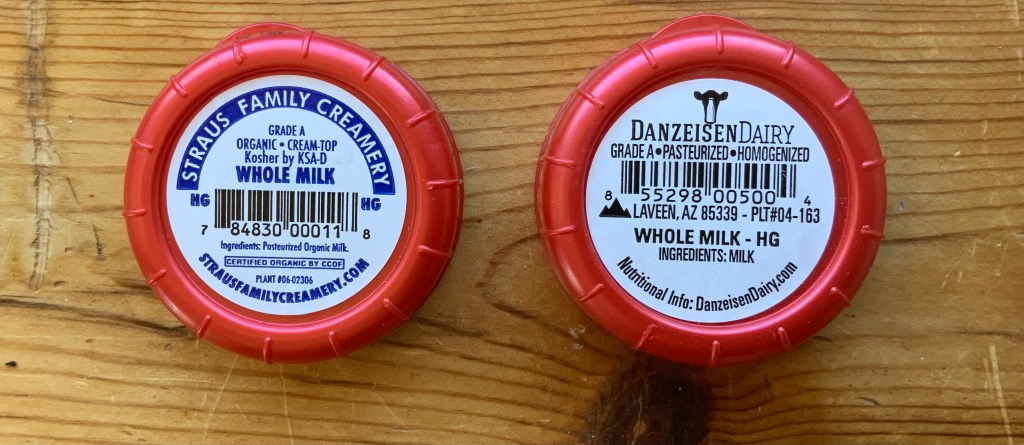
In the United States, whole milk can legally contain some non-whole milk. For example, processors may blend skim milk with higher-fat milk to bring it to a standardized minimum fat content. As long as the finished product meets the legal minimum standard for fat in whole milk, it can still be labeled “whole milk.” The term does not require that the milk come directly from the cow without any other additions

Mushrooms
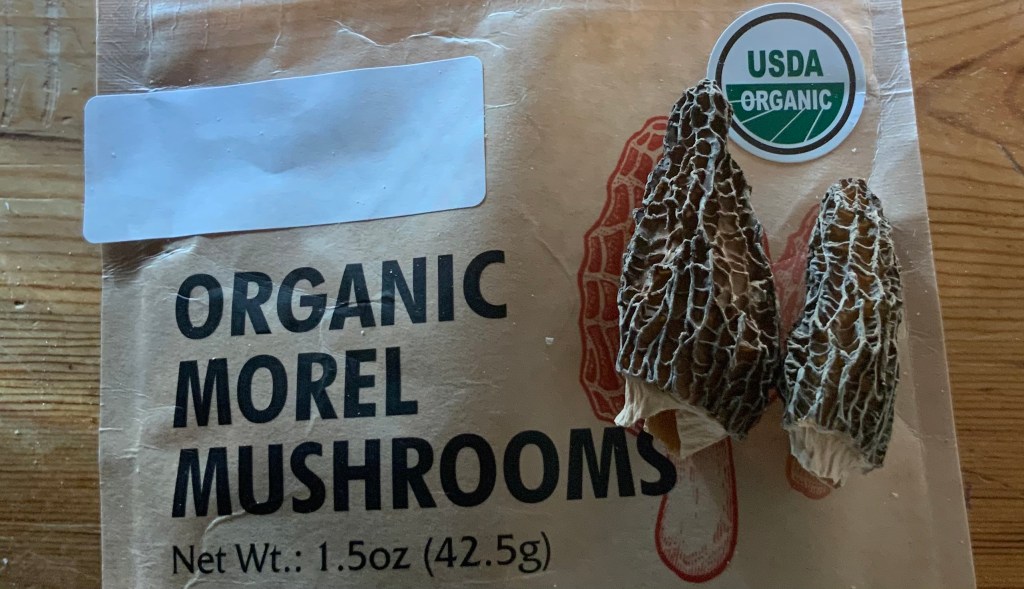
Morels: The morels in thefoodlessprocessed recipes are organic. They are cultivated without chemical or synthetic fertilizers and pesticides. They contain one ingredient: Organic Morel Mushrooms.
Mustard
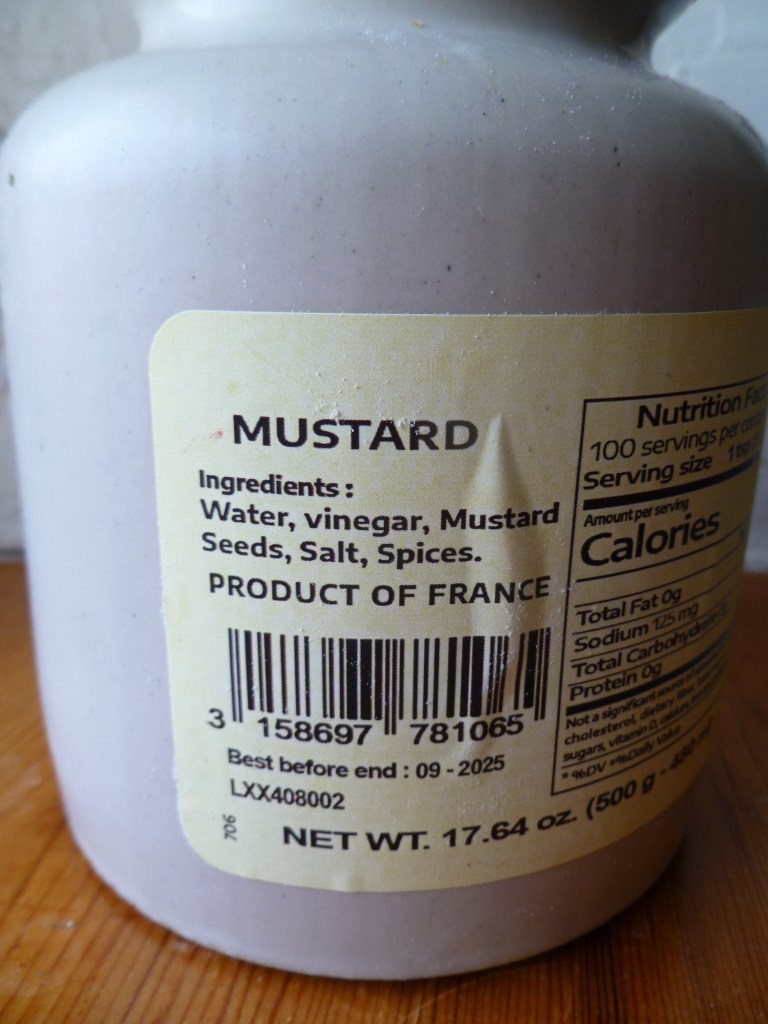
Whole Grain Mustard: The mustard in these recipes is a French imported whole grain mustard from Meaux. It contains no sugar, chemical additives or preservatives. Its ingredients are: Water, Vinegar, Mustard Seeds, Salt, and Spices.
Nuts
Peanuts: The peanuts used in these recipes are raw and unskinned. They contain one ingredient: Raw Peanuts.

Olive Oil
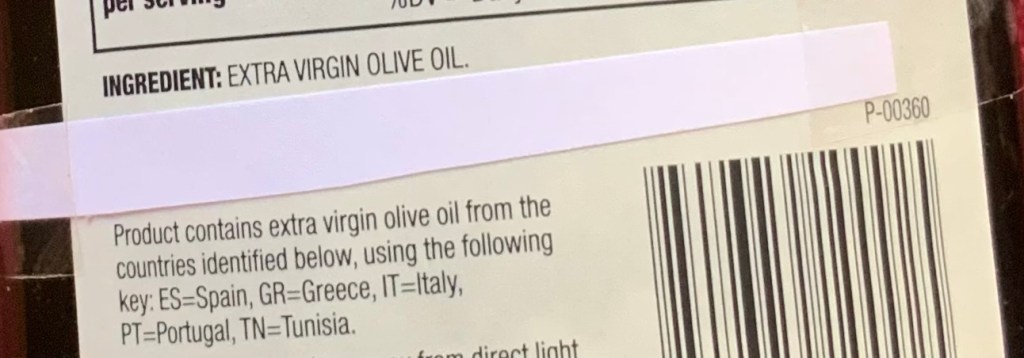
All recipes using oil use Extra-Virgin Olive Oil–usually a Mediterranean Blend that we buy in 2 litre sized bottles.
Vegetable Oils are never used for any purpose, including deep frying. They were not a part of traditional European and American food systems.
thefoodlessprocessed reuses Olive Oil for deep frying repeatedly until it darkens in color. As long as the oil is golden coloured and smells fresh, it may be reused. To store olive oil for reuse, pour it through a fine mesh sieve into a large bowl and transfer the sieved oil to a storage container. It does not require refrigeration.
It is preferable to store all Olive Oil, fresh or used, away from heat and sunlight.
Pasta
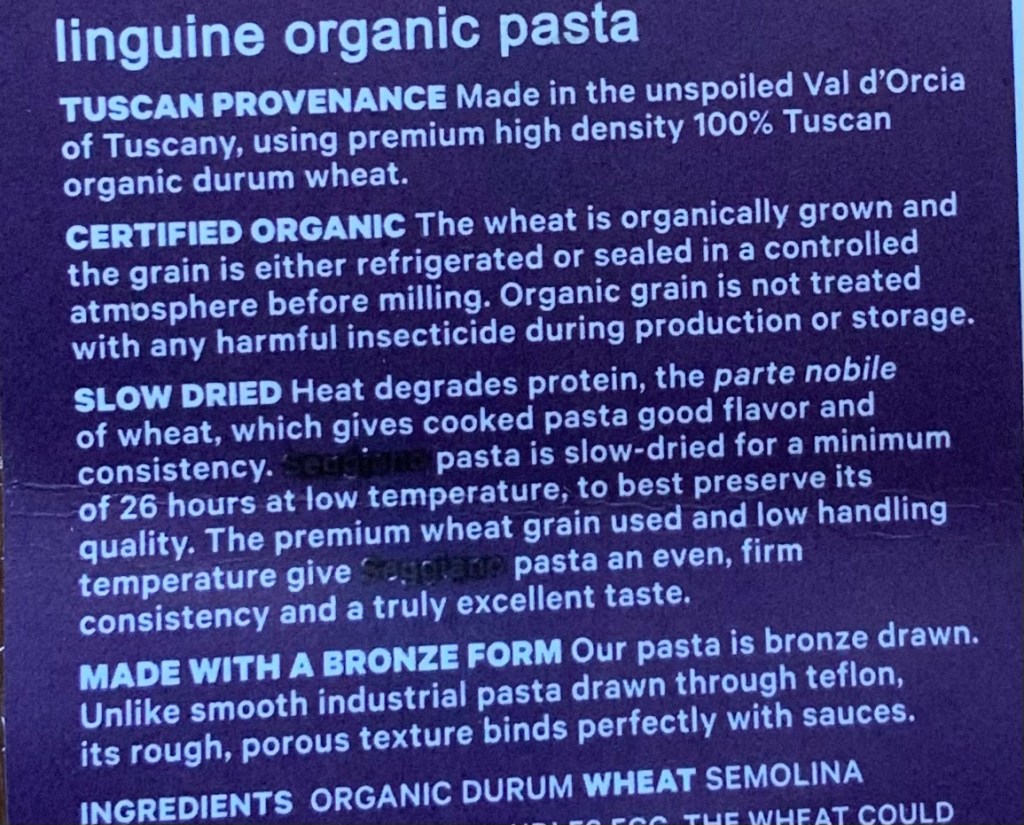
Dried Pasta: There are imported Italian dried, packaged pastas that are made with unenriched organic hard wheat flour. Some contain a single ingredient: Durum Wheat Semolina.
Other pastas contain two ingredients: Durum Wheat Semolina and Eggs.

Pork
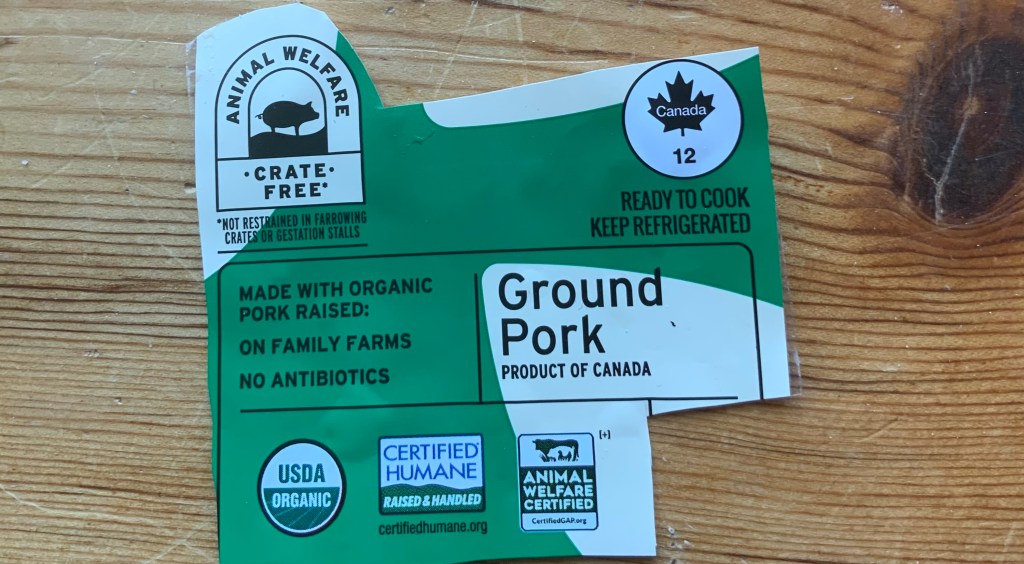
Ground Pork: The ground pork is organic and Certified Human, an independent certification program. The AWA certification is a program run by A Greener World. One of the program’s defining characteristics is that it requires animals be raised on pasture or range, not in confinement. You may read about some of the different certification programs here: Meat.
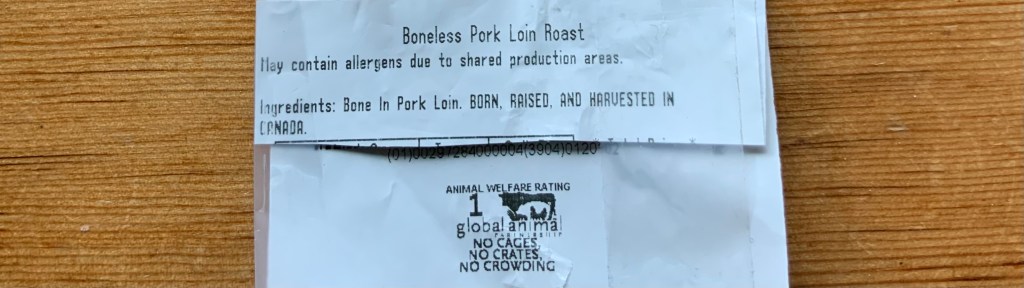
Pork Loin: The pork loin in these recipes is GAP certified, Level 1. GAP Level 1 is the first and lowest rung of certification above conventional commercial standards. Read about the various independent certification programs here: Meat.
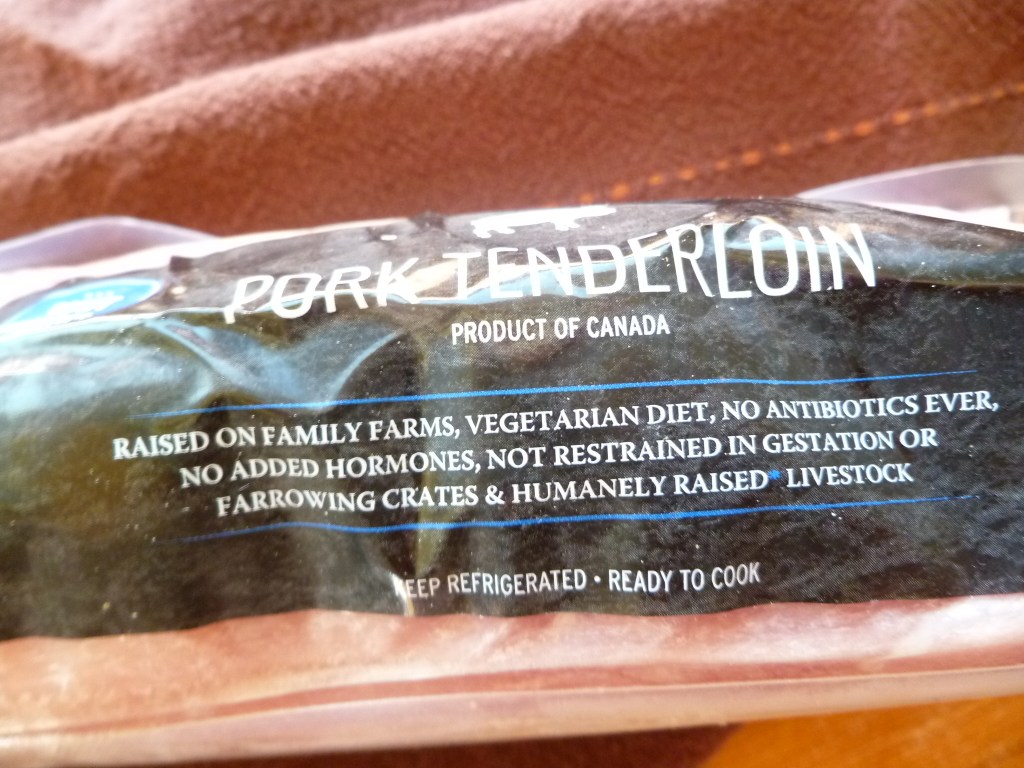
Pork Tenderloin: thefoodlessprocessed prefers to use tenderloins from companies that work with small producers. Tenderloins of around one pound or a little more are preferable. A good tenderloin is firm. If it is soft or mushy to the touch, it is not fresh. The best quality tenderloins are rosy coloured. There should be very little fat. Pork tenderloins sold in marinades contain preservatives and chemicals.
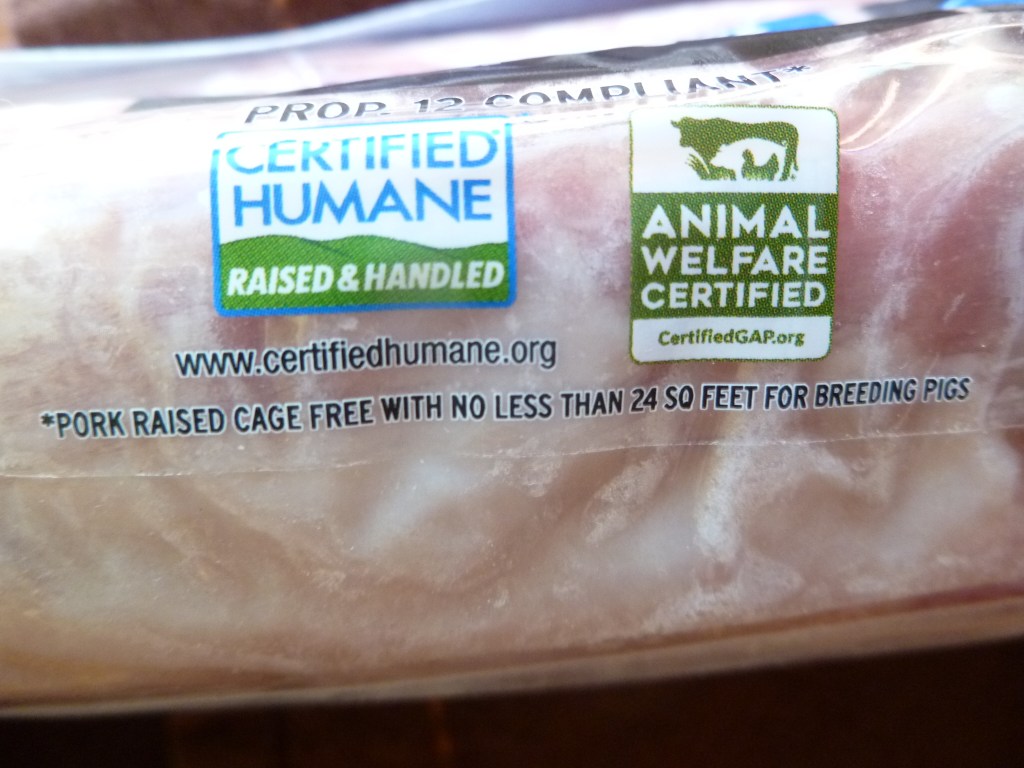
The label below bears the AWA certification, a program run by A Greener World. One of the program’s defining characteristics is that it requires animals be raised on pasture or range, not in confinement. The organization has a reputation for upholding strict standards. Read about the various third-party certification programs here: Meat.
Port
European Port is protected under an EU PDO (Protected Designation of Origin). It is among the most tightly regulated wines in Europe. By law, only wine produced in the Douro Valley in northern Portugal—and made according to the prescribed method—may be called Port (or Porto). U.S. wine law allows considerably more flexibility in how its port-style wine is made and labeled than EU Port law. European Port comes with a higher assurance of quality.

Potato Starch
When a recipe uses cornstarch for any purpose, we substitute unmodified potato starch. The reason for this has to do with how cornstarch is labeled in the United States. Technically, for labeling purposes, modified cornstarch is one that has been chemically or physically treated to change its properties. It is what is known as a “hidden ingredient”, a popular term meaning it is widely used in processed and packaged foods, but listed in ways that are not always obvious, and used in foods without consumers fully realizing it is a chemically treated additive.
However, although technically not considered modified, most cornstarch brands on U.S. grocery shelves have been chemically treated for “more consistent performance”–usually with acids or enzymes. These treatments are defined as part of the “normal preparation of cornstarch for home and kitchen use”. Only if the starch is chemically or physically altered beyond “standard cooking application” must it be labeled as modified. So a chemically treated and modified cornstarch may be sold as “cornstarch” in the United States.
EU labeling is clearer for consumers. It does not allow a modified starch that is “common in cooking” to be called simply “cornstarch”.
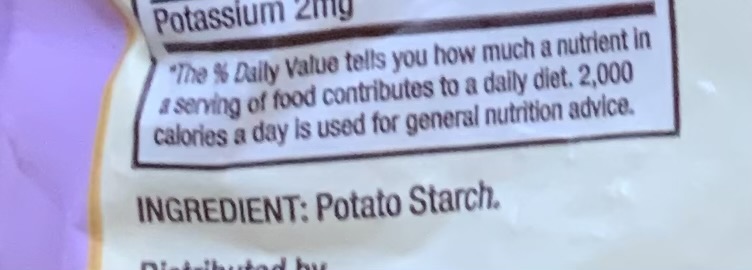
The same labeling principles apply to potato starch. The brand used in these recipes states on the label that it is unmodified. We contacted the company and asked if their potato starch was treated in any way not technically considered modified and received this reply: “I can confirm that our potato starch is a native starch, meaning it has not been chemically modified in any way. We do not use chemical treatments on any of our products.”

Prosciutto
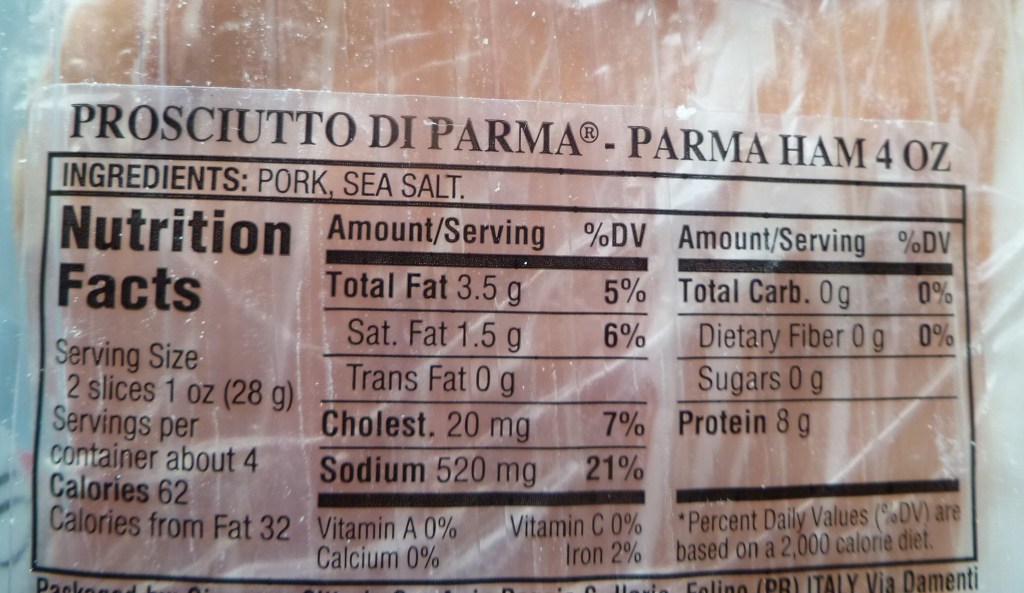
thefoodlessprocessed uses only imported Italian Prosciutto di Parma PDO (or Sugar-Free Bacon for a more pronounced flavour) in recipes using Ham. Other varieties of Ham often contain one or more of the following: some form of sugar, chemical preservatives, additives, flavourings and colourings. After examining many labels in the hope of discovering other reliably less processed hams, we have abandoned the search and opt for Italian Prosciutto PDO . Italian Prosciutto is made according to a carefully regulated process developed over centuries and contains two ingredients: Pork and Sea Salt. Tradition is protected by meaningful government regulation. The PDO designation is a legally enforced one: All stages of production must occur within the designated geographical region, not just final processing. and only codified traditional techniques are permissible.
Pumpkin
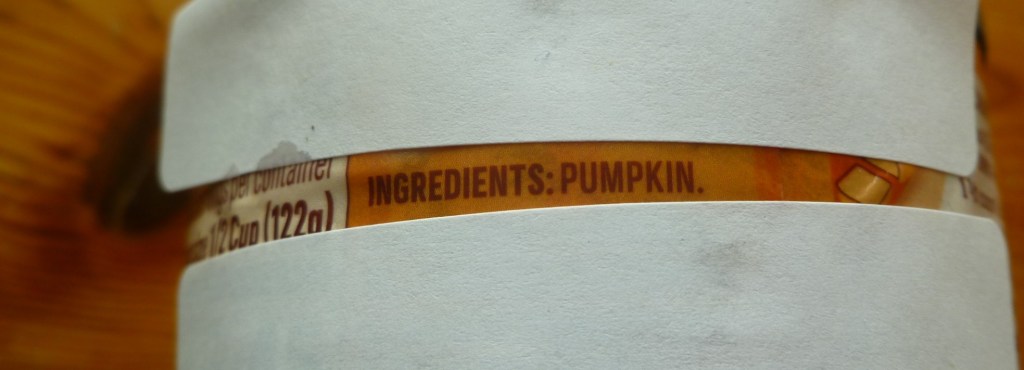
Sometimes we use organic pumpkin and sometimes not. Either way, the canned pumpkin used in thefoodlessprocessed recipes contains one ingredient: Pumpkin.

Salt
Sea Salt: For baking, Sea Salt is recommended. Iodized Salt contains chemical additives which can affect both taste and texture.
For all other cooking and seasoning thefoodlessprocessed also uses Sea Salt. Iodized salt contains sugar in the form of dextrose. Its function is to prevent the potassium iodide added to the salt from breaking down into iodine. But the traditional cuisines on which our cooking is based provide an ample wide range of natural sources for iodine.
We do not season with salt as we cook. Everyone at the table adds salt to suit their taste.

Sherry
Sherry (aka Jerez orXérès): thefoodlessprocessed recipes recommends imported Spanish sherry. In Europe, sherry is a Protected Designation of Origin (PDO) wine — which means its name, production, and labelling are legally controlled. Sherry must be made in a specific geographical location and according to traditional methods.
Artificial flavors or aromatics are not permitted in PDO Sherry, nor are stabilizers and chemical additives that are allowed in U.S. sherry.


Sour Cream
See the discussion of crème fraîche as a substitute for sour cream on this page: Crème Fraîche. There you will also find information on the ultra-processed versions of commercial sour cream.
Homemade Sour Cream: The 1964 edition of The Joy of Cooking by Irma Rombauer and Marion Becker includes a recipe for making sour cream in case, as they say, “your dairy does not carry it”. This version requires cream with a butterfat content of at least 20% , so in terms of the different creams available today, you would use heavy cream. They suggest buttermilk as a starter. However, if you wish to make a less processed sour cream, buying a sour cream starter culture is preferable. Commercial buttermilk in the U.S. is a reconstituted product. It may contain milk that is modified with milk solids or cream, salt, stabilizers such as carrageenan, and added vitamins if the nutritional value of the milk has suffered under processing.
The term ‘all natural’, if it appears on a carton of sour cream is basically descriptive and has no binding meaning. Because there’s no strict legal definition, “all natural” is often used as a marketing term.
Stock
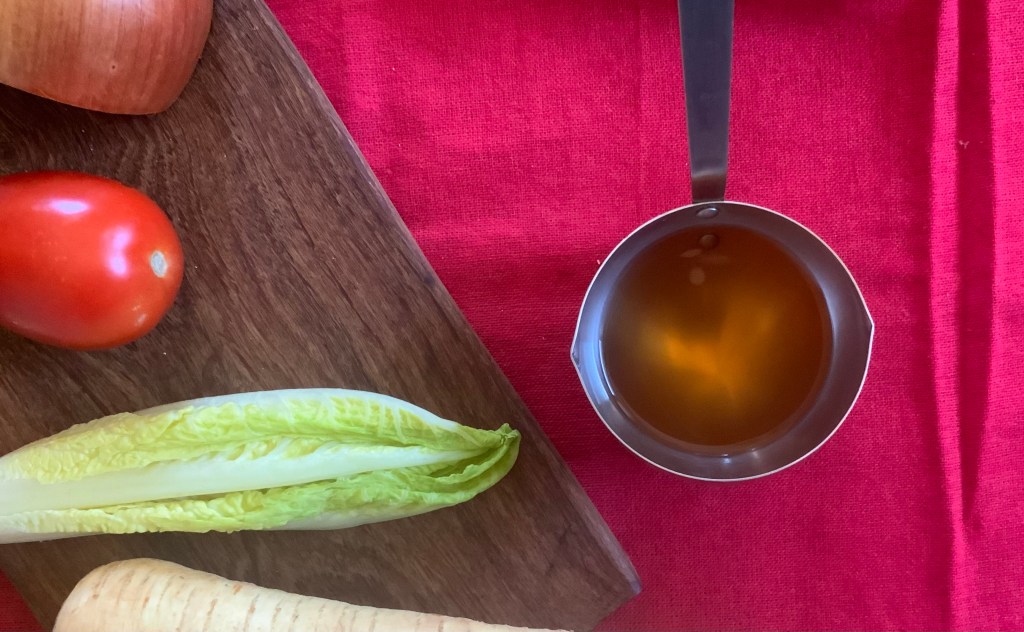
Homemade Vegetable or Meat Stock is used in all recipes, rather than bouillion cubes, canned or boxed stock or a commercial demi-glace. Follow this link to thefoodlessprocessed recipe: Vegetable Stock.
Tomatoes
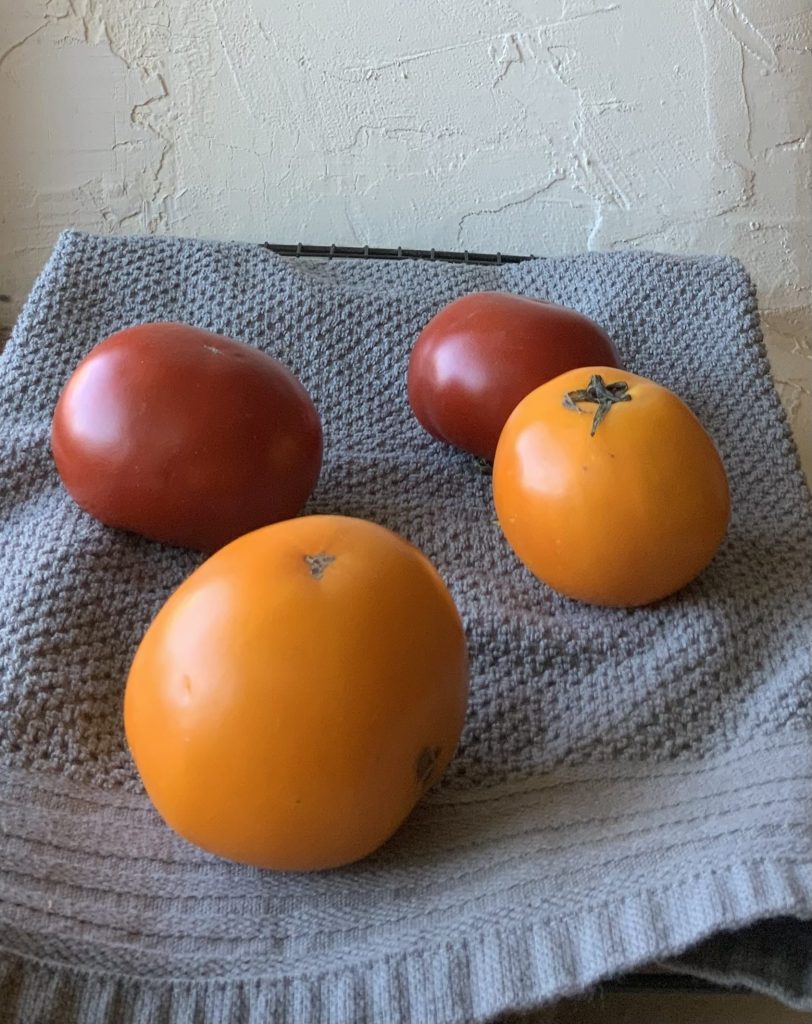
Fresh Tomatoes: Whenever a foodlessprocessed recipe calls for cooking fresh tomatoes, we generally use organic Romas, Heirlooms or dry-farmed tomatoes. Organic vine-ripened tomatoes are another option. They tend to be less flavorful, but if the quality of the other varieties on a given day is not very good, the vine-ripened ones are a fine alternative.
For eating fresh, organic Heirlooms and dry-farmed tomatoes are both excellent.
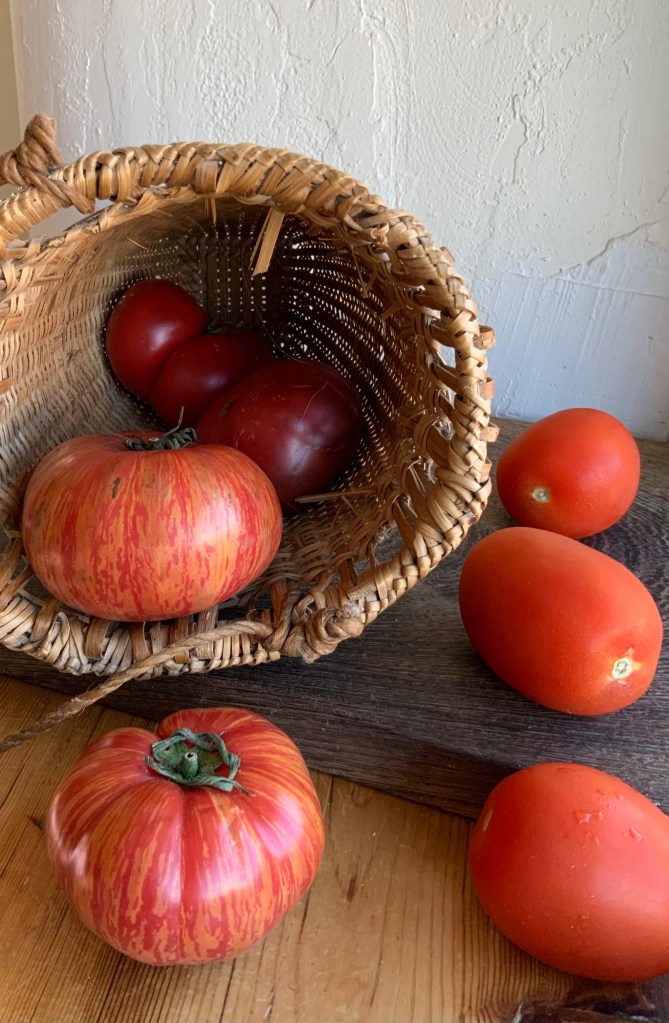
Dry-farmed tomatoes are grown mostly with rainfall rather than irrigation. Like Heirlooms, they are very flavorful. They keep longer at room temperature than Heirlooms.
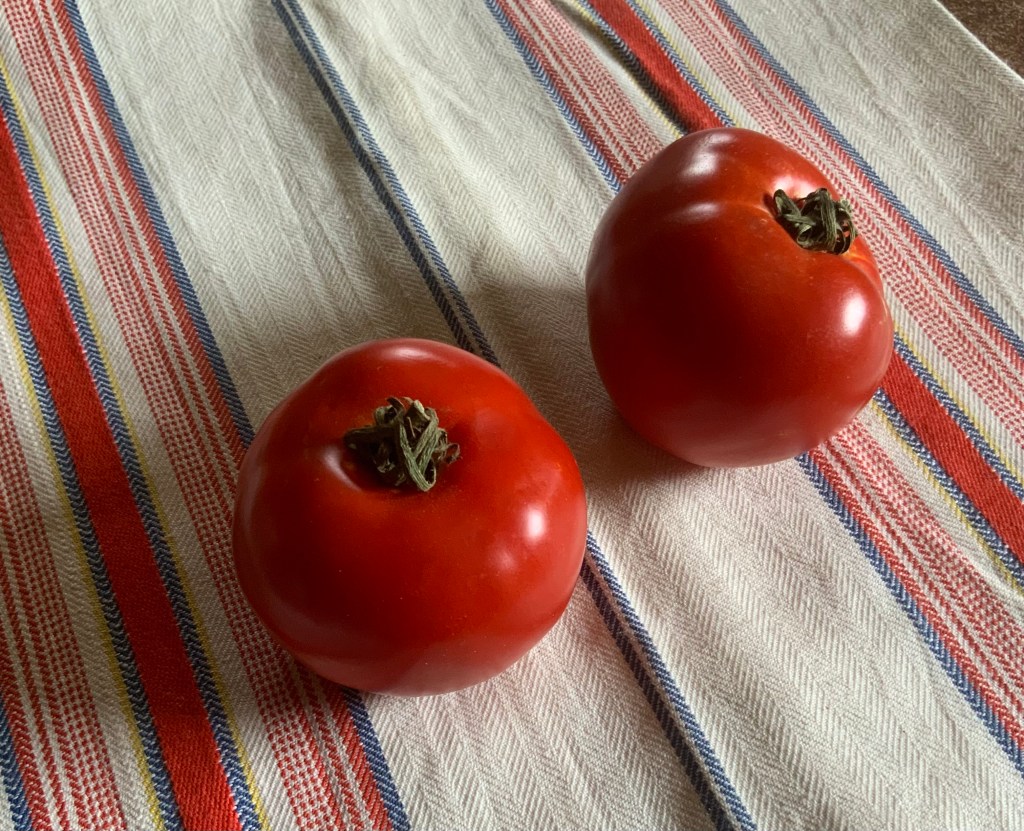
The flavour of a fresh tomato is at its best when it has not been refrigerated. Refrigeration changes its texture and diminishes its taste. We keep tomatoes at room temperature as long as possible.
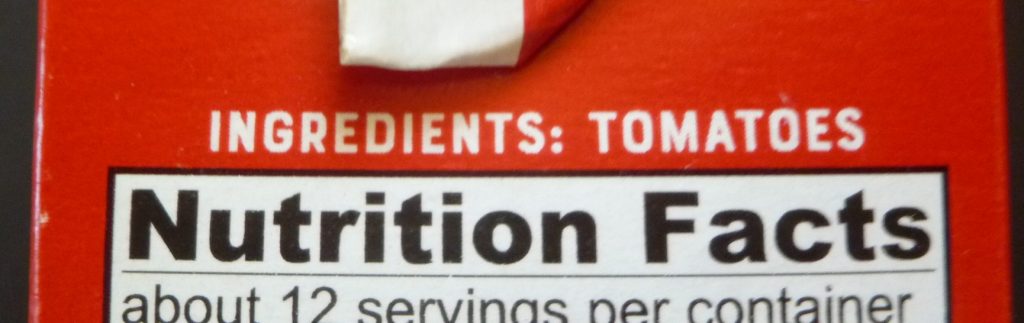
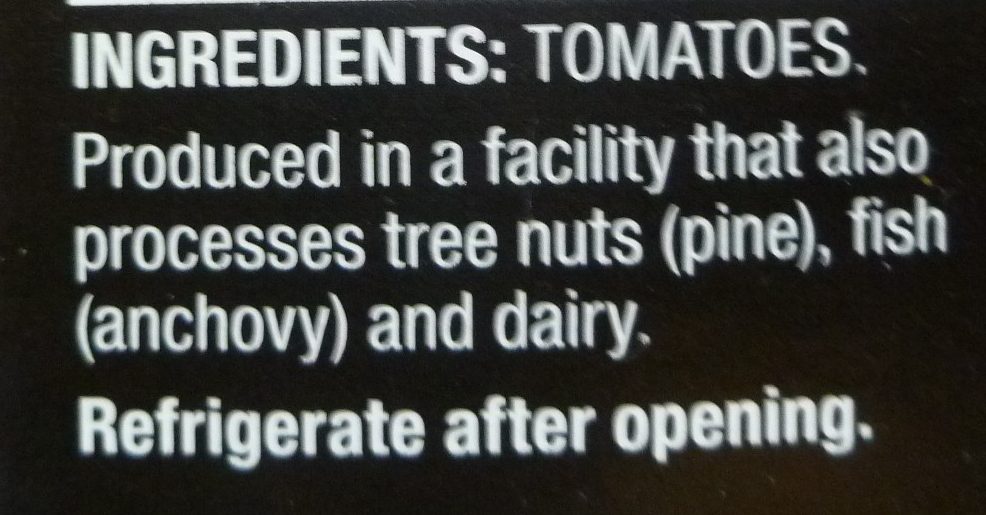
Preserved Tomatoes: thefoodlessprocessed uses imported Italian boxed tomatoes in recipes made with preserved tomatoes. The tomatoes contain one-ingredient: Tomatoes. The box size is 26.46 oz (about 750g or 3 cups). The tomatoes come in several varieties: Chopped, Crushed, and Strained. Recipes will indicate which variety has been used.
Tomato Paste
All recipes use imported Italian tomato paste that comes in a tube or glass jar and contains only 1 ingredient: Tomatoes.
Vanilla
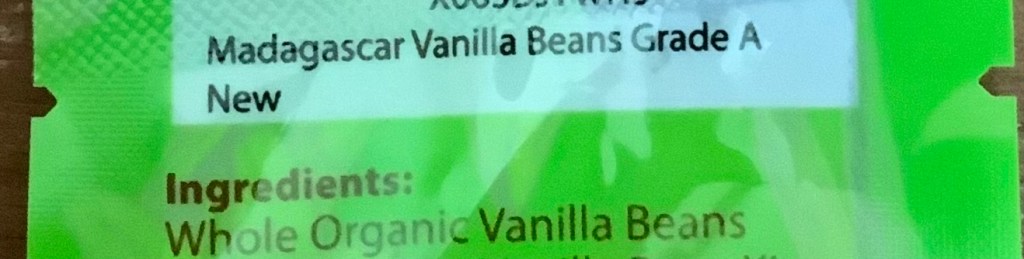
Organic vanilla beans are used to make homemade vanilla extract. A small number of beans are used and replaced in the extract infrequently. We buy only a small pack at a time, of good quality, and store them in the freezer.
Vegetables
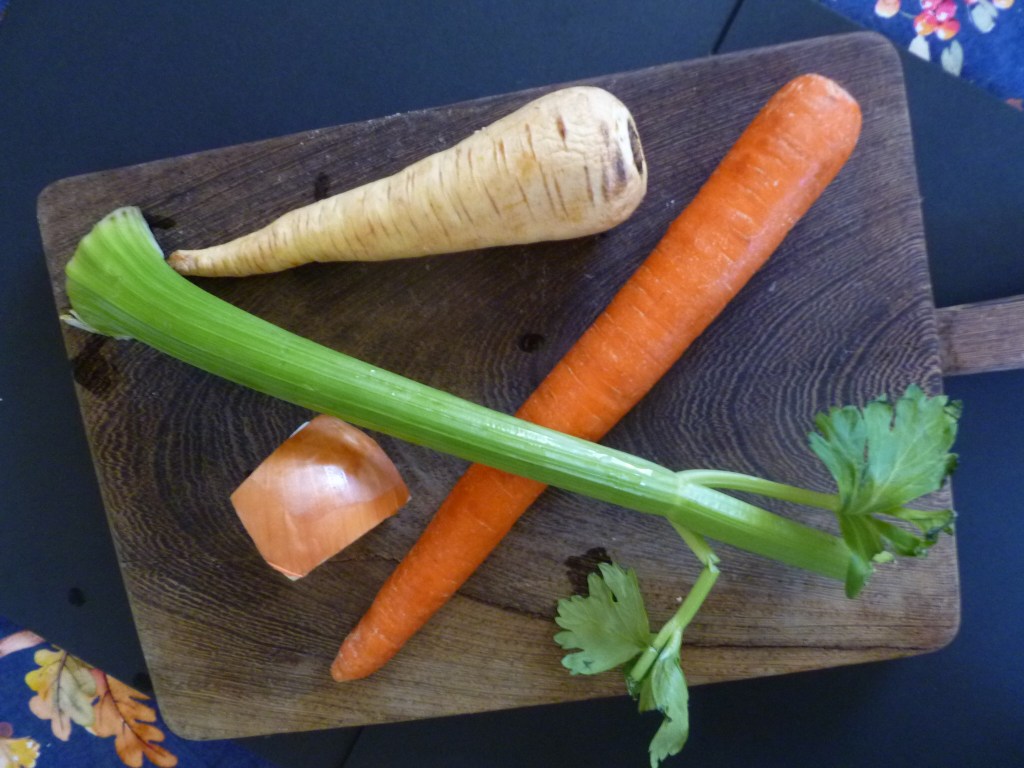
When it is possible, thefoodlessprocessed uses organic vegetables in our attempt to reduce the amount of pesticide residue in our food. Since much of a vegetable’s goodness and flavor is in or just beneath the skin, organic varieties are preferable, for they don’t require peeling.
Potatoes, garlic, leeks, onions, and chives are considered as vegetables in this context.
Venison
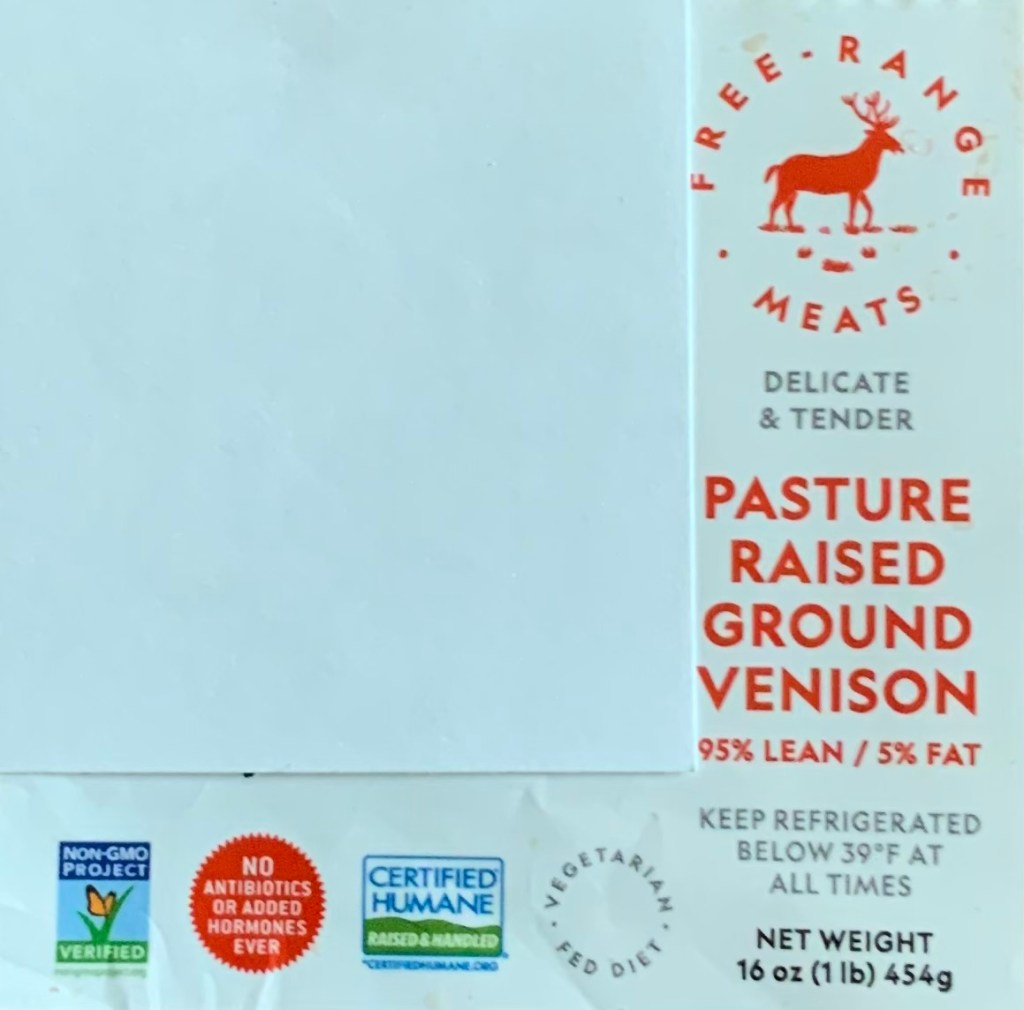
The venison for thefoodlessprocessed recipes has been certified by the Certified Humane Raised and Handled program of the Humane Farm Animal Care (HFAC) organization.
The various certification systems for animal welfare are described above in the Ingredients section: Meat.
Vinegar
“In home preparations, a certain amount of eau de vie may be added to vinegar at the moment of bottling to stabilize it; commercial vinegars are undoubtedly stabilzed in less innocent ways.” Richard Olney in Simple French Food, (1974 edition).
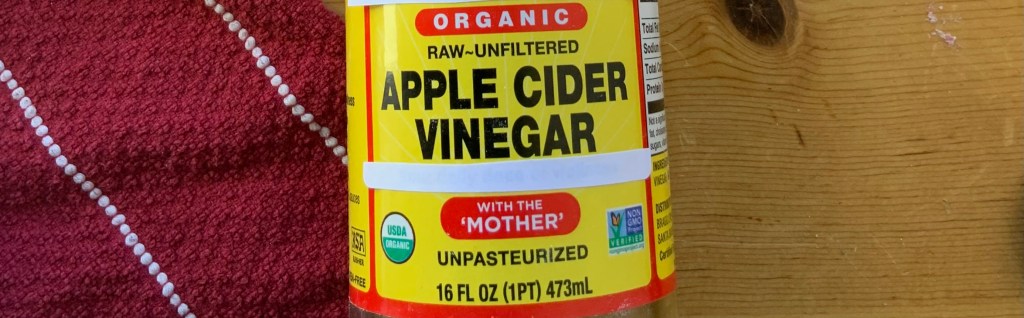
Apple Cider: Apple cider vinegar in these recipes contains two ingredients: Organic Apple Cider Vinegar and Water.

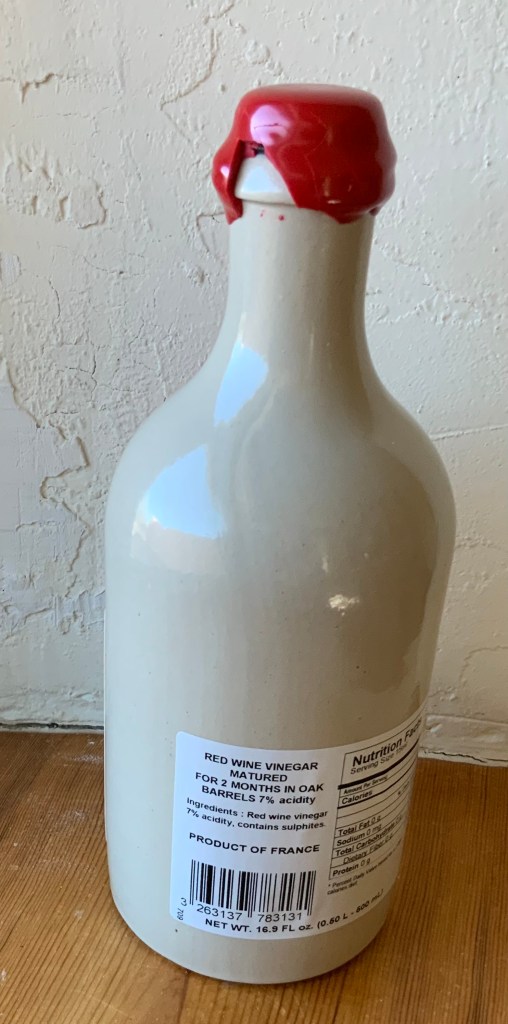
Red Wine Vinegar: The red wine vinegar in thefoodlessprocessed recipes is a French import, aged in oak barrels but there is no indication that it is or is not unpasteurized, raw, “with mother,” or stabilized solely through traditional cellar aging and acidity management. Vinegars with only one ingredient, such as “red wine vinegar” may still be made using industrial processing and stabilization methods that are not required to be listed on the label.
Water
Water: Bottled Spring Water is recommended if your water source is treated chemically.
Wheat Bran
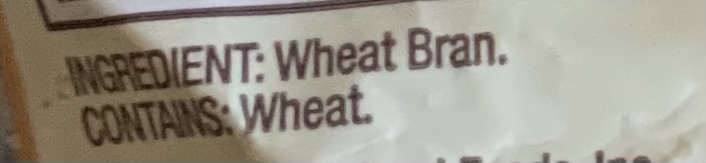
Wheat bran is the outer layer of the wheat kernel. It is not typically enriched. It already contains much of the fiber and minerals that refinement removes. There is one ingredient in it: Wheat Bran.
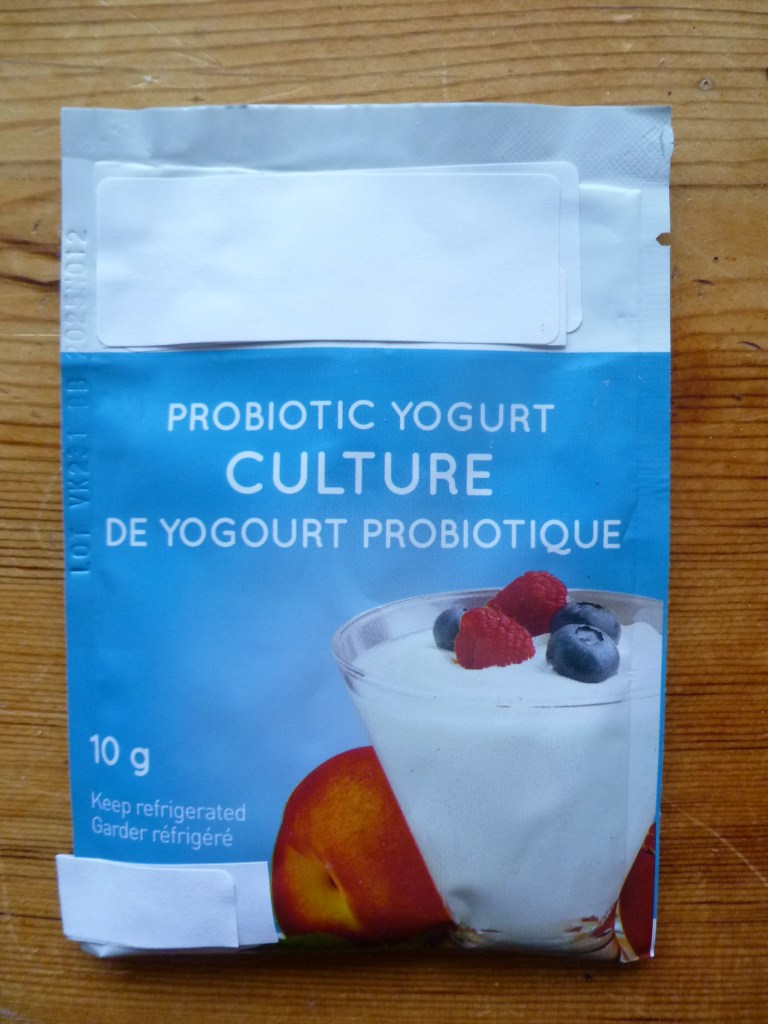
Yoghurt Starter
Homemade yoghurt is best made the first time using a high quality commercial starter. There are starters for ‘sweet’ yoghurt, the term for a yoghurt of mild flavour. Starters labeled ‘Bulgarian’, ‘Greek-style’, ‘traditional’ or ”heirloom’ may have a sharper, more distinctive taste. But the best indicator of this style will be the inclusion of ‘lactobacillus delbrueckii subsp. bulgaricus’ in the list of bacterial strains on the label.
A less processed starter will not contain sugar, gelatin, or other additives–only the strains of bacteria listed on its label.
After making an initial batch, you can use your own homemade yoghurt as a starter many times, until the strain weakens. Commercial starters are not designed for indefinite use. Signs that it is time for a fresh starter are: a slower setting time, a
weaker texture (that is, a thinner consistency), and a loss of flavour.