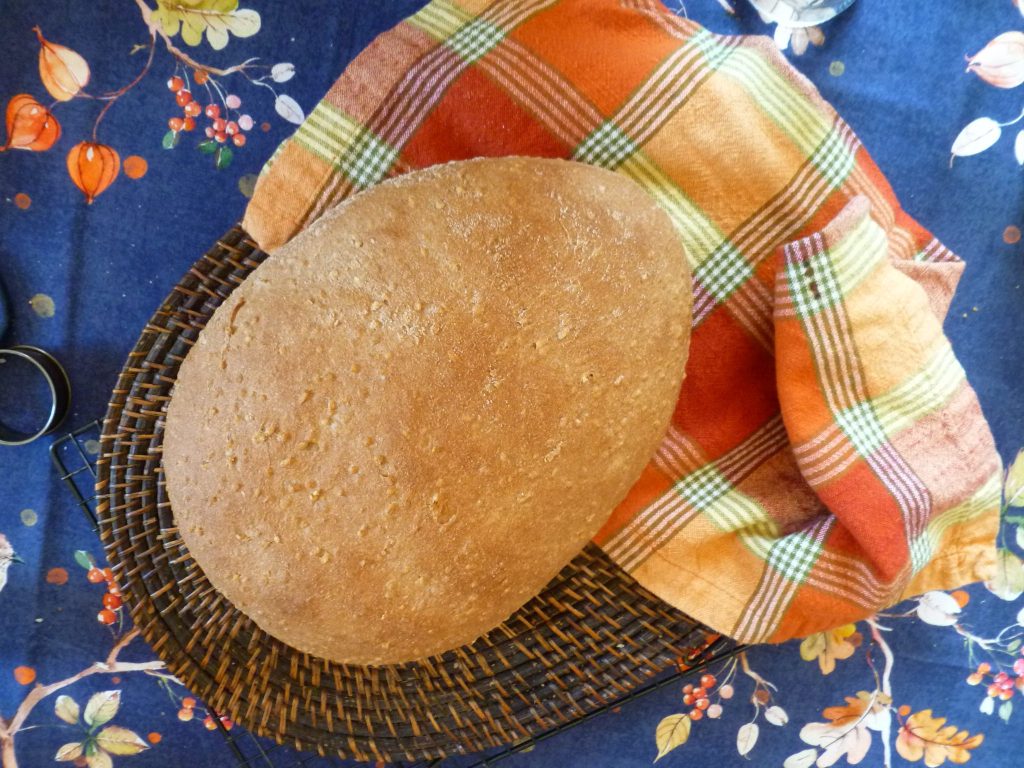
Monastery Bread is an English loaf. Unlike a bread with a pre-fermentation, it requires only mixing and two rises before baking. The loaf is large and remains fresh for several days. It freezes well. Because it is simple in the preparation and reliable in the results, Monastery Bread is a good bread for novice bakers. Since it requires minimal attention, it also is a good choice for making a loaf when time is limited.
You may click on any of these links to read about the ingredients for which less-processed options are used in this recipe: Flour (White, Whole Wheat), Cornmeal, Water, Honey, Salt, Butter, Grains (Steel Cut Oatmeal).
Equipment
- a Kitchen Scale
- a Large Mixing Bowl
- a Small Bowl
- a Large Buttered Bowl for the first rise of the dough
- a Pastry Board
- a Baking Sheet
- Parchment Paper
- Optional: a Standing Mixer and Paddle Attachment are used for kneading the dough
Ingredients for the Yeast Mixture
- 1/2 teaspoon Organic Unfiltered Honey
- 2 teaspoon SAF Instant Yeast
- 100 ml Well Water or Bottled Spring Water (heated until it is warm to the touch)
Ingredients for the Dough
- 250 g Stone-Ground Whole-Wheat Flour
- 125 g European All-Purpose Unenriched Soft Wheat White Flour (or substitute Organic White All-Purpose Hard Wheat flour…hard wheat flour is the standard American variety).
- 1 and 1/2 teaspoons Sea Salt
- 250 ml Well Water or Bottled Spring Water (heated until it is warm to the touch)
- 25 g Organic European-style Unsalted Butter, melted
- 125g Steel Cut Irish Oatmeal
- Flour for the Pastry Board
- Organic Medium-Ground Cornmeal for the Baking Sheet
Activating the Yeast, Mixing and Kneading the Dough, Rising
- In the small bowl, mix the yeast with the honey and water. Set it aside. In a few minutes, the yeast will foam and bubbles will appear on the surface.
- In the large mixing bowl, combine all the dough ingredients. Add the yeast. Mix and knead. The kneaded dough will be sticky, but also elastic. It will pull away from the sides of the bowl. If it is only soft and sticky, it requires more kneading.
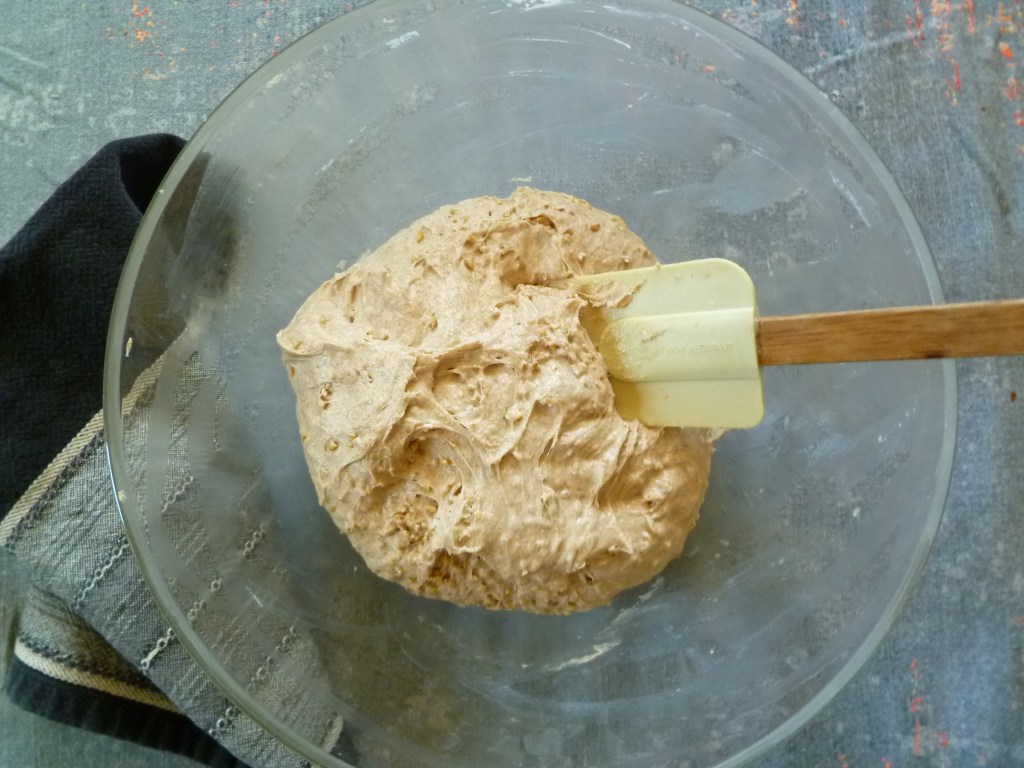
- Turn the dough out onto the floured pastry board and shape it into a ball. Transfer it to the large buttered bowl. Cover it and let it rise to double in size. Rising times will vary depending on room temperature and weather. 1 hour is an estimate.
- Place a sheet of parchment paper on the baking sheet. Sprinkle the paper with cornmeal.
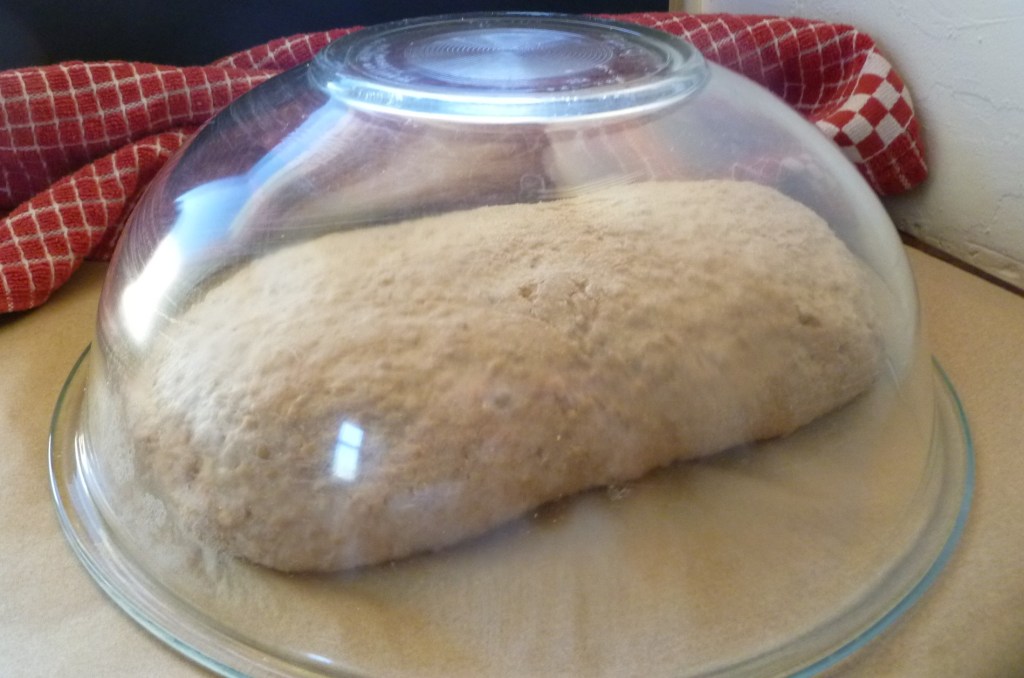
- Turn the dough out onto the floured pastry board and form it into a fat, oblong loaf. Place it on the parchment-lined baking sheet. Cover it. (A very large bowl or a cotton kitchen towel makes a good cover.) Let the dough rise until doubled in size. Again, 1 hour is an estimate.
Baking
Gas or Convection Oven: thefoodlessprocessed uses a gas oven. The conversions from Fahrenheit to Celsius do not attempt to adjust for differences between baking in a gas or convection oven. I have no experience using a convection oven, and leave adjustments to the better judgement of you who do have.
- Preheat the oven to 200 C (400 F). Brush the loaf with cold water. Place it on the lower middle rack of the oven and bake for 30 – 35 minutes. When the loaf is a golden brown and sounds hollow when tapped on the bottom, it is done.
- Cool completely before slicing. To keep fresh for up to three days at room temperature, wrap the loaf in foil and store it in a light polyethylene bag. Monastery Bread freezes well, wrapped and bagged.



Leave a comment