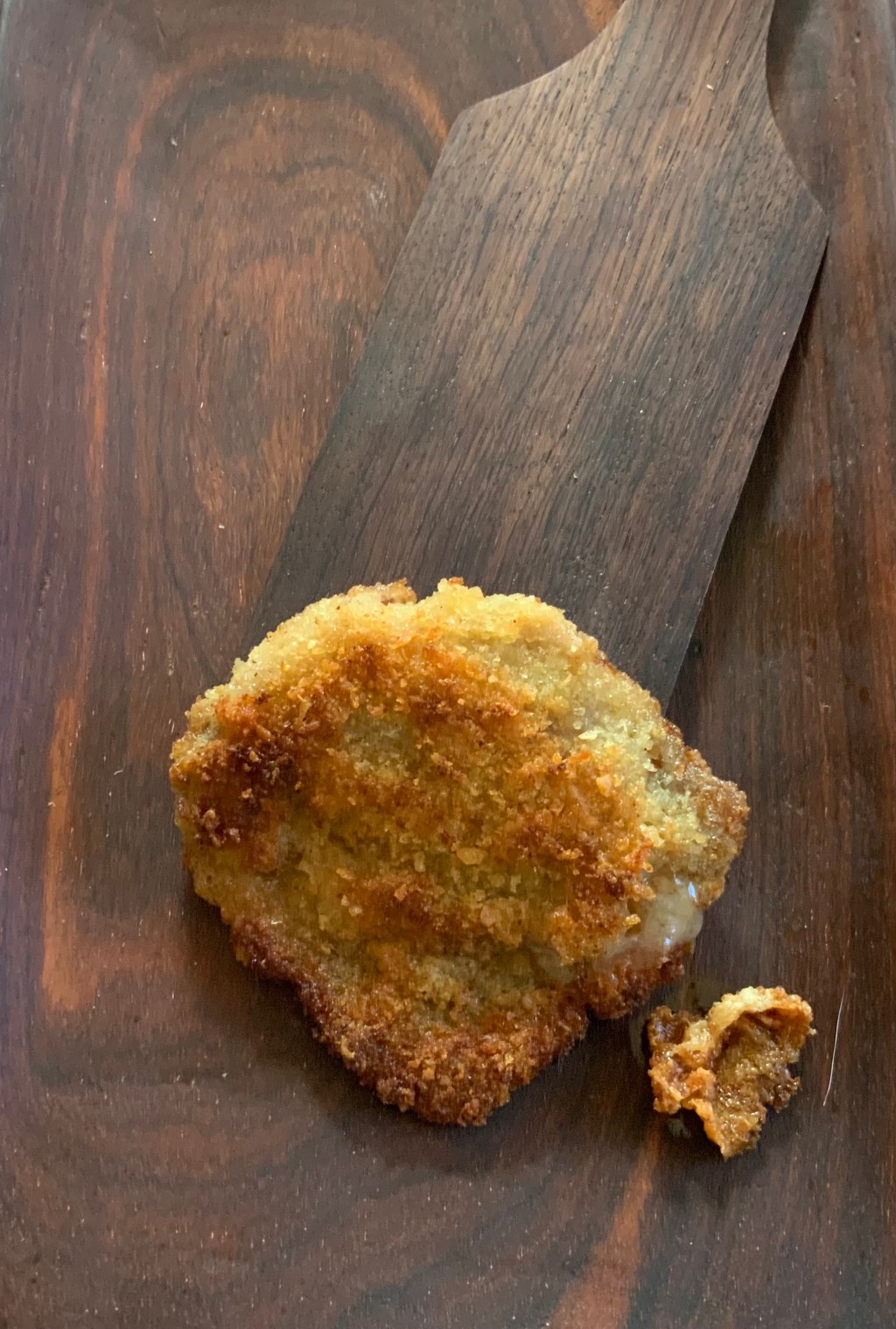
The origin of Cordon Bleu may be Swiss, possibly French. Today, on restaurant menus, on home cooks’ blogs, it features in the cooking of many European countries.
Cordon Bleu are sautéed. Sautéing is a quick cooking method used for tender foods such as fish or veal, pork or beef filets, chicken, mushrooms or onions. The term is broadly understood to mean cooking quickly in a little hot fat.
Clarified butter is the finest medium for sautéing. For anyone unfamiliar with it, this recipe for Cordon Bleu describes how to clarify butter. It is a simple process worth learning, for it is used in many ways besides sautéing. Clarified butter is the finest medium for sautéing. For anyone unfamiliar with it, this recipe for Cordon Bleu describes how to clarify butter. It is a simple process worth learning, for it is used in many ways besides sautéing.
European-style butter clarifies better than standard American butter mainly because the European-style has a higher butterfat content and lower moisture and milk solids. The solids are the portion of the butter that browns, foams, and sometimes burns. With less solid and water content, a European-style butter, separates out the butterfat more easily and gives a cleaner separation between clear yellow butterfat and the milk solids.
The choice of sauté pan is important. The bottom must be broad and flat and the sides not too deep and it must be of a very heavy metal. Thefoodlessprocessed uses either a traditional cast iron pan (that is, a heavy one with a smooth interior) or an enameled cast iron pan with a black, baked-on procelain enamel interior. Either is excellent for heating and browning evenly. (To read more about the unique qualities of cast iron, go to thefoodlessprocessed post: The Cast Iron Pan.)
You may read about the less processed ingredient options by clicking any of these links: Chicken Breasts, Pork Tenderloin, Butter, Flour, Gruyère, Prosciutto, Breadcrumbs.
(A note: Scaloppine also may be made with Chicken Breasts. A method is described here: Making Scaloppine ~ with Chicken Breasts. Any foodlessprocessed scaloppine recipes may be made with chicken. Other than the substitution of chicken, no change in any of these recipes is necessary.)
Equipment
- a Sauté Pan (thefoodlessprocessed uses either one of cast iron or, for larger amounts, an enameled cast iron sauteuse with a black baked-on porcelain enamel interior. Pans with a white enameled interior will not brown as well. You may read more about the unique qualities of The Cast Iron Pan here on thefoodlessprocessed.
- Utensils for making the scaloppine from pork or chicken: a Cutting Board, a sharp Knife with a long blade, a Kitchen Mallet, and Plastic Wrap.
- 3 Small Pie Pans (or other containers with rims) for breading the Cordon Bleu
- a Small Pot for clarifying the butter and reheating some of it for serving
Ingredients
- a Whole Pork Tenderloin, more or less depending on the number of Cordon Bleu you make. (Pork tenderloins of about 1 pound (454 g) are best for making scaloppine. A tenderloin of this size will make 8 to 10. There are two scaloppine in each Cordon Bleu.)
- Alternative: 4 thin-sliced Chicken Breasts will make 12 scaloppine which will make 6 Cordon Bleu
- Butter for Clarifying: 10 Tablespoons of Organic European style Unsalted Butter (140g), plus 1 Tablespoon per Cordon Bleu (14 g)
- Imported Italian Prosciutto (1/2 slice of a piece of Prosciutto sliced vertically in two for each Cordon Bleu)
- Imported Gruyère AOP (a slice cut from a block for each Cordon Bleu, each about 6 inches long/1 inch wide/1/8 inch thick)
- Chapelure (aka Fine Breadcrumbs). thefoodlessprocessed version is here.
- 3 Eggs, beaten
- European Unenriched All-Purpose Soft Wheat White Flour
Making the Scaloppine
The technique for making the scaloppine with pork is here on thefoodlessprocessed, and with chicken breasts is here.
Clarifying the Butter
A milky sediment separates out of melted butter. It scorches easily. Once clarified, the butter will heat to a high temperature without burning.
- Heat the butter in the small pot until a froth bubbles up. Skim off the froth. Pour off the clear yellow butter into a bowl, leaving the sediment behind. Discard the sediment. Set aside in a small pot one tablespoon of the clarified butter per Cordon Bleu to heat and pour over each one on the dinner plates before serving.
- Pour the remainder of the butter into the sauté pan.
Assembling the Cordon Bleu
- Place a scaloppine on the cutting board. Place a portion of cheese in the middle of a halved sliced of Prosciutto.
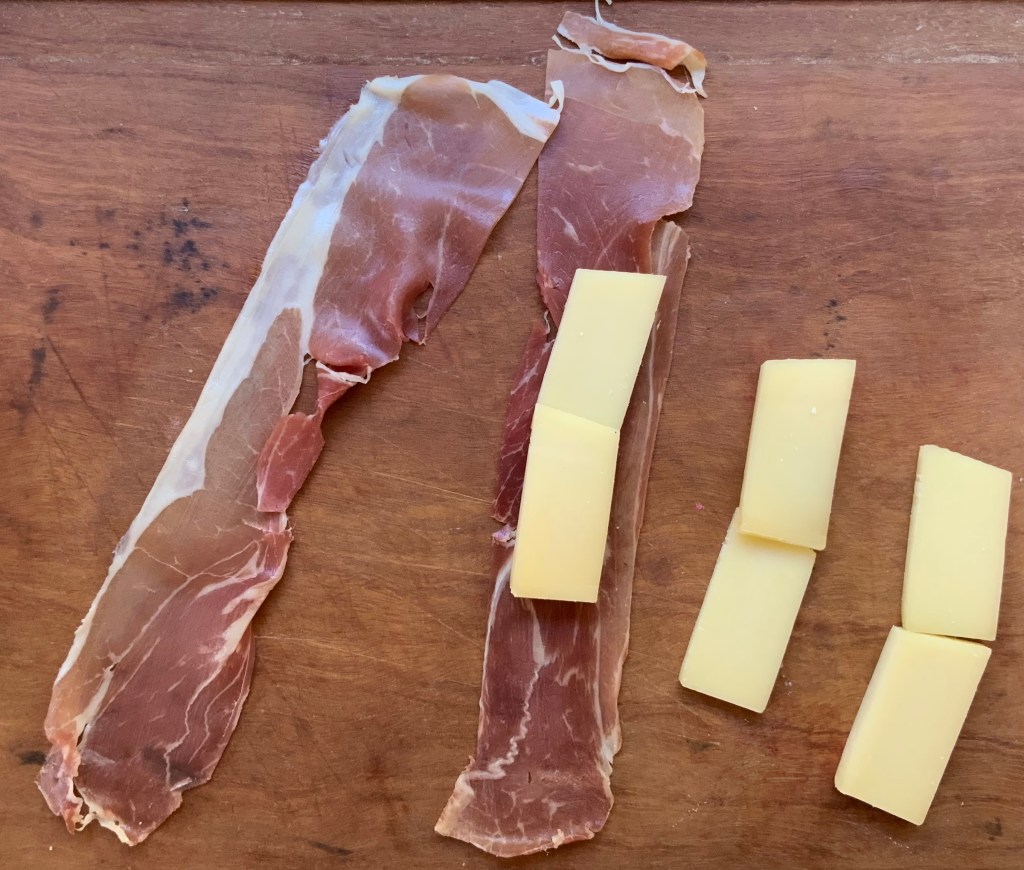
- Bring the ends of the slice of Prosciutto in toward the center, covering the cheese to form a packet.
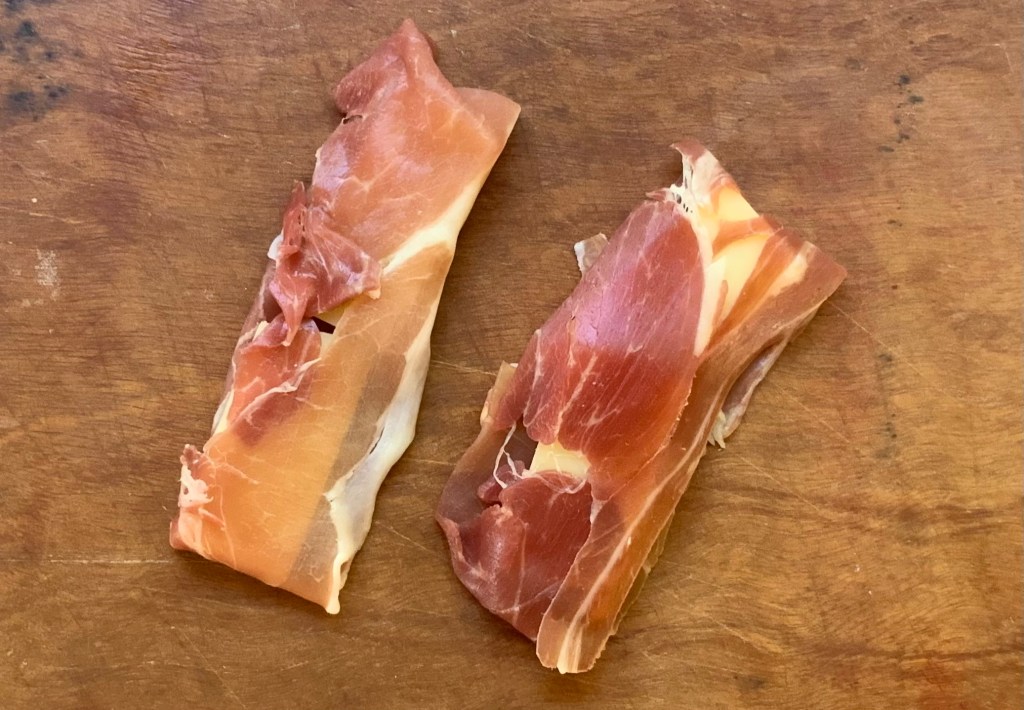
- Place the packet in the middle of the scaloppine. Place a second scaloppine on top of the packet and press the edges of the two together.
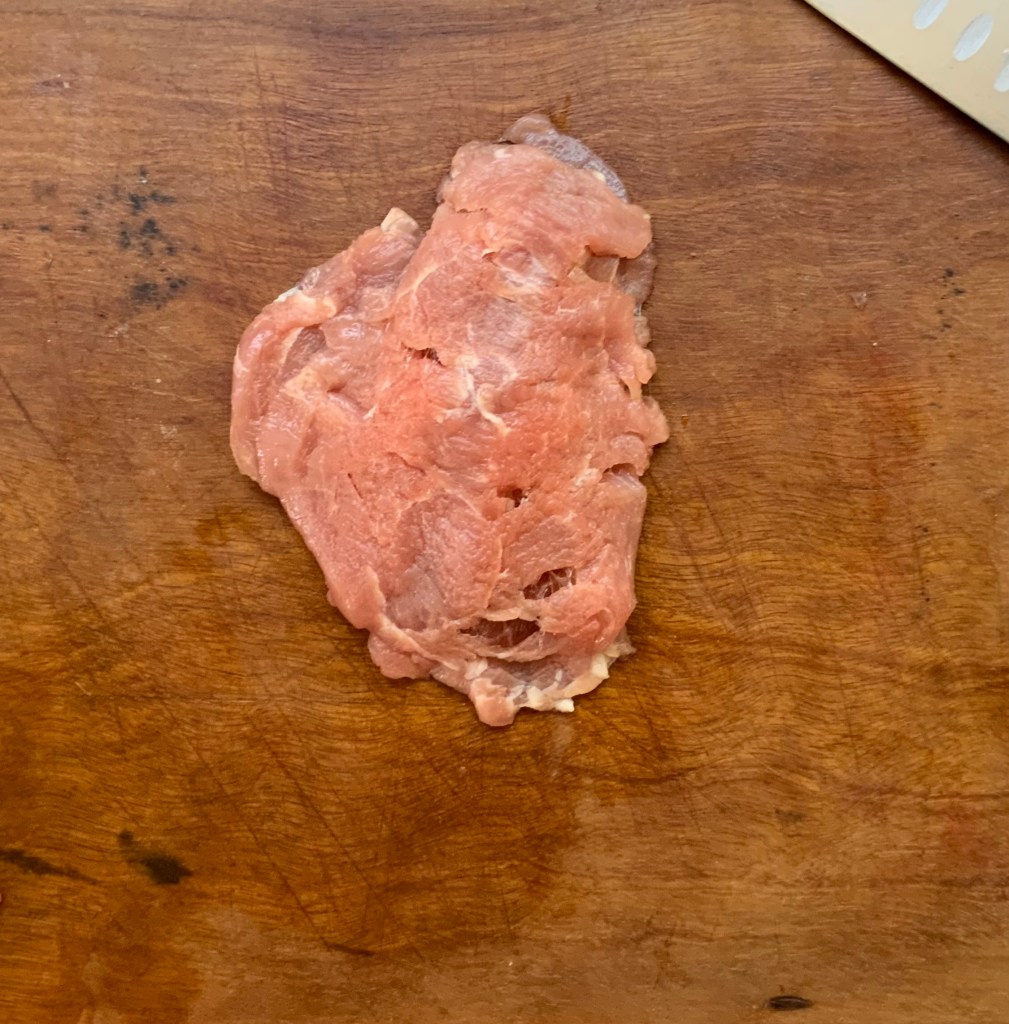
- Repeat this for as many Cordon Bleu as you want to make.
Breading
- Bread the Cordon Bleu: Pour a small mound of flour into one pie pan, the beaten eggs into the second, and about a cup of chapelure into the third. Coat each Cordon Bleu in the flour, then the beaten eggs, and then the chapelure.
Sautéing and Serving
- Heat the butter in the Sauté Pan until it is hot. Add the Cordon Bleu. Brown them on 1 side for about 4 minutes. Turn them and brown 4 minutes on the other side. If you have any last minute preparations to complete before serving them, turn off the heat and lean them on end around the edge of the pan.
- Reheat the reserved clarified butter.
- Place the Cordon Bleu on plates and spoon about 1 Tablespoon of the warm butter over each.



Leave a comment