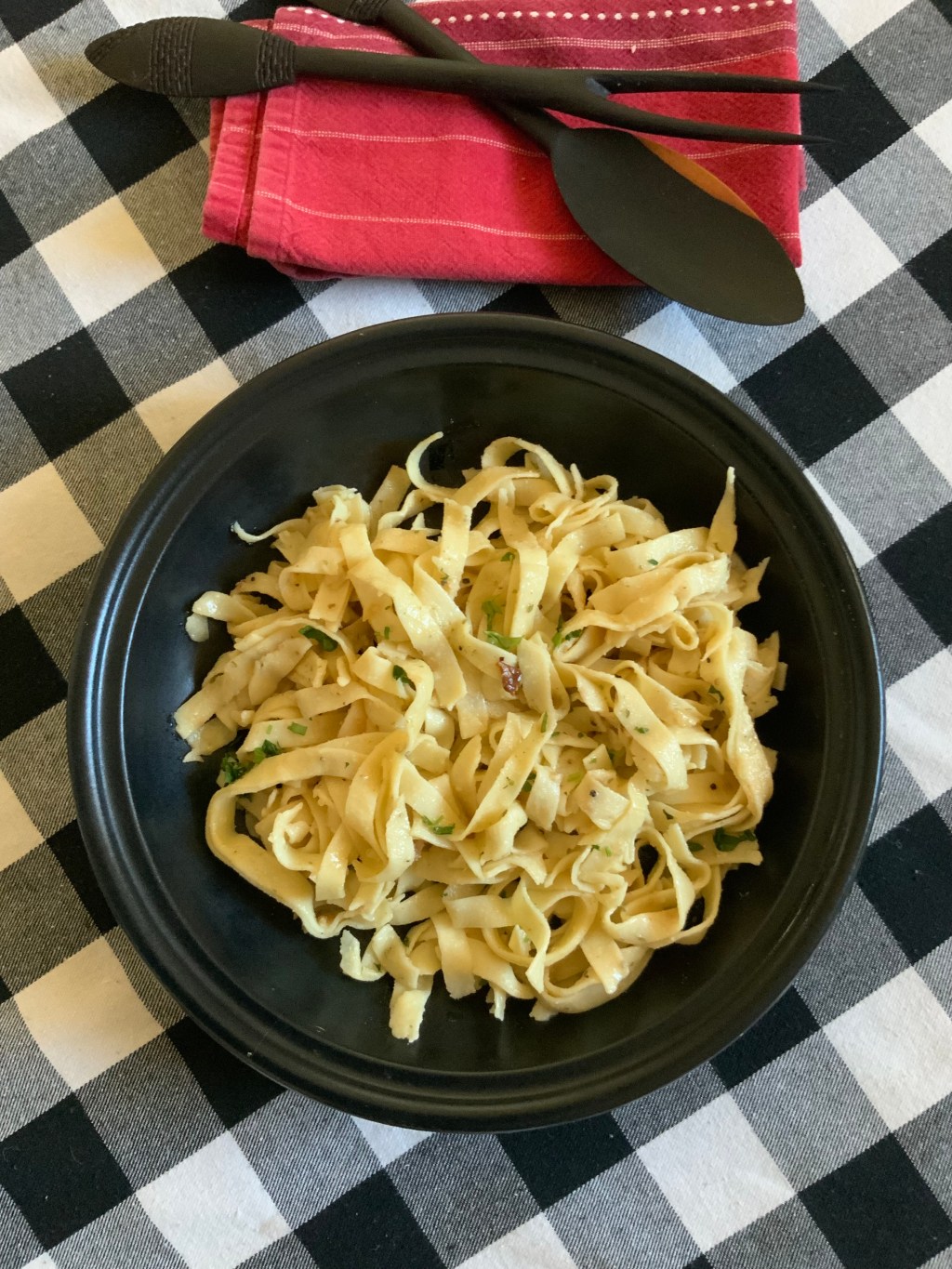
“Macaroni, spaghetti, noodles and the other pastes are as well liked, it seems to me, by the French as by the Italians…But in cooking them we preferred a slightly softer product than the Italians like…[and] We ate the pastes dressed rather simply…We liked, for example, to partly cook spaghetti or macaroni…then drain and turn it into the pan in which veal or beef was being braised and let it cook in the gravy..” Louis Diat from French Cooking for Americans (1946)
When one culinary tradition borrows from another the style of preparation is filtered through the tastes unique to the borrower.
The original of the pasta dish known as Fettuccine Alfredo is credited to a restaurateur in Rome and consisted of fettuccine, Parmesan, and water to blend them together. The sauce known as Fettuccine Alfredo in America is actually closer to the version of an Italian Salsa Bianca that is made without flour and is a reduction of cream with butter, Parmesan, and black pepper but…it is not identical to it.
This link will take you to thefoodlessprocessed recipe for fettuccine made with fresh pasta: Fresh Pasta for Spaghetti, Fettuccine, and Lasagne. Fresh fettuccine made with soft wheat flour will absorb the sauce and its flavours.
Fettuccine Alfredo may be made with a commercial pasta instead of fresh. For those who are interested in a less processed option for packaged, dried pasta, follow this link: Dried Pasta. The sauce coats pasta made with hard wheat flour instead of being absorbed as it is with fresh soft wheat pasta.
In addition to the pasta, other less processed ingredient options are: Butter, Cream, Parmesan, Parsley, Fresh Parsley.
Equipment for the Sauce
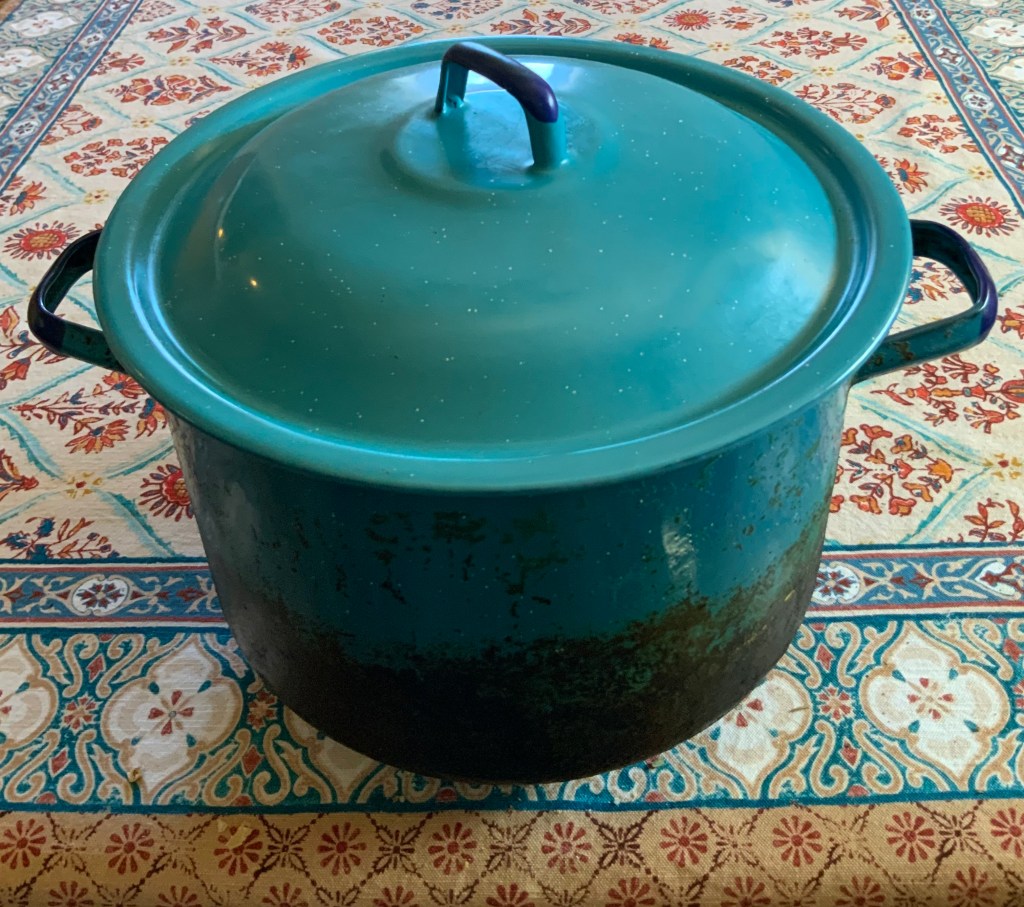
- a Heavy Bottomed Pot of about 5-quart capacity. thefoodlessprocessed uses an Oval Enameled Cast Iron Dutch Oven of a 5.5 quart (about 5.2 liter) capacity and a Lid
- a Flame Tamer (aka Heat Diffuser, Simmering Plate) is optional. The pot does not sit directly over the heat source. This is especially useful when cooking in enameled cast iron, which should be used only over a low flame. Some versions may be used on a smooth-top burner.
- a small Liquid Measuring Cup
Ingredients for the Sauce
- a recipe of cooked Fresh Fettuccine Pasta: thefoodlessprocessed version is described in this post: Fresh Pasta for Spaghetti, Fettuccine and Lasagne. The fettuccine is cooked right before mixing it with the sauce.
- 6 Tablespoons of Unsalted European-Style Butter (about 85 g)
- about 2 Tablespoons of minced Shallot or Yellow Onion
- 1 Cup of Organic Heavy Cream (240 ml)
- 1/2 cup of finely grated Parmigiano Reggiano PDO (about 90 g)
- 1/4 teaspoon Coarse Ground Black Pepper
- a few Tablespoons of chopped Fresh Italian Flat-Leaf Parsley or a teaspoon or two of Dried Cut-Leaf Parsley
- 1/4 cup of the Water used to cook the Pasta (60 ml)
Making the Sauce
Note: This portion of the sauce recipe may be made in advance. It is mixed with the fettuccine and finished right before serving.
- Place the heavy pot on the flame tamer. Add the butter. When it is melted, add the shallot or onion and cook until the edges just begin to color.
- Add the cream and reduce it over low heat until it is thickened. Large bubbles will begin to form on the simmering sauce.
- Turn off the heat and add the black pepper.
- Cover the sauce while cooking the fettuccine.
Equipment for Cooking Pasta
- a Large Pot (8 quarts/7.5 liters or thereabout) and Lid
- a Colander
Making Fettuccine Pasta
This link will take you to thefoodlessprocessed recipe for fettuccine made with fresh pasta: Fresh Pasta for Spaghetti, Fettuccine, and Lasagne.
Cooking Fettuccine Pasta
- Bring to a boil enough water in the pot to hold the pasta comfortably in a loose tangle as it cooks.
- Add the pasta. Adjust the heat for a steady, but not vigorous boil.
- For pasta that is somewhat softer than al dente, cook for 3 minutes.
- Reserve 1/4 cup (60 ml) of the pasta water in a liquid measuring cup before draining the pasta.
- Drain in the colander.
Mixing the Pasta and Finishing the Sauce
Note: Mix and finish the sauce right before serving.
- Reheat the sauce if necessary. Add the cooked fettuccine, the Parmesan, and the reserved pasta water. Toss lightly to blend.
- Add the parsley and toss again lightly.

 thefoodlessprocessed
Leave a comment