
Suggestions for how to work easily with pasta dough are given in the following introduction to the recipe.
A link to options for less processed commercial pasta also appears below the introduction.
Homemade pasta is not an exact science The type of flour, room temperature, humidity and egg size affect the texture of the dough, rendering it softer or drier. A very soft dough will be difficult to roll and cut cleanly. A dough that is too stiff may crumble apart as it goes through the rollers.
Rather than try to standardize against possible variations on any given day, it is easier to work with them.
The proportions of flour and egg in the following recipe generally require only minor adjustments, if any. If the dough sticks a little going through the rollers, rub a little flour on the surface and send it back through before rolling it on a thinner setting. When it feels too stiff to pass through the first (number 1 or widest) setting, moisten your hand and knead the dough to a softer consistency.
There also are a few general aids to working with pasta dough. Refrigerated dough is easier to roll and cut. Dough that has been frozen and thawed in the refrigerator rolls and cuts more easily still. Frozen dough will darken in colour , but there is no discernible difference in taste or appearance when cooked.
Pasta may be dried and stored in a box at room temperature, but this recipe uses the drying rack only to hold the fresh strands before cooking.
Click on this link to read about the less processed ingredient option: Flour.
For those who are interested in a less processed option for packaged, dried pasta, follow this link: Dried Pasta.
Equipment for Mixing, Rolling and Cutting the Dough
- a Food Processor and Blade Attachment
- a Pasta Machine: thefoodlessprocessed uses a manually operated pasta machine.
- Spaghetti/Fettuccine Cutter: The hand machine used here has both blades on one attachment.
- a Pastry Board
- a Pizza Cutter
- a Spatula with a Flat Metal Blade
- a Pasta Drying Rack (for spaghetti and fettuccine pasta)
- Cotton Kitchen Towels (for lasagne strips): 4 will probably be enough.
Ingredients: (for about 1 pound or 454 g of pasta dough)
- 2 and 1/4 cups of European Unenriched All-Purpose Soft Wheat White Flour (270 grams), plus some flour for dusting the dough as you roll and cut it (Note: If you prefer to use 00 flour sold specifically for pasta, the dough may remain crumbly or fail to come together with the number of eggs in this recipe. Adding an egg supplies enough additional moisture to make a cohesive dough.)
- 3 Eggs
Mixing the Dough and Rolling it out into Strips
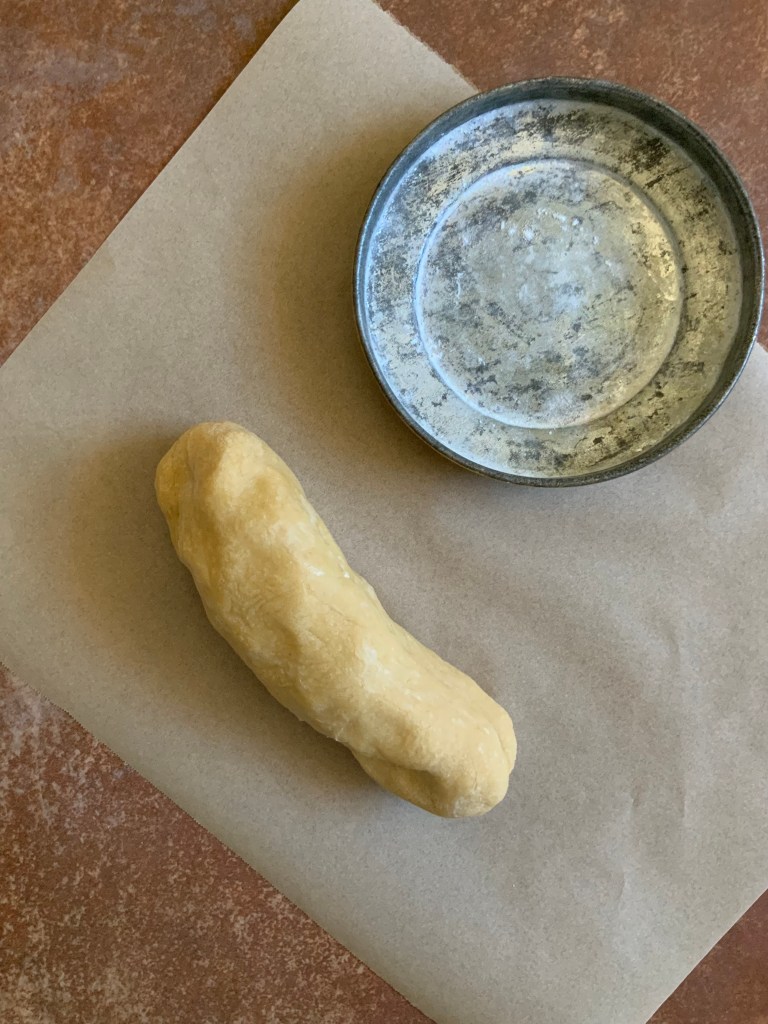
- Put the eggs in the bowl of the food processor, fitted with the blade attachment. Process the eggs until well beaten. Add the flour. Hold down the top of the processor firmly as the dough forms, for it may pull against the blade with some force.
- As soon as the dough leaves the sides of the processor bowl cleanly and forms a ball, turn off the processor and turn the dough out onto a lightly floured pastry board. At this point, if there is time, refrigerate the dough for an hour or more. Otherwise, continue to the next step of rolling out the dough and cutting it.
- Divide the dough into 4 pieces. Flatten them with the palm of your hand.
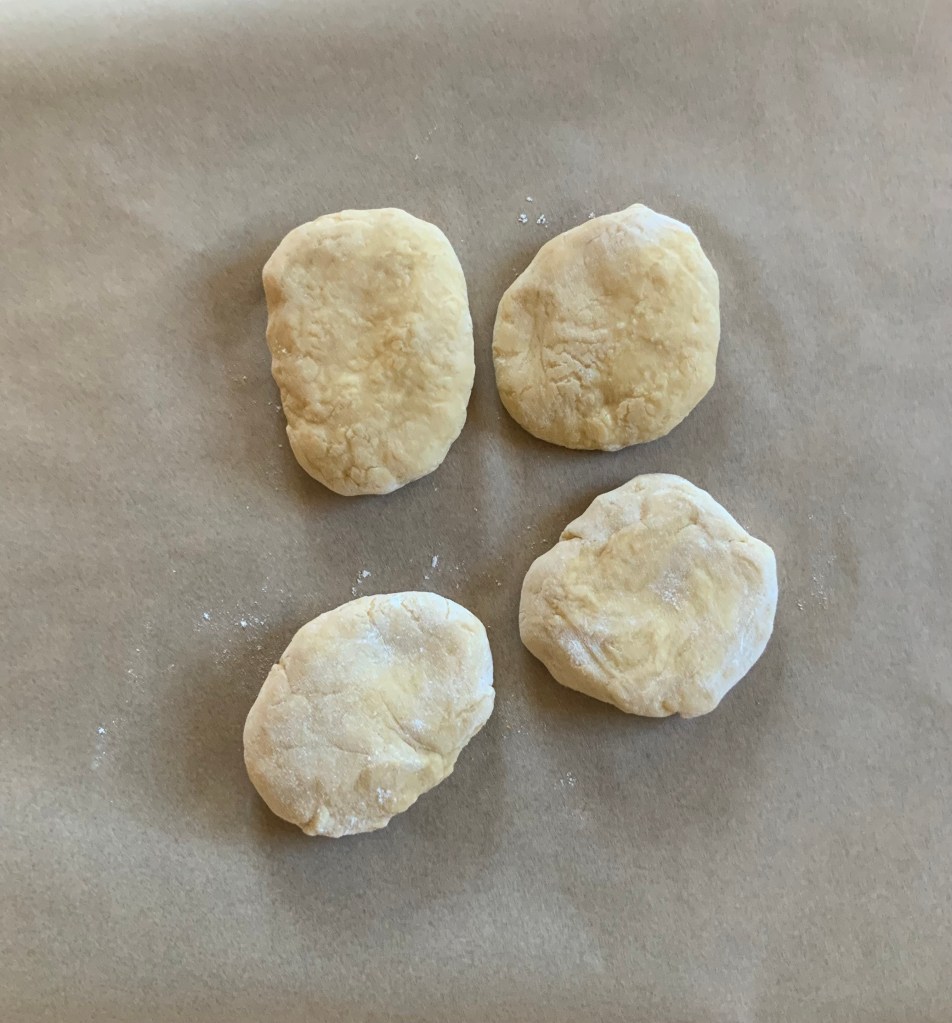
- Cover all but one piece of dough with a towel or plastic wrap. Set up the pasta machine, fitted with the blade attachment for fettuccine and spaghetti, on a work surface and place the drying rack nearby. Feed a piece of dough through the rollers on the lowest setting (No. 1).
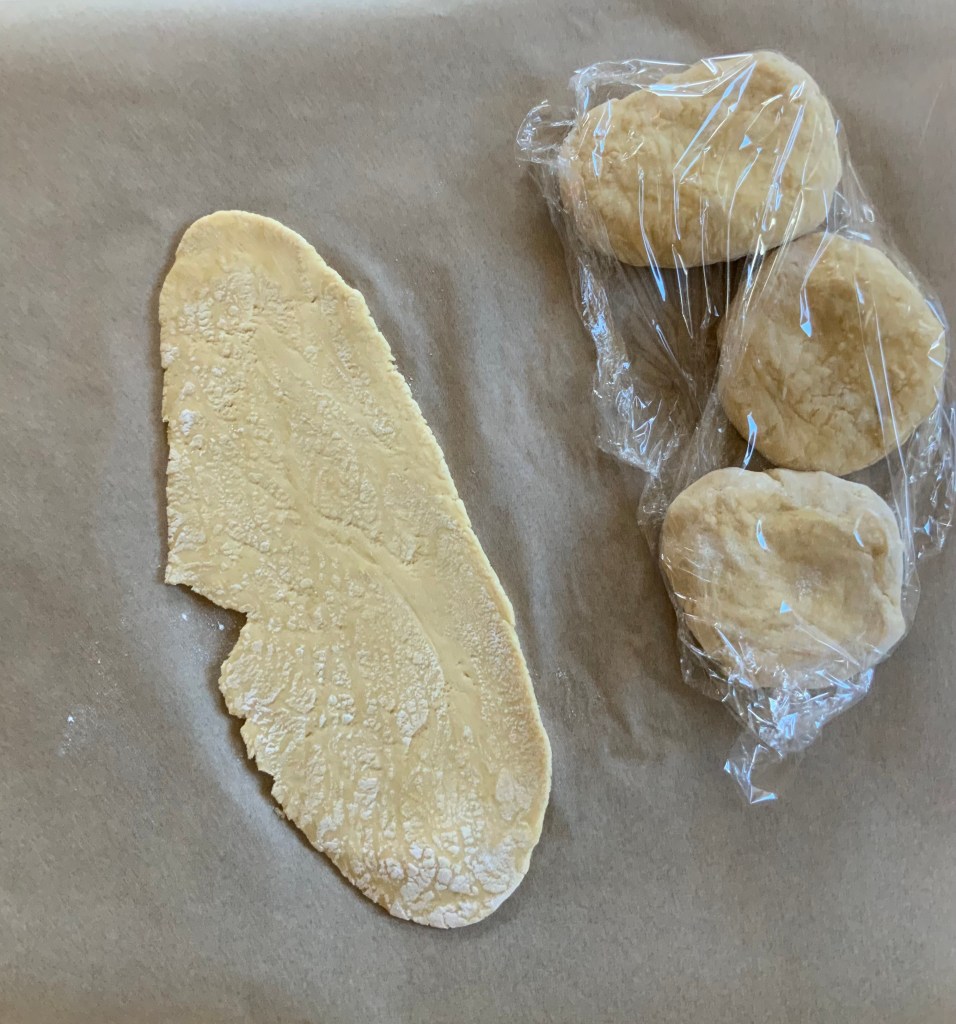
- Fold the edges of the flattened piece before feeding it through the No. 1 setting again so that the strip will become more uniform.
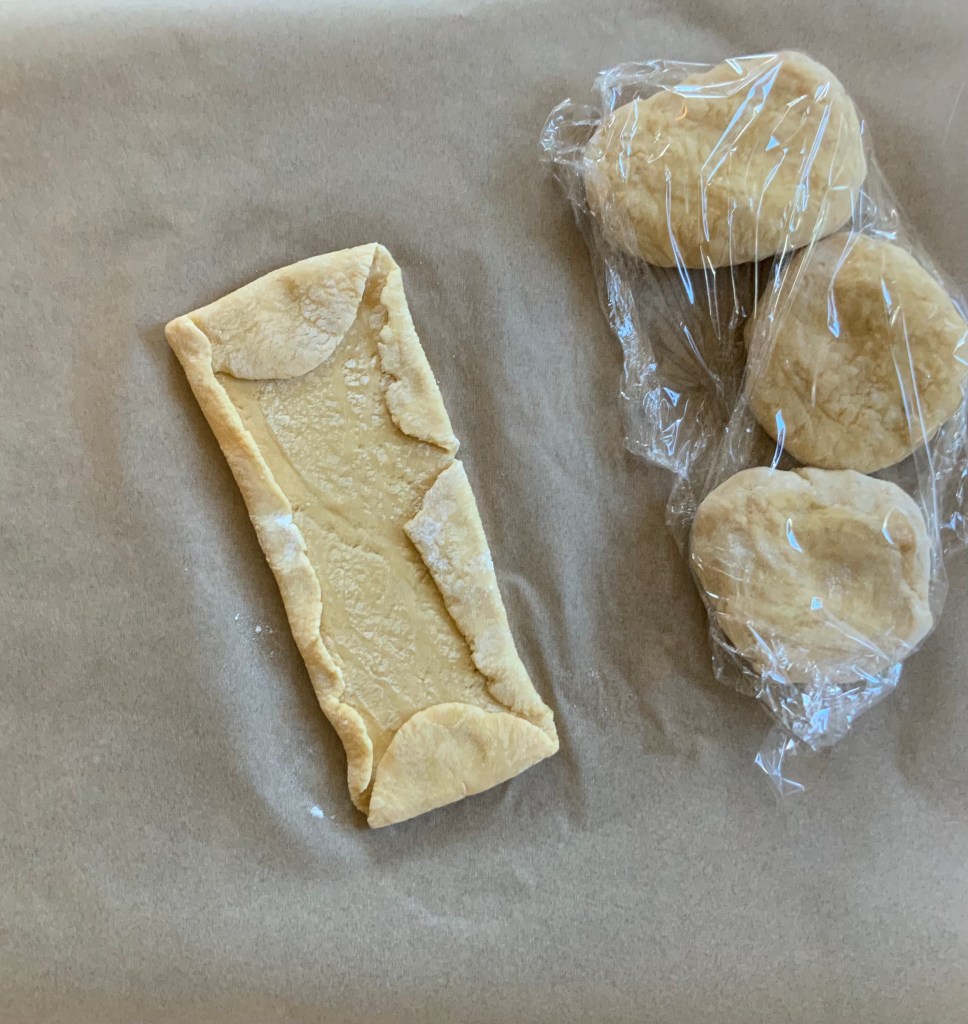
- Roll this strip 3 times through the No. 1 setting.
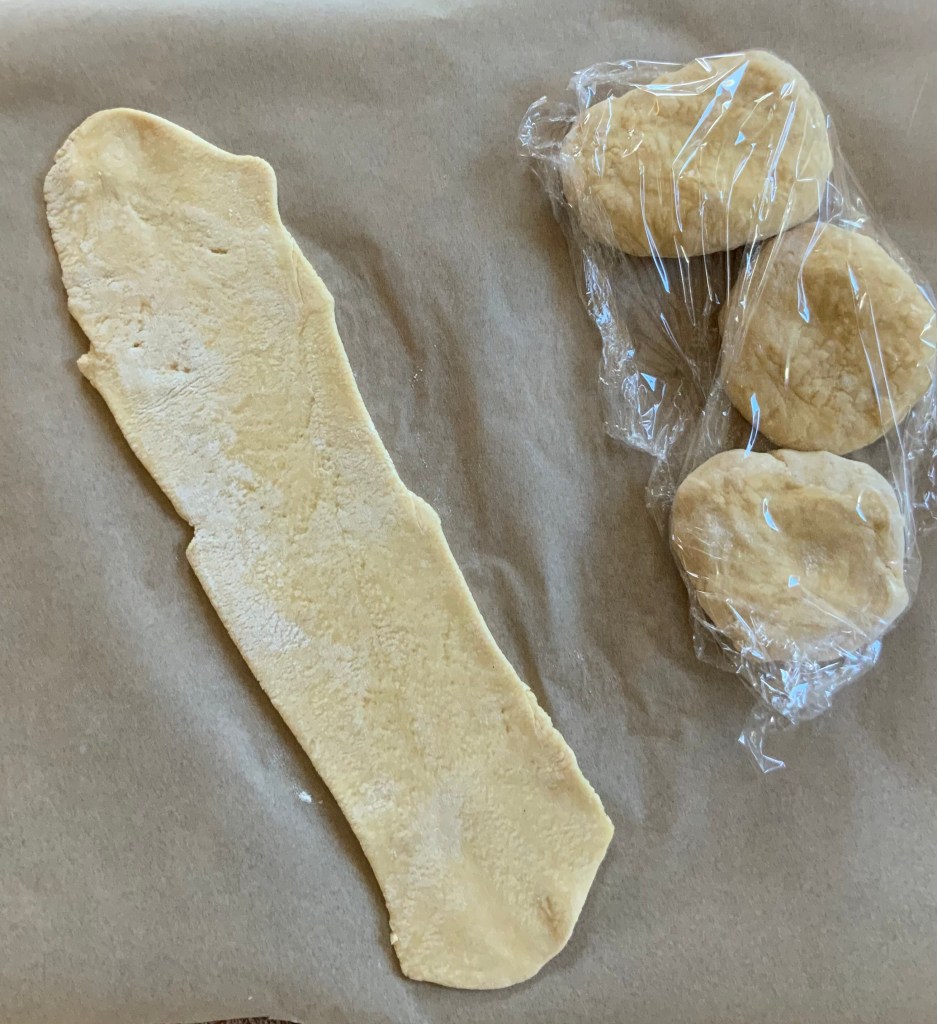
- Then, roll the strip once on each successively higher setting. For fettuccine or lasagne roll the strip once through settings 2 through 6. This will form a strip about 40 inches in length (about 105 cm). For spaghetti, roll the strip once through settings 2 through 3. The strip will be about 11 inches long (12.5 cm). For fettuccine or lasagne, the strip will be cut into shorter lengths. The fettuccine strip will then be fed through the blades. The spaghetti strip is not cut into shorter pieces. See below: Cutting the Strips for Spaghetti.
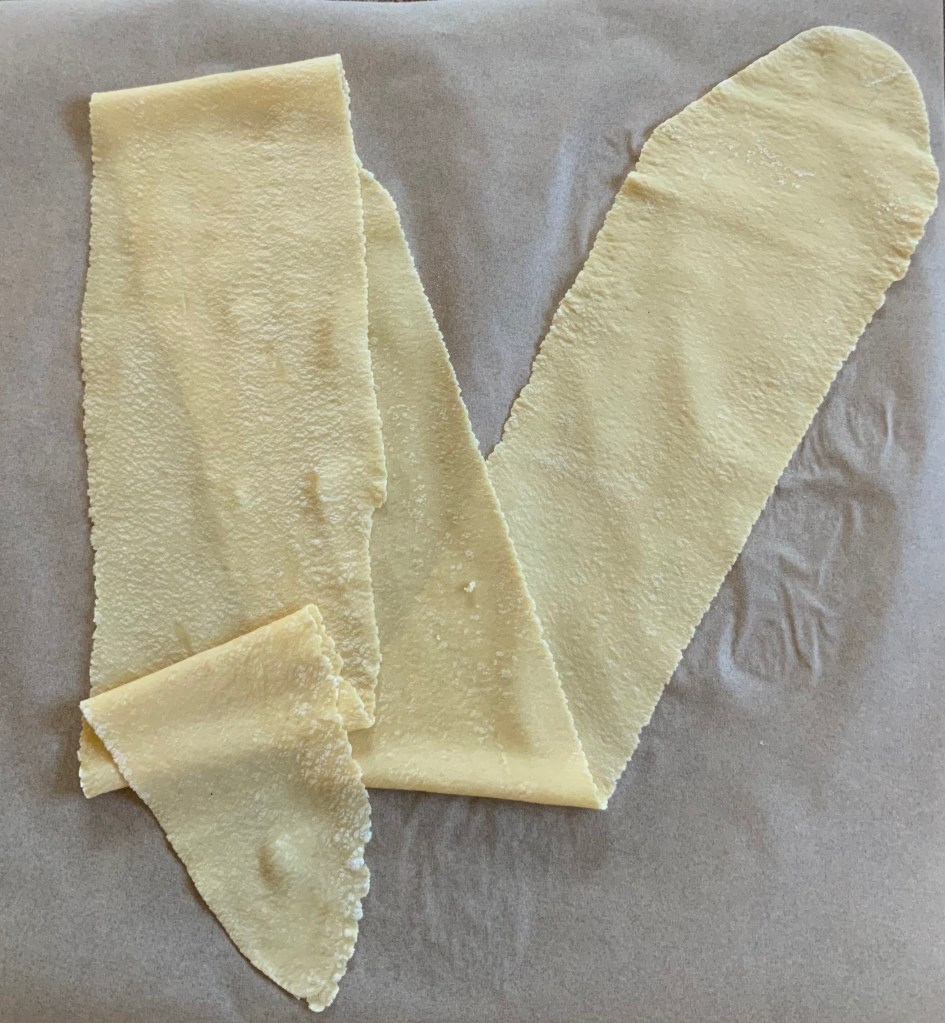
- For fettuccine, use a pizza cutter to cut the strip into 10-inch lengths before feeding these shorter strips through the blades for fettuccine. (At this point, strips for lasagne will be cut into 8-inch lengths. See the detailed instructions below: Cutting Lasagne Strips.)
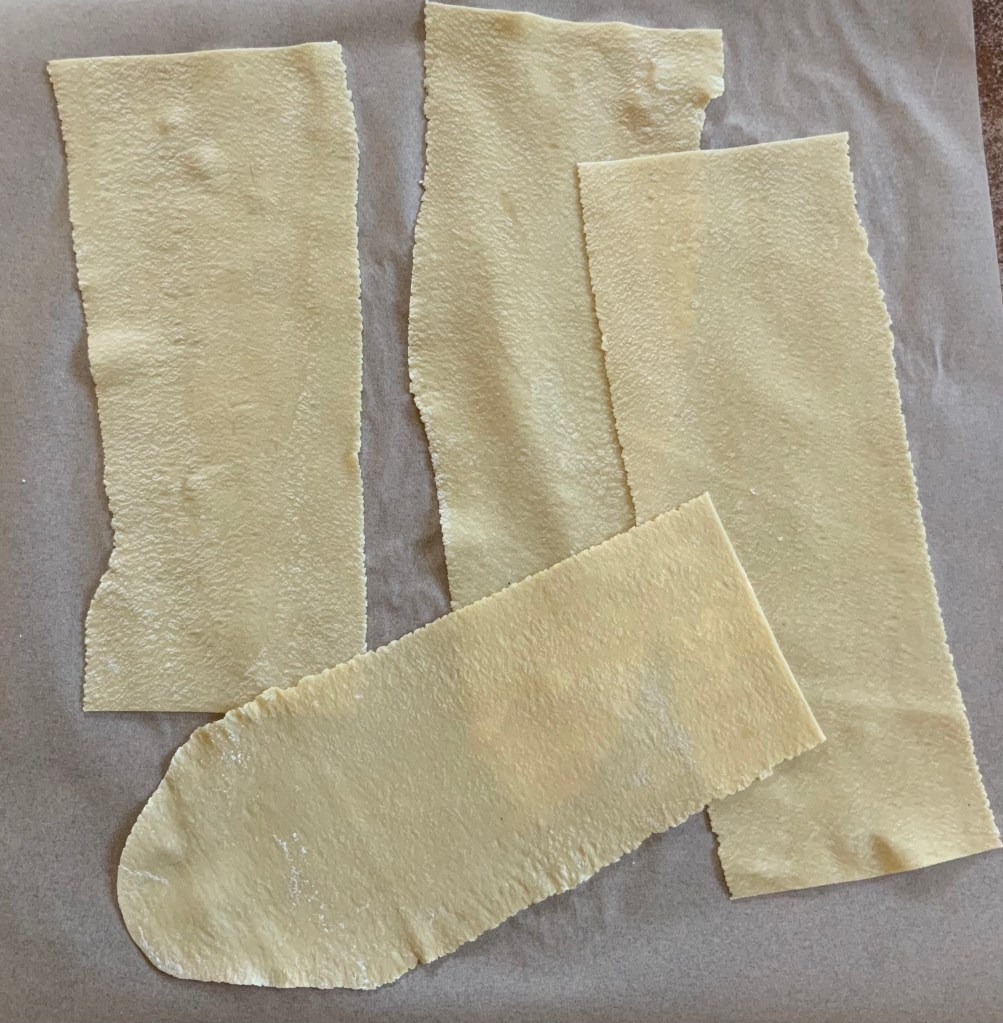
Cutting the Strips for Fettuccine
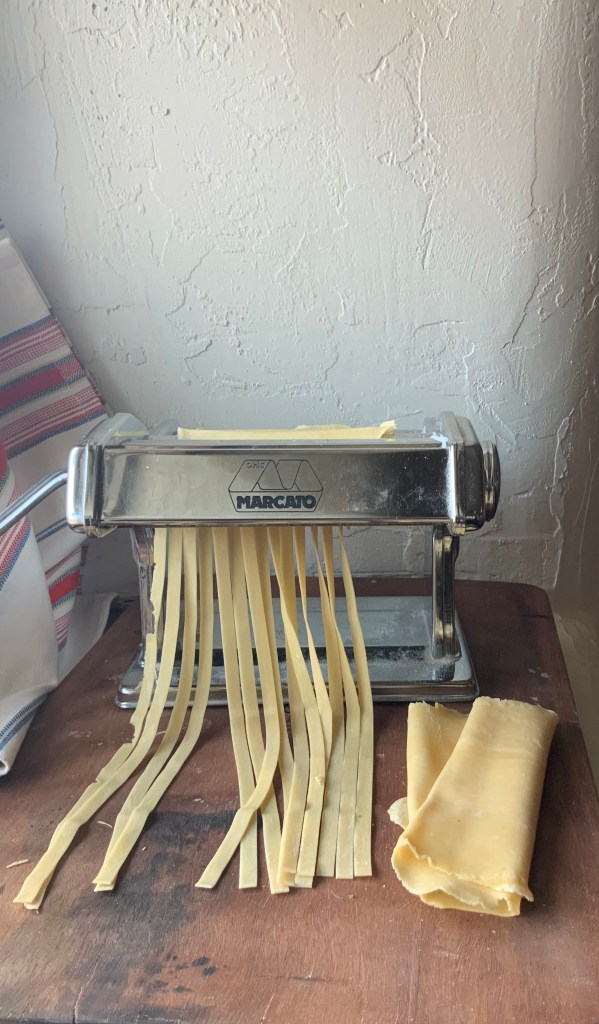
- Place the blade of the spatula flat down beneath the area where the cut pasta will feed out.
- Feed a strip through the fettuccine blades, letting the cut pasta fall down and drape over the metal blade of the spatula. Lift the fettuccine by the handle of the spatula and transfer it to the drying rack. Repeat for all 3 remaining strips.
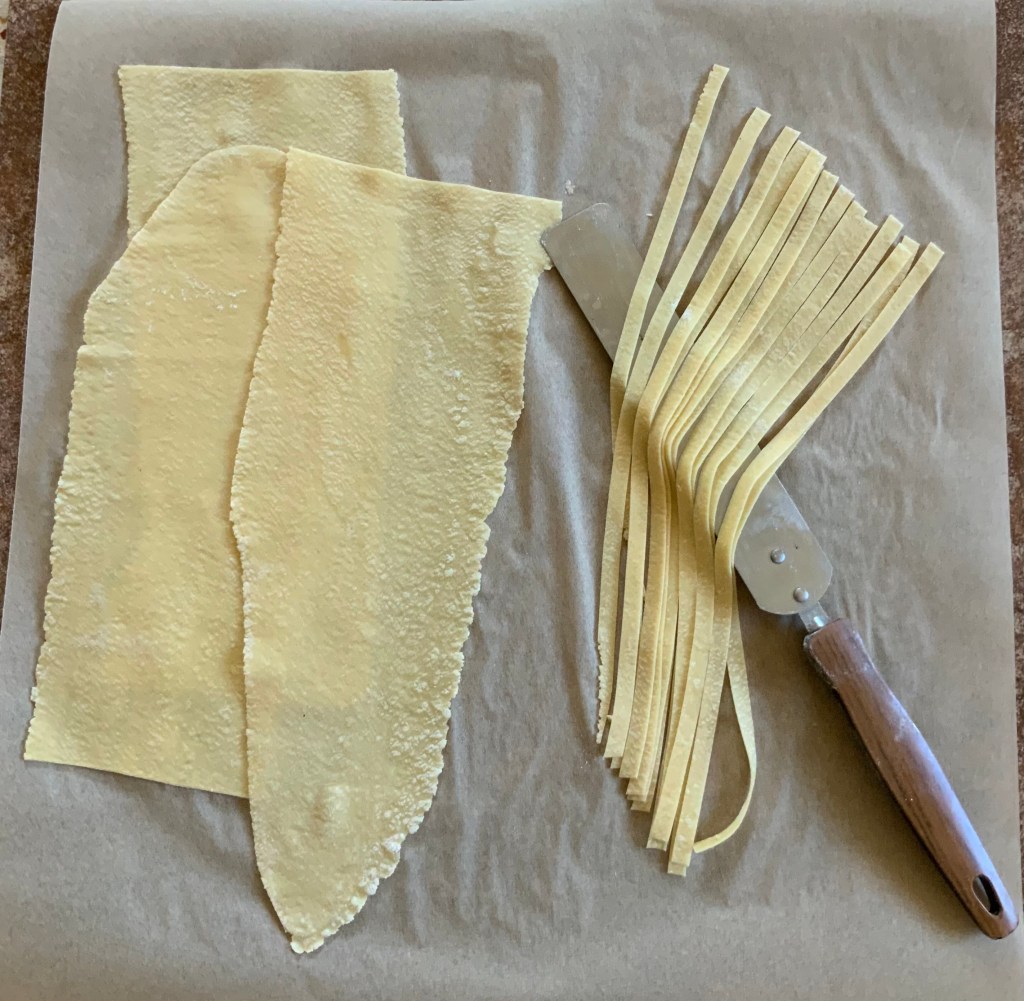
- Repeat these steps on the 3 remaining pieces of dough.
Cutting the Strips for Spaghetti
- Place the flat blade of the spatula beneath the cutting blades where the spaghetti will feed out. Pasta rolled through level No. 3 feeds out less freely than pasta rolled through level No. 6. If you are turning the handle with your right hand, keep the palm of your left on the dough to help keep it stretched straight as it feeds through the blades.
- The cut spaghetti will feed down onto the blade of the spatula.
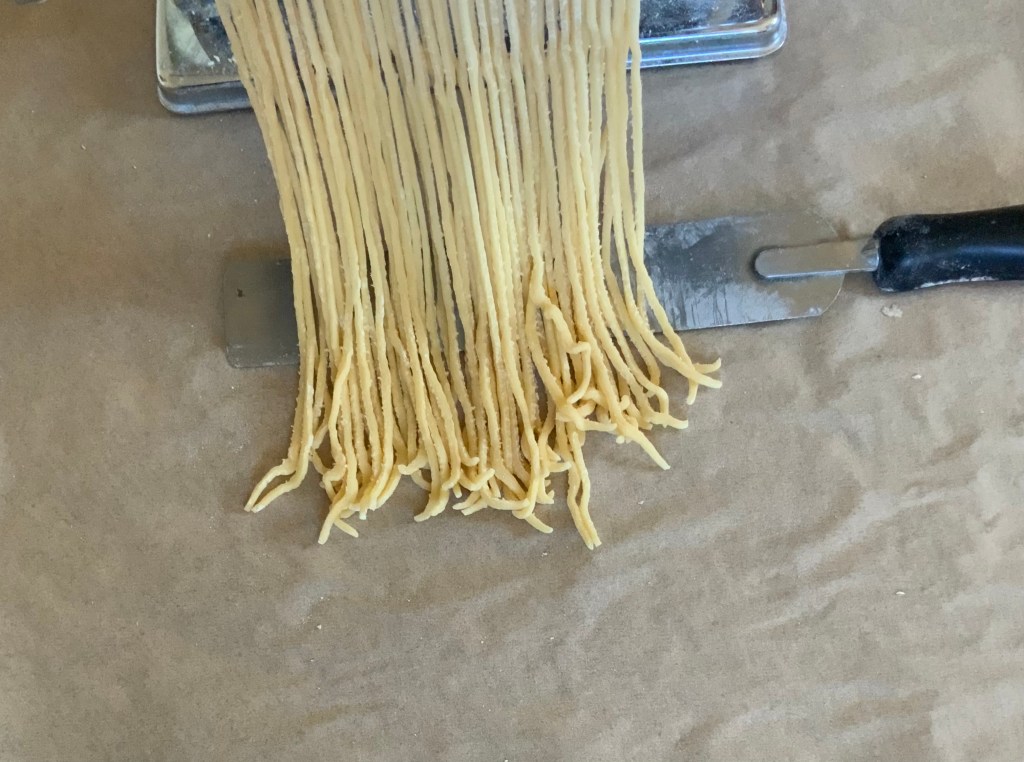
- Lift the spaghetti, draped over the blade of the spatula, by the spatula handle, and transfer it to the drying rack.
- Repeat for the 2 remaining pieces of dough.
Cutting Lasagne Strips
The number of strips and their length will depend on the dimensions of the baking dish used for making the lasagne. An 8 x 8 inch (about 20 x 20 cm) baking dish will make 4 large portions of lasagne.
- To fit an 8 x 8 inch (20 x 20 cm) baking dish, 8 strips, 8 inches (20 cm) each will make a 4-layer lasagne. The unused portion of the strips may be rolled up into a ball and frozen for later use. Cut at least 9 strips, however. The extra strip is to fill in any spaces as you form the layers, or replace a piece that tears in cooking. For a larger baking dish, you might need to cut all the dough strips into lengths of the necessary size.
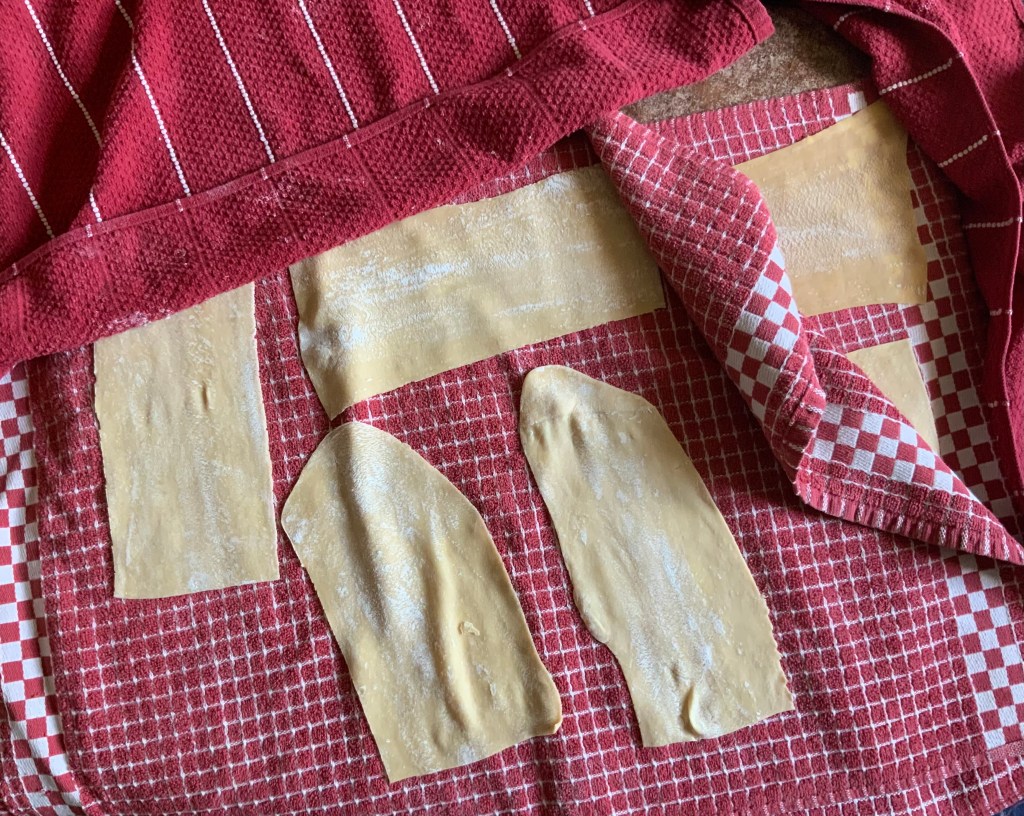
- Place the kitchen towels one atop the other next to the floured board. Place a strip of dough on the board and cut it crosswise into 8-inch lengths. Arrange the pieces on the bottom towel and cover them with the other two. Cut as many lengths as the size of your baking dish requires, placing them in single layers between the towels. Cover the top layer of strips with another towel. Short pieces may be rolled into a ball and frozen for another use.
Equipment for Cooking Pasta
- a Large Pot (8 quarts/7.5 liters or thereabout) and Lid
- a Colander, preferably one that will fit snugly into the rim of the pot if the pasta will be served on individual plates and the sauce added atop each portion
- a Large Mesh Strainer (for lasagne strips)
- Cotton Kitchen Towels (for lasagne strips)
Cooking Spaghetti Pasta
- Bring to a boil enough water in the pot to hold the pasta comfortably in a loose tangle as it cooks.
- Add the pasta. Adjust the heat for a steady, but not vigorous boil.
- For pasta that is somewhat softer than al dente, cook for 6 minutes.
- Drain in the colander. If the pasta will be served on individual plates and the sauce added atop each portion, hang the colander of pasta over the pot’s rim, where it will drain more thoroughly and will lose less heat. Toss the pasta with a little olive oil to separate the strands. Cover the colander with the lid of the pot if the spaghetti is not transferred to plates straightaway.
Cooking Fettuccine Pasta
- Bring to a boil enough water in the pot to hold the pasta comfortably in a loose tangle as it cooks.
- Add the pasta. Adjust the heat for a steady, but not vigorous boil.
- For pasta that is somewhat softer than al dente, cook for 3 minutes.
- Drain in the colander. If the pasta will be served on individual plates and the sauce added atop each portion, hang the colander of pasta over the pot’s rim, where it will drain more thoroughly and lose less heat. Toss it with a little olive oil to separate the strands. Cover the colander with the lid of the pot if the fettuccine is not transferred to a sauce or plates straightaway.
Cooking Lasagne Strips
- Lay several kitchen towels one atop the other on a workspace or counter. The cooked strips are placed on the towels to drain, just as they were arranged when they were cut.
- Bring to boil enough water in the pot to hold the strips comfortably.
- Add half the strips (4 or 5). Adjust the heat for a steady, but not vigorous boil.
- For pasta that is somewhat softer than al dente, cook for 3 minutes.
- Scoop out the strips with the mesh strainer and transfer them to the colander.
- Add the remaining strips to the boiling water, cook and transfer to the colander.
- Run cold water over the strips.
- Separate them carefully with your hands and lay them in single layers between the stacked towels to drain. Cover the top layer with a towel.
The strips are now ready to use to assemble the lasagne.



Leave a comment