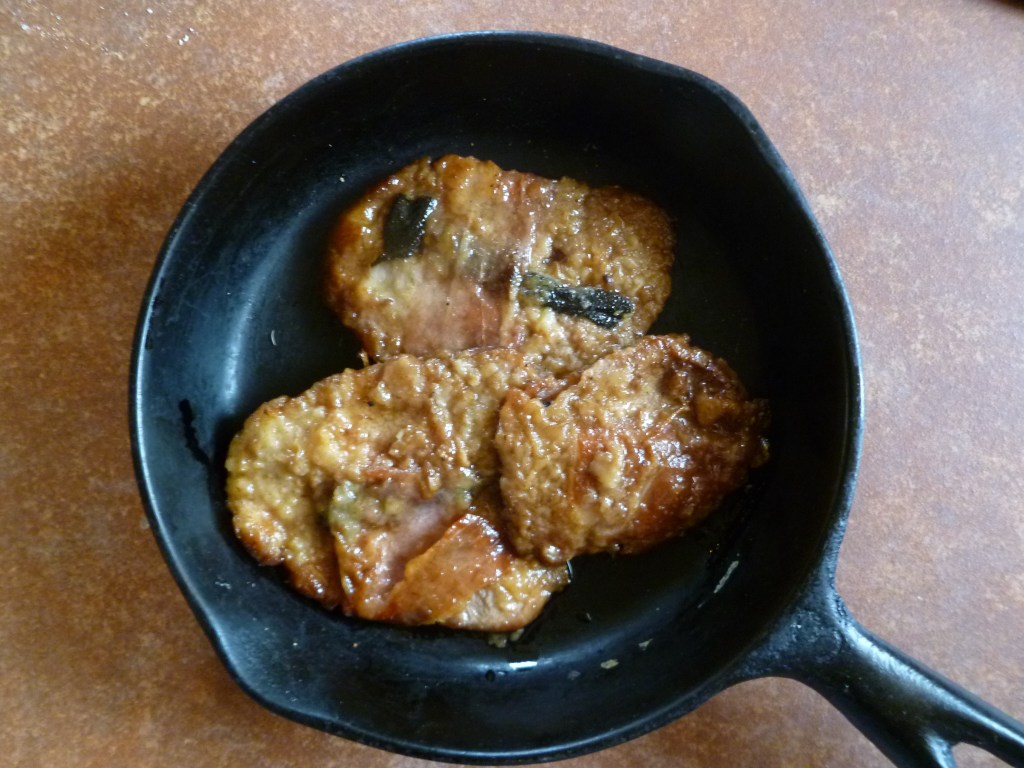
“Eighty percent of Italian cooking is done in a sauté pan.” (Marcella Hazan)
Saltimbocca roughly translates “jump in the mouth”. It is an Italian dish. But pork and sage is familiar fare throughout Western Europe and in America as well. In this sense, for those unfamiliar with it, Saltimbocca falls into the category of food one is accustomed to–a new way with the known.
Saltimbocca’s ingredient list is short. Most of them have less processed forms which you will find discussed in these links: Chicken Breasts, Pork Tenderloin, Prosciutto, Fresh Sage, Flour, Butter, Olive Oil, Parsley, Fresh Parsley.
A note: Chicken breasts also may be made into scaloppine and used in any of thefoodlessprocessed scaloppine recipes. How to do this is described in this post: Making Scaloppine ~ with Chicken Breasts.
Equipment
- a Sauté Pan (thefoodlessprocessed uses either one of cast iron or, for larger amounts, an enameled cast iron sauteuse with a black baked-on porcelain enamel interior. Pans with a white enameled interior will not brown the meat as well. You may read more about the unique qualities of The Cast Iron Pan here on thefoodlessprocessed.
- Utensils for making the scaloppine from a pork tenderloin or chicken breasts: a Cutting Board, a sharp Knife with a long blade, a Kitchen Mallet, and Plastic Wrap.
- a Small Pie Pan or Rimmed Container to hold flour
- a Rimmed Baking Tray, preferably large enough to hold the floured Scaloppine in a single layer
Ingredients
- at least 1 Whole Pork Tenderloin: Those of about 1 pound (454 g) are best for making scaloppine. A tenderloin of this size will make 8 to 10 scaloppine. A suggested amount is 3 or 4 per person.)
- Alternative: 4 thin-sliced Chicken Breasts (about 1 pound or 450 g). These will make 12 scaloppine or 3 per breast.
- about 1/8 cup of Extra-Virgin Olive Oil (30 ml) and 2 Tablespoons of Organic European style Unsalted Butter (28 g)
- Imported Italian Prosciutto (1/2 slice of a piece of Prosciutto sliced vertically in two for each Scaloppine)
- a Fresh Sage Leaf for each scaloppine
- European Unenriched Soft Wheat White Flour
- about 3/4 cup of Dry White Wine (180 ml)
- about 1 Tablespoon of Fresh Lemon Juice
- some chopped Fresh Parsley or Dried Parsley (not powdered)
Making the Scaloppine
The technique for making the Scaloppine with pork tenderloin is here on thefoodlessprocessed. For making them with chicken breasts, follow this link: Making Scaloppine ~ with Chicken Breasts.
Making the Saltimbocca
(Note: Flour the scaloppine at least 30 minutes in advance if possible. The flour will adhere to the meat and browns with a smoother finish.
- Place a sage leaf on a scaloppine and wrap 1/2 slice of prosciutto over it, tucking the ends on to the underside. Repeat with all scaloppine.
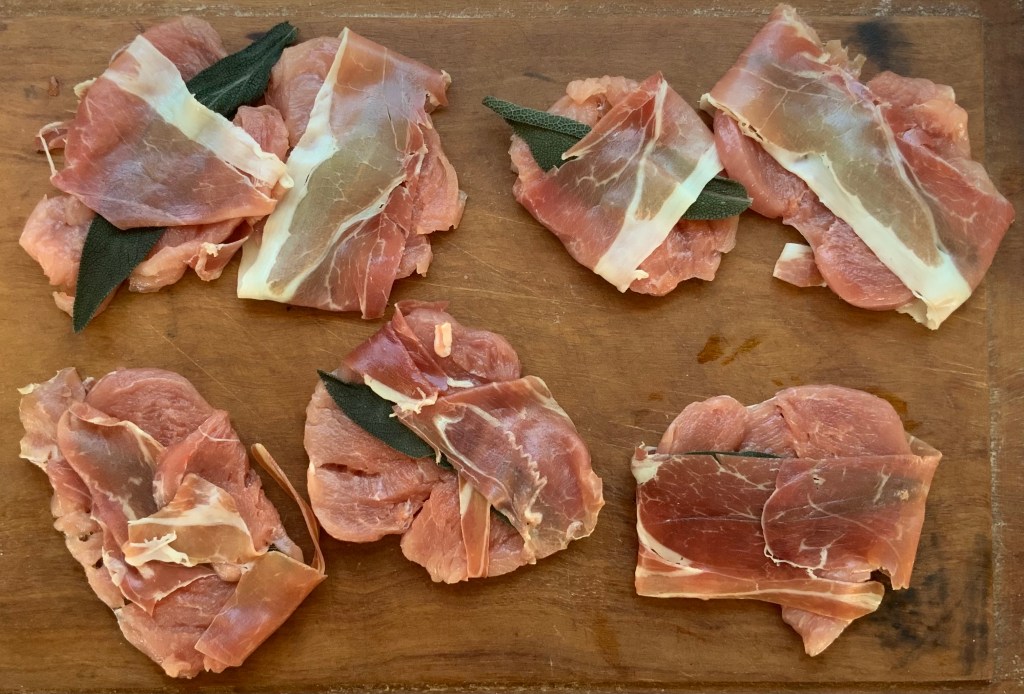
- Mound a little flour in the pie pan and flour the scaloppine. Place them on the rimmed tray as they are floured. If there is time, let the scaloppine sit for 30 minutes to allow the flour to adhere to the meat.
- Heat the olive oil and butter in the sauté pan. The oil should be hot but not allowed to smoke. It will shimmer as it approaches the right temperature. The butter will melt and foam. When the foam subsides, add as many scaloppine as will fit without crowding and sauté until golden.
- Turn when the scaloppine come away from the pan easily and brown on the second side. Test to ensure that the scaloppine come away from the pan without sticking before transferring them to a plate.
- If you are sautéing the scaloppine in batches, add a bit more olive oil and another tablespoon of butter and sauté the next group. Remove them from the pan as well.
- Reduce the heat to a medium degree. Add the white wine to the pan. Stir and scrape the brown bits from the pan’s surface.
- Just as the wine begins to reduce and thicken, return the scaloppine to the pan. Further reduce the heat so that the sauce does not reduce too quickly. Reheat the scaloppine, turning them in the sauce. The browned flour coating on the scaloppine will further thicken the sauce. Add the lemon juice, sprinkle with some parsley, and serve.
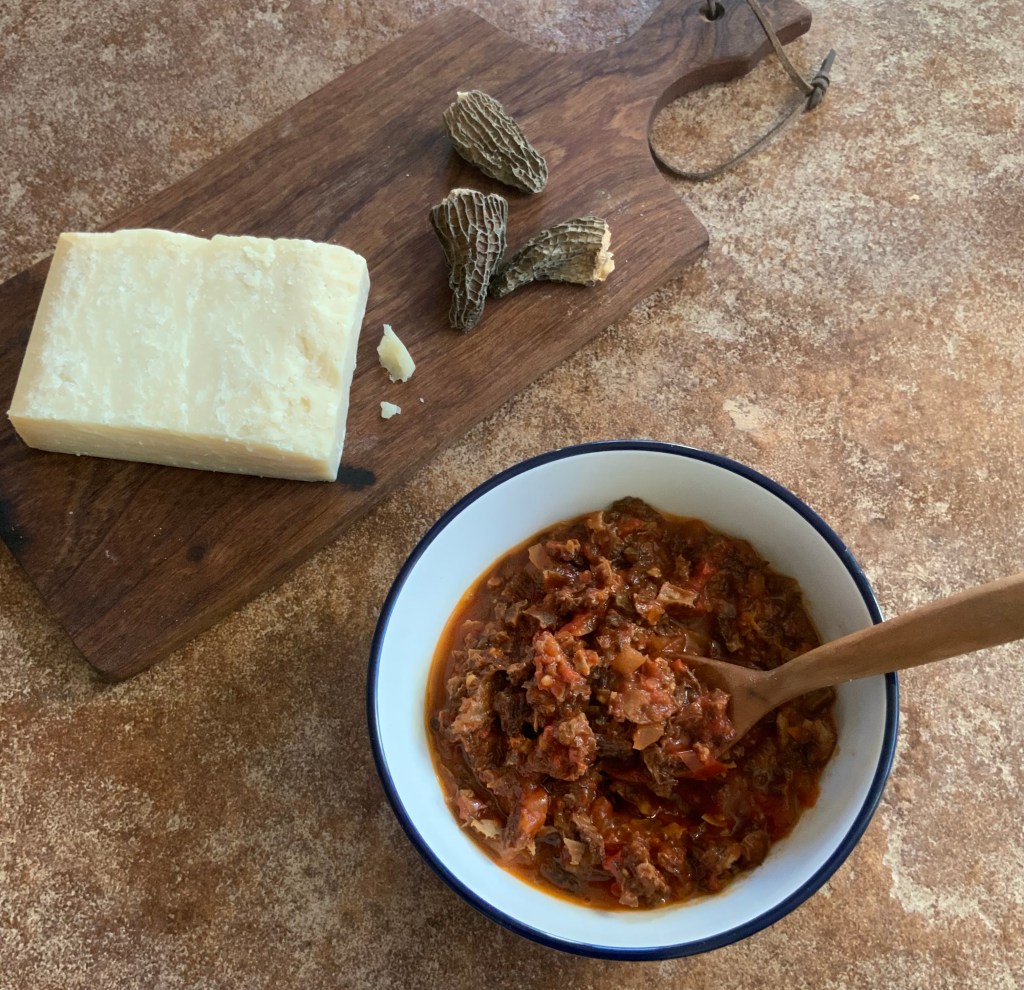
This version of Saltimbocca has only enough sauce to lightly coat the scaloppine. In the Complimentary Combinations provided below, it is served with fettuccine and a morel sauce.

 thefoodlessprocessed
Leave a comment