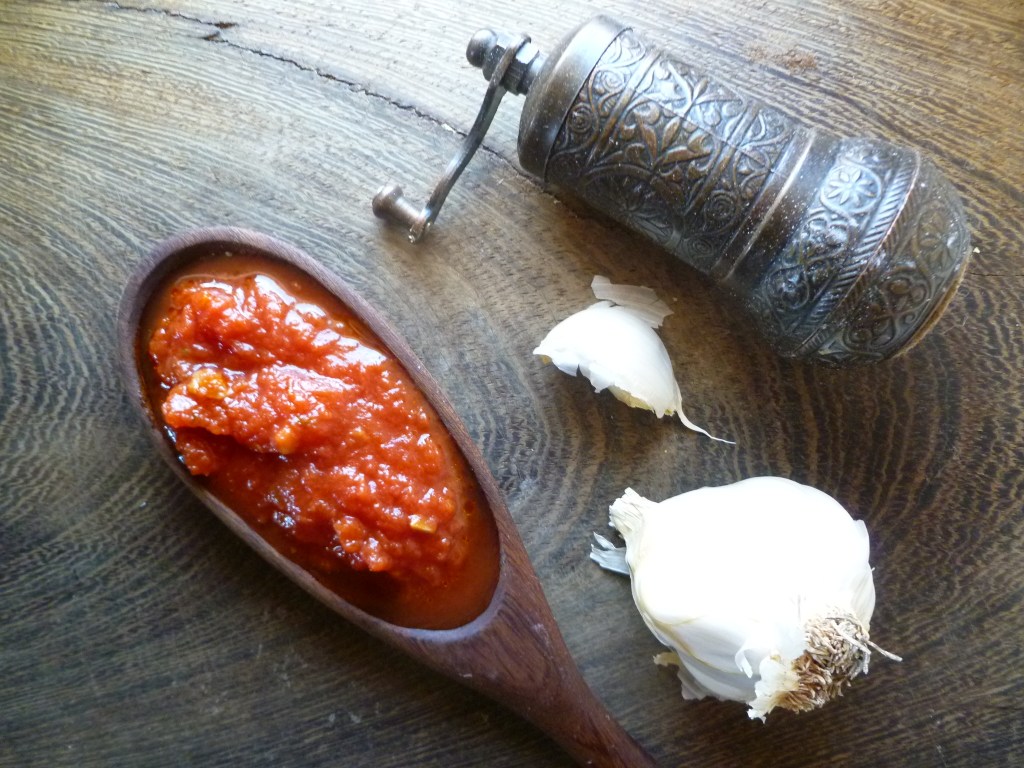
In traditional European and American styles of cooking, a basic recipe for Tomato Sauce is used in many different ways. The sauce is cooked down to the consistency that suits its purpose. Used as a Pizza Sauce, for example, it will be very thick; for Scaloppine Parmesan or a Sauce for pasta, less so. The recipe below describes a sauce cooked to the latter consistency.
Click on any of these links to read about the less processed ingredient options used: Preserved Tomatoes, Olive Oil, Tomato Paste, Oregano.
Equipment
- a Pot with a Heavy Bottom and a Lid
- a Flame Tamer (aka Heat Diffuser, Simmering Plate). This is optional. The pot is not in direct contact with the heat. The heat is dispersed more evenly and the sauce cooks more gradually. It is less likely to scorch as it thickens. Some brands may be used on a smooth-top burner.
Ingredients
- about 3 Tablespoons of Extra-Virgin Olive Oil
- 2 or 3 Cloves of Garlic, minced–number according to taste
- a Box of Imported Italian Fine-Chopped Tomatoes (A box of the variety used is 750 grams or a little over 3 cups.)
- 1 Tablespoon of Imported Italian Tomato Paste
- 1 teaspoon of dried Oregano Leaves (not powdered)
Making the Sauce
- Heat the olive oil in the pot and add the minced garlic. Sauté until the edges of the garlic begin to brown.
- Remove the pot from the heat. To avoid spattering, cool the pot a little and then add the tomatoes, the tomato paste and the oregano.
- Place the flame tamer on the burner and adjust the heat to low. Place the pot on the flame tamer. Cover the pot and simmer the tomato mixture until it is reduced to a sauce of medium thickness. ‘Medium’ is a subjective criteria. The color of a medium thick sauce will be bright red. It will hold its shape on a spoon. Stir the sauce occasionally as it simmers to ensure that it is not sticking to the bottom of the pot.



Leave a comment