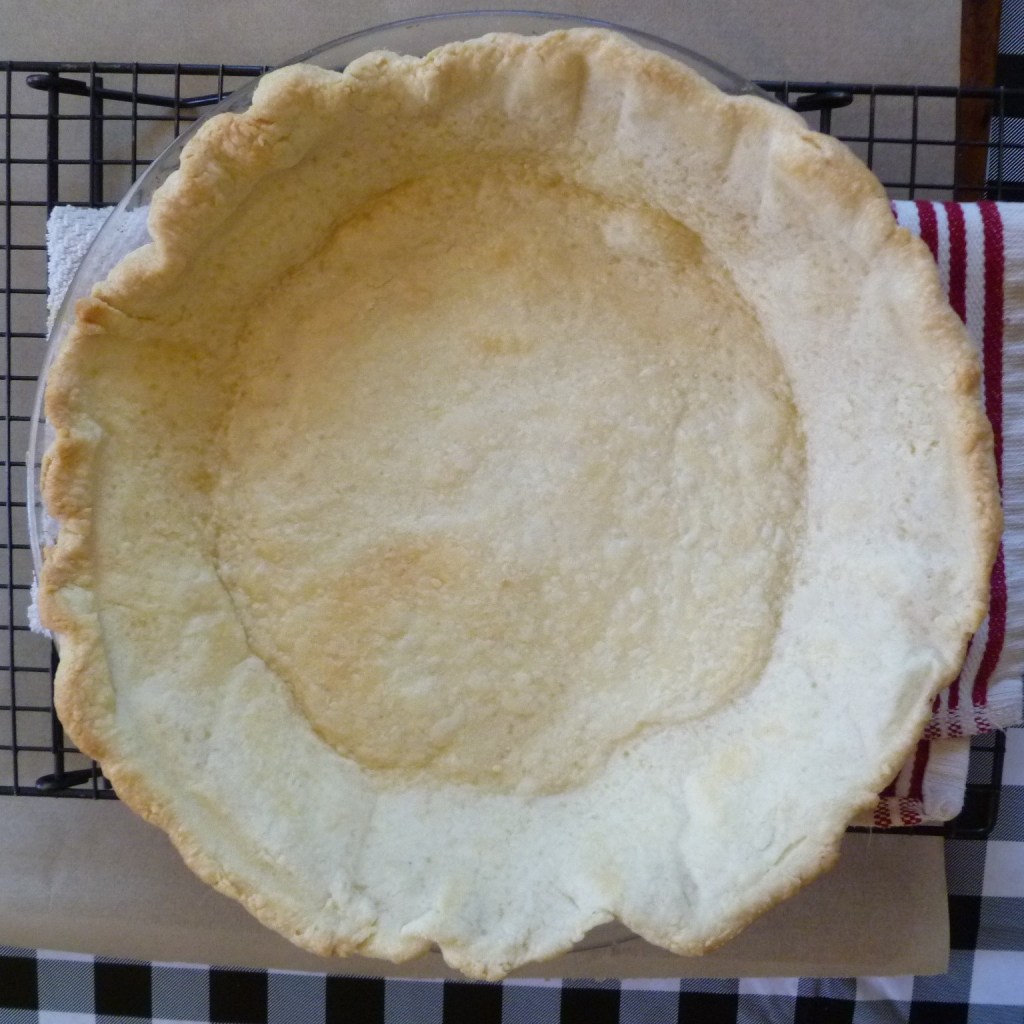
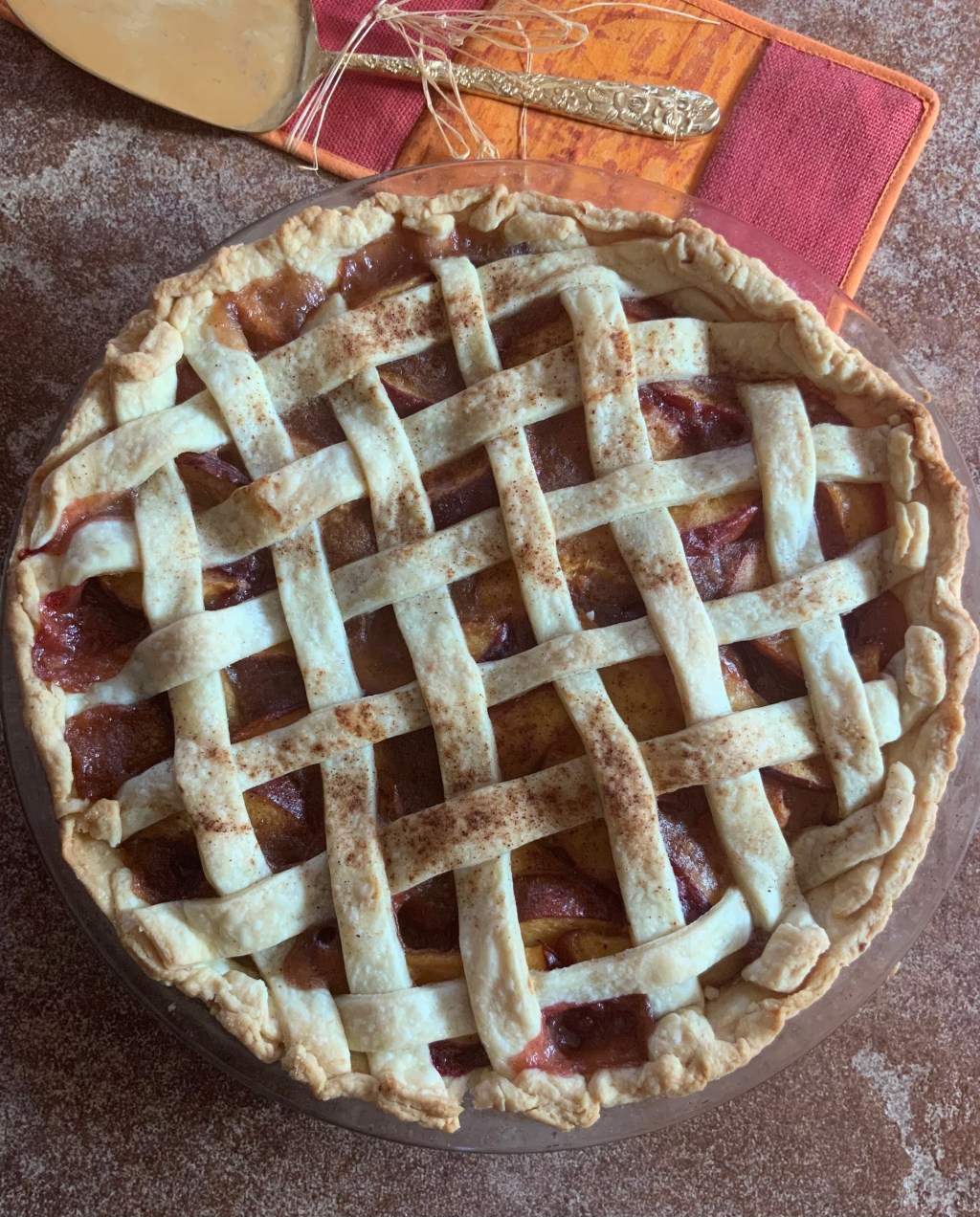
thefoodlessprocessed uses this basic short crust for both savoury and sweet pastries. We use an organic European-style unsalted butter. European butter has a higher butterfat and lower moisture content.
The dough freezes well. It rolls out more easily after it has been refrigerated or frozen and thawed in the refrigerator. Frozen dough will have darkened a shade in colour, but there is no discernible difference in the quality or appearance after baking.
The recipe proportions below are enough for a single crust traditional slant-sided American pie pan with a 10-inch diameter base or for a shallow straight-sided tart pan with a 10-inch removable base.
Descriptions of how to blind bake both slant-sided and straight-sided crusts are also given below.
You may read more about the less processed ingredient options through these links: Flour, Butter, Salt, Water.
Equipment for Mixing the Dough, Rolling Out and Blind Baking
- a Large Mixing Bowl
- a Pastry Board
- a Rolling Pin
- a Traditional American Slant-sided Pie Pan (10-inch Diameter Base)
- a Sheet of Parchment Paper larger than the Pie Pan
- a Lightweight Slant-sided Pie Pan (8-inch Diameter Base). (This is used for the blind baking.)
Ingredients
- 1 and 1/2 cups of European Soft Wheat Unenriched White Flour, plus a little more for the board and finished dough (180 g)
- 9 Tablespoons of Organic European-style Unsalted Butter (126 g)
- 3/4 teaspoon Sea Salt (about 4 g)
- a maximum of 4 and 1/2 Tablespoons of Cold Bottled Spring Water or Well Water
Mixing the Dough
- Pour the flour and salt into the bowl and mix them together.
- Add the butter, cutting it into small pieces.
- Rub the butter into the flour with your hands until you feel only very fine bits of butter in the texture of the mix.
- Sprinkle a tablespoon of water over the mixture and lightly blend it in with your fingers. Add the water by tablespoons until the dough forms a cohesive ball.
- Lightly flour the dough. Wrap it in plastic wrap and refrigerate for about 30 minutes before rolling it out if there is time. The dough also may be frozen for later use and thawed in the refrigerator before using.
Rolling Out, Forming and Baking the Pie Shell
Note: The baking time of 15 minutes is for a completely baked crust. For a partially baked crust, reduce the time to 10-12 minutes.
Gas or Convection Oven: thefoodlessprocessed uses a gas oven. The conversions from Fahrenheit to Celsius do not attempt to adjust for differences between baking in a gas or convection oven. I have no experience using a convection oven, and leave adjustments to the better judgement of you who do have.
- Preheat the oven to 450 F (232 C). Roll the dough out on a lightly floured pastry board. Roll from the center out in all directions to form a circle that will fit in the pie pan with a small overhang.
- Transfer the dough to the pie pan: Place the pie pan next to the board. Roll the dough loosely around the pin, towards you, until only about half the dough hangs down from the pin. Drape the unrolled portion over the edge of the pan nearest you and unroll the remainder out away from you, covering the pan
- Press the dough down into the pan and up the sides. Trim the overhang a little beyond the border of the pan. Roll the edges of the dough under to rest on top of the pan. Crimp the border with your fingers.
- Place the sheet of parchment paper over the shell and position the smaller pie pan down into the parchment-covered shell. Lightly press the parchment and rim of the smaller pan into the sides of the crust to keep the crimped border from sliding down below the edge of the pan.
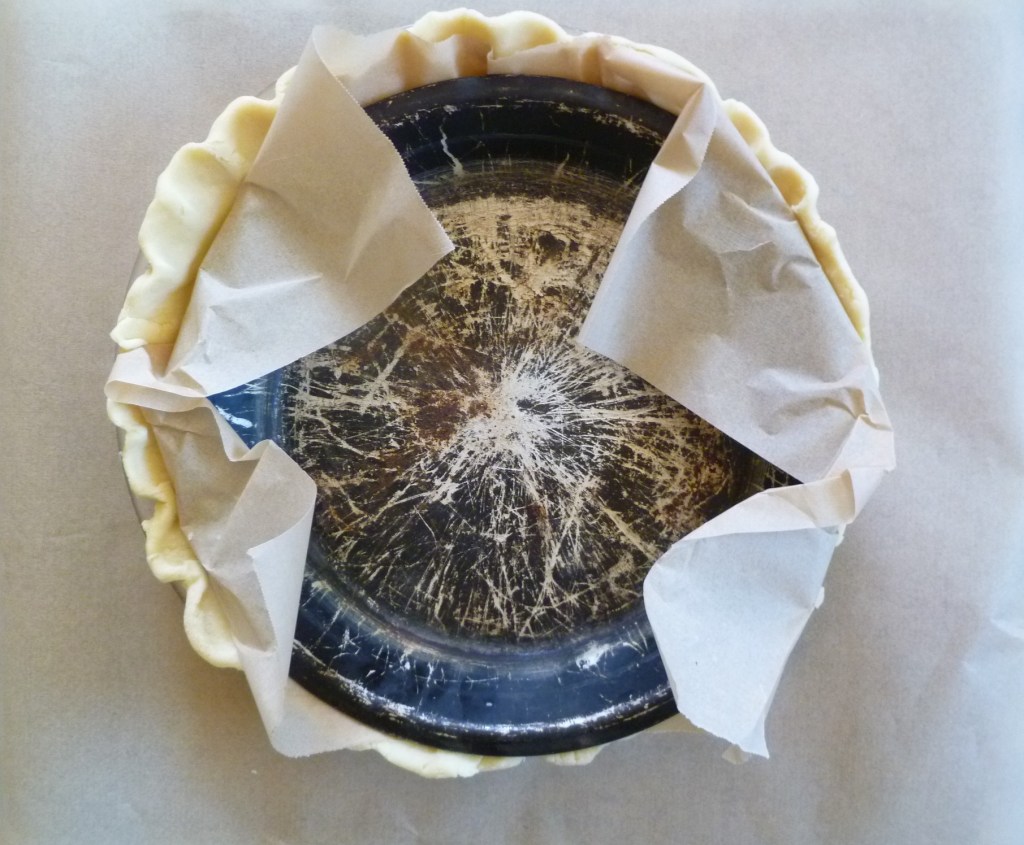
- Bake on the lower middle rack of the oven for 15 minutes. Remove the parchment and small pan. If the bottom of the crust is not lightly browned, bake a few minutes more without the cover.
- Cool the shell completely before filling.



Leave a comment