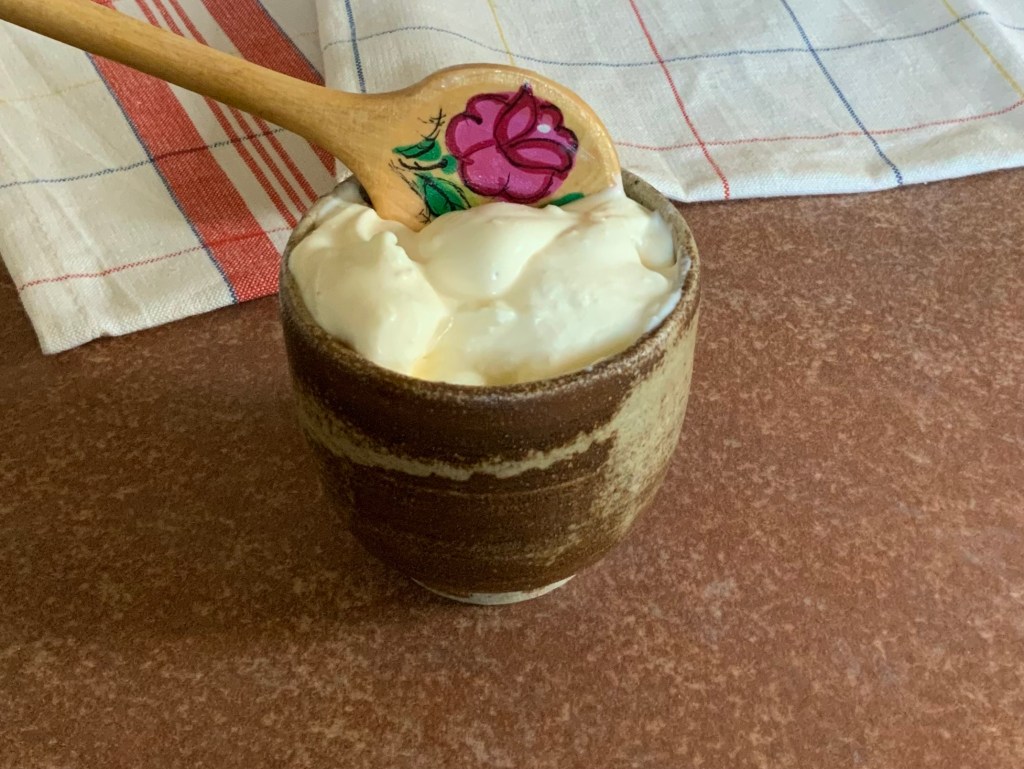
Crème fraîche is a cultured French cream. It uses a specific lactic culture different from those found in yoghurt or buttermilk to produce a crème of distinctive mellow flavour and a thick, smooth texture. It is a very versatile staple of French cuisine that is used, for example, to thicken hot sauces and soups, and also as a base for cold sauces and dips. In short, it expands your range of traditional ingredient choices.
Crème fraîche stays fresh longer than heavy cream and the two are often interchangeable in recipes. Keeping some on hand in addition to cream allows you to substitute it instead of altering a menu or making an extra trip to the store when there is no more cream in the refrigerator.
A homemade version is best made using a high quality commercial brand as a starter, one that contains only heavy cream and an active culture. Crème fraîche starter may also be bought online. After making an initial batch, you can use your own homemade crème as a starter.
To read more about crème fraîche as a less processed ingredient in recipes and about the less processed ingredient options in making crème fraîche, follow these links: Cream, Crème fraîche.
Equipment
- a Small Mixing Bowl
- a Glass Jar and Lid with about a 2-cup capacity (or about 475 ml)
- Plastic Wrap
Ingredients
- 1 cup (236 ml) Organic Heavy Cream
- 2 or 3 Tablespoons of Crème fraîche
Making the Crème
- Pour the heavy cream into the mixing bowl
- Whisk in the crème fraîche.
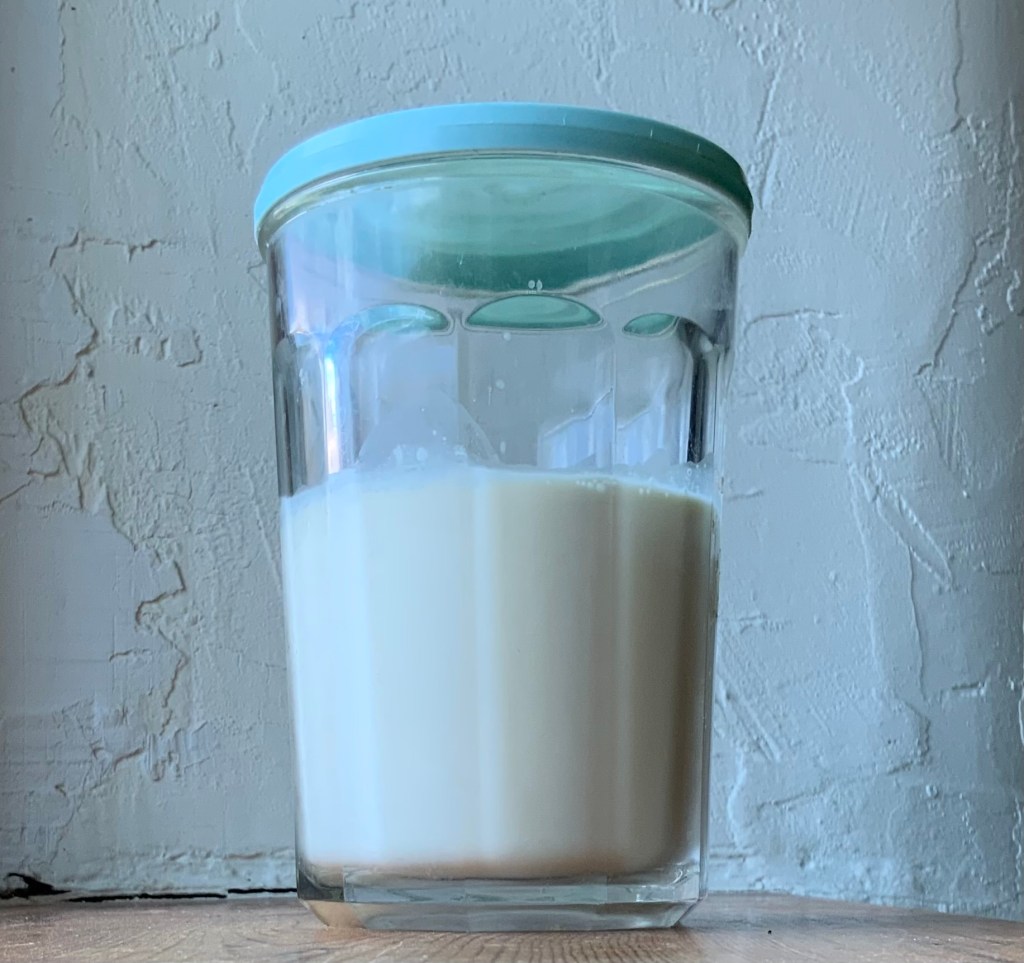
- Pour the mixture into the jar and cover it loosely with plastic wrap and the lid.
- Leave the cream at room temperature for 24 hours. It will thicken as it ferments and become crème fraîche. Whisk it smooth and refrigerate it for several hours. The crème will thicken more as it chills..
- Homemade crème fraîche will keep for several weeks in the refrigerator.





Leave a comment