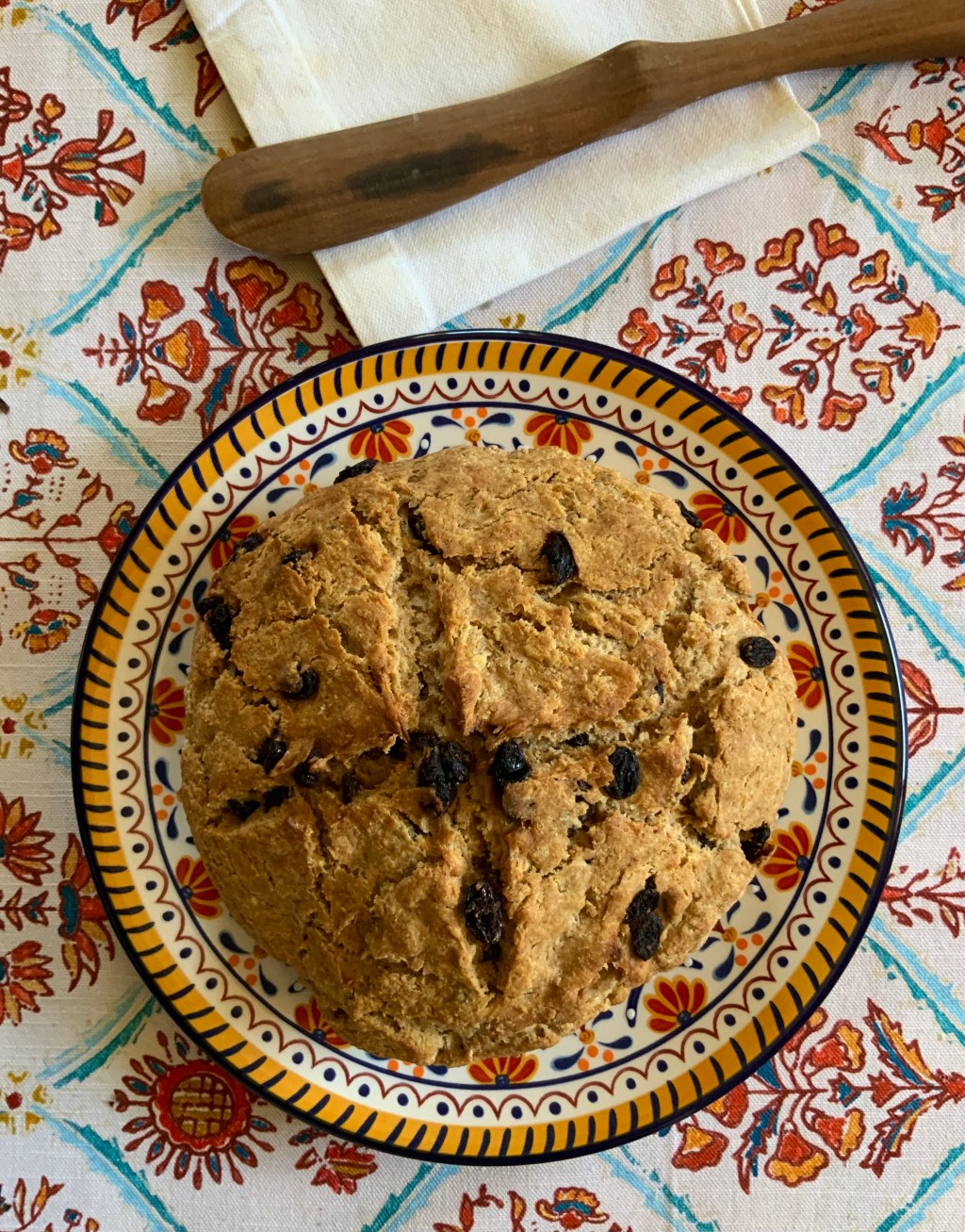
Irish Soda Bread is a quick bread. Quick breads are leavened without yeast, using instead baking powder or baking soda. They are baked immediately after mixing.
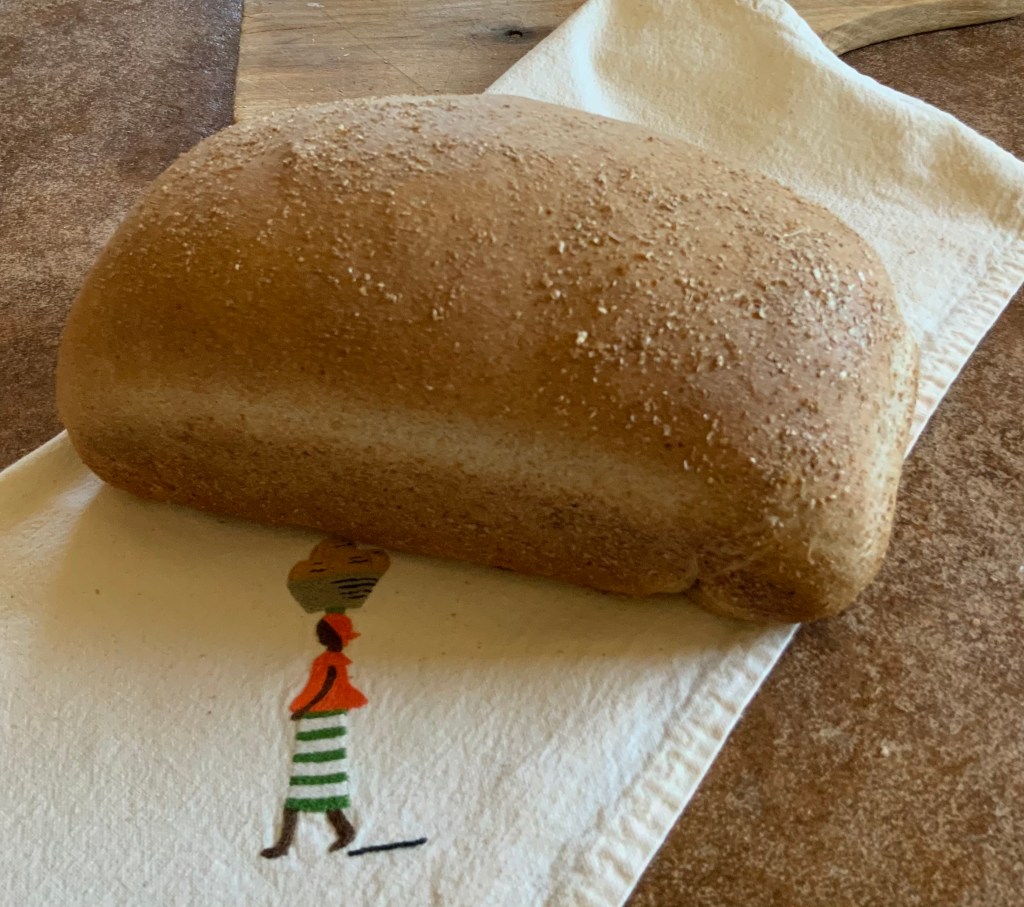
This particular soda bread is a small one, baked in a Dutch oven for about 35 minutes.
The less processed ingredient options are described here: White Flour, Whole Wheat Flour, Butter, Raisins, Buttermilk.
Equipment
- a Large Bowl for mixing the dough
- a Wooden Spoon
- a Pastry Board
- a Lame (a razor blade on the end of a handle), or a Sharp Knife
- a Medium-Sized Bowl lined with Parchment Paper for baking the bread
- a Dutch Oven
Ingredients
- 1 cup (125 g) of All-Purpose Unenriched European White Flour and a little more Flour for the Pastry Board or substitute Organic White All-Purpose Unenriched Hard Wheat Flour. (The standard American flour is a hard wheat flour.)
- 1 cup (125 g) of Stoneground Whole Wheat Flour
- 1/2 teaspoon of Baking Soda
- 1/2 teaspoon of Sea Salt
- 2 Tablespoons (30 g) of European-Style Unsalted Butter
- 1/2 cup of Organic Raisins
- 3/4 Cup (180 ml) of Homemade Buttermilk or Buttermilk Substitute (3/4 cup/180 ml of Whole Milk and 3/4 teaspoon of Organic Unfiltered Apple Cider Vinegar.
Forming the Parchment Baking Nest
Since this is a small loaf, the parchment is formed in a medium-sized bowl. It may still be baked in a large Dutch oven.
- Cut off a large sheet of parchment paper. The exact size is unimportant, but it should be large enough to come up beyond the sides of the medium-size mixing bowl.
- Then fold this rectangle to form a rough triangle. Fold it again into a smaller triangle.
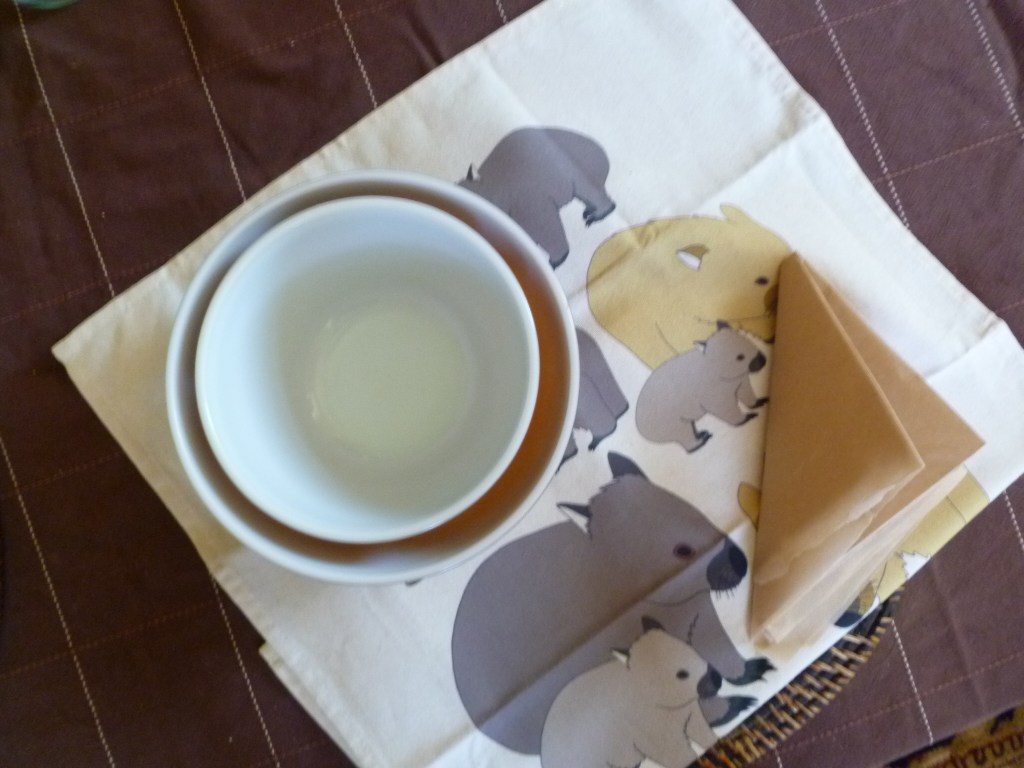
Place the narrow point of the triangle down in the center of the medium-size mixing bowl and unfold the paper into the bowl, pressing the pleats out and moulding the paper to fit the bowl. Place the smaller mixing bowl down onto the paper and fold the pointed edges of the paper down around the sides of the medium bowl.
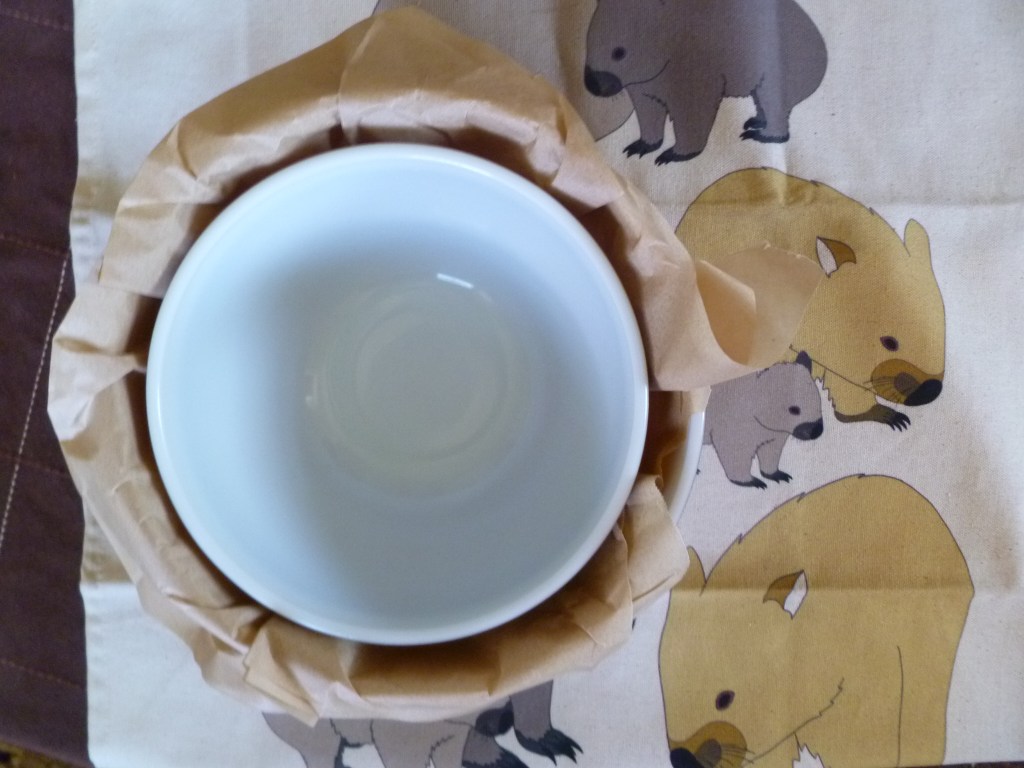
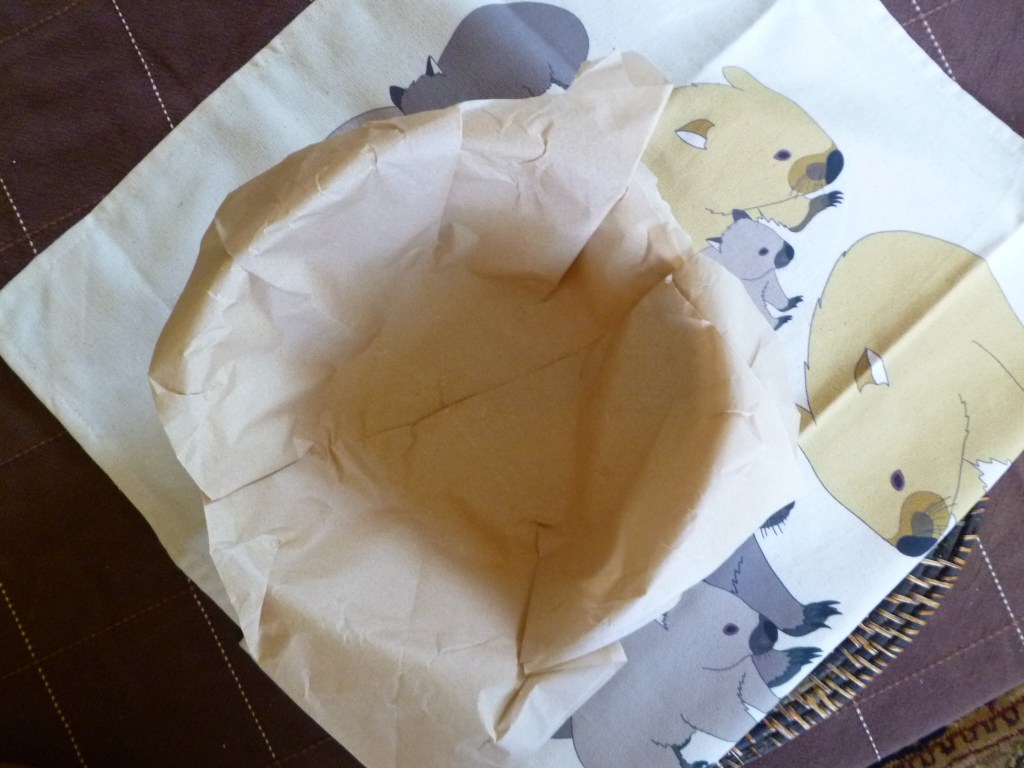
- Remove the smaller mixing bowl.
Mixing and Baking the Bread
Gas or Convection Oven: thefoodlessprocessed uses a gas oven. The conversions from Fahrenheit to Celsius do not attempt to adjust for differences between baking in a gas or convection oven. I have no experience using a convection oven, and leave adjustments to the better judgement of you who do have.
- Place the Dutch oven (covered with its lid) on the middle rack of the oven and preheat it to 425 F (220 C).
- If you are using the buttermilk substitute, mix together 3/4 cup of milk with 3/4 teaspoon of apple cider vinegar and leave it stand to thicken while you mix the other ingredients.
- In the large bowl, combine the white and whole wheat flours, the baking soda and the salt.
- Add the butter, cut into pieces, and rub it into the flour mixture with your fingers until you no longer feel distinct bits of butter in the mix.
- Stir in the raisins.
- Add the buttermilk or buttermilk substitute and stir quickly to form a slightly sticky dough.
- Turn the dough out onto a floured pastry board and shape it into a round by gathering it together and turning it in a circular fashion.
- Place it in the parchment nest.
- With a lame or sharp knife, cut a cross in the center of the loaf.
- Remove the preheated Dutch oven, set aside the lid, and lift the loaf by the edges of the parchment and transfer it to the Dutch oven. Replace the lid and return the Dutch oven to the oven. Bake for 25 minutes.
- Remove the lid and continue to bake for another 10 minutes. The loaf will be golden brown and hollow-sounding underneath.
- Remove the loaf to a rack and cool it for at least 30 minutes before cutting.

 thefoodlessprocessed
Leave a comment