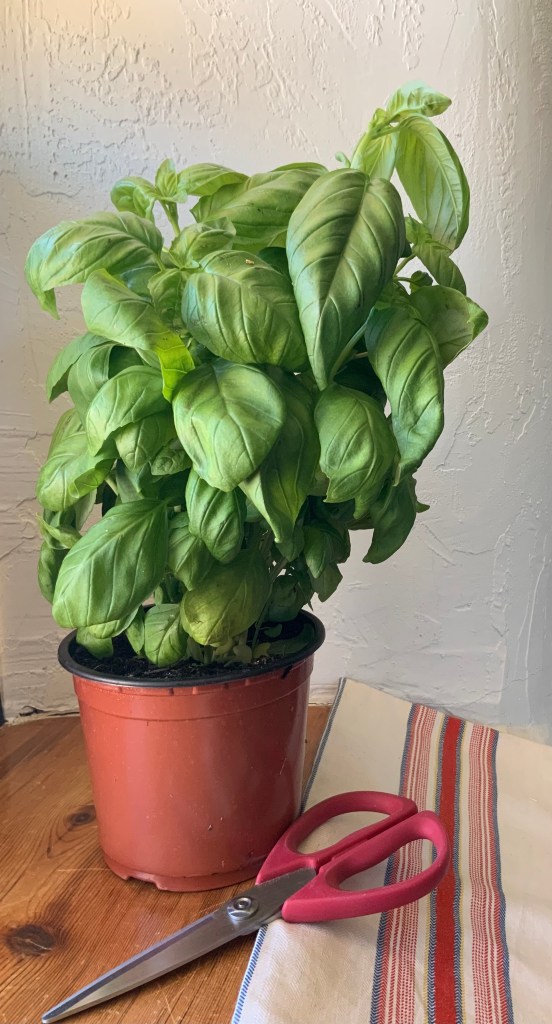
Bright-green, soft-leaf Genovese basil is the variety of the herb most often used for pesto. In the supermarket you may come across containers of basil that have large, darker leaves and thick stems. This, too, may be Genovese basil, but a commercial hybrid variety bred for sturdiness and longer shelf-life. It is less sensitive to refrigeration and is harvested later for a better yield. The flavour of the hybrid differs significantly from the original.
Authentic Genovese basil is often sold as a live potted plant and in a size large enough to use for making pesto.
This link will take you to thefoodlessprocessed recipe for spaghetti made with fresh pasta: Fresh Pasta for Spaghetti, Fettuccine, and Lasagne.
The spaghetti for the pesto may be made with a commercial pasta instead. For those who are interested in a less processed option for packaged, dried pasta, follow this link: Dried Pasta.
Here are the other links for further information about the less processed ingredient options: Basil, Olive Oil, Parmesan.
Equipment for the Pesto
- a Food Processor and Blade Attachment: If your processor has both larger and smaller bowls, the smaller will give a smoother, more consistent sauce.
- a Heavy Bottomed Pot of about 5-quart capacity. thefoodlessprocessed uses an Oval Enameled Cast Iron Dutch Oven of a 5.5 quart (about 6.25 liter) capacity. The pot is used to keep the pasta warm while mixing it with the pesto.
- a Flame Tamer (aka Heat Diffuser, Simmering Plate) is optional. The pot does not sit directly over the heat source. This is especially useful when cooking in enameled cast iron, which should be used only over a low flame. Some versions may be used on a smooth-top burner.
Ingredients for the Pesto
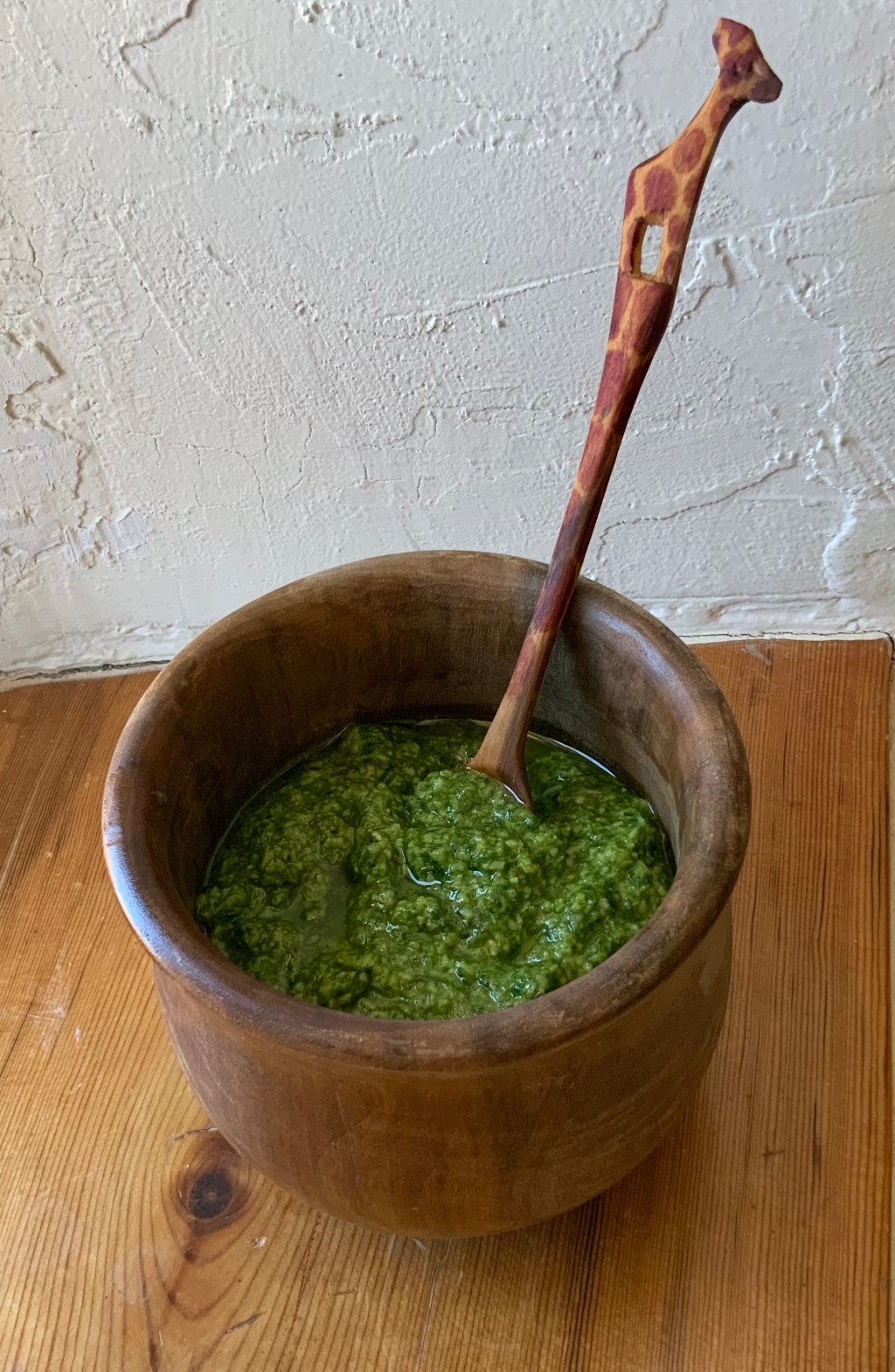
- 4 cups of fresh Genovese basil leaves, measured by lightly packing them in a 4-cup (about 1 liter) liquid measuring cup. From a live plant, snip off stems of larger leaves at their junction with smaller leaves on the same stem. Remove the large leaves and add them to the measuring cup. Discard the cut stems. You may find that you use the entire plant. If not, leave the remainder of the plant intact and use the remaining leaves later for another use. A very good pesto may be made with only 1 or 2 cups of leaves by increasing the amount of cheese when processing the mixture until the sauce is of a pale-green, creamy consistency. The sauce in the photograph below contains only a single cup of basil leaves.
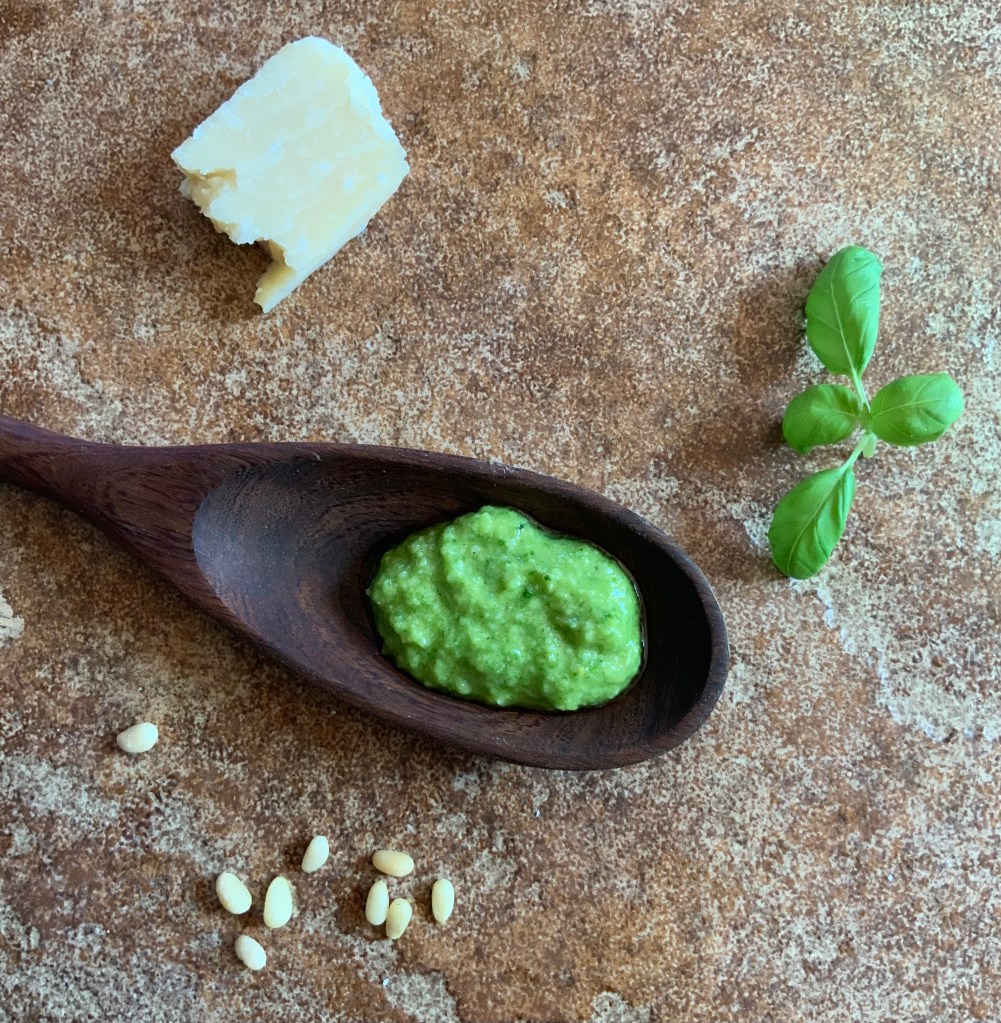
- 3 Tablespoons of Pine Nuts (Walnuts are a good substitute.)
- 1/2 cup of Extra-Virgin Olive Oil (about 120 ml) and a little more for the bottom of the pot used for mixing the pasta and sauce together.
- 1 cup of finely grated Parmigiano Reggiano PDO (about 90 g)
Making the Pesto
Note: Before making the pesto and mixing it with the pasta, fill the pot with a couple of inches of water. Place it on the flame tamer and heat it. Once the water is hot, turn off the heat. Leave the water in the pot until you are ready to mix the pesto with the spaghetti. The pasta will cool down less as it is mixed if the pot is warm. When you are ready to mix the sauce and pasta, discard the water. Add a very little olive oil to coat the bottom of the pot. Put the hot cooked pasta in the pot, add the pesto and mix the two together well. Serve once mixed. The flavour and colour of pesto will change if reheated. See the directions for cooking the spaghetti below.
- Rinse the leaves under cool running water right before making the pesto and pat the excess moisture off with paper towels. The leaves do not need to be dry.
- Place the leaves, olive oil, and pine nuts in the bowl of the processor and process until it becomes smooth.
- Add the Parmesan and blend again. The pesto should be of a thickness that will hold together on a spoon. Add some more Parmesan if it is too thin.
- When you are ready to mix the sauce and pasta, discard the water from the large pot. Add a very little olive oil to coat the bottom of the pot. Put the hot cooked pasta in the pot, add the pesto and mix the two together well. Serve once mixed. The flavour and colour of pesto will change if reheated.
Making Pesto in Advance
Because the fresh taste and colour of the basil in the pesto will deteriorate rapidly. Keeping the sauce airtight if it is not to be served right away will prevent this.
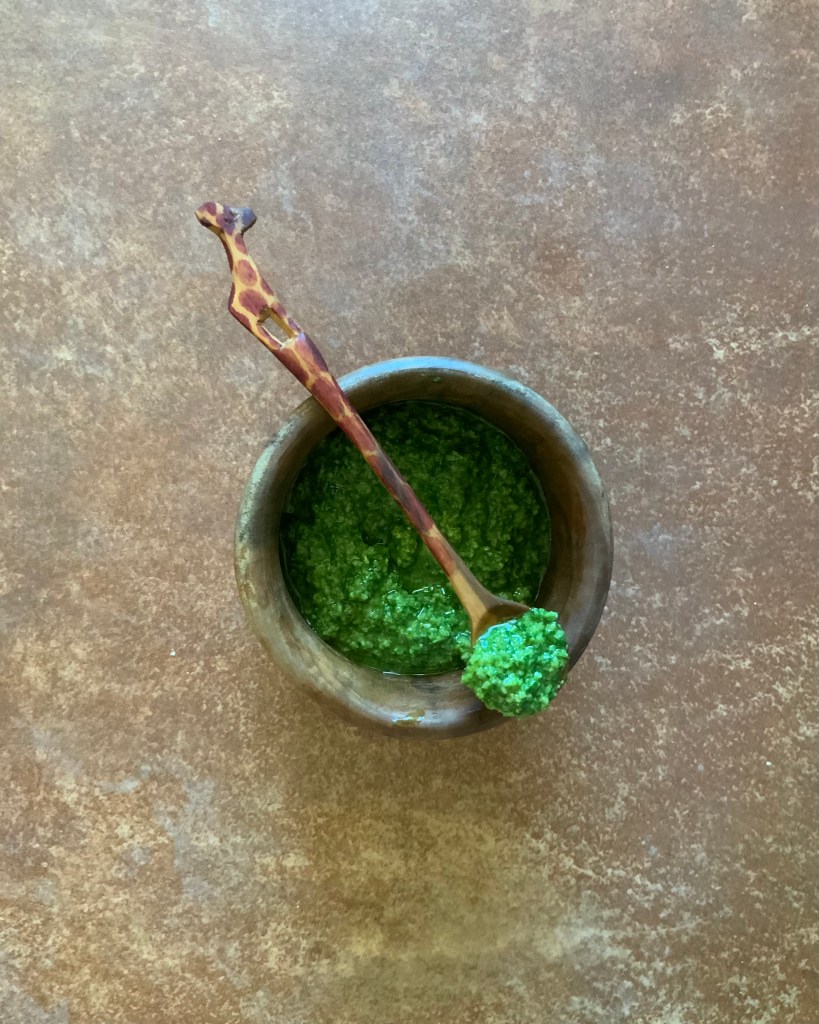
If the sauce is to be used within a few hours, it should be kept at room temperature. Put the pesto in a small bowl, pour a thin film of olive oil over it and place a piece of plastic wrap directly down on the oil to seal out air.
Pesto may be kept in the refrigerator for later use by storing the sauce in a glass jar, pouring a film of olive oil over it and placing a piece of plastic wrap down on the olive oil–again, sealing out air. Seal the jar with a lid and refrigerate it. The pesto will retain its colour and flavour for several days. Bring the jar of sauce to room temperature before opening it and using it.
Equipment for Cooking Pasta
- a Large Pot (8 quarts/7.5 liters or thereabout) and Lid
- a Colander
Cooking Spaghetti Pasta
- Bring to a boil enough water in the pot to hold the pasta comfortably in a loose tangle as it cooks.
- Add the pasta. Adjust the heat for a steady, but not vigorous boil.
- For pasta that is somewhat softer than al dente, cook for 6 minutes.
- Drain the spaghetti in the colander.



Leave a comment