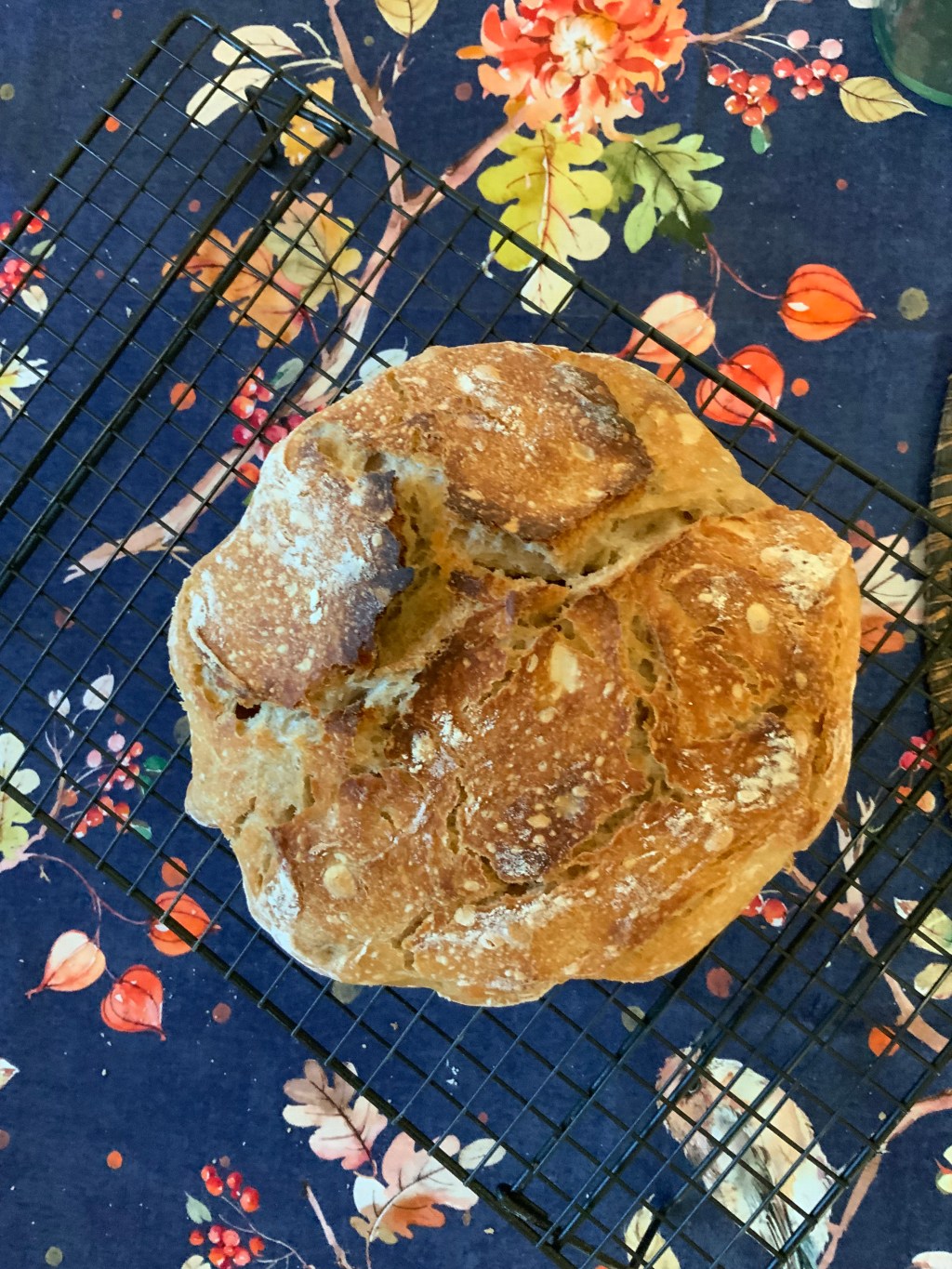
“Handling yeast doughs, the combined process of mixing, kneading and baking them is, I think, a special kind of skill. Success does not always follow first attempts but perfection invariably comes after continued practice. It is one of the cookery skills that you do well only after you have acquired the “feel” of it. For example, flours vary considerably so you have to know the “feel” of the dough when the right amount has been added, just as you must learn the smooth and elastic “feel” of a dough that is kneaded sufficiently, and as you must recognize the “feel” of lightness when it has risen enough. But to make really good bread…is, to my way of thinking, not only a great satisfaction but a feat to be proud of as well.” (Louis Diat from French Cooking for Americans (1946).
In this passage from one of his cookbooks, Louis Diat has succinctly described both the difficulties and the personal rewards of breadmaking. Like anything worth learning, breadmaking does not promise instantaneous success or an exemption from failures. (I have made my share of inedible loaves.) What it does offer is an opportunity to acquire a valued skill, the results of which are satisfying as a creative endeavour, as well as being incomparably good to eat. Moreover, it comes with the promise that, if you want to master breadmaking, you will. This means that, with some perseverance, you are guaranteed success. Often, with success, comes the desire to learn even more. Breadmaking offers you a personal journey of learning that need not end.
In an ultra-processed food culture, making bread at home provides the assurance that the bread you and your family eat is free of preservatives, chemicals and synthetic vitamins, and that it is made with flour and other ingredients of the best quality. There are, of course, commercial “artisan” loaves, but they are a very expensive choice for daily bread. Some of them may be good, but they are not as good as the breads made at home, nor do they offer a similar, almost endless variety.
The foodlessprocessed recipes often recommend European Unenriched Soft Wheat White Flour over American Unenriched Hard Wheat White Flour. (There is a discussion of White Flour here in the Ingredients section: White Flour.) But this is a matter of preference and, perhaps, availability, and using American flour instead of European, or vice versa, will only give slightly different–but still good–results. (Soft wheat flour absorbs less liquid.). The key in either case is to avoid enriched flours or flours that contain more than one ingredient: Wheat.
There are two sites that I have found very helpful in learning about breadmaking: BreadClub20 and theBread.code();.

 thefoodlessprocessed
Leave a comment