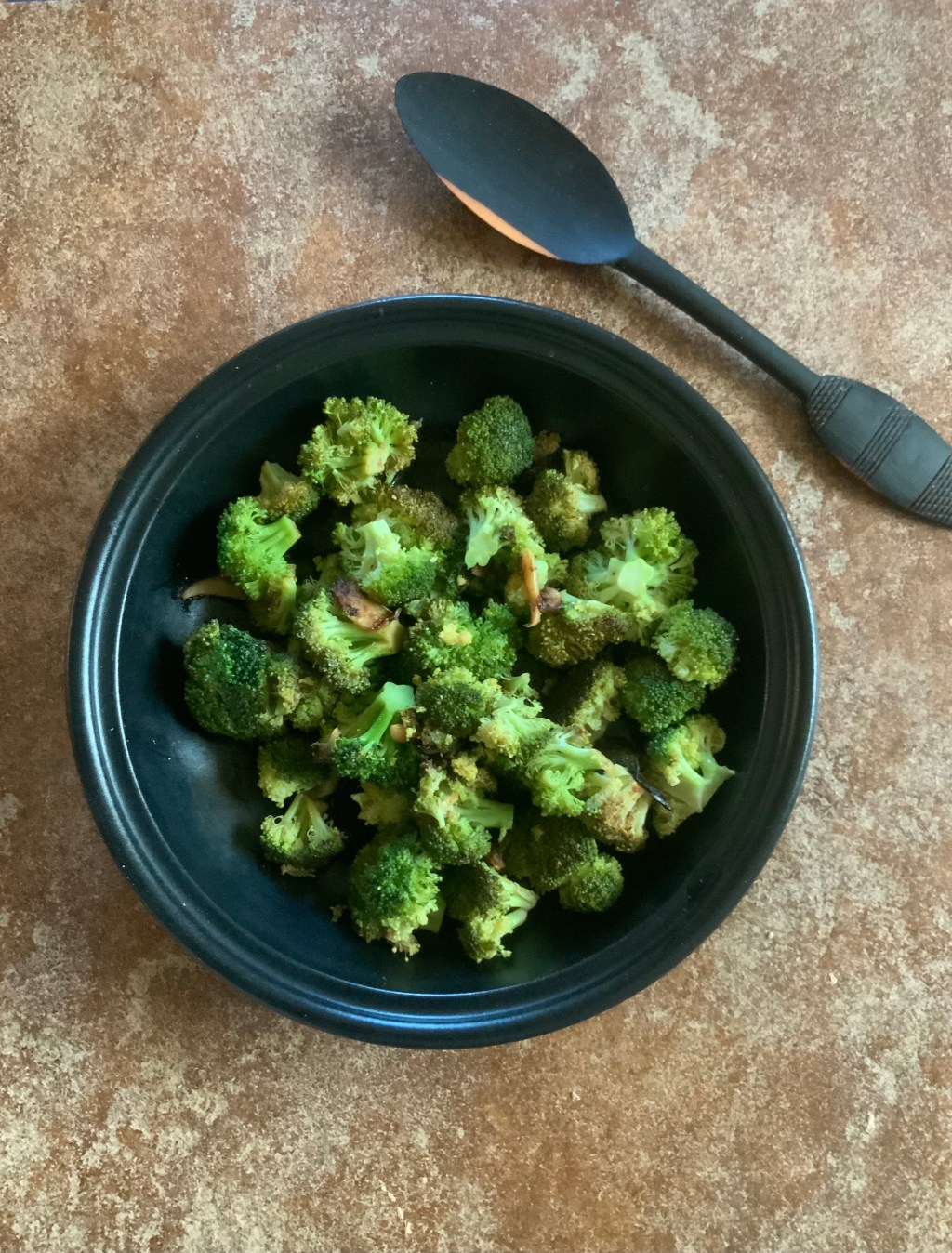
Winter dishes in cold climates tend towards the rich and full-bodied, with good reason. They restore both body and spirit. Greens and lemon are every bit as wintry because they are a balance to richer dishes.
Where winters are mild, the freshness of this dish is just as suited to a lighter meal.
The less processed ingredient options are discussed through these links: Vegetables, Olive Oil, Fruit.
Equipment
- a Sauté Pan and Lid, for example, one of cast iron or, for larger amounts, an enameled cast iron sauteuse with a black interior
- a Kitchen Knife and a Paring Knife and a Cutting Board
- a Box Grater
- a Flame Tamer (aka Heat Diffuser, Simmering Plate) is optional. The pan does not sit directly over the heat source, the heat is diffused more evenly, and scorching is less likely. Some versions of flame tamers are compatible with a smooth-top burner.
Ingredients
- 1 and 1/2 pounds (680 g) of Organic Fresh Broccoli (on the stem): The amount may be doubled without altering the amounts of the other ingredients.
- 2 Cloves of Garlic, cut lengthwise in thin slices
- 3 Tablespoons of Extra-Virgin Olive Oil
- at least 1/4 cup of Dry White Wine (60 ml) and likely more: up to a total of 1/2 plus 1/8 cup or 150 ml
- 1 Organic Lemon
Braising the Broccoli
- Grate the zest of the lemon over the fine holes of the box grater and reserve it. Then juice the lemon and reserve the juice. There should be about 3 Tablespoons.
- With the paring knife, separate the florets of broccoli from their stems. Wash the florets and leave them lightly wet. The water will become part of the braising liquid.
- Set the pan on the flame tamer over medium heat. When the olive oil shimmers in the pan, add the garlic and sauté until the slices begin to brown around the edges.
- Add the broccoli and toss it with the garlic.
- Add the wine, cover the pan, and braise the broccoli for 5 minutes.
- After 5 minutes, check the degree of doneness and the amount of liquid remaining in the pan. The broccoli may be cooked just to the crisp-tender stage, but if cooked longer, until tender, it will absorb more of the flavours of the wine and lemon as they reduce to a syrupy consistency.
- If you don’t wish to cook the broccoli further and the liquid in the pan has evaporated, add another 3 tablespoons of wine. Turn up the heat, add the lemon juice and cook, tossing the broccoli in the pan from time to time, until the liquid is reduced to practically nothing. Add the grated zest and toss everything together to blend the flavours.
- If you are cooking the broccoli until tender and the liquid in the pan has evaporated, add another 3 tablespoons of wine. If it hasn’t simmered away, cover the pan and braise for another 5 minutes. If the broccoli is now tender and the bottom of the pan is dry, add 3 more tablespoons of wine. If there is still braising liquid, add only the lemon juice, turn up the heat and reduce to concentrate, tossing the broccoli occasionally to coat it in the thickened juices. Add the zest and toss everything together once more.
- The broccoli may be cooked further in the same fashion, checking the liquid in the pan, adding a bit more, and braising, covered, for a few more minutes until it reaches the stage of doneness you want. Then raise the heat, add the juice and cook briskly, uncovered, as described above, to concentrate the braising juices, finishing by adding the zest.



Leave a comment