“From one or two hours will be required to heat the brick oven thoroughly. Towards the end of the time the fire…should be spread all over the floor of the oven so that the whole floor may be heated evenly…When the fire is burnt out and the red pulsing ceases, scrape out the charcoal…and brush out the small ash with a broom of twigs. Then take a large clean mop, dip it in hot water, and mop over every part of the inside of the oven,..leaving a little steam within the oven. Leave the oven closed for some little time to even the heat, before you open it and fill it.” (quote from a nineteenth century source provided by Dorothy Hartley from Food in England (1954).
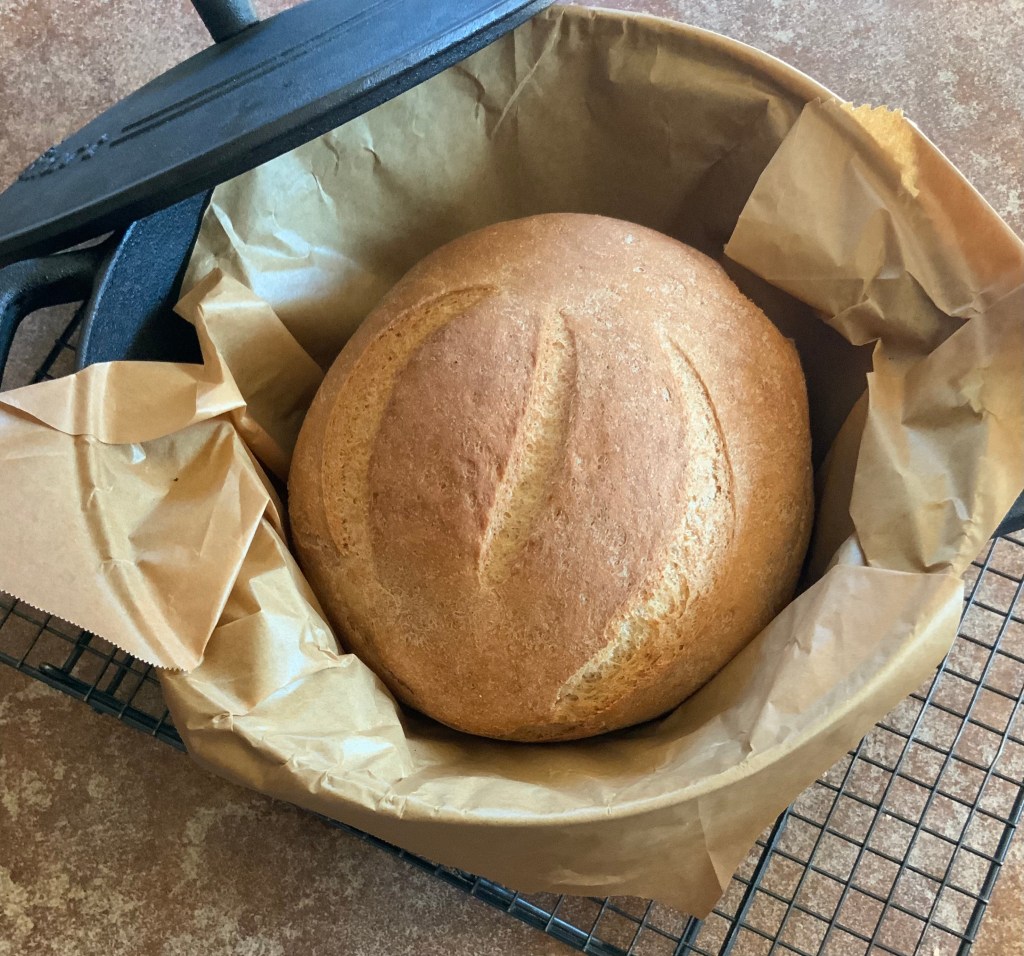
Dutch oven baking has a distinguished lineage. It applies the same basic principles to bread baking as traditional masonry ovens. As the passage above explains, these old ovens relied on stored heat, just as the Dutch oven does on a smaller scale. Like the old ovens, it traps the steam released by the dough and prevents the crust from forming before the bread has fully risen. After the dough rises in a parchment-lined bowl, it is placed (still in its nest of parchment) directly down on the bottom of the preheated Dutch oven–similar to placing the dough on the hot floor of a traditional oven. The Dutch oven also has a unique benefit all its own of keeping soft doughs from spreading and losing volume.
A baking tray cannot heat as evenly nor an oven and a pan of water trap steam as effectively as the trusty little Dutch oven.
Dutch-oven baking is a simple method. It comes down to 5 brief steps: lining a large bowl with parchment paper, placing the shaped loaf of dough down in it for a second rise, preheating the Dutch oven, lowering the loaf down into the oven, and baking it in two stages–first with the lid on and then without the lid. Neither the parchment enclosing the loaf, nor the Dutch oven requires oil or flour. Nothing sticks; nothing burns. If a bit of parchment wedges itself between the cracks in the bottom of the loaf, it will pull away completely as the bread cools.
The wood-fired oven endured for thousands of years for good reason. Styles varied from place to place, and designs for it evolved over time, but every version retained the essential features that made this oven’s bread exceptional. In its own modest way the Dutch oven brings back those same enduring features to breadmaking in our home kitchens.
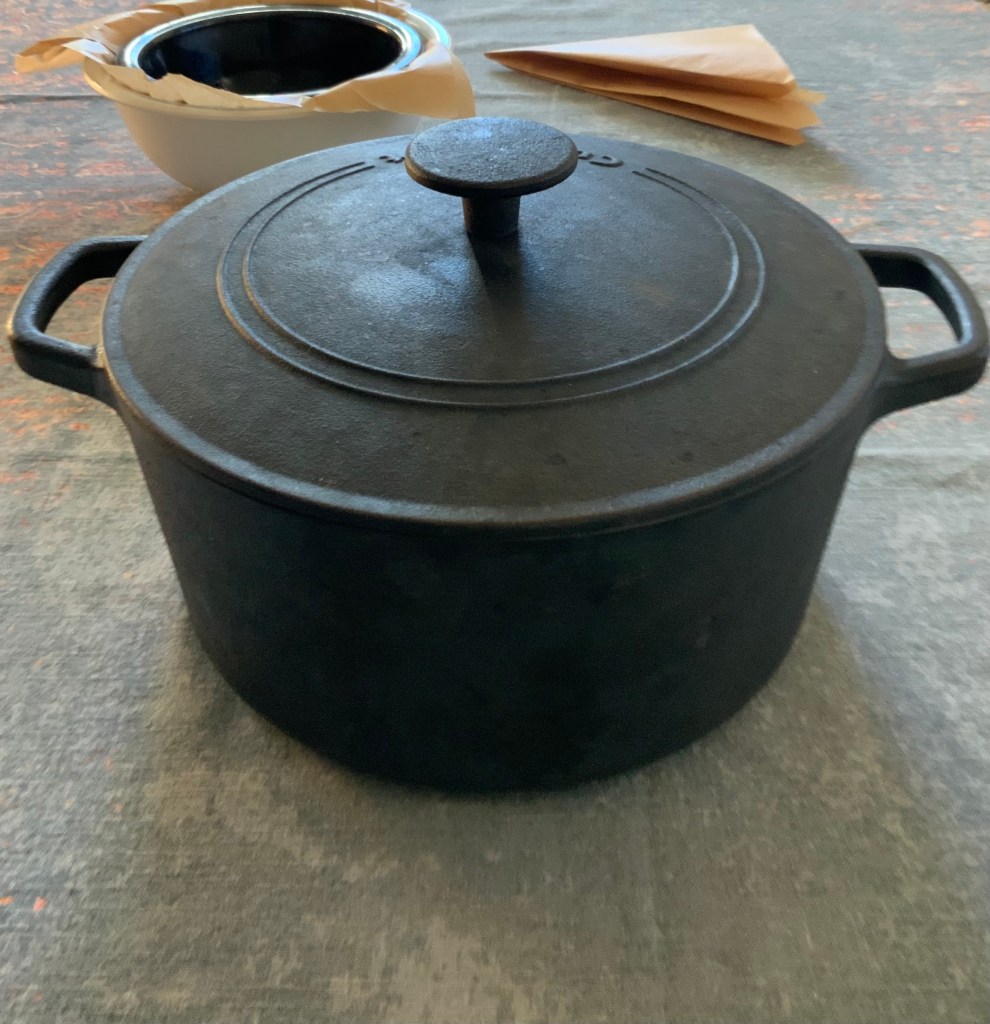
Postscript: Since we make bread frequently in a Dutch oven, this one in the photo above is dedicated to the single business of bread making—with one exception: it doubles as our popcorn maker. It makes excellent popcorn and making an occasional bowl of popcorn in the oven keeps it well-seasoned.

 thefoodlessprocessed
Leave a comment