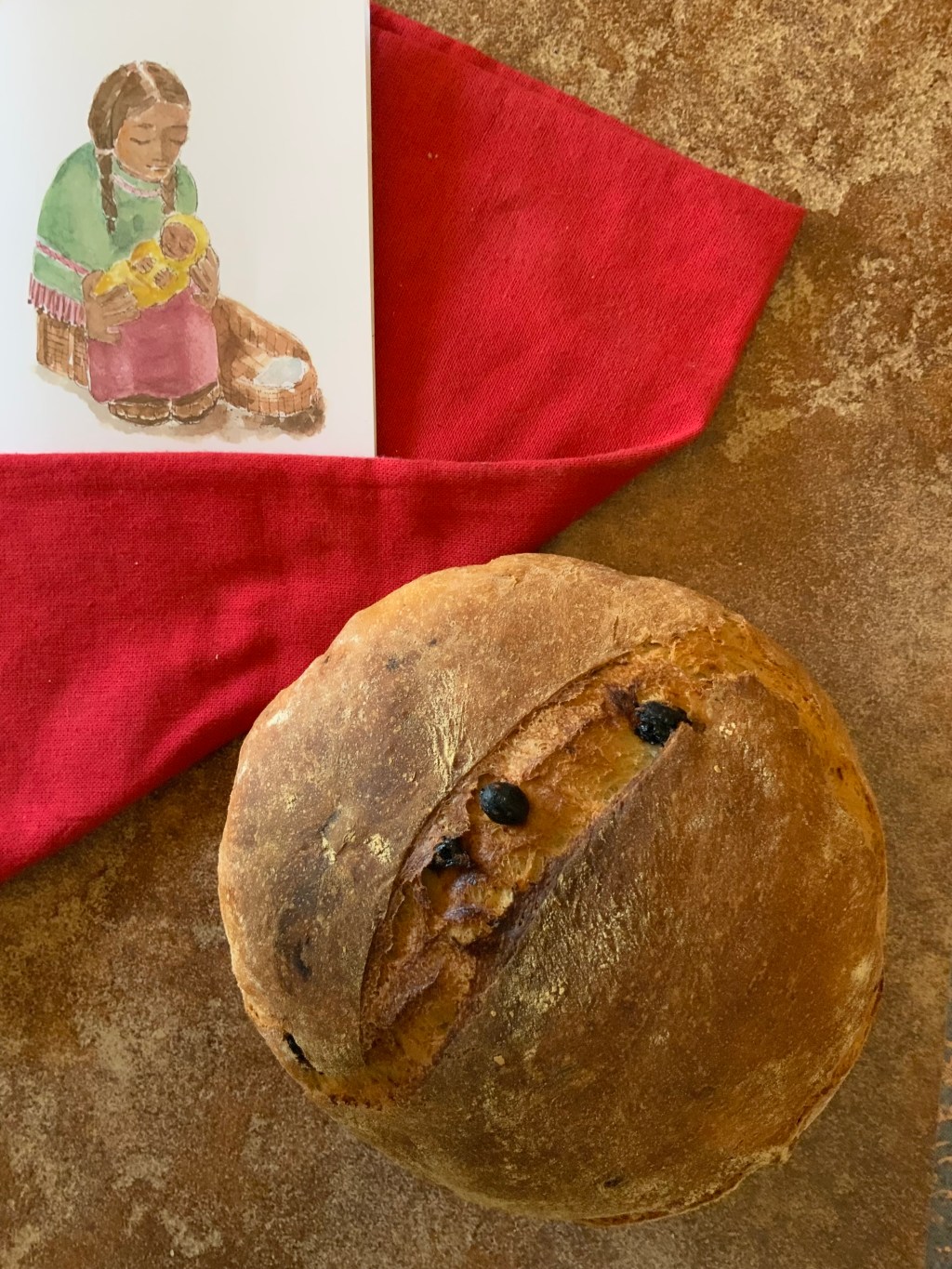
“And so, as Tiny Tim said, ‘A Merry Christmas to us all; God bless us, everyone!” (Charles Dickens from A Christmas Carol ( 1843).
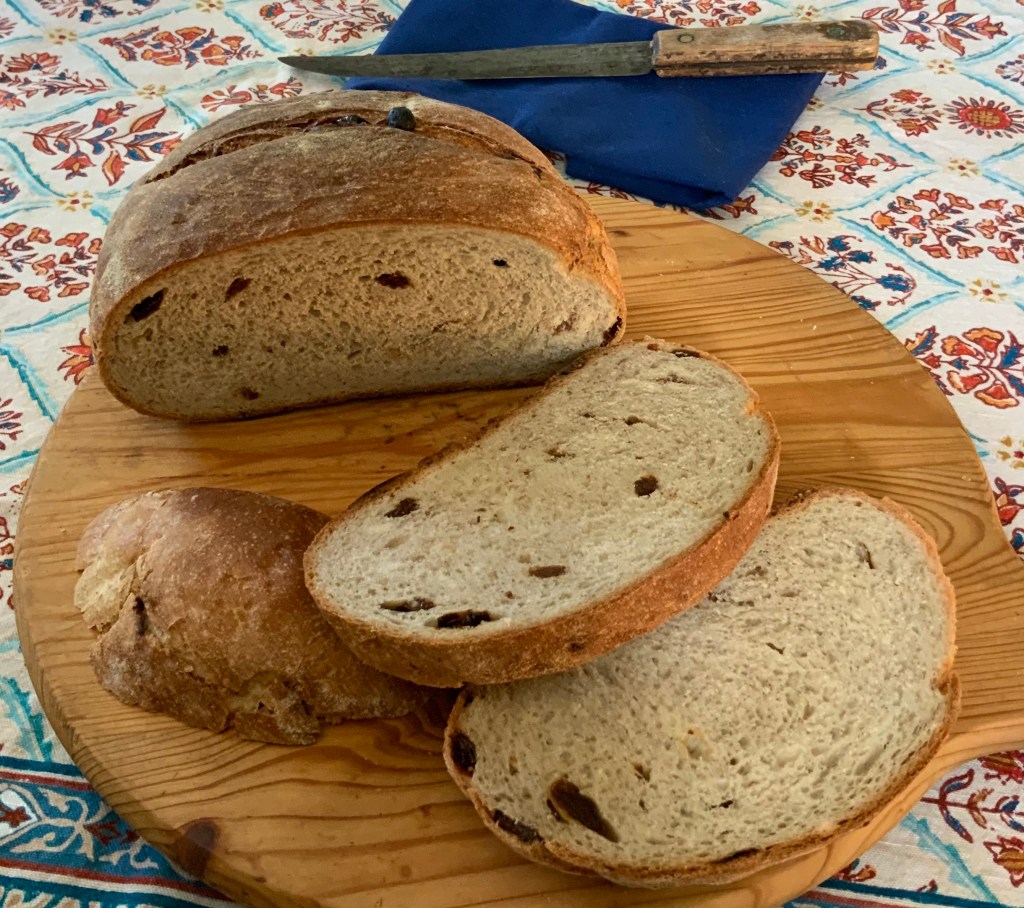
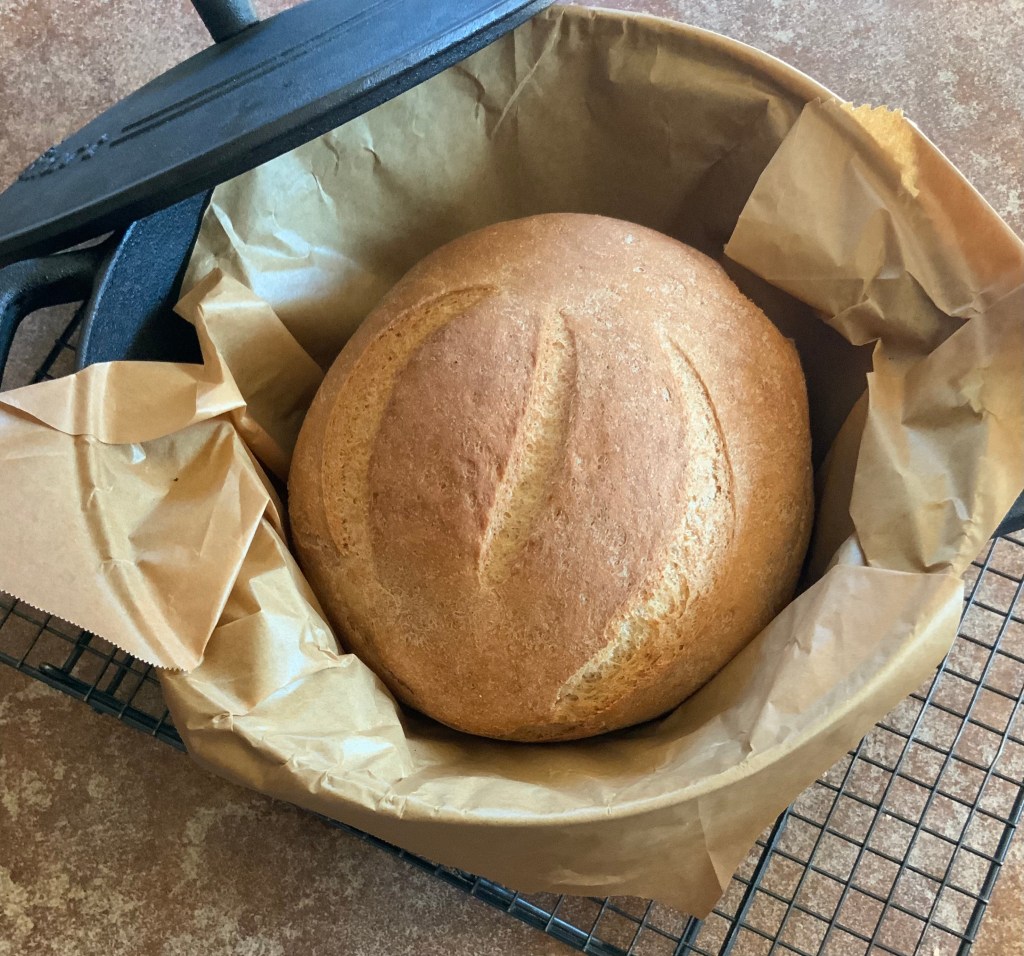
To an uncomplicated white-flour loaf are added raisins plumped in Spanish dry sherry and a variety of warm wintry spices. This is a bread for Christmas time. The raisins help keep the bread moist and tender. They provide some sweetness , but the loaf remains one that may be served with charcuterie and cheeses as well as jam and butter. Made a day ahead, this is still ‘fresh bread’ the next day.
The less processed ingredient options are described through these links: Flour, Water, Honey, Salt, Butter, Sherry, Raisins, Cinnamon, Coriander, Ginger, Nutmeg,
Equipment
- a Digital Scale: The recipe was made using metric measures. The nearest U.S. measurements are also given.
- a Liquid Measuring Cup
- a Small Bowl for steeping the raisins in the sherry
- a Standing Mixer and the Paddle Attachment or a Large Bowl for mixing the dough by hand
- a Wooden Spoon
- a Large Bowl for the dough’s first rise
- a Pastry Board
- a Lame (a razor blade on the end of a handle), or a Sharp Knife
- a Large Mixing Bowl lined with Parchment Paper for baking the bread
- a Dutch Oven
Ingredients
- 500 g of Organic Hard Wheat All-Purpose White Flour (about 4 cups plus 2 and 1/2 or 3 tablespoons): This flour is the standard American variety.
- 330 to 350 ml of Bottled Spring Water (1 and 1/3 to 1 and 1/2 cups)
- 1 teaspoon of Organic Unfiltered Honey
- 7 gm SAF Instant Yeast (2 and 1/4 teaspoons)
- 10 g of Sea Salt (1 and 3/4 teaspoons)
- 20 g of Organic European-Style Unsalted Butter, softened (1 Tablespoon plus 1 teaspoon), plus a little butter for the bowl in which the dough rises for the first time
- 180 g of Organic Raisins (about 1 and 1/4 cups)
- Imported Spanish Dry Sherry
- 1/4 teaspoon of Organic Ceylon Cinnamon
- 1/4 teaspoon of Organic Ground Nutmeg or Freshly Ground Nutmeg
- 1/4 teaspoon of Ground Ginger
- 1/4 teaspoon of Ground Allspice
- 1/4 teaspoon of Ground Coriander
Mixing the Dough
- Put the raisins in a small bowl and pour the sherry over them to cover. Set them aside.
- Add the flour to the bowl of the mixer (or large bowl if mixing by hand). Measure 350 ml of water into the liquid measuring cup. Gradually add the water to the flour, stirring. Add enough water to make a scrappy dough (up to 350 ml). Set the dough aside for 20 minutes. The rest allows the flour to fully absorb the water.
- Add the honey and the salt and mix well.
- Add the spices.
- Add the yeast and mix well again.
- Add the softened butter and mix it in.
- Squeeze the sherry from the raisins and mix them into the dough. (The sherry may be reserved and used to flavour meat, soups or vegetables.)
- Knead the dough, either in the mixer or on a lightly floured pastry board, until it is smooth and pliable. If you are kneading the dough in the mixer, the dough should gradually come away from the sides of the bowl.
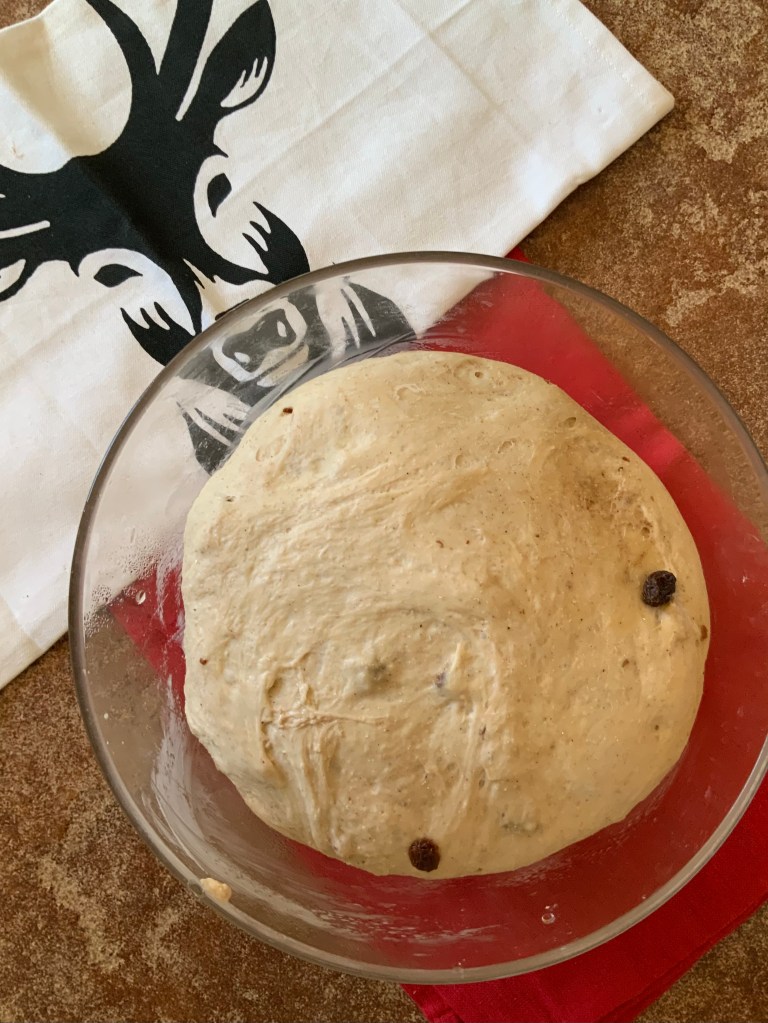
- Place the dough in the buttered bowl for the first rise. Cover it and leave it to double in bulk.
Lining the Bowl for the Second Rise
- Cut off a large sheet of parchment paper. The exact size is unimportant, but it should be large enough to come up beyond the sides of both the large mixing bowl or the Dutch oven.
- Then fold this rectangle to form a rough triangle. Fold it again into a smaller triangle.
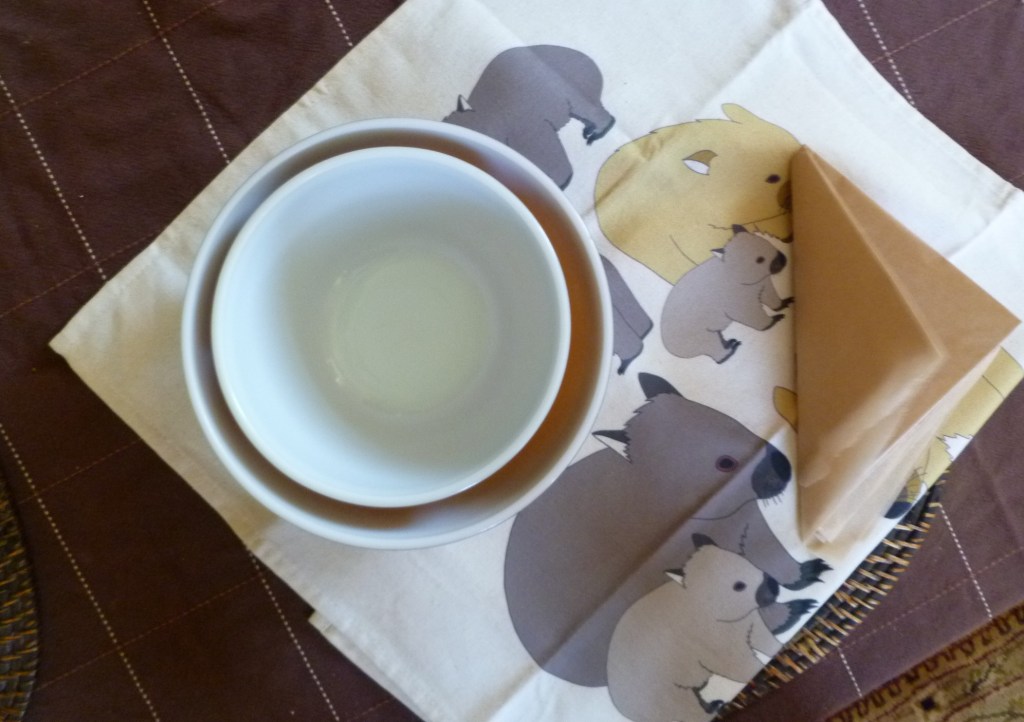
- Place the narrow point of the triangle down in the center of the large mixing bowl and unfold the paper into the bowl, pressing the pleats out and moulding the paper to fit the bowl. Place the smaller mixing bowl down onto the paper and fold the pointed edges of the paper down around the sides of the large bowl.
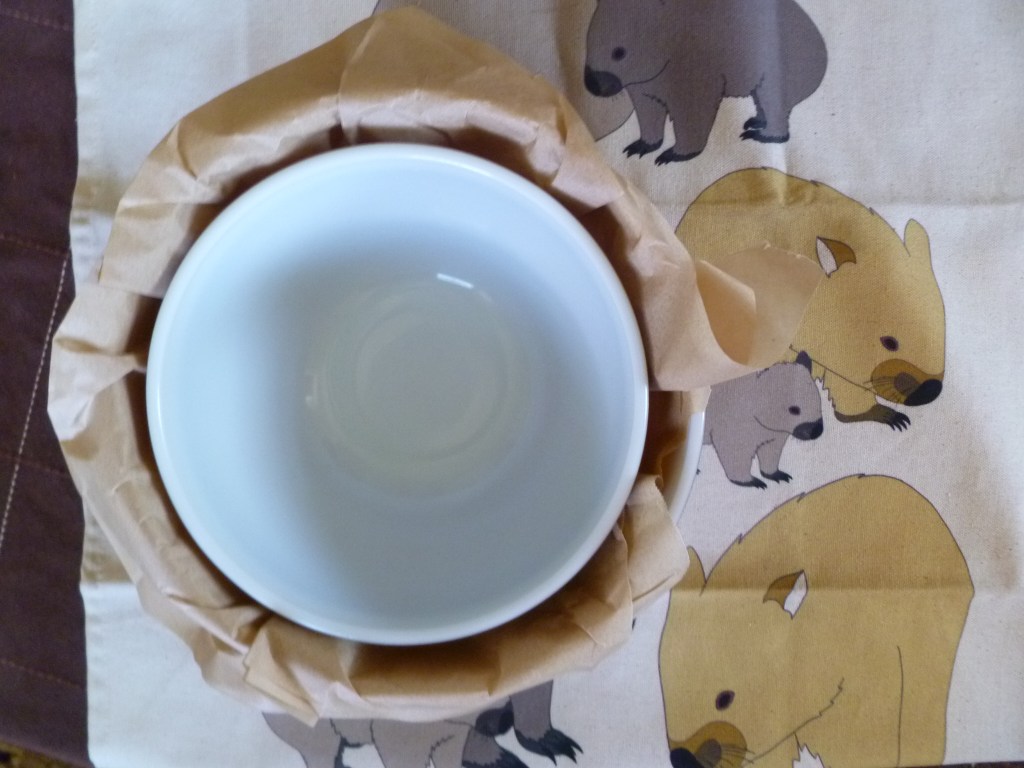
- Remove the smaller bowl. The dough will be left to rise once more in this lined bowl.
Forming the Boule
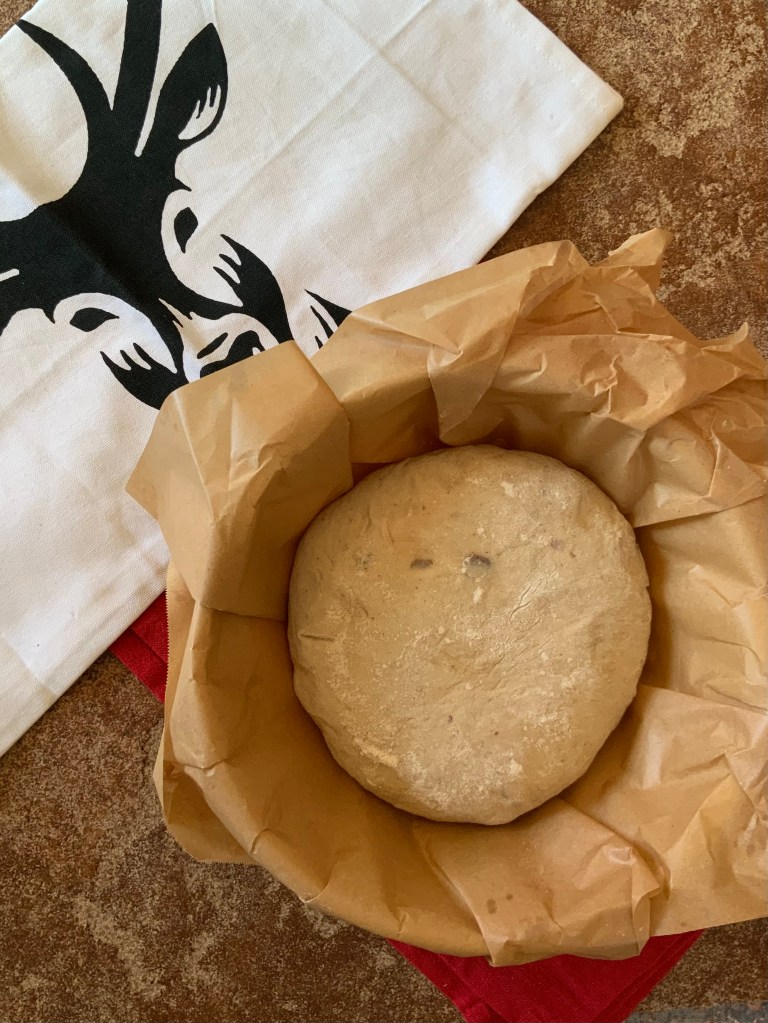
The loaf is formed in the style of a traditional French “boule”, which means rounding the dough into a tight ball, creating surface tension across the top. Here is a YouTube video that thefoodlessprocessed has found useful on how to create surface tension from the site Bake with Jack.
- Place the round in the parchment-lined bowl, cover it and set it to rise until it doubles again.
Baking the Bread
Gas or Convection Oven: thefoodlessprocessed uses a gas oven. The conversions from Fahrenheit to Celsius do not attempt to adjust for differences between baking in a gas or convection oven. I have no experience using a convection oven, and leave adjustments to the better judgement of you who do have.
- Place the Dutch oven in the oven. Set the oven temperature to 230 C/450 F. Preheat the Dutch oven for 30 minutes.
- When the bread has doubled again in size, it is ready to bake.
- Slash the loaf with a lame or a very sharp knife.
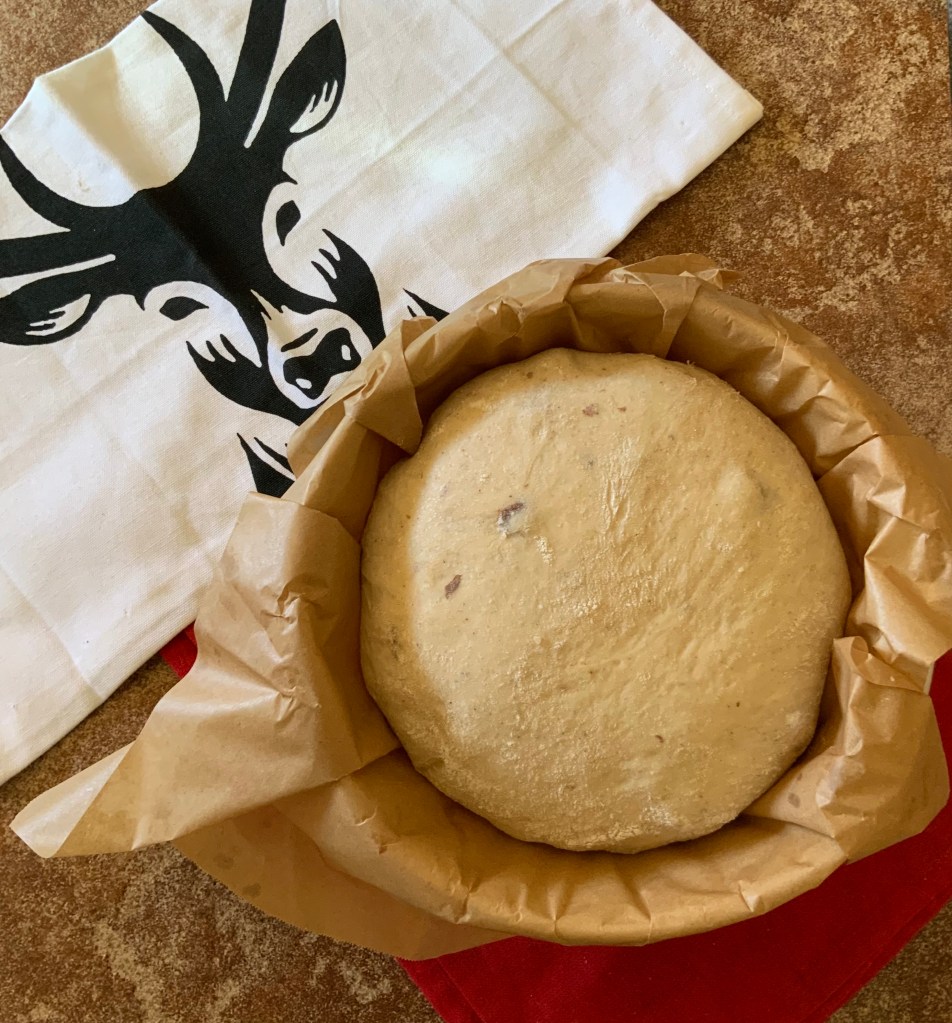
- Set the bread down in the preheated Dutch oven by lifting it by the borders of its parchment nest and placing it down in the Dutch oven. Replace the lid.
- Bake it for 30 minutes with the lid on.
- Remove the lid and bake it for another 15 minutes.
- The total baking time will be 45 minutes. The bread will sound hollow when tapped on the bottom. Remove the loaf from the Dutch oven and cool it.
- Wrapped in foil and stored in a light polyethylene bag, this bread will remain fresh at a minimum through the following day.



Leave a comment