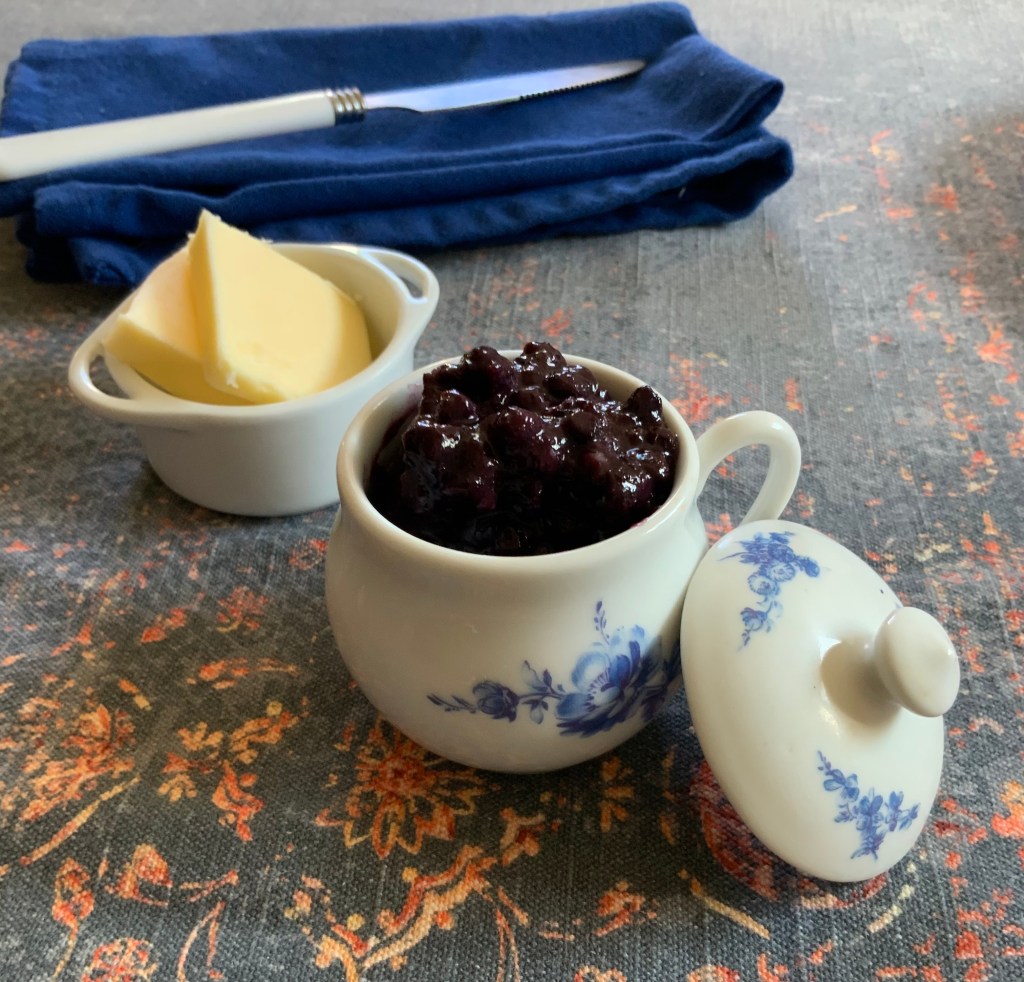
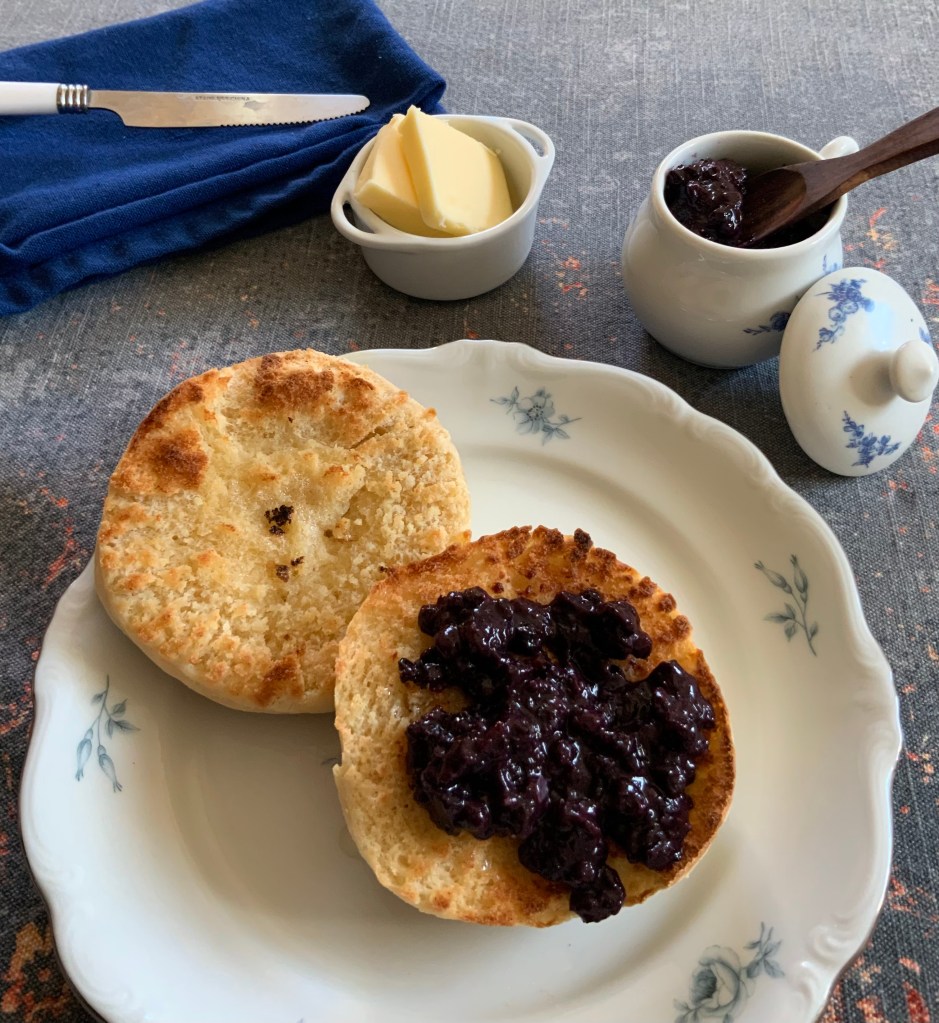
Traditionally the terms ‘jam’ and ‘preserves’ meant two distinct things. Fruit, as it turns into jam, breaks down and becomes a textured spread. The fruit in preserves remains relatively whole.
Wild boreal blueberries remain whole in this recipe for preserves not because they are cooked by a different method from the strawberries in thefoodlessprocessed recipe for Strawberry Jam, but because they are heartier than cultivated berries and soften, rather than collapse.
Varieties of these little wild berries are found both in North America and Europe. Often they are more flavorful than cultivated blueberries. And in a sense they are less processed, since they grow wild in their native soil without any additions of artificial pesticides or chemical fertilizers.
Homemade preserves, made with or without sugar and pectin, will lose some moisture and thicken over time. This is normal and does not mean the fruit was cooked too long or the ingredient combination was faulty. This is simply what good preserves that are primarily fruit (and not a standardized formulation of different sweeteners and ingredients) do once they have been stored in the refrigerator. In the past, home cooks never expected their preserves to remain exactly the same. They stirred them and added a little liquid to bring them back to their original consistency, as is still done today. Stirring in a small amount of apple juice will soften the preserves.
The less processed ingredient options used to make the preserves are: Blueberries, Apple Juice, Homemade Apple Juice Concentrate, European-Style Unsalted Butter, and Unmodified Potato Starch.
Equipment
- a Medium-Sized Pot with a Heavy Bottom and Lid
- a Wooden Spoon
- a Liquid Measuring Cup
- a Large Bowl
- a Whisk
- a Flame Tamer (aka Heat Diffuser, Simmering Plate). The pot does not sit directly over the heat source and the preserves can cook down very slowly over an even heat. Some versions of flame tamers are compatible with a smooth-top burner.
- Glass Containers for storing the preserves in the refrigerator: There will be around 3 cups (or 960 g) of preserves.
Ingredients
- 3 Pounds of Frozen Wild Boreal Blueberries, thawed (1.36 kg) and their juice1 Cup plus 1 Tablespoon of Homemade Apple Juice Concentrate (240 ml plus 1 Tablespoon): Make a little extra to add to the berry juice in case the juice measures less than 1 cup. The foodlessprocessed recipe for concentrate is here: Apple Juice Concentrate.
- 4 Tablespoons total of Unmodified Potato Starch
- 3 Tablespoons (42 g) of European-Style Unsalted Butter
Making the Preserves
Three pounds of berries will make about 3 cups of thick, dense preserves (or about 960 g). For this relatively small amount, there is no need to go through a canning process.
- Drain the juice from the berries into a measuring cup. If there is 1 cup or more of juice, pour it all into the pot. If there is less, add some extra apple juice concentrate to make 1 cup.
- Pour the berries into a bowl and set them aside.
- Add 3 tablespoons of the potato starch to the juice in the pot and whisk until the mixture is smooth.
- Add the butter. Place the pot on the flame tamer and cook over low heat to melt the butter, stirring often.
- Add the berries and 1 cup (240 ml) of the apple juice concentrate. Cook over the lowest heat, partially covered. Stir the mixture now and then with a wooden spoon, scraping the sides and bottom of the pot.
- At the end of 2 and 1/2 hours, mix together the remaining tablespoon of potato starch with the remaining tablespoon of apple juice concentrate and add this to the simmering berries.
- Continue to cook the mixture down, partially covered, stirring occasionally.
- Look at the mixture as you stir it and feel its consistency. At the end of the first 2 and 1/2 hours it will still look like a pourable fruit sauce.
- The berry mixture will thicken. It will bubble slugglishly, here and there across its surface. As it turns into preserves, the surface will become a mass of fat bubbles, in appearance much like the surface of cream that has finally thickened. It will look like preserves, the fruit and juices bound together–not fruit in a thick sauce formed of the juice. The estimated total time for this transformation is about 4 and 1/2 hours.
- When the preserves have reached this point in appearance, remove them from the heat and transfer them to containers (preferably glass ones). When cool, lid the jars and refrigerate them.



Leave a comment