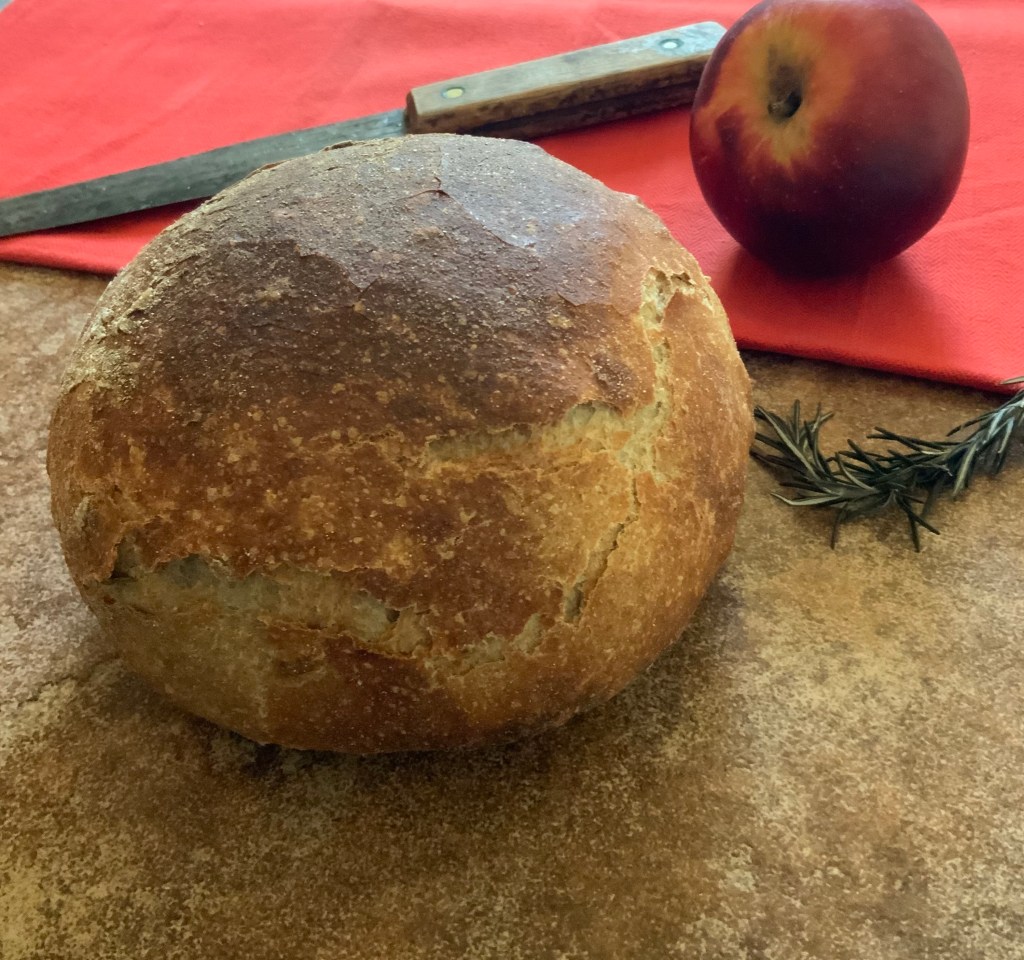
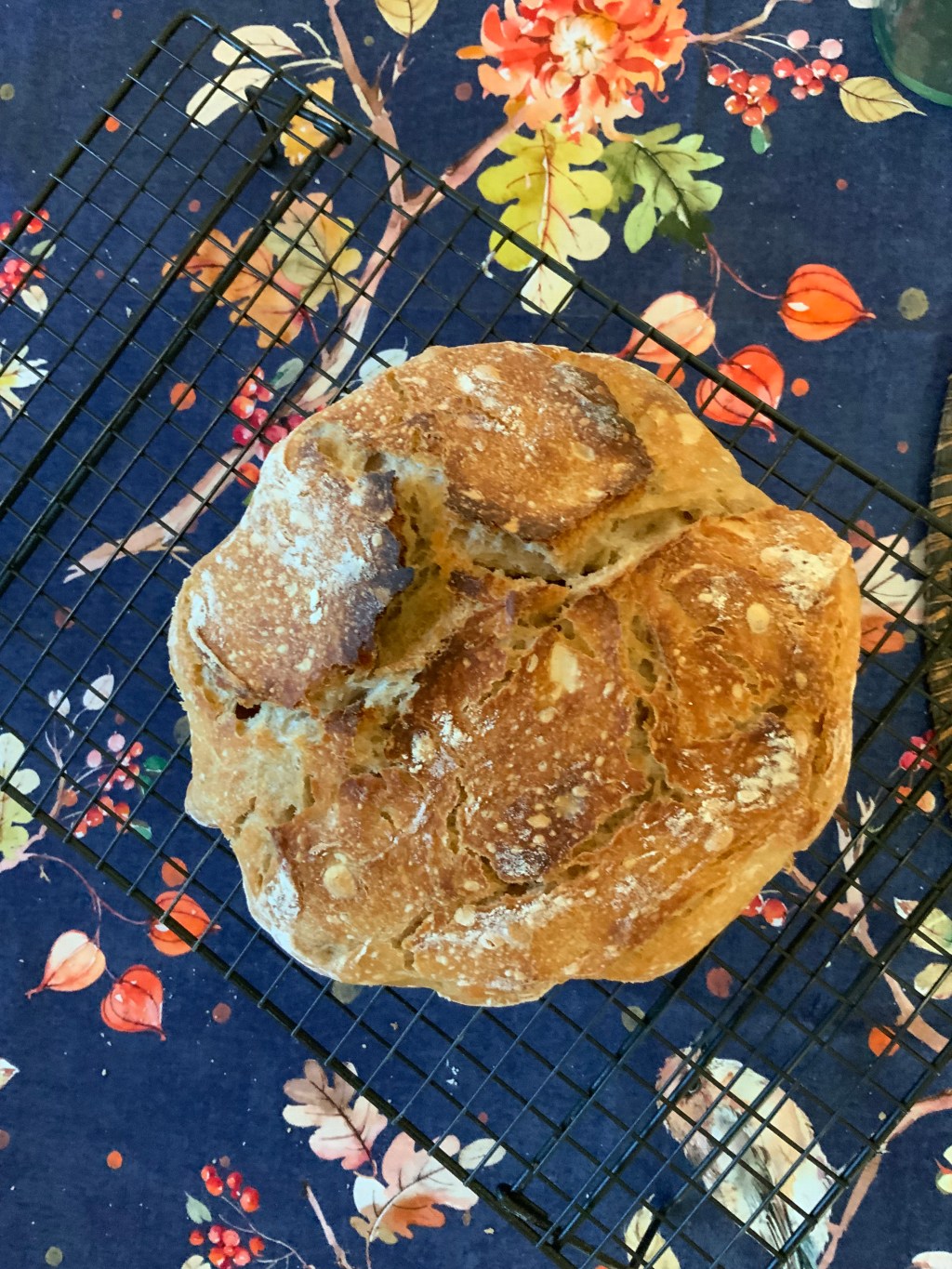
Although this bread is made over two days, it is nevertheless a good choice when time is not on your side. It is quickly mixed together into a rough dough, without kneading, and rises overnight. The next morning, the dough is formed into a boule-style loaf, placed down in a parchment-lined bowl for only one rise and then transferred to the Dutch oven for baking.
The rye flour in the loaf gives the bread a crisp crust, and, as is characteristic of yeast breads that include beer, it has a resilient, pleasantly chewy texture.
It may come as a surprise that beer is one of the less processed ingredient options: Beer, White Flour, Whole Wheat Flour, Rye Flour, Apple Juice, Fresh Rosemary, Water, and Salt.
Equipment
- a Digital Scale: This is a European recipe. Metric measurements keep a good balance between liquid and dry ingredients, yeast and baking time.
- 2 Large Bowls, one for mixing and a second for fermenting the dough
- a Wooden Spoon
- a Medium-Sized or Large Mixing Bowl lined with Parchment for the loaf’s single rise before baking.
- a Dutch Oven
Ingredients
- 180 g of European Soft Wheat All-Purpose Flour: Organic All-Purpose White Hard Wheat Flour may be substituted, creating only a slight change in texture. The American standard flour is of hard wheat.
- 180 g of Stone-Ground Whole Wheat Flour
- 30 g of Stone-Ground Dark Rye Flour, plus a little for forming the loaf into a boule-shaped loaf
- 1 and 1/2 teaspoons of Sea Salt
- 1 teaspoon of SAF Instant Yeast
- 2 teaspoons of Fresh Rosemary, chopped: Strip the leaves from the stems before chopping them. The addition of rosemary is very nice if the bread is to accompany cheese or charcuterie. Skip the rosemary if the bread is intended for butter and jam.
- 120 ml of an Imported German Pilsener Beer or Imported Dutch Lager
- 120 ml of Bottled 100% Apple Juice Not from Concentrate or Refrigerated Fresh-Pressed 100 % Apple Juice
- 60-80 ml Bottled Spring Water
Mixing the Dough the Day Before Baking
Note: To bake the bread on the following morning, mix the dough in the late afternoon or evening the day before.
- In the mixing bowl, combine the flours, the rosemary, yeast and salt.
- Add the beer and apple juice and stir everything together.
- Add the water in increments, stirring with a wooden spoon, until the dough comes together in a rough ball, sticky enough to cling, but not wet or gluey. In bread- making parlance, this consistency is described as “tacky”. Soft wheat flour absorbs less liquid than hard wheat flour. Depending on the humidity and temperature the entire 80 ml may not be needed to form the dough made with soft wheat flour.
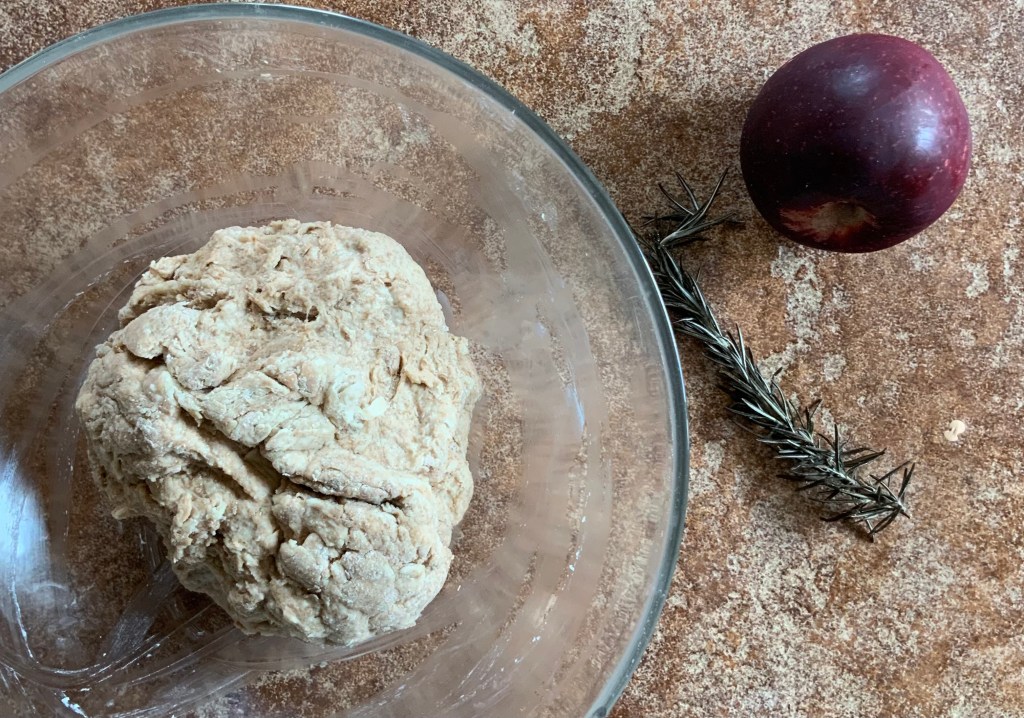
- Place the dough in a lightly buttered bowl. Cover it and leave it at room temperature to rise overnight.
Lining the Bowl for Rising on the Following Day
- Cut off a large sheet of parchment paper. The exact size is unimportant, but it should be large enough to come up beyond the sides of both the mixing bowl or the Dutch oven.
- Then fold this rectangle to form a rough triangle. Fold it again into a smaller triangle.
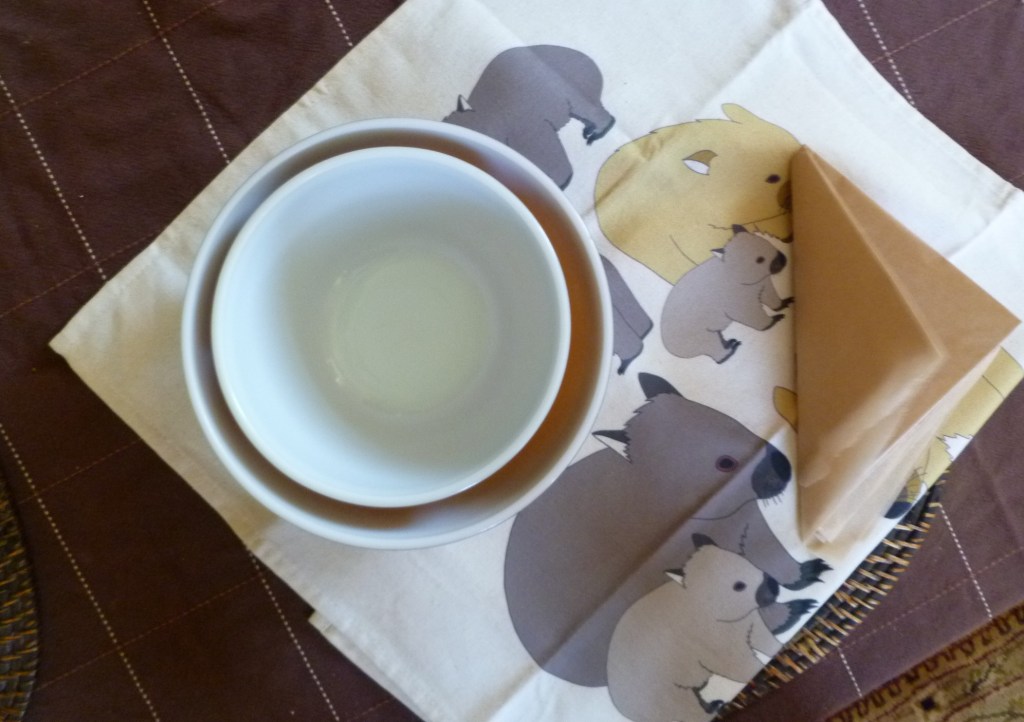
- Place the narrow point of the triangle down in the center of the mixing bowl and unfold the paper into the bowl, pressing the pleats out and moulding the paper to fit the bowl. Place the smaller mixing bowl down onto the paper and fold the pointed edges of the paper down around the sides of the large bowl.
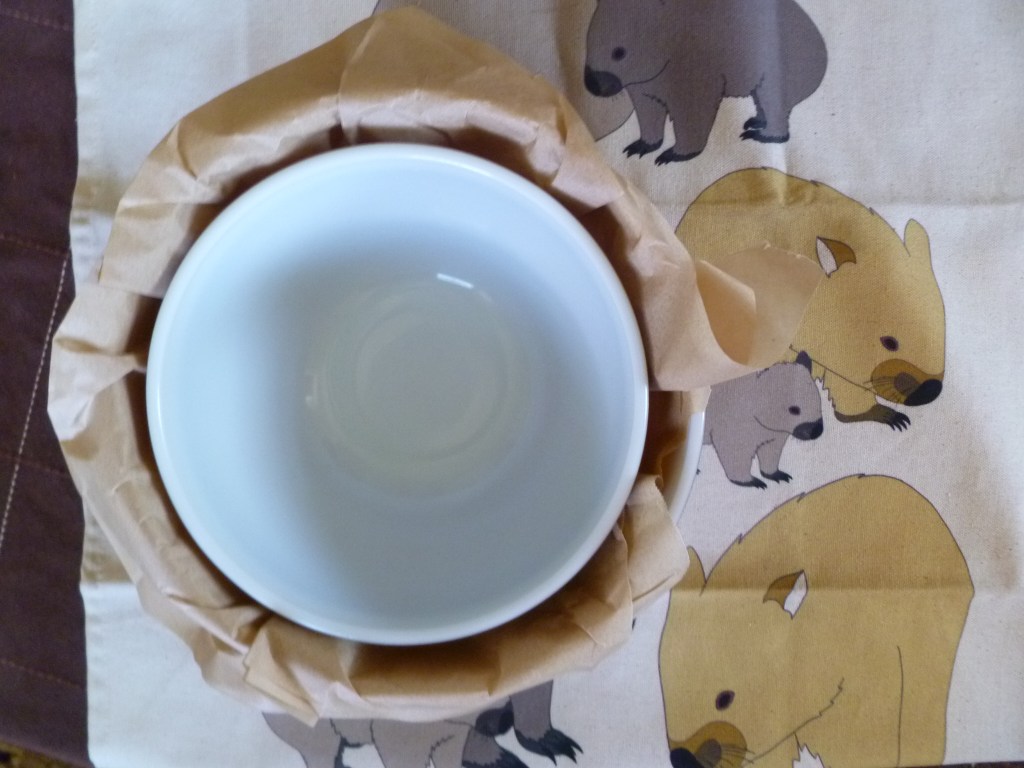
- Remove the smaller bowl. The dough will rise in this lined bowl.
Forming the Boule
The loaf is formed in the style of a traditional French “boule”, which means rounding the dough into a tight ball, creating surface tension across the top. Here is a YouTube video that thefoodlessprocessed has found useful on how to create surface tension from the site Bake with Jack.
- The dough will still be sticky on the second day. Sprinkle the pastry board with some rye flour and turn out the dough onto it. Sprinkle a little more rye flour over the top of the dough.
- Fold the edges in toward the center several times and pinch them together. Turn the round right side up and shape into a boule, creating surface tension.
- Place the round in the parchment-lined bowl, cover it and set it to rest and rise for 45-60 minutes. The loaf will rise perceptibly but will not rise dramatically owing to the rye in the mix.
Baking the Loaf
Gas or Convection Oven: thefoodlessprocessed uses a gas oven. The conversions from Fahrenheit to Celsius do not attempt to adjust for differences between baking in a gas or convection oven. I have no experience using a convection oven, and leave adjustments to the better judgement of you who do have.
- Place the Dutch oven in the oven. Set the oven temperature to 230 C/450 F. Preheat the Dutch oven for 30 minutes.
- Remove the Dutch oven and set the lid aside. Transfer the risen loaf by lifting it by the edges of the parchment and lowering it, parchment and all, down into the Dutch oven.
- Replace the lid. Place the Dutch oven on the middle rack and bake the bread for 30 minutes.
- Remove the lid and continue baking the loaf for another 15 minutes.
- Cool the bread completely before slicing it.



Leave a comment