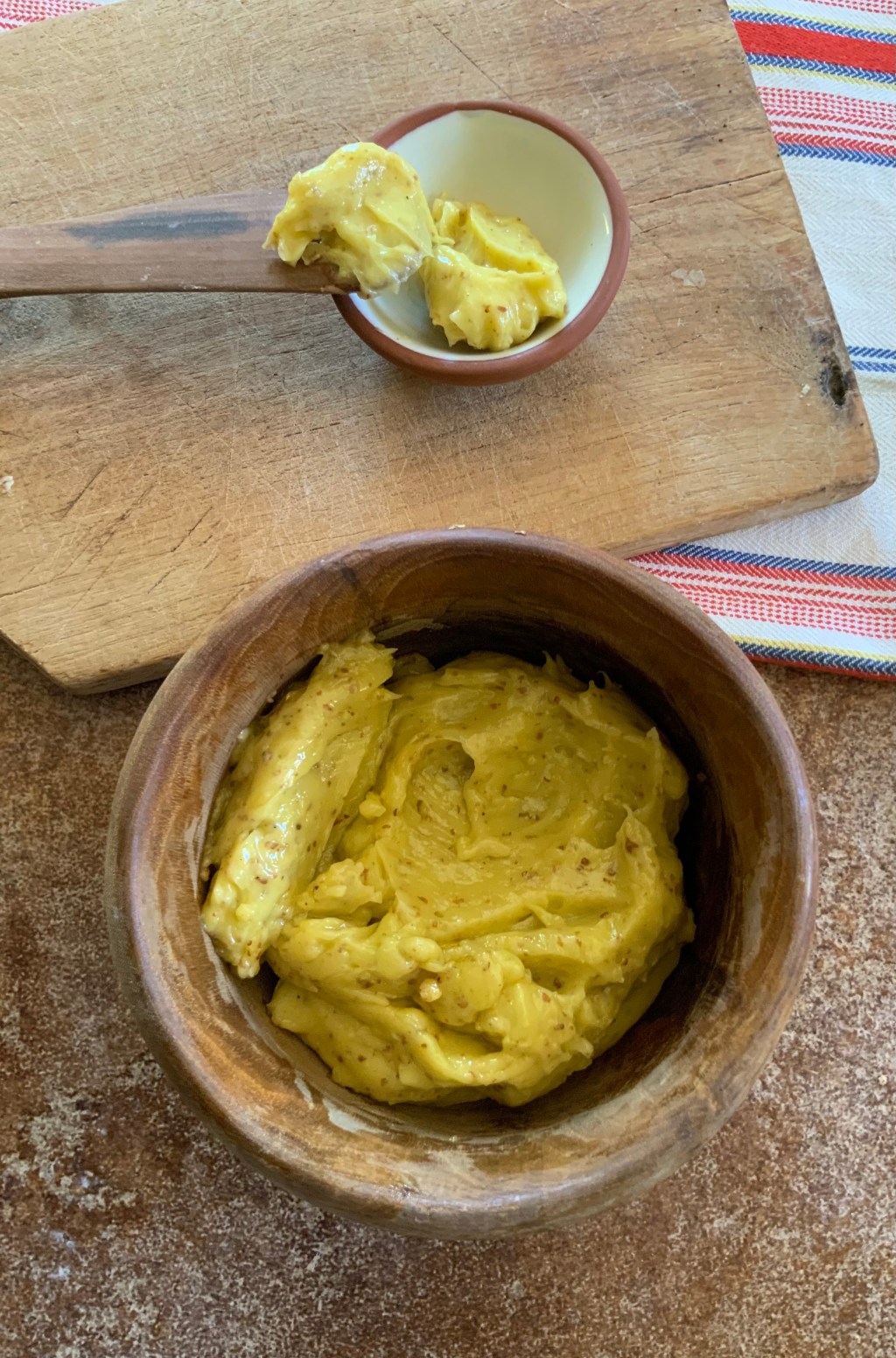
“SALSA MAIONESE: This is one of the best sauces…In a china bowl break the raw yolks of two fresh eggs. After you have whisked them a little, add 6 or 7 tablespoons of olive oil, pouring it very slowly,..Then add the juice of one lemon and…more oil.” Pellegrino Artusi from Science in the Kitchen and the Art of Eating Well (first published in 1891). The first English edition appeared in 1997.
“[Mayonnaise] is one of the best and most useful sauces in existence…Groundnut oil…at about a third of the price is usually substituted for olive oil…Although, to me, nothing can replace the flavour and aroma of a genuine, mildly fruity olive oil…this is expensive and none too easy to obtain, so it should be said that a great many people…prefer to use groundnut oil not only because of its cheapness but because they are not accustomed to the flavour of olive oil. Groundnut oil…could certainly be used for practising but, as it is absolutely devoid of taste, it is necessary to add flavour..” Elizabeth David from French Provincial Cooking (1960).
“A good aïoli is made with good olive oil.” Richard Olney from Simple French Cooking (1974).
“The Provençal is disposed to approve of mayonnaise because it is made largely of olive oil, but he wants to make it more exciting, besides it contains no garlic. These two defects are cured simultaneously by mixing the mayonnaise with crushed garlic–a great deal of crushed garlic..” Waverly Root from The Food of France (1958).
What Richard Olney stipulates as indispensible for good aïoli, is also the case for mayonnaise. After all, aïoli is mayonnaise to which crushed garlic is added at the very beginning of the process of making the sauce. Good olive oil, (neither refined, deodorized nor mixed with another type of oil), makes good mayonnaise.
The method presented here outlines the different stages that eggs and oil pass through on their way to becoming mayonnaise or aïoli. These are guideposts intended to help gauge the mayonnaise’s progress.
The post concludes with Margaret Costa’s version of preparing the sauce from her Four Seasons Cookery Book (1970). Instead of a conventional recipe of rules and step-by-step directions, it is an engaging piece of writing that may be helpful in visualizing from start to finish how to make mayonnaise.
The less processed ingredients are few, for the ingredient list is short: Olive Oil, Garlic, Mustard, and Salt.
Equipment
- a Medium-Sized Mixing Bowl
- a Hand Mixer
- for making aïoli: a Mortar and Pestle or Wooden Spoon and Small-Sized Mixing Bowl
Ingredients
- 2 Egg Yolks
- 2 teaspoons of Imported French Coarse-Grained Mustard
- 1/8 teaspoon of Sea Salt
- 4 Cloves of Organic Garlic (for aïoli)
- 3/4 – 1 cup 180 – 240 ml) of Extra-Virgin Olive Oil
The Extra Step for Making Aïoli
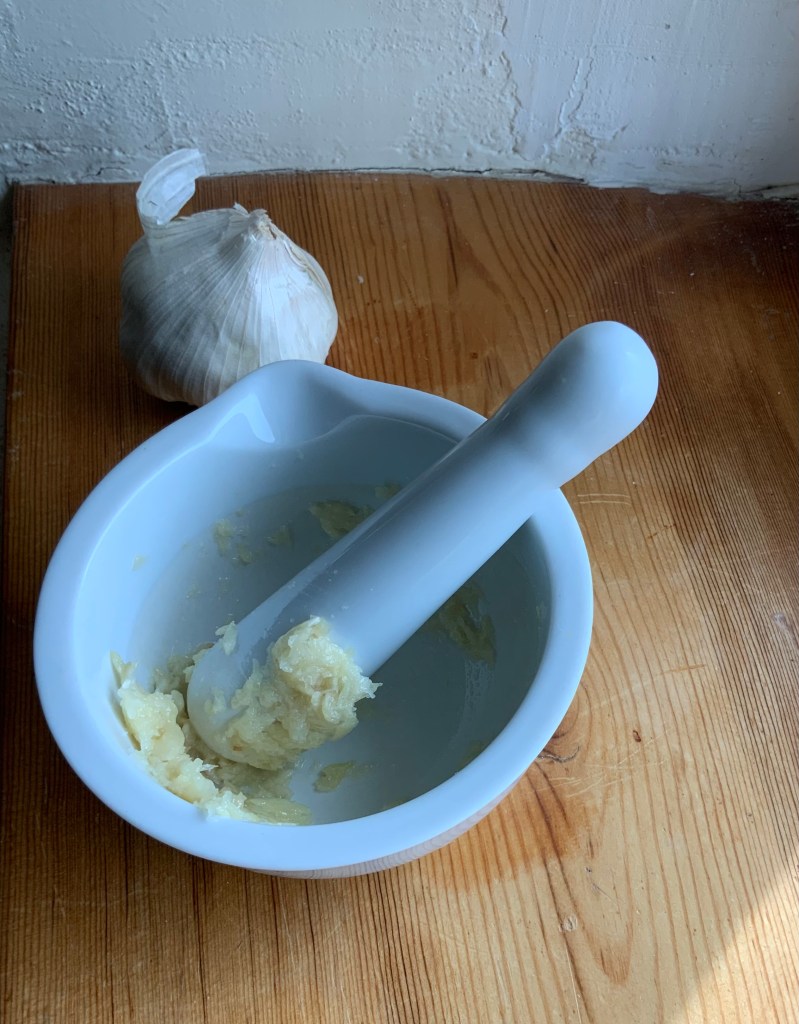
- Mash the cloves of garlic and the salt with a mortar and pestle or with the back of a wooden spoon in a small mixing bowl. Scrape the mashed garlic into the bowl in which the mayonnaise is going to be made.
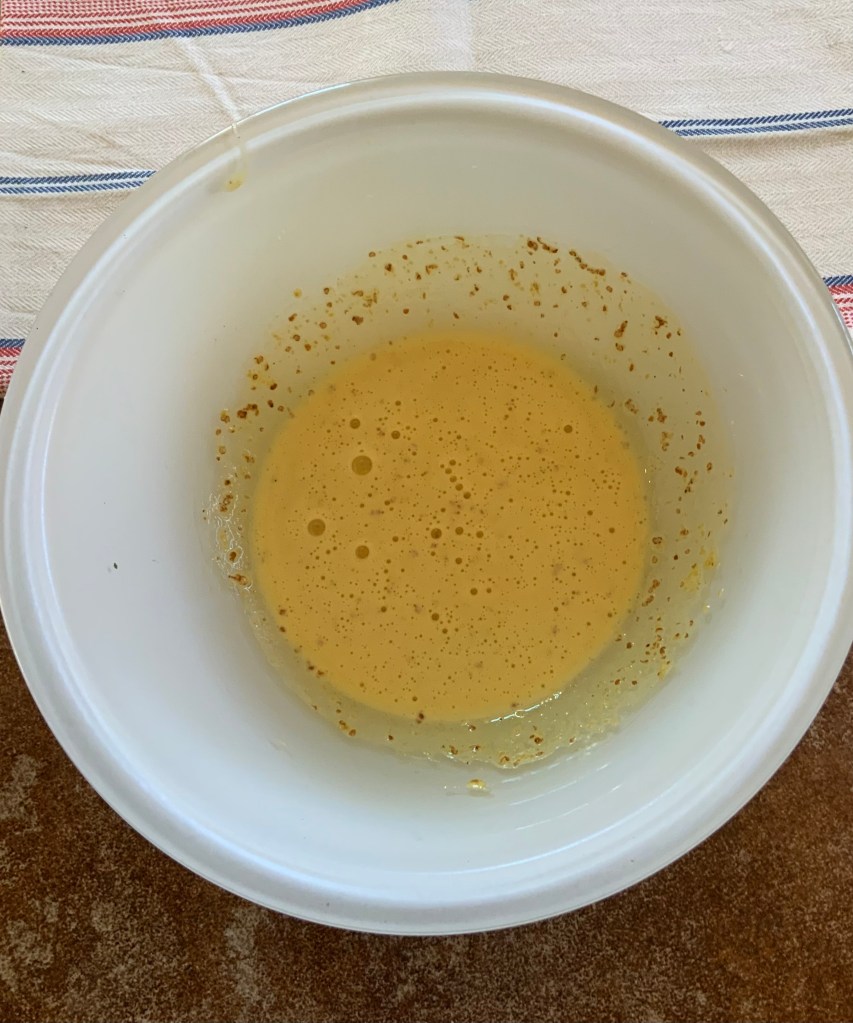
- Add the egg yolks, salt and mustard to the mixing bowl and beat them using the hand mixer until they begin to thicken.
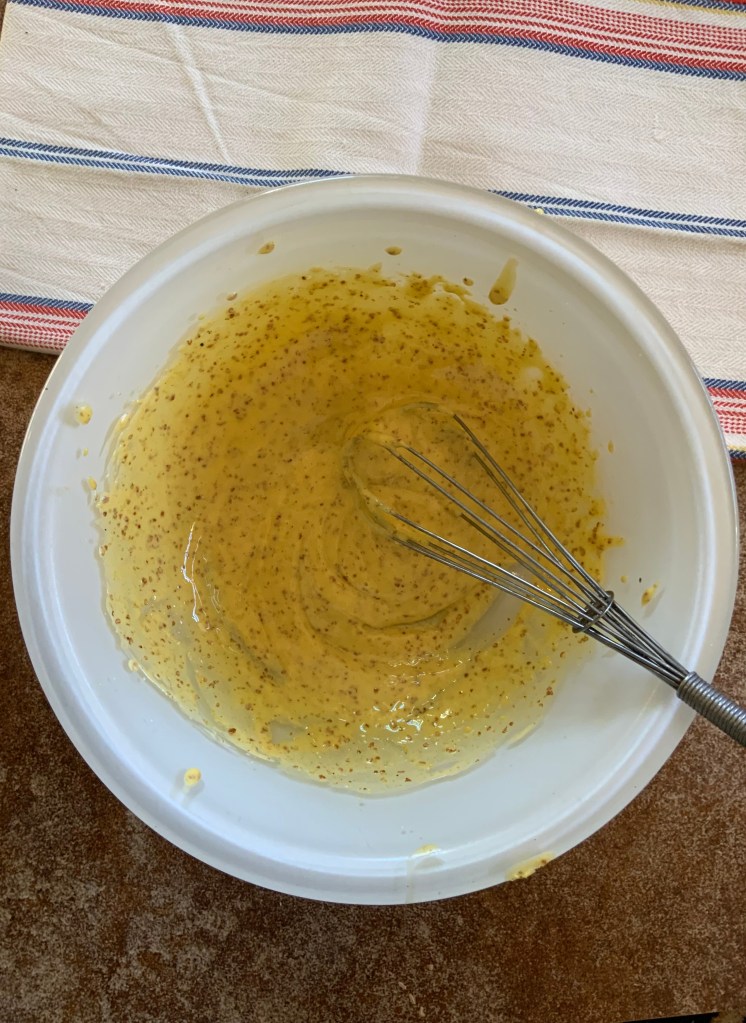
- While beating with the mixer, add a small drip of olive oil. Before adding more, give this small amount time to emulsify (i.e. the oil begins to form a stable mixture with the other ingredients). Add another drip. The visible signs that the mixture is changing in the desired direction are (1) that the bottom of the bowl will be visible as you continue mixing; (2) the color lightens and the volume increases a bit. There is no need to hasten to add more oil. When signs of the emulsion become perceptible, add a third drip: (3) the beaters of the mixer will begin to mark a swirl pattern, but the swirls will fade when the sauce is no longer being mixed.
- After 3 drips about 1/4 cup (60 ml) have been added, and as the beating continues, the swirl marks will remain longer. The bottom of the bowl will be visible while beating. If the mixture is stirred with a whisk, it will feel thicker. When the mixer is set aside to test how far along the emulsion has come, the bottom of the bowl will remain visible for a longer time before the sauce spreads back over it.
- Add another drip of oil. Beat until it is completely incorporated into the sauce. Then add another drip—then another. After each addition the mixture visibly thickens. The swirl markings from the beaters remain. The bottom of the bowl is visible and the sauce no longer spreads back over it.
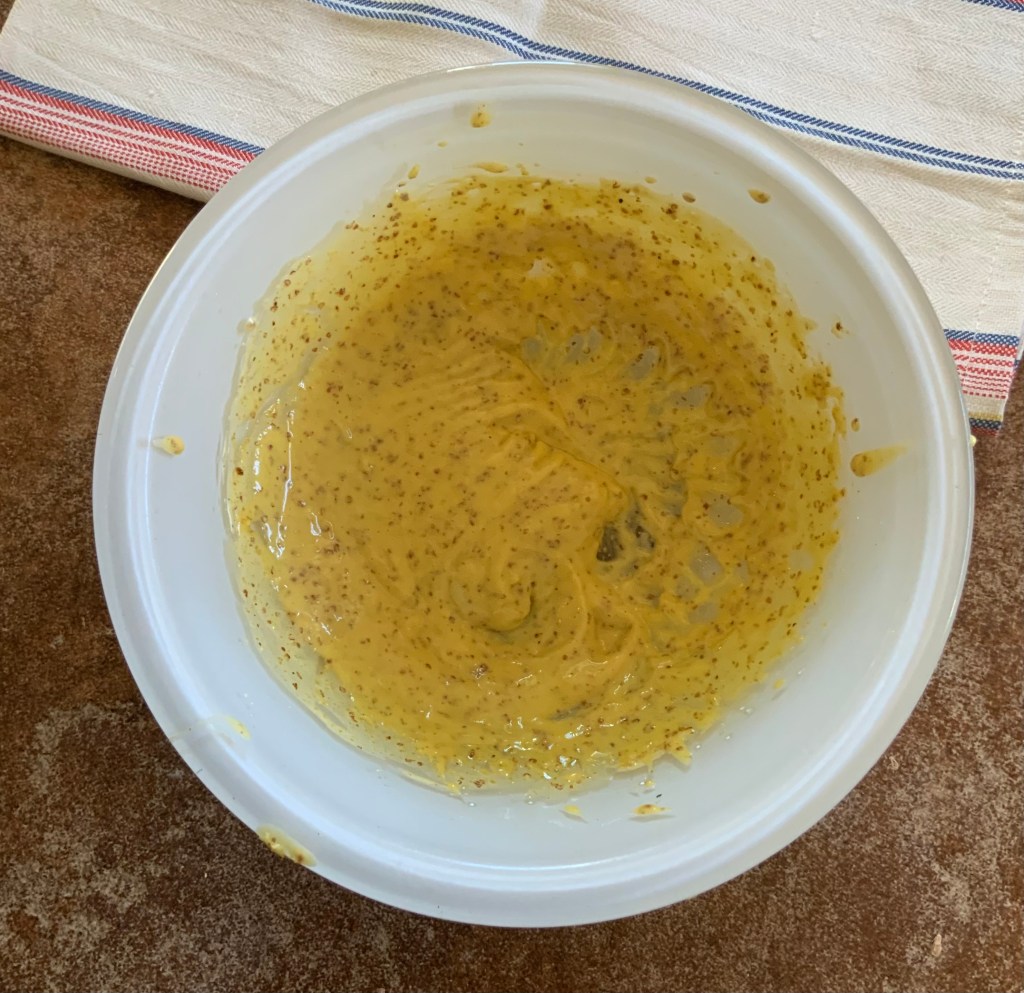
- Add drips of oil more rapidly. After about 7 separate drips of oil have been added (about 1/2 cup or 120 ml) the sauce has become real mayonnaise/aïoli. It is thick, holds its shape, and there is no separation into parts.
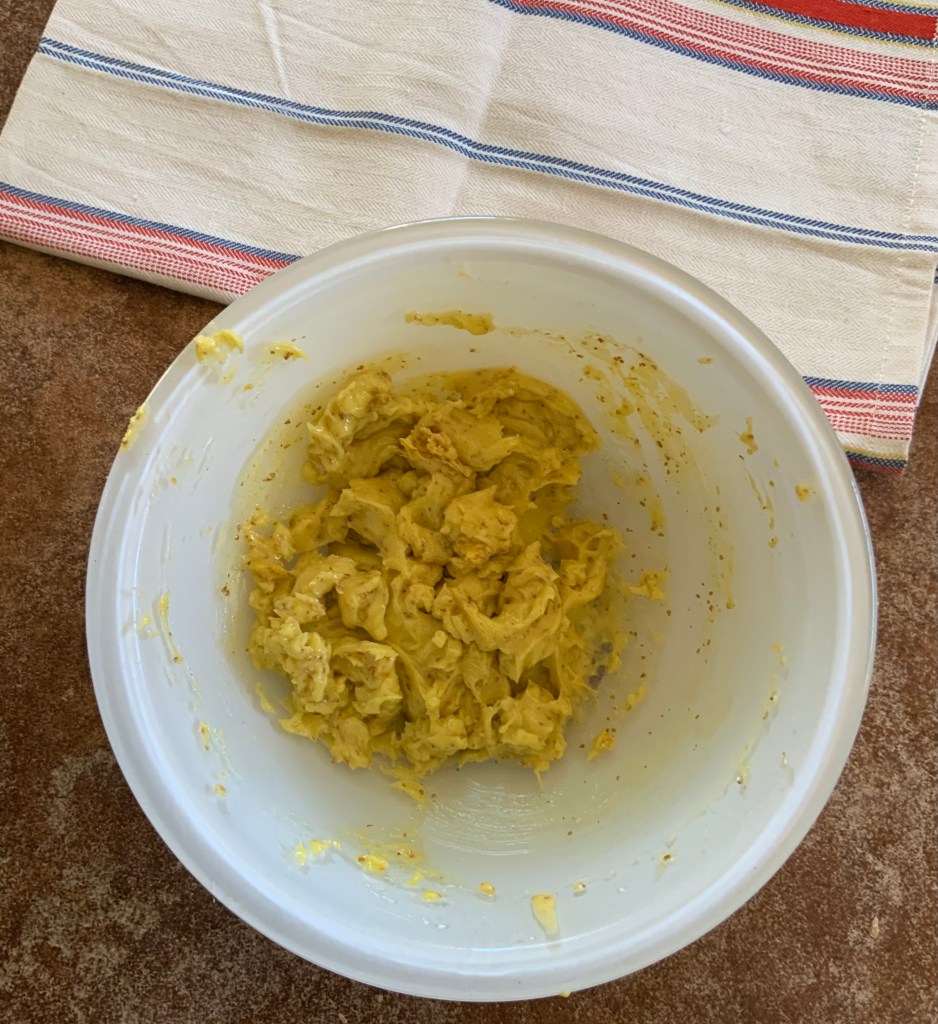
- Continue incorporating the rest of the oil a little at a time. The mayonnaise/aïoli will easily absorb the full cup of oil (240 ml).
Note: A thoroughly emulsified mayonnaise/aïoli may be stored in a glass jar in the refrigerator. Plastic wrap pressed down on the surface of the sauce will help preserve it. If it is used cold, straight from the refrigerator, it will not separate. It will remain thick. Stirring it gently will not break up the emulsion, but vigorous whisking may do. Many cooks advise not refrigerating at all, but, instead, placing it in a sealed container in a cool place. This works well if there is a cool place and if the sauce will be used within a few hours. Longer storage at room temperature depends on the specific conditions.
Margaret Costa’s Mayonnaise from her Four Seasons Cookery Book
Mayonnaise: Use a really clean, dry bowl and keep it steady by standing it on a tea towel wrung out in cold water. Into it put 2 good-sized egg yolks, quite free of white. Add salt, pepper, a little crushed garlic if you like, and about half a teaspoon of made mustard, which will help it to thicken easily. Stir to a smooth paste with a wooden spoon. Blend in a few drops of lemon juice and then start adding the olive oil, very gradually. There is really no need, except for the first moment or two, to add it drop by drop. This very off-putting advice alone must sell a million bottles of ‘mayonnaise’ a year. Just add it by small teaspoonfuls, stirring steadily and always in the same direction, until the oil is absorbed. It’s difficult to be precise about how much oil you’ll need–for 2 large eggs, probably about 1/2 pint.
Once it begins to thicken and to look like mayonnaise you’re well on the way and can add the oil a little more freely until it is shiny and firm, almost stiff enough to cut with a knife. Then you ‘correct the seasoning’ and add a little more vinegar or lemon juice to sharpen the flavour, but not too much at a time or you may make it too thin. Cover the bowl or turn the mayonnaise into a screw-top jar and leave it in a cool place, but don’t chill it. It will keep for several days.

 thefoodlessprocessed
Leave a comment