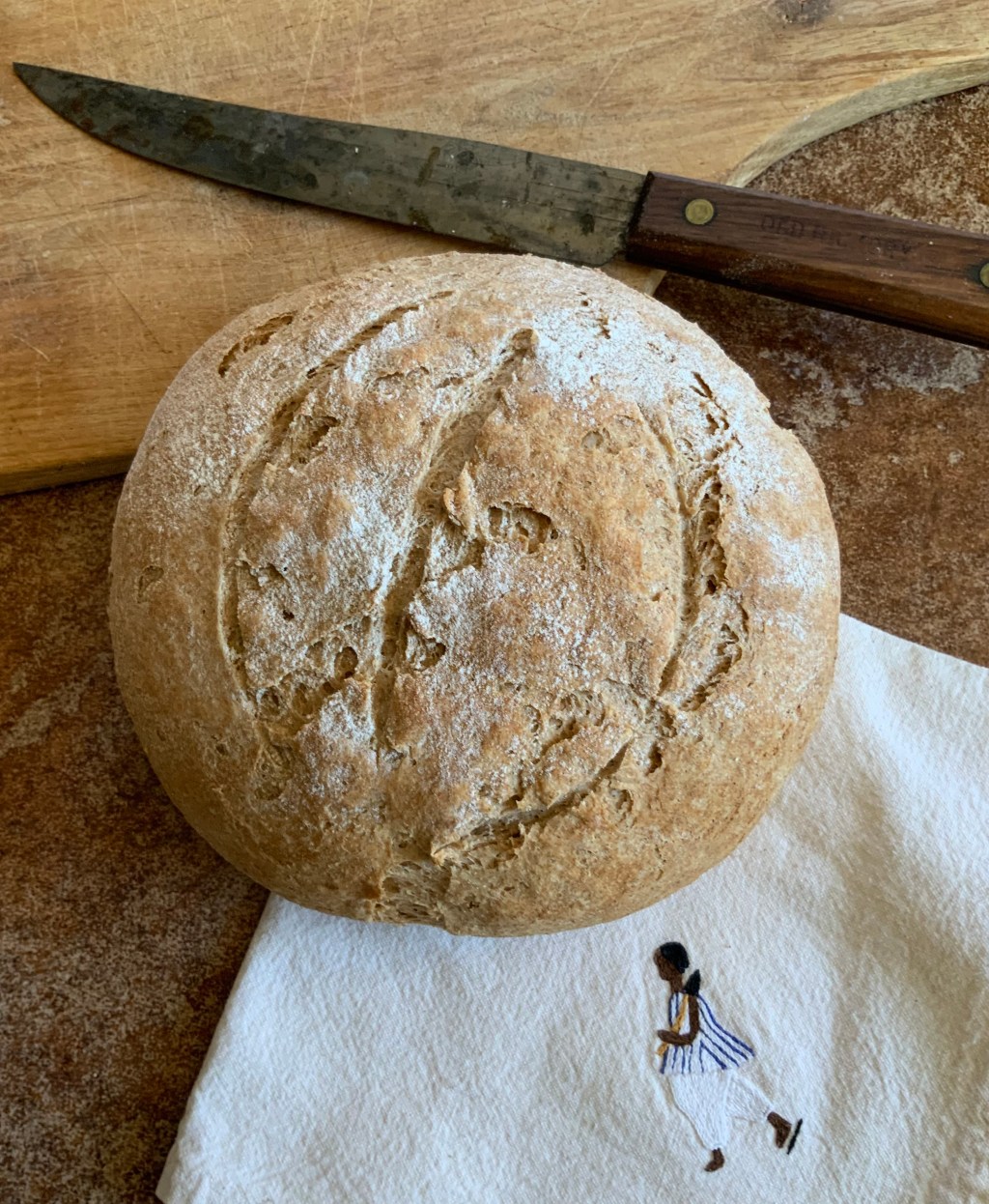
This variety of beer bread is flexible. It may be made with a mixture of whole wheat and European soft wheat flour, or with whole wheat and a hard wheat flour. Only the amount of beer added will vary.
Beer bread doughs are often soft and a bit sticky and tend to spread if not baked in a container. But this version may be baked successfully on a baking tray.
The less processed forms of the ingredients are described through these links: Beer, Butter, White Flour, Whole Wheat Flour, and Salt.
Equipment
- a Digital Scale
- a Standing Mixer with a Paddle Attachment
- a Large Bowl for the first rise, lightly buttered
- a Pastry Board
- a Lame or Sharp Knife and a Small Sieve
- A Parchment-Lined Baking Sheet
- a Pan of Water
Ingredients
- an Imported German Pilsener or Dutch Lager: about 300 ml for a Soft Wheat Flour Loaf and 330 ml for a Hard Wheat Flour Loaf (Hard Wheat is the standard American White Flour.)
- 250 g of Organic Stoneground Whole Wheat Flour
- 250 g of European Unenriched Soft Wheat All-Purpose White Flour or 250 g of Organic Unenriched Hard Wheat All-Purpose White Flour, plus a very little flour for the pastry board and for dusting the loaf before baking it
- 10 g or Sea Salt
- 10 g of SAF Instant Yeast
- 30 g or European-Style Unsalted Butter, softened
Mixing the Dough
- Mix the two flours together in the bowl of the mixer and rub the butter into the flours.
- Add the salt and yeast.
- Turn on the mixer and begin adding the beer in increments until the dough that forms is no longer dry, but slightly sticky and comes away from the sides of the mixing bowl. If the dough contains soft wheat flour, 300 ml is a good estimate of the total amount of beer added to make the dough. For hard wheat flour, 330 ml may be enough to form the dough. These are estimates and a little more beer might be needed if the dough is still a little too dry.
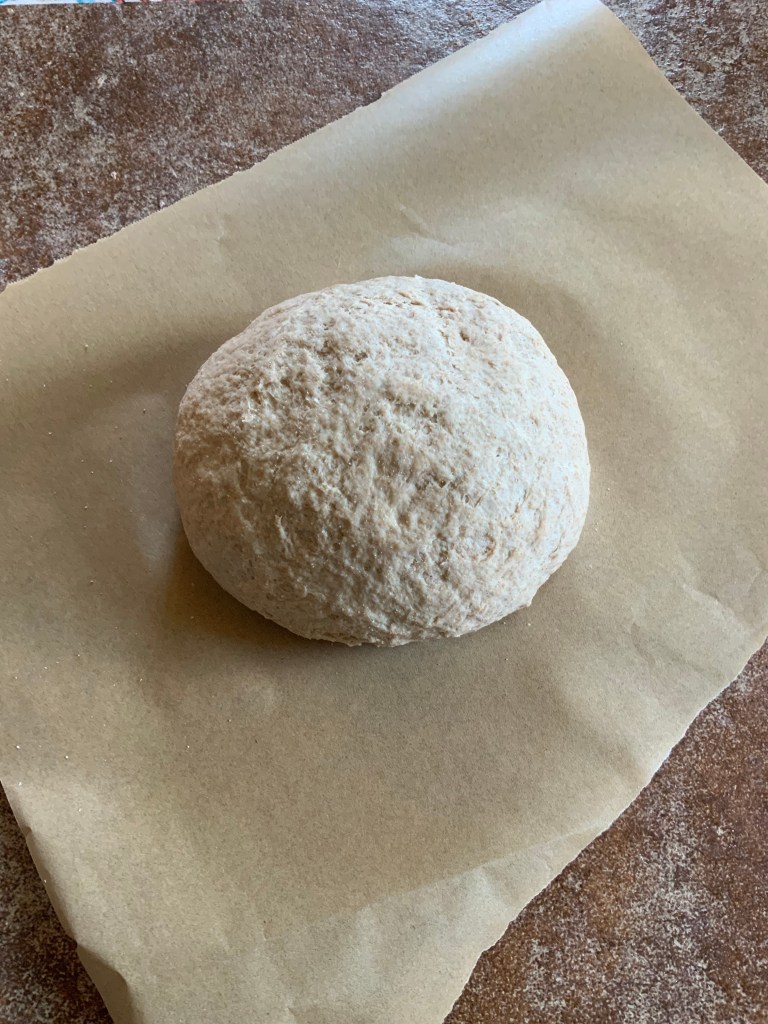
- Turn the dough out on a very lightly floured pastry board and knead it to a smooth consistency. It will feel damp to the touch. Form the dough into a boule shape, which means rounding the dough into a tight ball, creating surface tension across the top. Here is a YouTube video that thefoodlessprocessed has found useful on how to create surface tension from the site Bake with Jack.
The First Rise
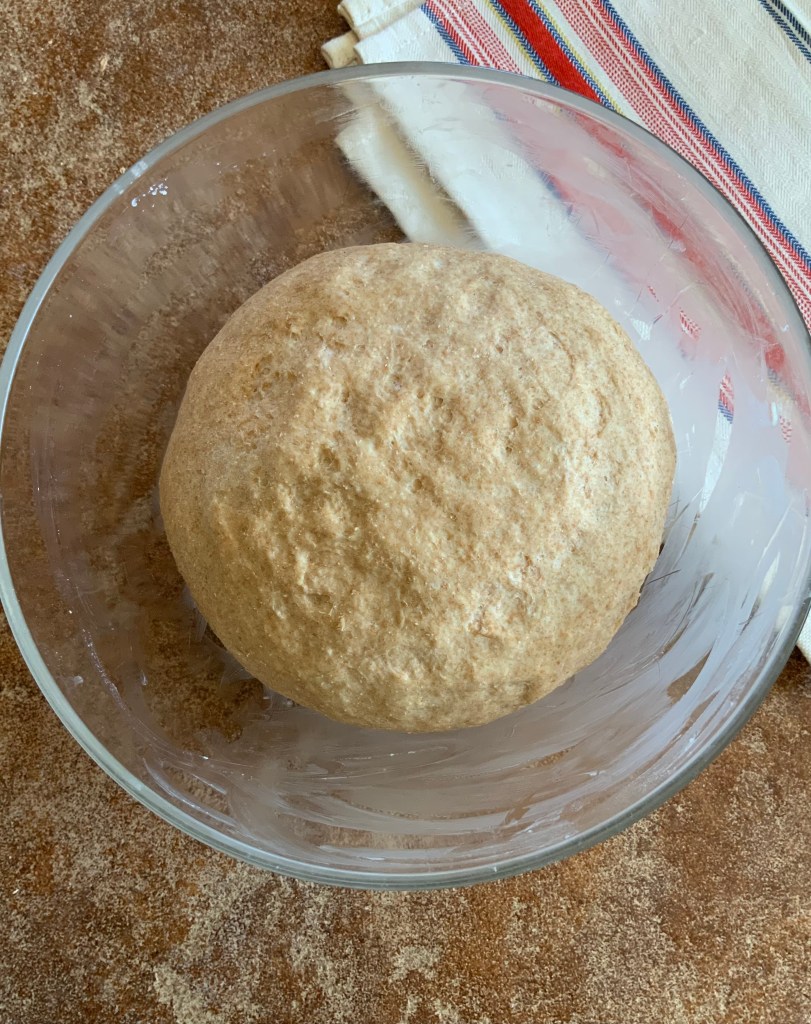
- Place the shaped dough in a lightly buttered bowl. Cover it with plastic or an inverted large bowl and set it to rise in a warm place until it has about doubled in size. Its texture will now be soft and pillowy.
The Second Rise
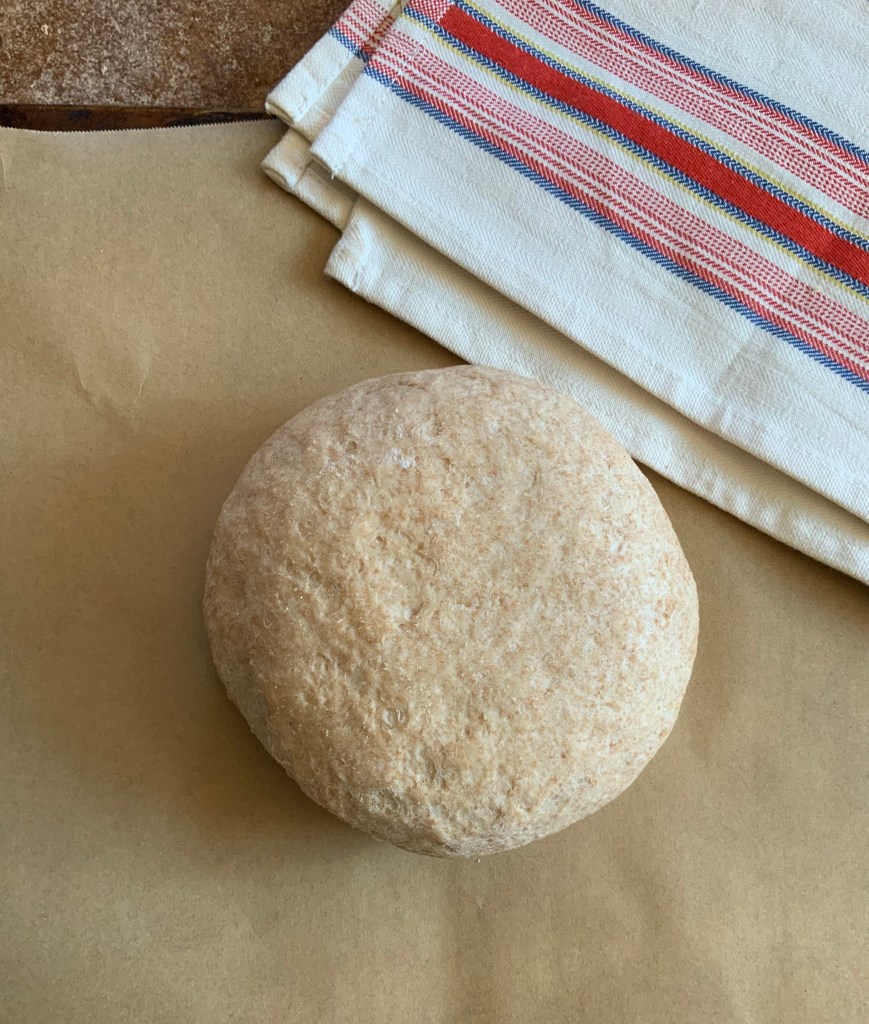
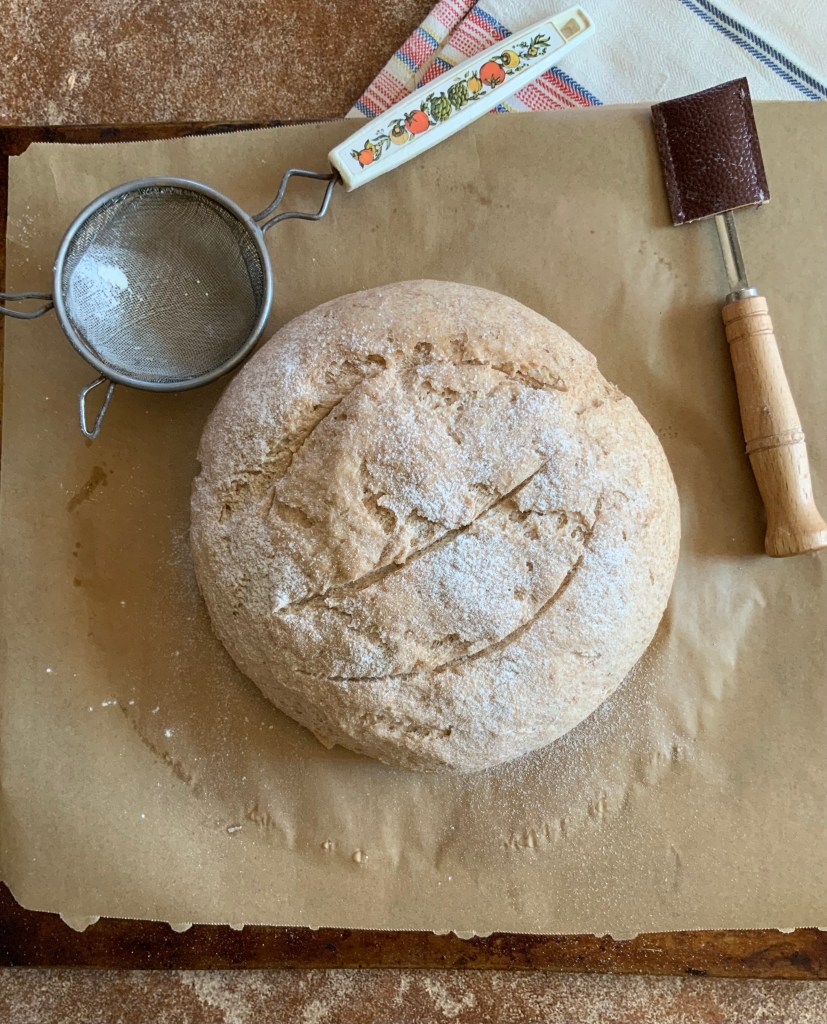
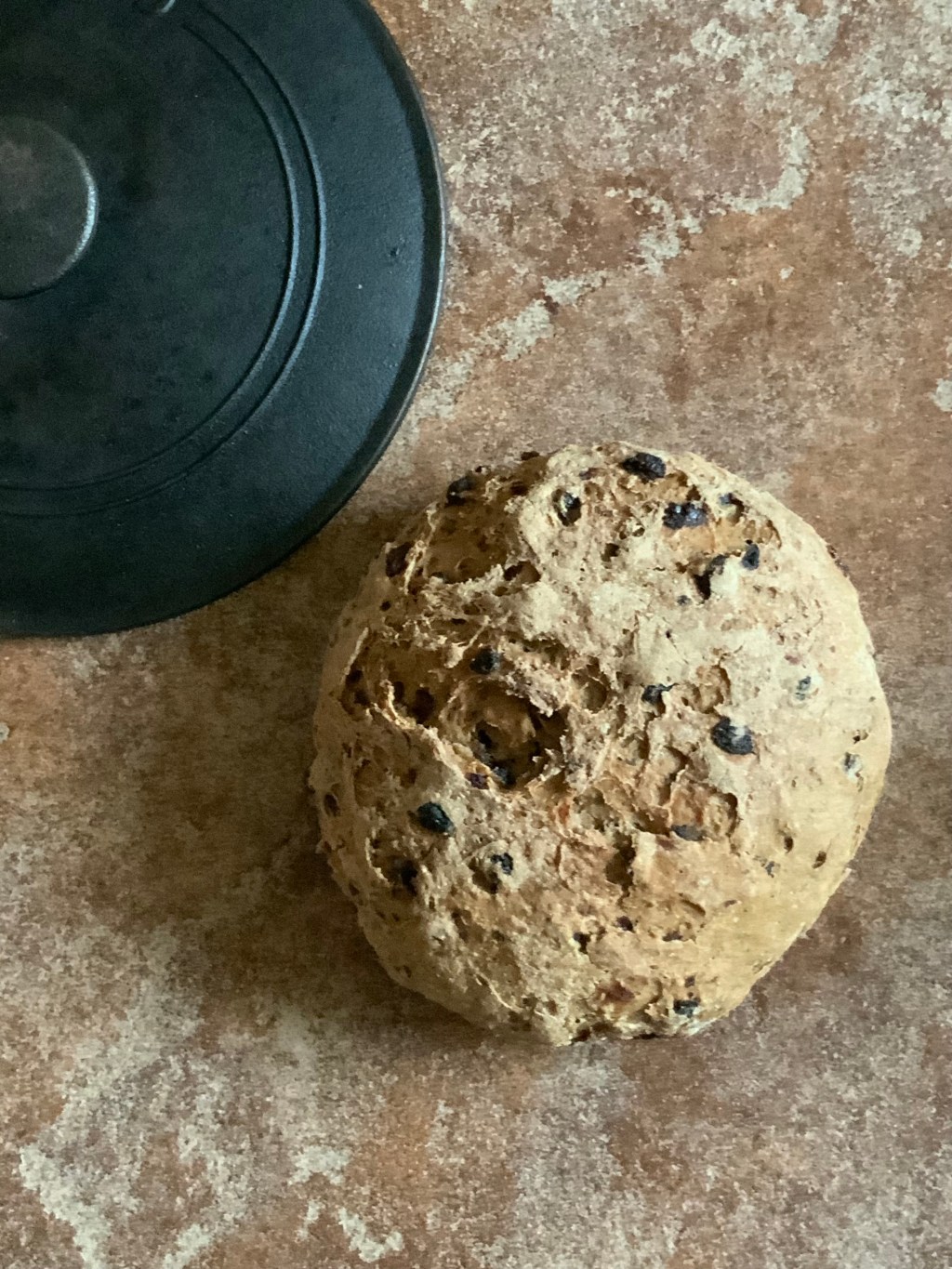
- Again shape the dough into a boule. Place it on the parchment-lined baking sheet. Cover it with a towel or a large inverted bowl and again set it to rise until it has about doubled in size. The photo shows the dough shaped into a boule before the second rise.
Baking
Gas or Convection Oven: thefoodlessprocessed uses a gas oven. The conversions from Fahrenheit to Celsius do not attempt to adjust for differences between baking in a gas or convection oven. I have no experience using a convection oven, and leave adjustments to the better judgement of you who do have.
- Preheat the oven to 200 C/400 F. Place a pan of water on the bottom rack of the oven.
- Slash the top of the loaf with a lame or sharp knife and sieve a little flour over it.
- Bake the bread on the center rack for 30 minutes.
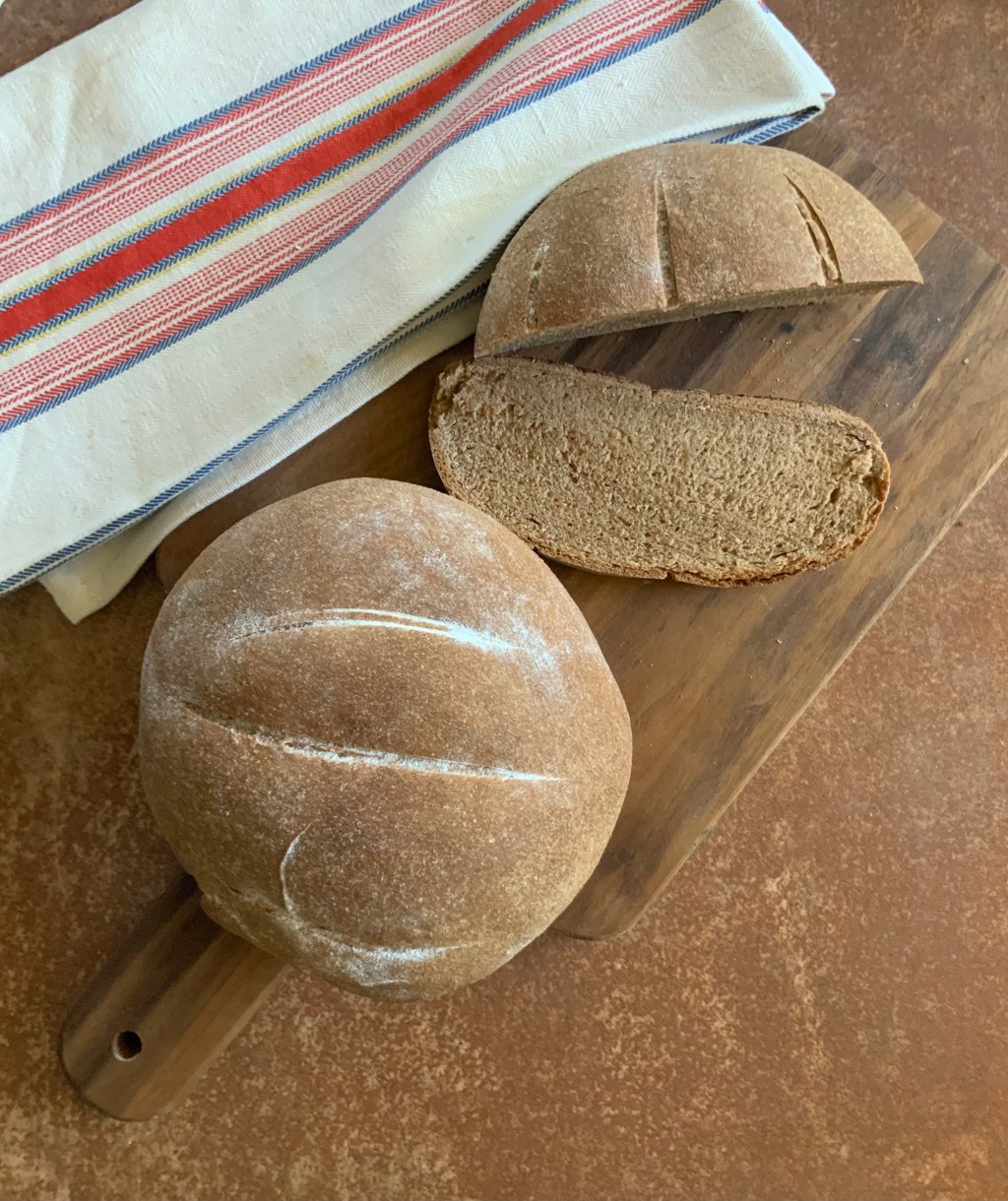
- For a softer crust, wrap the loaf in a towel while it cools on a rack.


 thefoodlessprocessed
Leave a comment