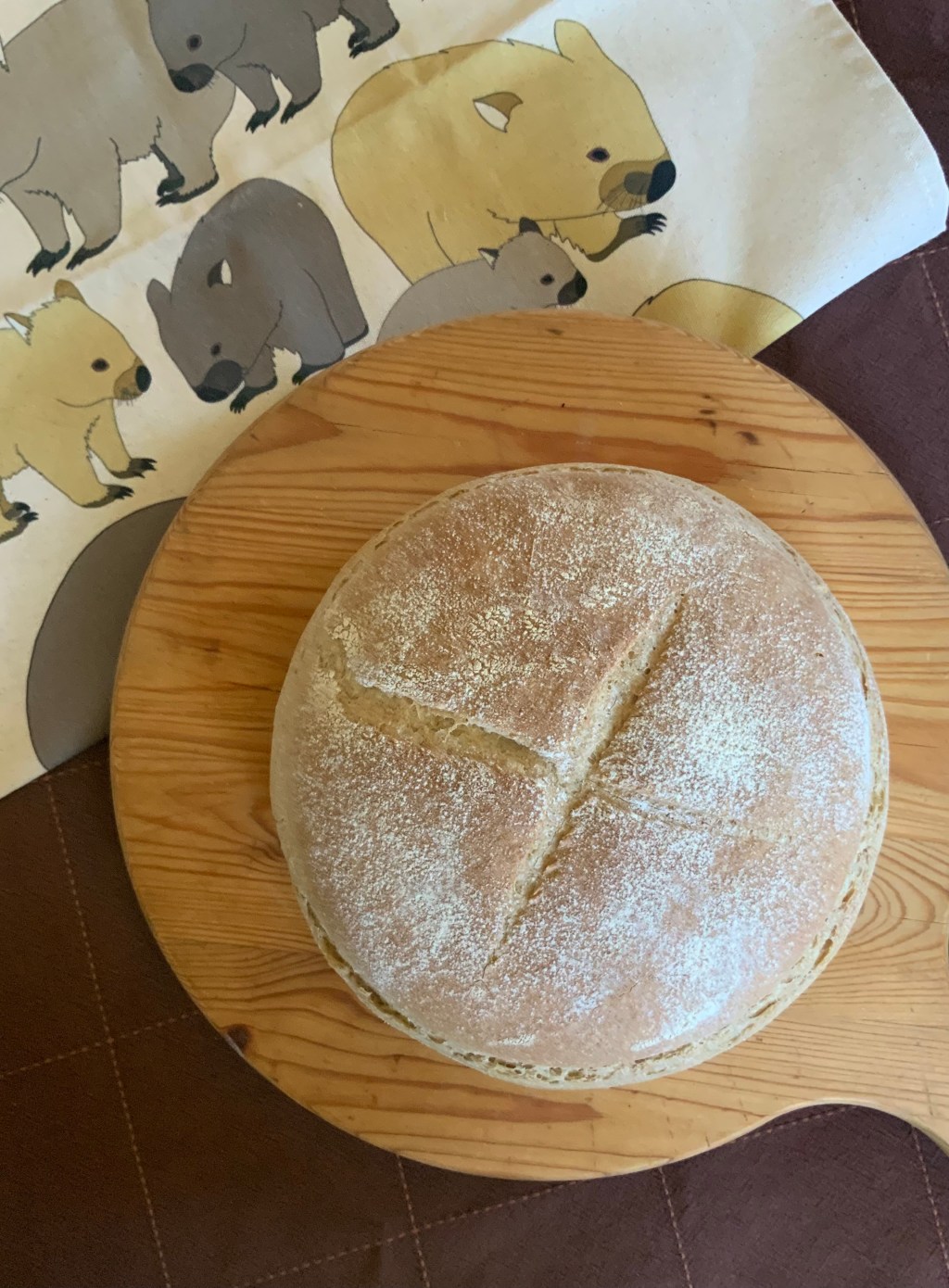
A Swiss bread from the Jura is one typical of breads made in the Jura mountain region. Usually it is made with a blend of white and rye flours, formed into a large round loaf, slashed with a cross cut and floured before baking. A sourdough starter is common, but this version includes a biga (an Italian preferment of flour, water, and yeast, mixed up the day before making the bread and fermented overnight).
The loaf is chewy, a little dense, a little moist. Both the rye flour and the biga help keep the loaf fresh for several days.
The less processed ingredients are described through these links: White Flour, Rye Flour, Butter, Salt and Water.
Equipment
- a Digital Scale
- a Medium Bowl for mixing the biga
- a Standing Mixer and Paddle Attachment–or, the dough may be mixed in a large bowl and kneaded by hand.
- a Pastry Board
- an 8-inch diameter (20 cm) Springform Pan, buttered and floured
- a Lame or Sharp Knife to score a cross in the dough before baking
- a Small Sieve
- a Pan of Water to create a bit of steam during baking
- Optional: a Cast Iron Pizza Pan or Baking Stone on which to bake the bread
Ingredients for the Biga
- 50 g of Organic White Unenriched All-Purpose Hard Wheat Flour/aka Bread Flour
- 50 g of Organic Stoneground Dark Rye Flour
- 90 ml of Bottled Spring Water
- 1 g (about 1/8 teaspoon) of SAF Instant Yeast
Ingredients for the Bread
A note on flour: There is no single system for classifying flour varieties; classifications differ from country to country. For this dough, choose a white flour recommended for bread making rather than one intended for cakes and pastries.
- 475 g of Organic White Unenriched All-Purpose Hard Wheat Flour/aka Bread Flour-(the American standard variety is hard wheat.)…and some to sprinkle on the pastry board and over the loaf before baking
- 65 g of Organic Stoneground Dark Rye Flour
- 325 g of Bottled Spring Water
- 7 g of Sea Salt
- 3 g of SAF Instant Yeast
- the Biga, mixed the day before and fermented overnight. See below: Making the Biga.
- Salted Butter to grease the Bowl in which the dough rises and some for the Pan in which the bread bakes
Making the Biga–the Day Before Making the Bread
- Mix together the flours and the yeast in a medium bowl.
- Add the water and stir to combine everything.
- Cover the bowl with plastic and leave it at room temperature overnight.
Making the Dough–the Following Day
- In the large bowl, or bowl of the mixer, add the flours and the yeast.
- Add the water and mix everything together. Let the mixture stand, covered at room temperature, for 30 minutes.
- Add the biga. Mix it in well and again cover the bowl and rest the mixture at room temperature for 30 minutes.
- Mix in the salt. (Adding the salt last improves the dough for a variety of reasons.)
- Either knead the dough by hand on a floured pastry board or in a standing mixer fitted with the paddle attachment.
- When the dough is sufficiently kneaded it will be soft, still a bit sticky, but will pull away from the sides of the bowl (or your hands) and feel elastic.
- Shape the dough into a ball. Place it in a lightly buttered bowl, covered with plastic or another large bowl, and leave it at room temperature until it doubles in size.
Forming and Creating the Loaf
- Form the dough into a boule shape, which means rounding the dough into a tight ball, creating surface tension across the top. Here is a YouTube video from the site Bake with Jack that may be useful on how to create surface tension.
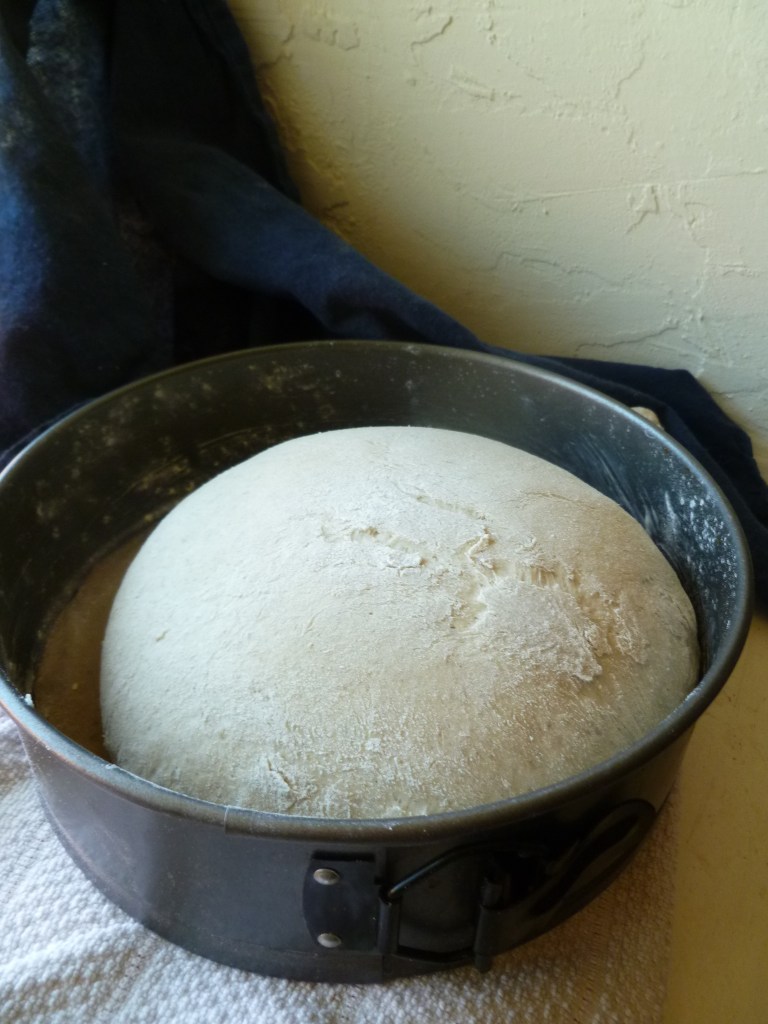
- Transfer the boule to the buttered and floured springform pan. Cover the pan lightly with a cotton towel and leave the dough at room temperature until the dough is rounded and risen to a point a bit below the rim of the pan.
Baking
Gas or Convection Oven: thefoodlessprocessed uses a gas oven. The conversions from Fahrenheit to Celsius do not attempt to adjust for differences between baking in a gas or convection oven. I have no experience using a convection oven, and leave adjustments to the better judgement of you who do have.
- Preheat the oven to 240 C/465 F. If the loaf is going to be baked on a cast iron pizza pan or a baking stone, place it on the middle rack of the oven now to preheat.
- Slash a cross on the top of the loaf with a lame or sharp knife and sieve a little flour over it.
- Place a pan of water on the bottom rack of the oven.
- Put the loaf in the oven on the middle shelf/pizza pan or baking stone and reduce the temperature to 220 C/425 F.
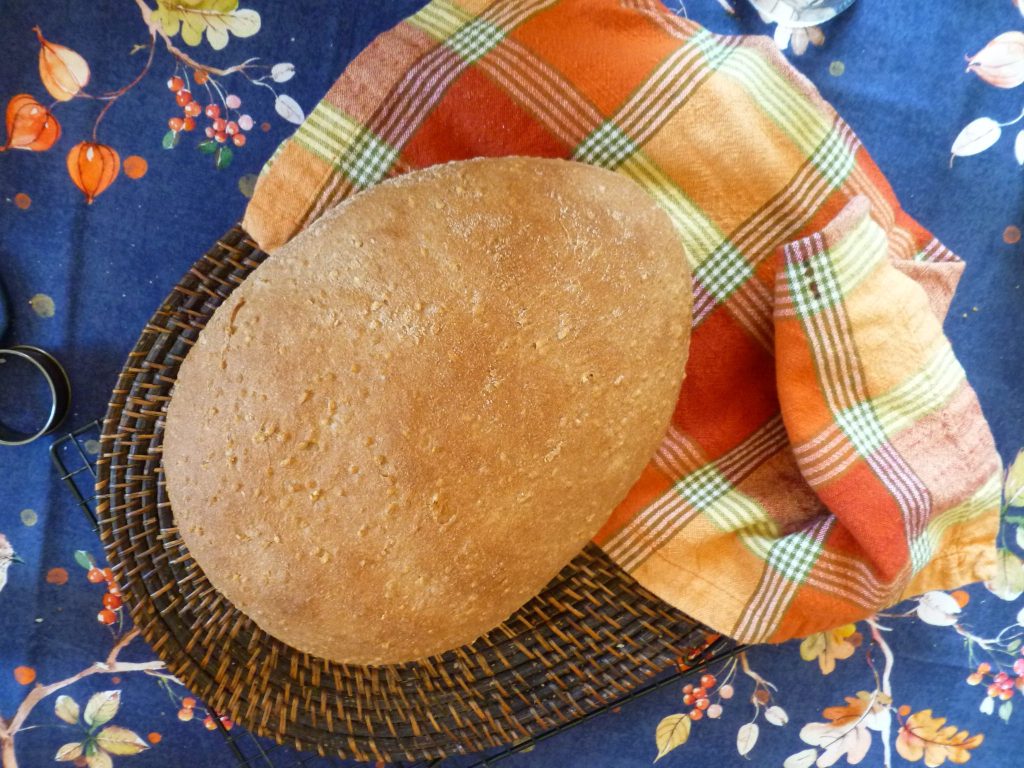
- Bake the loaf for 20-25 minutes. Remove it from the pan and cool it on a rack.
- The bread will slice better if it is completely cool.



Leave a Reply