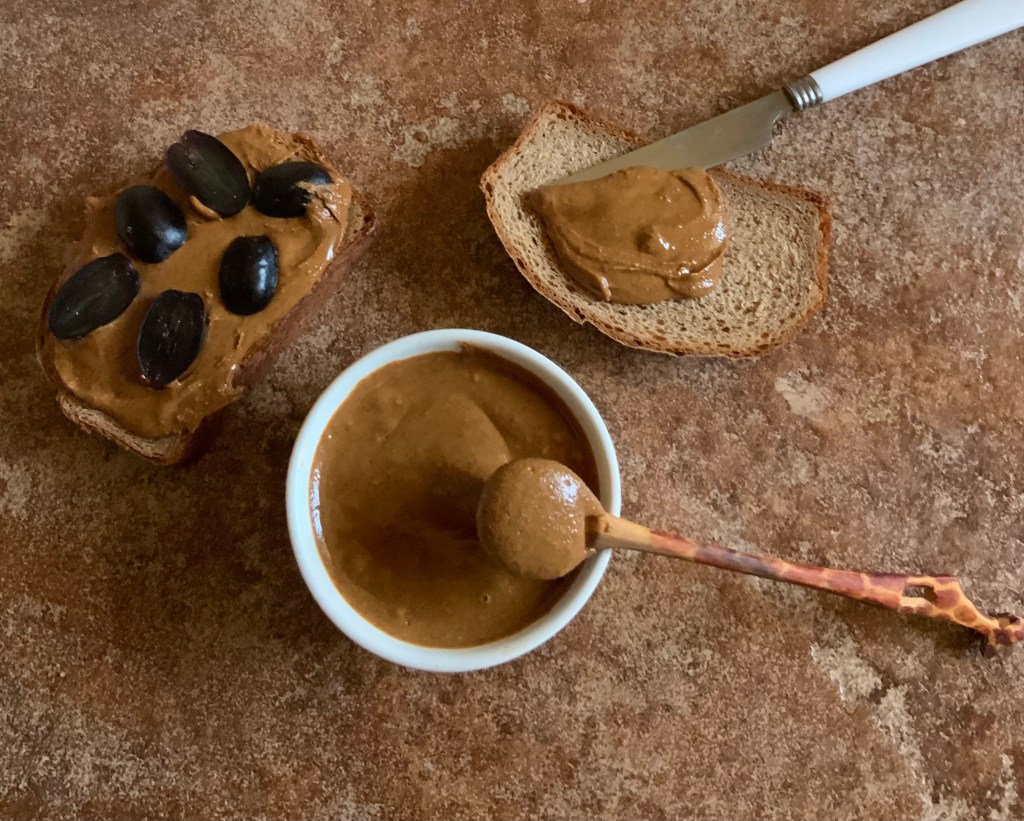
Roasted peanuts do not quickly release their oil and turn into peanut butter. A food processor takes the nuts through each successive stage that transforms them into a smooth, just cohesive spread. It is a gradual steady progression.
This peanut butter is made with redskin Spanish peanuts. The skins are not removed. As with many fruits and vegetables, the skins are a significant source of goodness. They also deepen the flavour of the butter and contribute somewhat to stabilizing it.
Eventually peanut butter that contains no added stabilizer such as palm or vegetable oil will separate. Commercial varieties add them to reduce cost, ensure a consistent, standard result, and improve shelf stability over long periods. But since it is fresh and made in small batches, homemade peanut butter typically remains stable at room temperature with little or no oil separation, and by adjusting roasting time and seasoning it can be tailored to individual tastes.
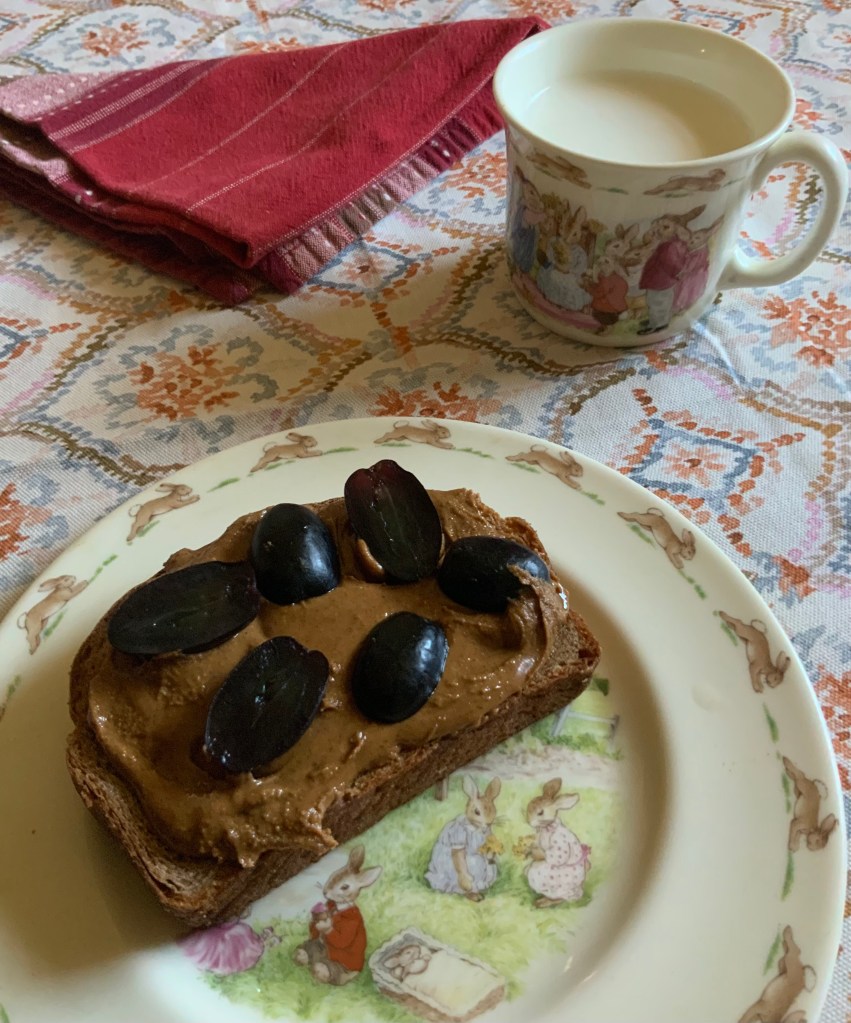
And, for those who appreciate the American PB&J, the recipe includes an optional suggestion for an open-faced sandwich that evokes the essential fruit character of the jelly without added sugar.
The less processed ingredient options are described through these links: Peanuts, Olive Oil, Salt, Fruit, and Homemade Bread.
Equipment
- a Large Bowl
- a Rimmed Baking Pan large enough to hold 2 or 2 and 1/4 cups (280 -315 g) of peanuts in a single layer (The dimensions of the base of the pan used for this recipe are 10 x 15.5 inches or approximately 25 cm x 40 cm.)
- Aluminum Foil
- a Food Processor
- Optional: a Chopping Board and Knife to chop the additional roasted nuts for crunchy peanut butter
- a Lidded Jar to store the peanut butter: A glass jar of a 350 ml capacity ( 11.5–12 oz) is ample.
Ingredients
- 2 cups (280 g) of Raw Spanish Peanuts, skins on: For crunchy peanut butter add another 1/4 cup (about 35 g) of nuts.
- 1/2 Tablespoon of Extra-Virgin Olive Oil
- a Shaker of Salt
- Optional for the Peanut Butter and Not Jelly Open-Faced Sandwich: Organic Grapes and any Homemade Bread.
Roasting the Peanuts
Gas or Convection Oven: thefoodlessprocessed uses a gas oven. The conversions from Fahrenheit to Celsius do not attempt to adjust for differences between baking in a gas or convection oven. I have no experience using a convection oven, and leave adjustments to the better judgement of you who do have.
- Preheat the oven to 350 F (or 175 C).
- Line the baking pan with aluminum foil.
- Pour the peanuts into the bowl. Add 1/2 tablespoon of olive oil and mix it with the nuts to coat them.
- Add salt to taste. Using a shaker will distribute the salt more evenly over the nuts. If you are unsure about the quantity of salt, be conservative at this point. Additional salt may be added to the finished peanut butter.
- Pour the nuts onto the pan and spread them out in a single layer.
- Place the pan on the middle rack of the oven and roast for about 25 minutes. The visible white parts of the peanuts will become lightly tanned, The peanuts will continue to roast a bit after they are taken from the oven. This roasting time gives a fairly dark roast. For crunchy peanut butter remove the additional 1/4 cup of nuts and set it aside while making the peanut butter.
Making the Peanut Butter
- Transfer the hot nuts to the food processor.
- Process until the nuts release their oil and become a smooth, silky spread. No additional liquid is needed. As they are processed the nuts change from a coarse, sandy meal, to a heavy, dry paste, to a slightly more fluid paste, and finally to a smooth, silky, shiny butter. Taste and add additional salt now if desired.
- For crunchy peanut butter, chop the reserved nuts and stir them in.
- Transfer the peanut butter to a jar and store it at room temperature.
The Open-Faced Peanut Butter and ‘Not Jelly’ Sandwich…for young Mats
- Spread a slice of any homemade bread liberally with the peanut butter and arrange halved grapes on top.



Leave a comment