“Italian cooks deal with vegetables better than anyone else in the Western world, perhaps because Italian farmers give them better vegetables than anyone else in the Western world. They have been at it longer; and from the beginning they gave loving care to the art of market gardening.” (Waverly Root from The Best of Italian Cooking (1974).
“As an accompaniment to meat, chicken, or game Italians rarely serve vegetables…Many vegetables are treated as a separate dish, usually as a first course rather than coming after the meat as in France.” (Elizabeth David from Italian Food (1969 revised reprint edition).
Whether or not one agrees with Mr. Root on the superiority of Italian vegetable cookery, it is an opinion based on rich and informed personal experience. It is also suggestive of a more general principle that applies to all good cooking–that is, good food is rooted in a deep familiarity and care for the ingredients in it. Nothing well and truly made is ever just “a side”.
Mrs. David’s observation is a reminder that one aspect of creatively cooking within a tradition is to vary the context in which a dish is served.
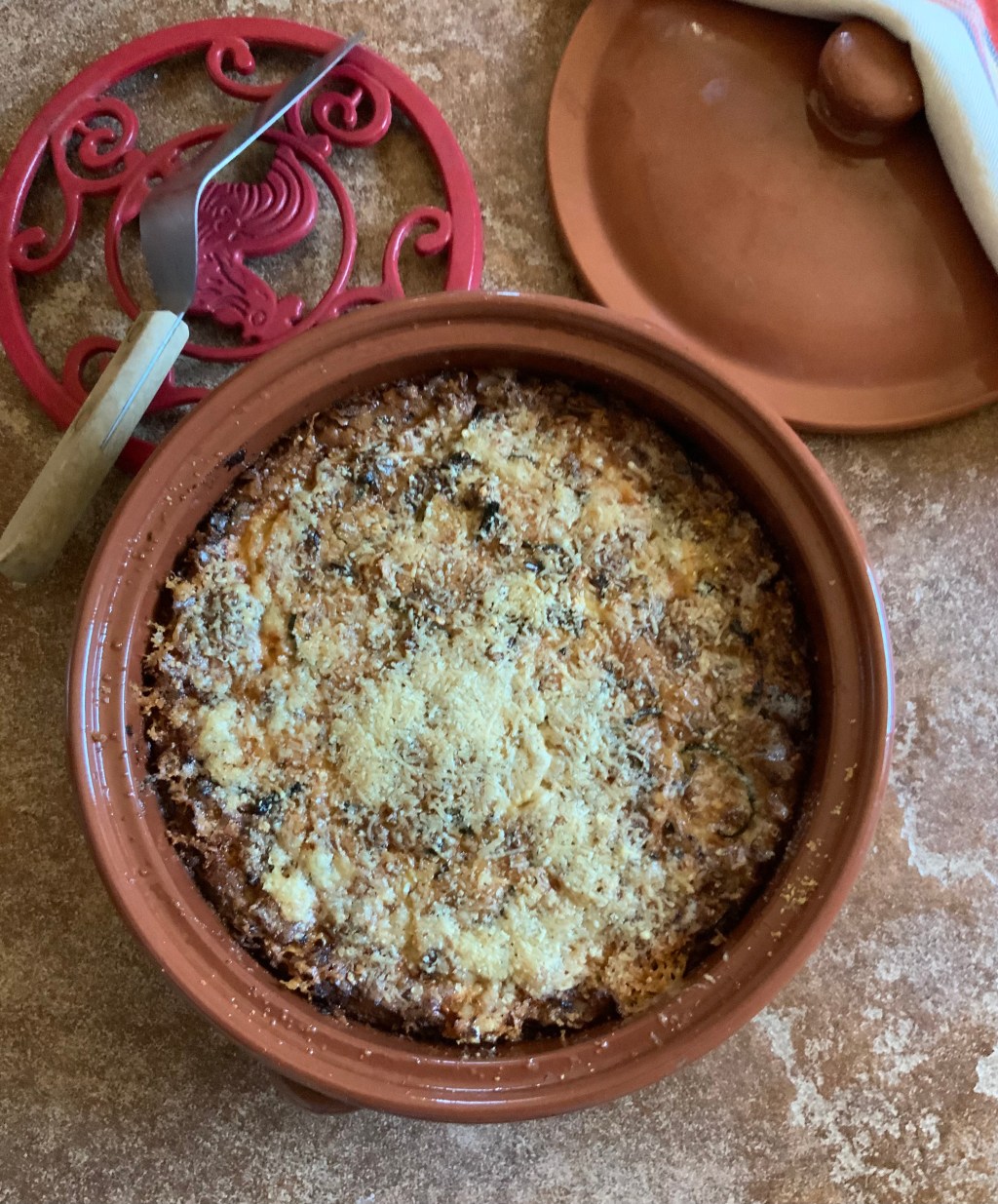
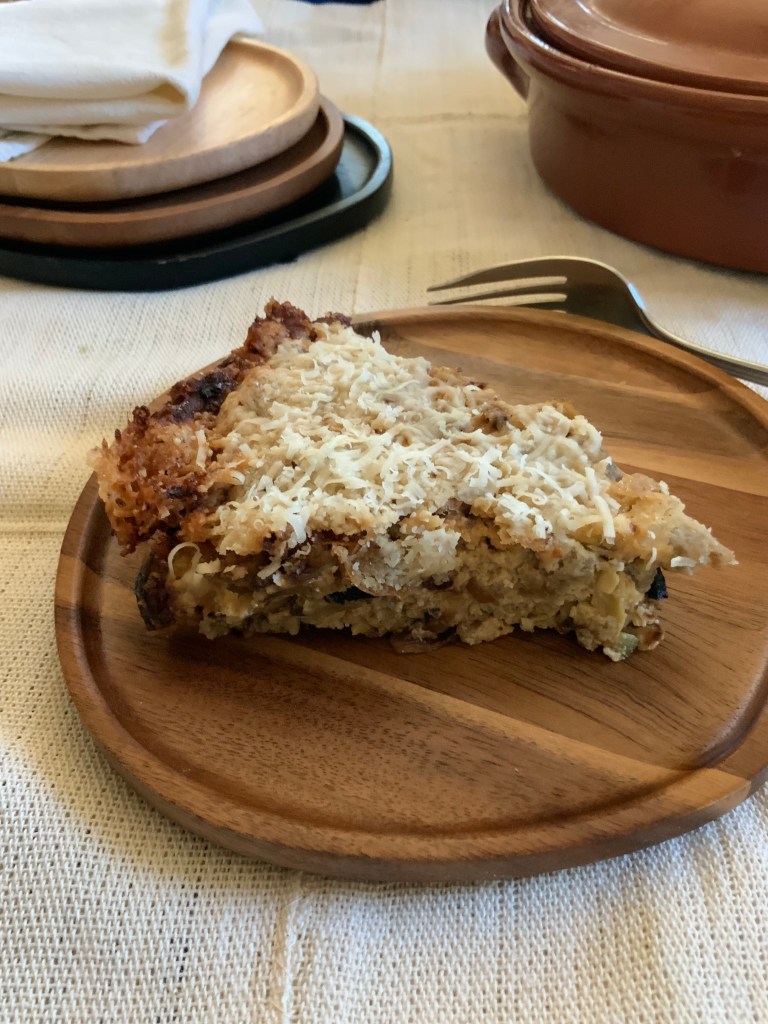
Both ideas apply to this vegetable tortino that is characteristic of the Italian home cooking tradition. This tortino includes eggplant, zucchini, onion and yellow squash. But the egg, cream and cheese mixture binding them together is the base of the dish. Having made one variety of tortino and understood its essentials, all sorts of other vegetable combinations might be used instead of these.
A tortino may appear as a first course…or, since it is good either hot–or not–and travels well, it lends itself to many different forms of dining.
Note: The inclusion of vinegar is not for flavour, but to improve the quality of the custard. The vinegar isn’t detectable in the finished dish.
Less processed ingredient options that appear in the tortino are: Vegetables, Olive Oil, Cream, Vinegar, Parmigiano Reggiano DOP, and Chilli Flakes (aka Dried Crushed Red Pepper).
Equipment
- a Large Heavy Pan with High Sides. This recipe is made with a 12-inch (30.5 cm) Cast Iron Chicken Fryer with a 4.25 quart capacity (about 4 liters). A close European equivalent is a Sauteuse Haute, which has high sides and a long handle. It is deeper than a regular sauté pan.
- a Kitchen Knife and Cutting Board
- a Spatula (aka Turner)
- a Small Mixing Bowl and a Large Mixing Bowl
- a Whisk or Immersion Blender
- a 9-inch (23 x 23 cm) square or 9-inch (23 cm) round Baking Dish: The dish in the photo is a Spanish Glazed Earthenware Cazuela.
- Aluminum Foil
Ingredients
- 1 and 1/2 Medium-Sized Onions, thinly sliced
- 1 Eggplant (about 1 pound or 450 g), peeled, quartered lengthwise and cut crosswise into thin slices)
- 1 Organic Zucchini, trimmed at the ends, sliced lengthwise and cut crosswise into thin slices
- 1 Organic Yellow Squash, trimmed at the ends, sliced lengthwise and cut crosswise into thin slices
- around 8 Tablespoons of Extra-Virgin Olive Oil and some more to oil the baking dish
- Freshly Ground Black Pepper
- 5 Eggs
- 4 Tablespoons of Imported French Red Wine Vinegar
- 1 Cup (240 ml) of Organic Heavy Cream
- 1 cup (around 100 g) of finely grated Parmigiano Reggiano DOP
- Chilli Flakes (aka Dried Crushed Red Pepper)
- Chapelure (aka French-style breadcrumbs): The recipe is here: Chapelure ~ a French way with Breadcrumbs. Alternatively, substitute other fine breadcrumbs, preferably made from homemade bread.
Making the Tortiino
- Rub the baking dish with olive oil and sprinkle the bottom and sides with the chapelure, or other fine breadcrumbs.
- Heat 3 tablespoons of olive oil in the pan. Add the onion slices and cook them over a moderately low heat until they are golden, stirring occasionally. Transfer them to a small mixing bowl.
- Add 4 tablespoons of olive oil to the pan. Heat it briefly if the pan has cooled. Add the eggplant slices and cook them over a moderately low heat, stirring occasionally, until they are soft and some of the slices are beginning to turn golden. Add more olive oil if the pan becomes too dry before the eggplant is cooked.
- Add a little more olive oil only if the bottom of the pan is no longer slick with oil. Add the zucchini and squash slices to the eggplant and continue cooking over moderately low heat, stirring from time to time, until they are tender as well.
- Remove the pan from the heat. Stir in the onion and grind black pepper into the mixture.
- In a large mixing bowl, beat together the eggs, cream and vinegar. Stir in 2/3 cup (65 g) of the grated Parmesan.
- Stir in the vegetables.
- Transfer the mixture to the prepared baking dish. Sprinkle some chilli flakes and freshly ground black pepper over the top.

Baking the Tortino
Gas or Convection Oven: thefoodlessprocessed uses a gas oven. The conversions from Fahrenheit to Celsius do not attempt to adjust for differences between baking in a gas or convection oven. I have no experience using a convection oven, and leave adjustments to the better judgement of you who do have.
- Preheat the oven to 350 F/177 C. Slide the oven rack to the lower middle level.
- Cover the baking dish with foil and bake the tortino on the lower middle level of the oven for 35 minutes.
- Remove it from the oven, sprinkle it with the rest of the Parmesan and return it to the oven for another 15 minutes. The topping will form a crisp, browned crust.
Note: If the tortino is made in advance and reheated, preheat the oven to 325 F/165 C. For a tortino that has been cooling at room temperature, pour a little cream around its perimeter and sprinkle a little more Parmesan over the top. Cover the dish with foil and reheat it. An estimated time is about 20 minutes. Remove the foil for 5 minutes to ensure that the crust is still crisp when served.
Bring a refrigerated tortino to room temperature before reheating it.




Leave a comment