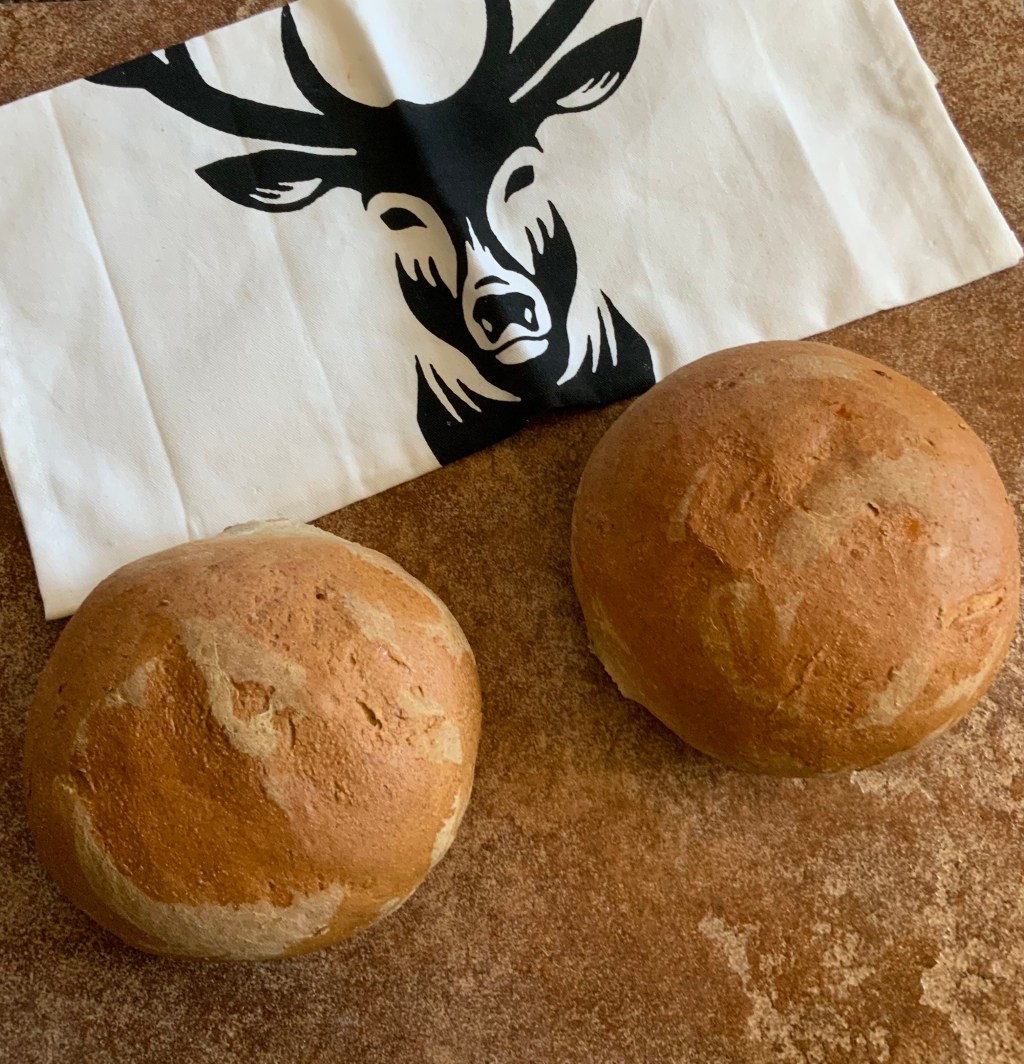
“Rye gives a very delicious and rather powerful flavour to any bread dough with which it is mixed.” (Elizabeth David from English Bread and Yeast Cookery (1977).
Rye breads have a distinctive flavour and a more or less dense texture, depending on the mixture of flours one chooses. (The bread becomes denser as the proportion of rye increases.). They tend to remain moist and fresh longer than many breads made entirely with wheat.
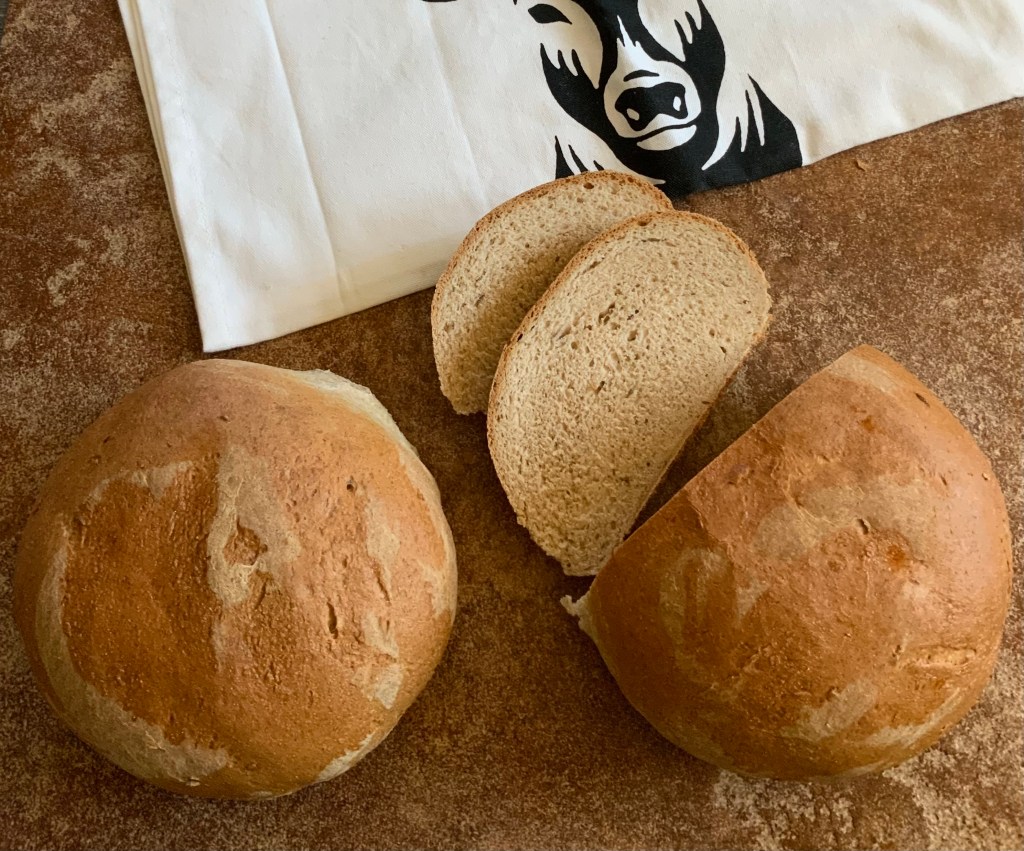
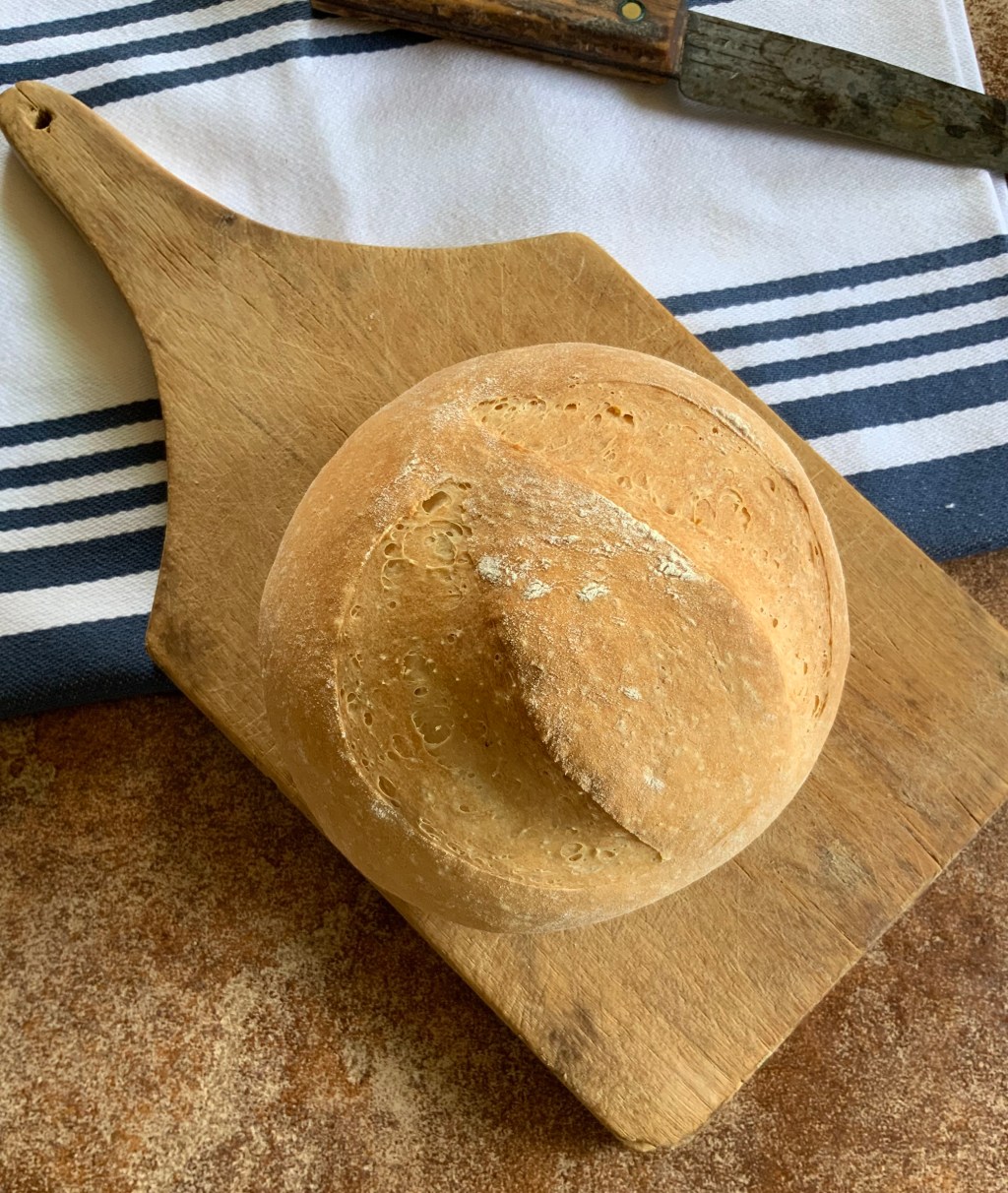
This particular one is neither very dense nor light, but somewhere in between. Texture and tastewise, it has character, and, at the same time, may be enjoyed in many forms–fresh or toasted.
This rye loaf is a good candidate for a daily bread, for it is an easy bread to make, both in terms of bread-making skill and tolerance of weather conditions.
The recipe makes two loaves. Although freezing never improves bread, this one withstands it well and may still be used fresh after thawing.
The less processed ingredients are described through these links: Rye Flour, White Flour, Milk, Butter, Honey, Salt and Water, and Cornmeal.
Equipment
- a Digital Scale, if you prefer using metric measurements
- 2 Small Bowls, one for proofing the yeast, and a second for whisking together egg white and water to brush on the loaf before baking
- a Standing Mixer with a Paddle Attachment or, to mix the dough by hand, a Large Mixing Bowl
- a Large Bowl for the dough’s first rise
- a Small Pot to heat the milk
- a Pastry Board
- a Baking Sheet
- Parchment Paper to line the Baking Sheet
- a Whisk or Fork
- a Pastry Brush, optional
Ingredients (for 2 loaves)
- 2 and 1/2 teaspoons of SAF Instant Yeast
- 1/4 cup (60 ml) of Warm Bottled Spring Water: The water should feel just becoming hot to the touch.
- 1 teaspoon of Organic Unfiltered Honey
- 2 cups (475 ml) of Minimally Processed Whole Milk, heated until warm: As with the water in this recipe, the milk is heated until you feel it is just beginning to turn hot.
- 2 Tablespoons of Organic European-style Unsalted Butter, softened, and a little more to grease the mixing bowl in which the dough rises and some to streak on the Baking Sheet to hold the Parchment in place
- 2 teaspoons of Sea Salt
- 2 cups (200 g) of Organic Stoneground Dark Rye Flour
- 4 cups (480 g) of All-Purpose European Soft Wheat White Flour or 4 cups of Organic Unenriched All-Purpose Hard Wheat White Flour (aka Strong Bread Flour): Hard wheat flour is the standard American variety. In the United States, only the organic variety of all-purpose white flour contains only one ingredient: wheat. Even unenriched varieties, if not organic, may include additional ingredients.
- 1 Tablespoon of Caraway Seeds
- 1 Egg White whisked with 1 Tablespoon of Bottled Spring Water to brush on the surface of the loaves before baking
- Organic Whole-grain, Stone-ground Cornmeal, coarse- or medium-ground or Polenta, coarse- or medium-ground.
Mixing the Dough and the First Rise
- In a small bowl, mix together the yeast, honey and warm water. Set the mixture aside to proof, i.e., it will become light and foamy.
- In the bowl of the mixer or, if mixing by hand, in a large mixing bowl, combine the rye and white flours, the salt, and the softened butter, cut in pieces.
- Using the paddle attachment, turn the mixer on to the lowest setting, and gradually add the milk, then the yeast mixture and the caraway seeds. Alternatively, add the milk slowly to the mixing bowl, stirring by hand with a spoon or spatula. Still stirring, add the yeast mixture and caraway seeds. Once all the ingredients are combined, knead the dough by hand.
- When the ingredients are well combined, continue mixing the dough at a higher speed or by hand until a dough forms that pulls away from the sides of the bowl or your hands. The dough will still be sticky–but not clinging.
- Butter a large bowl lightly and transfer the dough to it for a first rise. Cover the bowl with plastic or another larger bowl and set the dough in a warm place at room temperature–for example, on a sunny windowsill.
- Leave the dough to rise until it has about doubled in size. One hour is often sufficient for the first rise.
Forming the Loaves and the Second Rise
These loaves are formed in the style of a traditional French “boule”, which means rounding the dough into a tight ball, creating surface tension across the top. Here is a YouTube video that thefoodlessprocessed has found useful on how to create surface tension from the site Bake with Jack.
- Streak the baking sheet with butter and place a sheet of parchment on it. Sprinkle the parchment with cornmeal or polenta.
- Lightly sprinkle a pastry board with rye flour. Divide the dough in half and shape each into a traditional French boule.
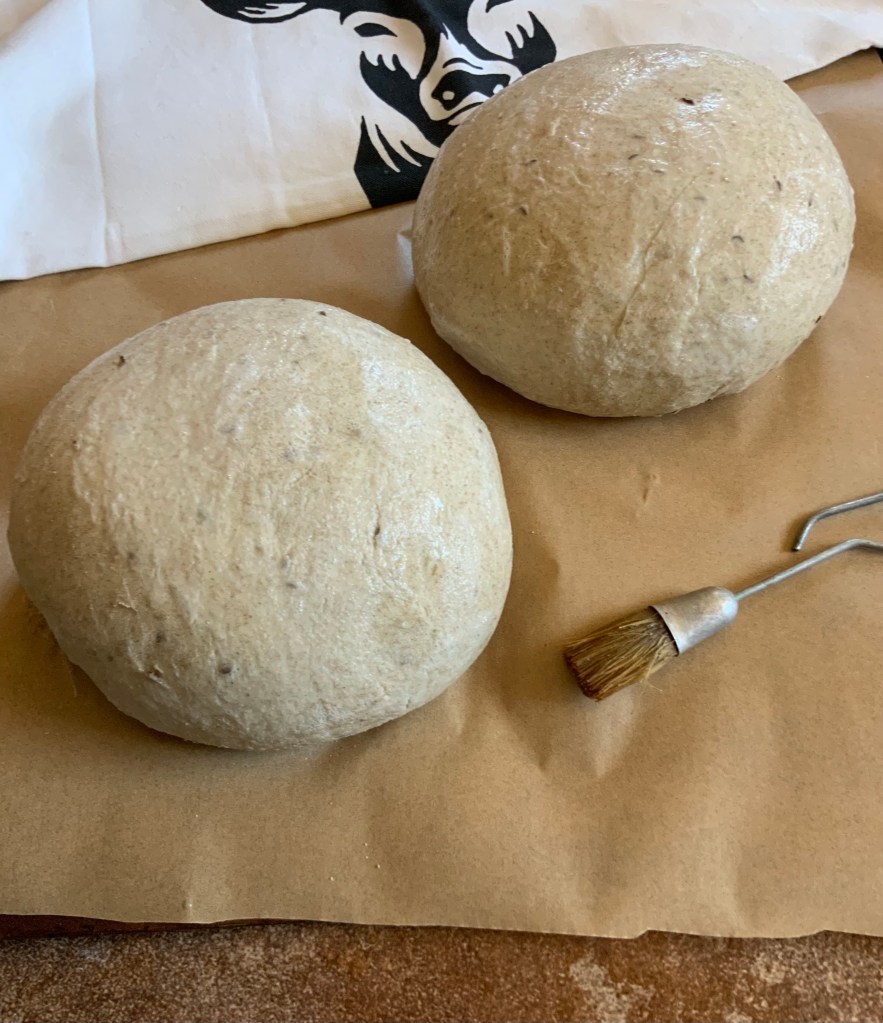
- Place the rounds on the baking sheet. Cover them lightly with a cotton kitchen towel and leave them to rise at room temperature in a relatively warm place until they double in size. When the rounds become plump balls with a tight, springy surface, it is time to bake. Further rising may cause them to lose height and flatten.
Baking the Loaves
Gas or Convection Oven: thefoodlessprocessed uses a gas oven. The conversions from Fahrenheit to Celsius do not attempt to adjust for differences between baking in a gas or convection oven. I have no experience using a convection oven, and leave adjustments to the better judgement of you who do have.
- Set the oven rack in the middle position. Preheat the oven to 375 F/190 C.
- With a pastry brush or your fingers, brush the surface of the loaves with the egg wash made by whisking together an egg white and 1 tablespoon of water.
- Bake the loaves for 40-45 minutes, until they are golden brown.
- Cool on a rack before slicing them. For a softer crust, cool the loaves wrapped in cotton kitchen towels.



Leave a Reply