“I think it only right to note that to me, and I think to many people, variety and change in the matter of daily bread are as important as its nutritional content…[also] using different flours and meals in varying ways…helps towards the very important understanding of the properties, the performance and character of each one, so in the long run variety makes for great improvements in the quality of the bread you bake. Or so I have found.” (Elizabeth David from English Bread and Yeast Cookery (1977).
“Milk is second to water in importance for the making of dough. [It] is said to prolong the life of a loaf of bread…I have made the experiment dozens of times and cannot say that I have found a marked difference in the keeping qualities of milk-enriched bread, although the milk does, I think, improve the quality of the crumb.” (Elizabeth David from English Bread and Yeast Cookery (1977).
The simplicity of the English milk loaf does not come at the expense of quality. The less processed ingredient options are: Flour, Milk, Butter, Salt and Honey.
Equipment
- a Digital Scale
- a Standng Mixer with a Paddle Attachment (if not mixing and kneading by hand)
- a Large Bowl, lightly buttered, for the dough’s first rise and a second one for mixing the dough if kneading it by hand
- a Pastry Board
- a 2-Pound Loaf Tin, (1.2 – 1.4 liter capacity), buttered and lightly floured. A 2-Pound Loaf Tin is not a standardized shape. The ones in which the photographed loaves were baked are typical American ones with dimensions: (9 x 5 x 3 inch) or (23 x 13 x 7 cm). The proportions of a British 2-lb loaf tin are different. The shape does not require a change in the amounts of ingredients or the baking time.
Ingredients (for 1 loaf)
- 450g of European Soft Wheat All-Purpose White Flour or Organic Hard Wheat Unenriched All-Purpose White Flour or Strong Bread Flour: European soft wheat flour is not enriched. American hard wheat flour may be enriched if it is not organic. Strong bread flour is a British white flour made from hard wheat. A little more flour is needed to flour the loaf tin.
- 270 ml of Minimally Processed Whole Milk
- 25 g of European-Style Unsalted Butter, softened– plus some to butter the loaf tin and the bowl for the first rise
- 1/2 teaspoon of Sea Salt
- 1 teaspoon of Organic Unfiltered Honey
- 1 teaspoon of SAF Instant Yeast
Mixing the Dough and the First Rise
- Into the bowl of the mixer (or the bowl for mixing the dough by hand) add the flour, salt, milk, butter, honey and yeast.
- Mix and knead with the paddle attachment or by hand until the dough is smooth, soft and pliable.
- Place it in the buttered bowl, cover it with plastic or invert a large bowl over the top, and set the dough aside to rise until it has about doubled in size and is light and puffy.
Forming the Loaf and the Second Rise
The loaf is formed with the simple ‘letter fold’ technique.
- Turn the dough out onto a lightly floured pastry board and pat it into a rectangle, roughly as wide as the loaf tin and a bit longer than the tin.
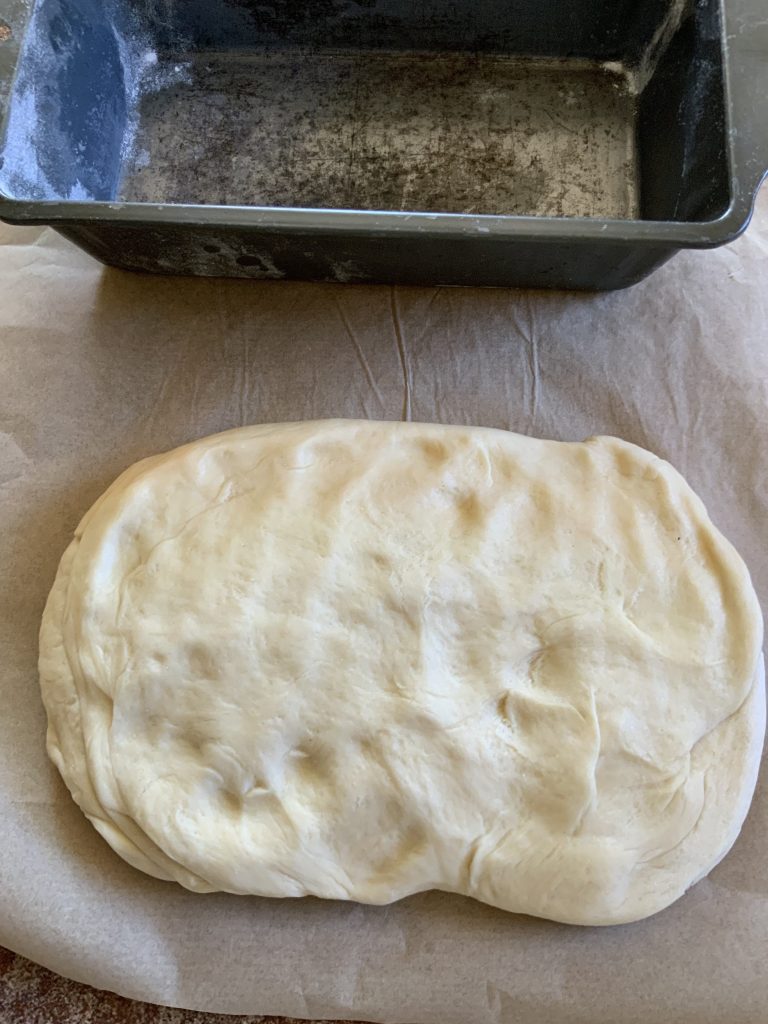
- Fold the top third down to the center.
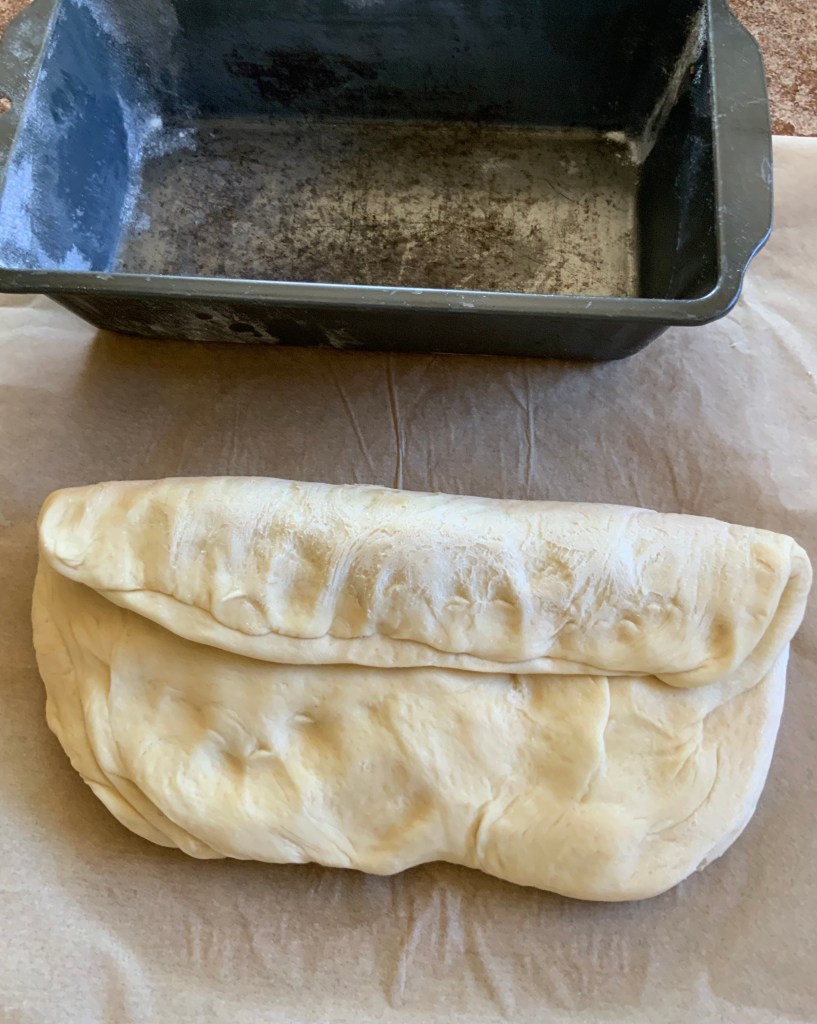
- Fold the botton third up to cover the top third and pinch along the seam to seal it.
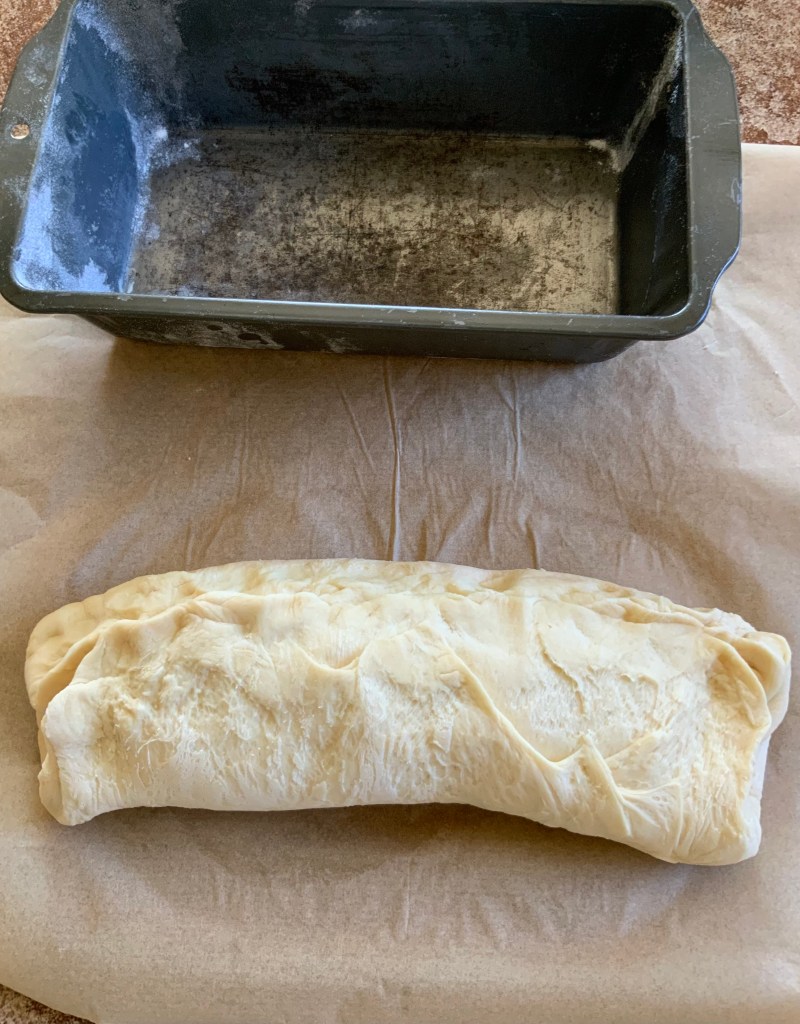
- Fold the two open sides inward.
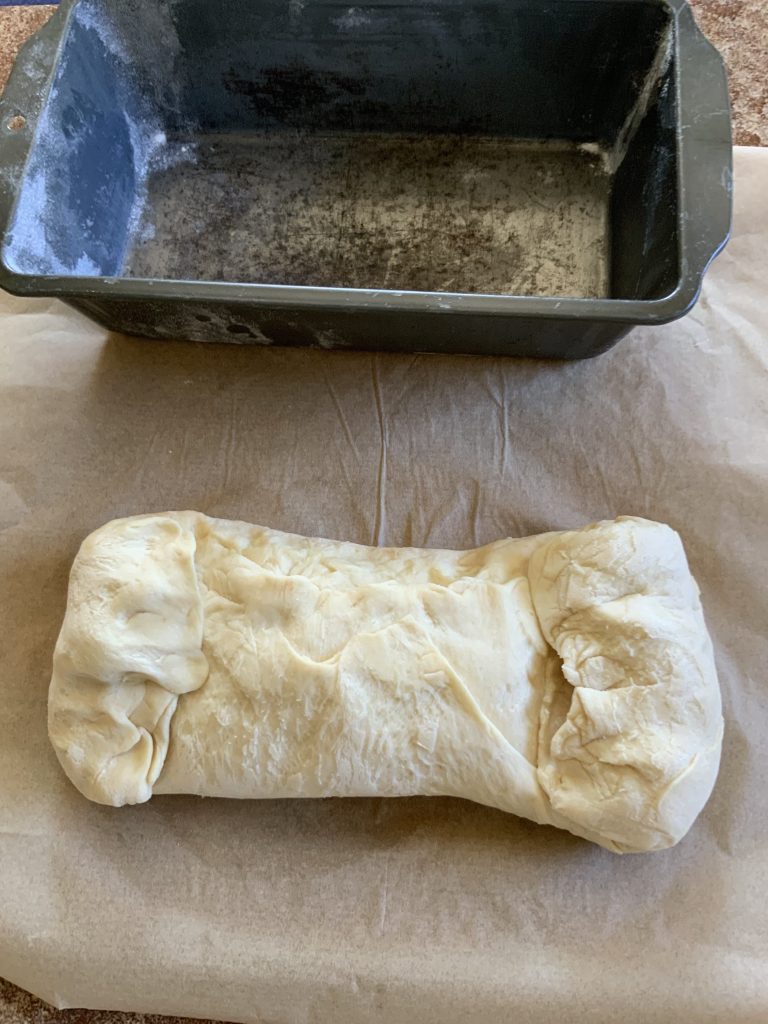
- Flip the loaf right side up, roll it gently to smooth and further tighten the surface and transfer it to the loaf tin.
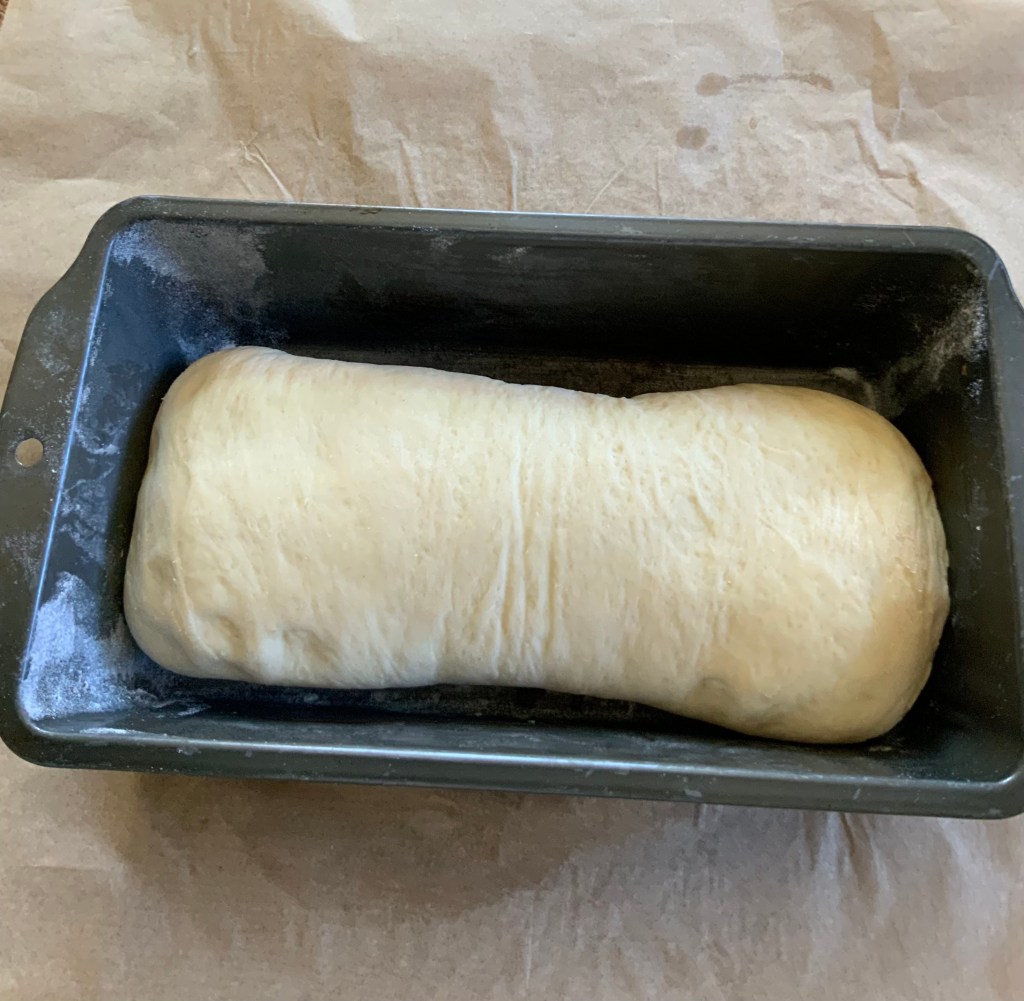
- Cover the loaf with plastic or a cotton dishtowel and set it aside to rise until it has risen above the rim of the tin, forming a dome. The first photo below shows a risen hard wheat flour loaf:
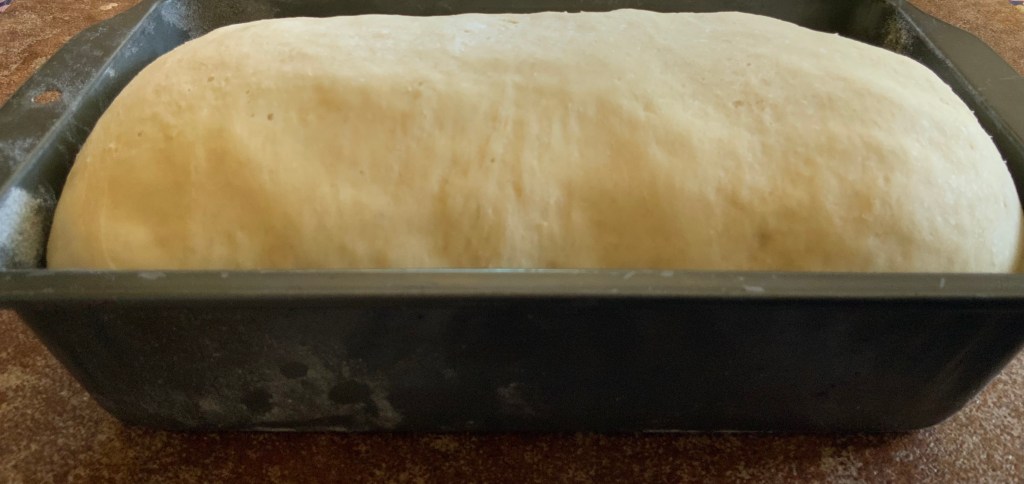
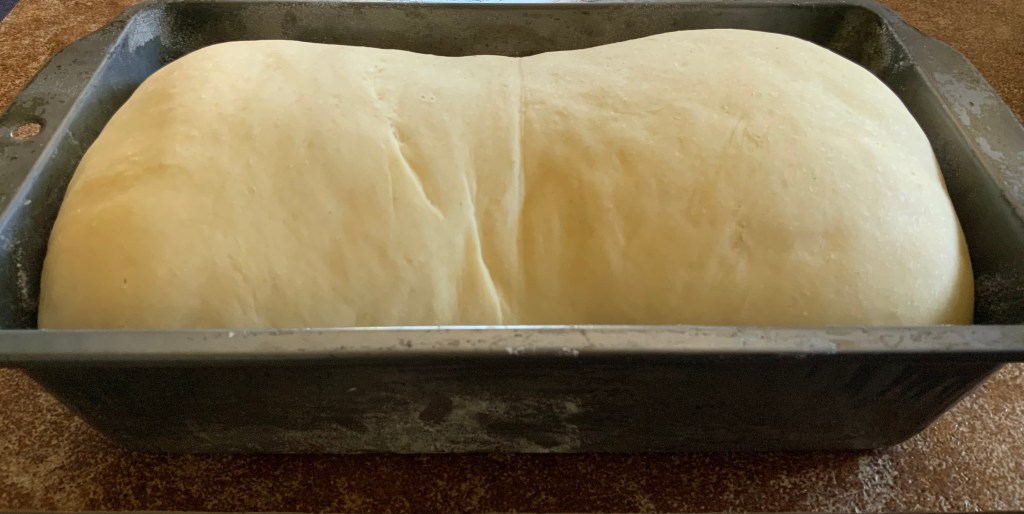
- This second photo is a risen soft wheat loaf. The soft wheat loaf has a billowy, less regular appearance as it rises.
Baking
Gas or Convection Oven: thefoodlessprocessed uses a gas oven. The conversions from Fahrenheit to Celsius do not attempt to adjust for differences between baking in a gas or convection oven. I have no experience using a convection oven, and leave adjustments to the better judgement of you who do have.
- Preheat the oven to 375 F / 190 C.
- Bake the loaf on the middle rack for 30 minutes.
- Turn it out of the tin to cool. It may be sliced warm.
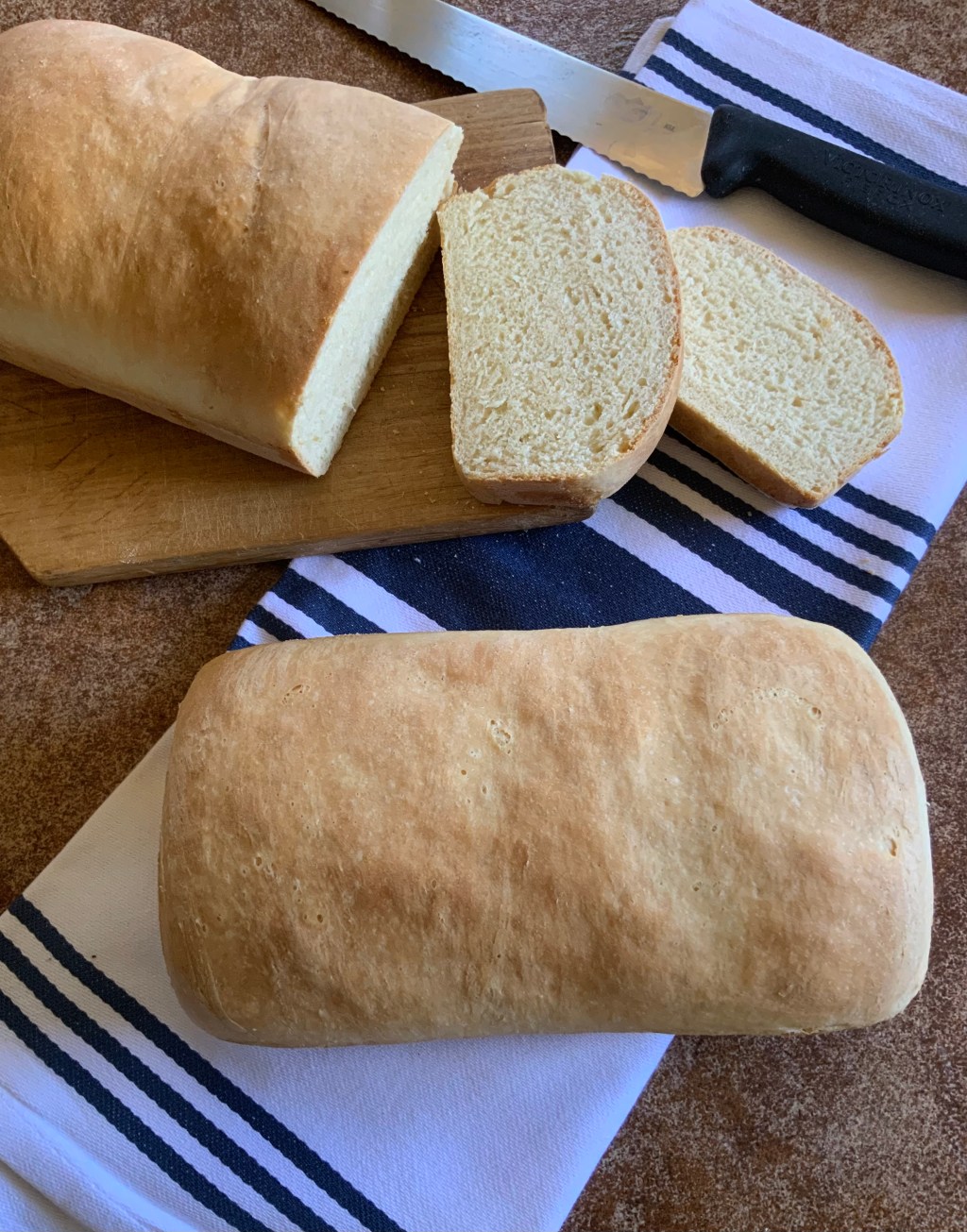
Both soft and hard wheat loaves are shown in the photo at the beginning of the post. The cut loaf is made from soft wheat flour.



Leave a comment