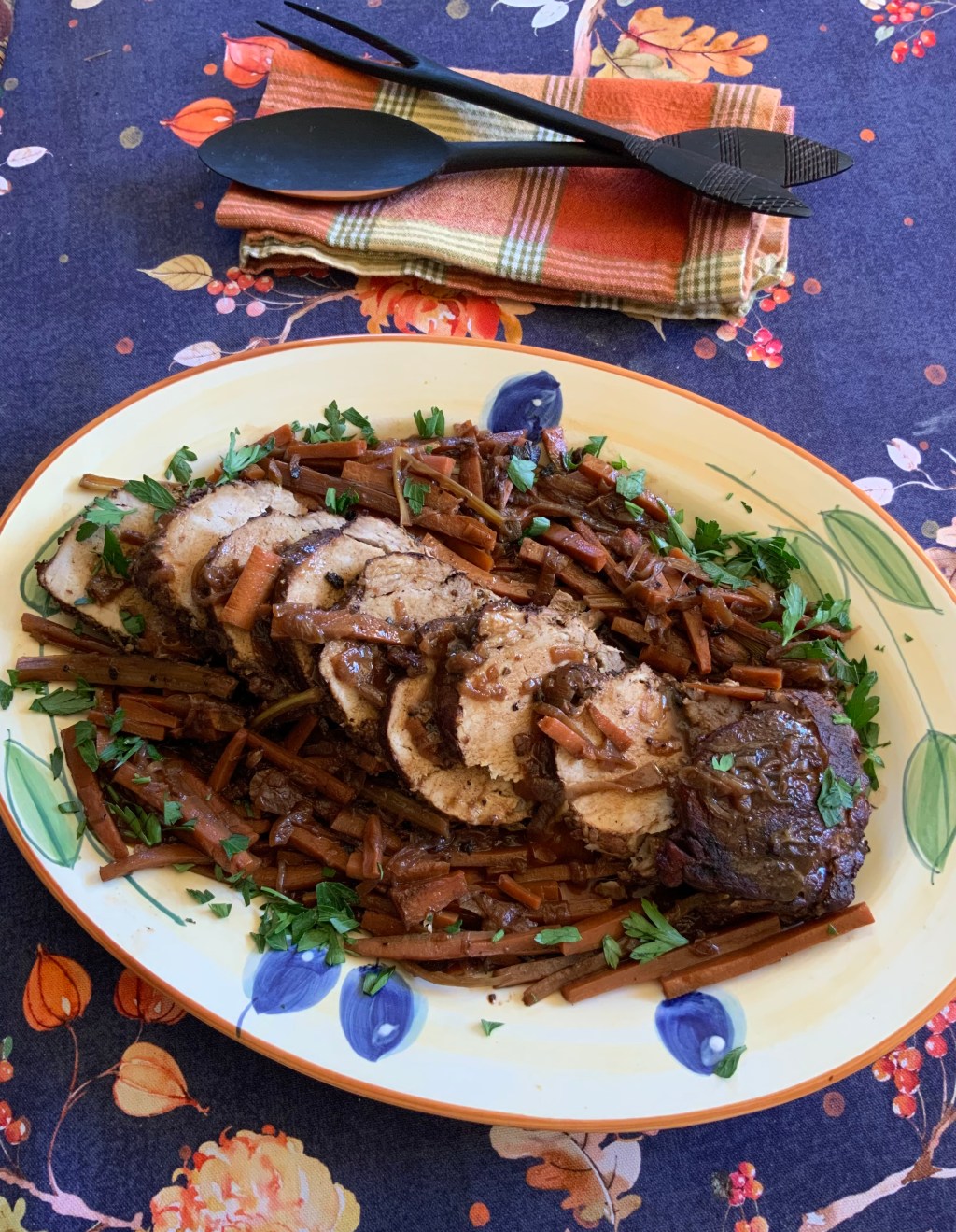
“The best kind of cooking doesn’t depend on exotic and expensive ingredients, only upon the best and freshest of what you decide to use. And upon the importance of taking time and trouble. Trouble that really isn’t trouble, but love, care, thought.” (Margaret Costa from Four Seasons Cookery Cookbook (1970).
“Too often [root vegetables] are allowed to grow to overmaturity, so that they are characterized by a strong taste and a woody, fibrous texture…If you would enjoy root vegetables, I counsel you to choose them cautiously and to prepare them as carefully as you would new asparagus, for instance.” (Louis Diat from Gourmet’s Basic French Cookbook (1961).
Margaret Costa wrote the passage introducing this post in the preface to her only published cookbook, which first appeared in 1970 and is still in print. She was a proponent of tailoring one’s cooking to the changing offerings of the seasons, choosing “the best and freshest” available according to the time of year.
Louis Diat’s advice is a reminder that even the humble root vegetable benefits from care in its selection and preparation.
Note: The braising liquid for the pork is a combination of red wine and grappa, recommended by the Italian cook Marcella Hazen. Imported French brandy is a good substitute if there is no grappa on your pantry shelf or in your liquor cabinet.
The less processed options for the pork are: Pork Loin Roast, Extra-Virgin Olive Oil, Garlic, Fresh Thyme, Fresh Sage, Carrots, Onion, Celery, Grappa or Imported French Brandy, and Parsley.
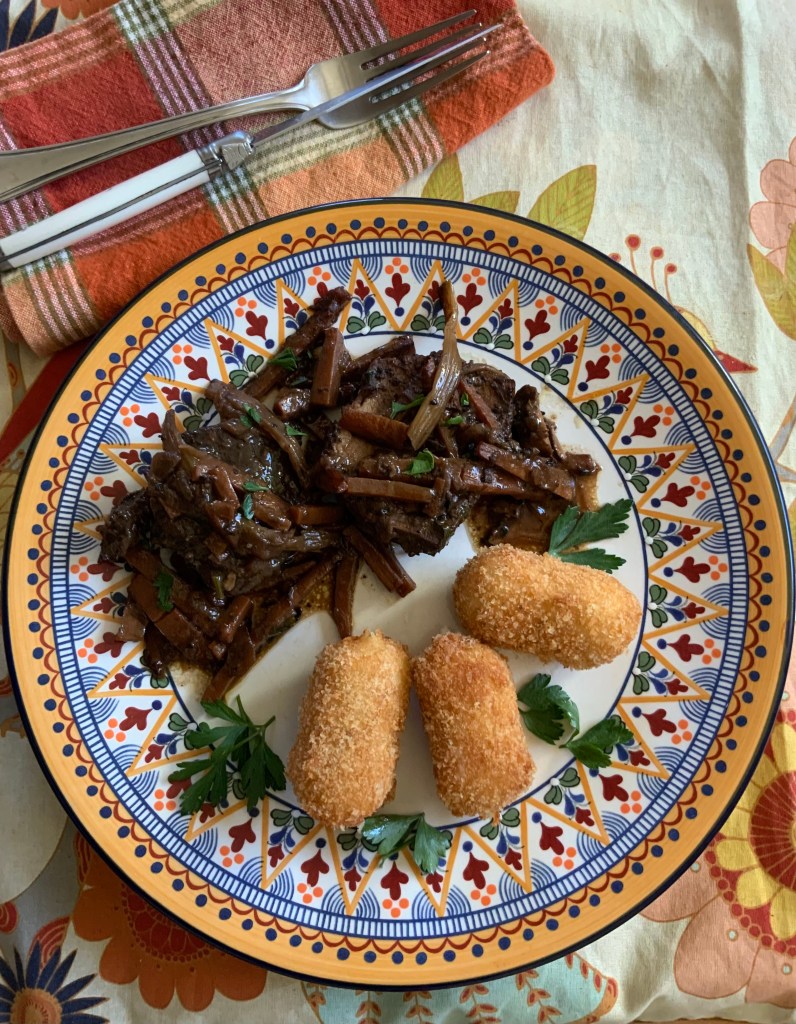
Potato croquettes accompany the pork and the recipe is provided here: Croquettes de pommes de terre ~ Potato croquettes.
Equipment
- a Large Heavy Pan with High Sides and a Lid. This recipe is made with a 12-inch (30.5 cm) Cast Iron Chicken Fryer with a 4.25 quart capacity (about 4 liters). A close European equivalent is a Sauteuse Haute, which has high sides and a long handle. It is deeper than a regular sauté pan.
- a Knife and Cutting Board
- Kitchen String to tie the pork after trimming
- a Small Food Processor is optional for chopping the herbs and garlic
- a Plate on which to coat the Pork with the herb mixture and tie it with string, and hold it while preparing the vegetables
- a Slotted Spoon
- a Heavy Braising Pot and Lid: for example, an enameled cast-iron braiser with a cast-iron lid. The one used in the recipe holds 3.5 US quarts (3.3 litres) and is approximately 12 inches (30 cm) in diameter.
- a Flame Tamer is optional: During a long, slow simmer it helps prevent scorching and distributes the heat evenly over the bottom of the pot.
- a Small Bowl and Spoon to mix a small amount of beurre manié
Ingredients (A roast of this size will probably make 4 generous servings.)
Note; Serving numbers can only be estimated since much depends on what else is being served, the appetites of those around the table, the occasion….
- a 3-pound (about 1.4 kg) Pork Loin Roast, before it is trimmed of fat
- 3-4 Organic Garlic Cloves
- the Leaves stripped from 3-4 stems of Organic Fresh Thyme
- 8-10 Leaves of Organic Fresh Sage
- 2 teaspoons of Coarse-Gound Black Pepper
- Extra-Virgin Olive Oil: enough to rub over the pork loin and to coat the bottom of the pan in which the pork and vegetables are browned
- 2 cups (475 ml) of Dry Red Wine
- 1/8 cup (30 ml) of Grappa or an inexpensive Imported French Brandy
- 2 Organic Yellow Onions (about 1/2 pound or 250 g)
- about 1/2 pound of Organic Carrots: If the carrots are organic, there is no need to peel them and, in fact, preferable to leave the skin on, since much of their goodness lies on or just beneath the carrot’s skin.
- several Stalks of Celery (about 2.35 oz or 65 g)
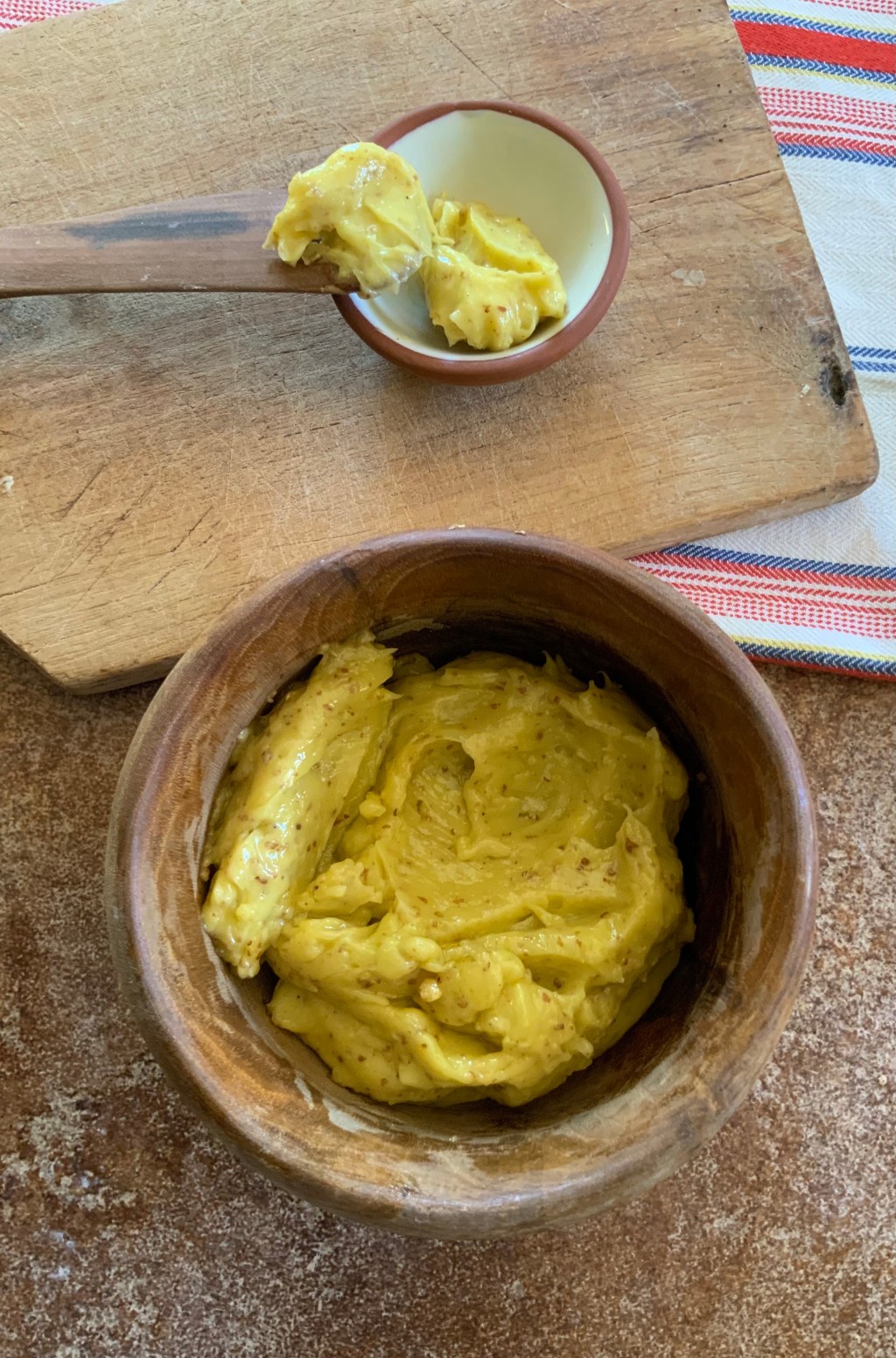
- Beurre Manié made by creaming together in a small bowl with the back of a spoon 1 Tablespoon (about 14 g) of Softened European-style Unsalted Butter and 1 Tablespoon of European Unenriched All-Purpose Soft-Wheat Flour: If Hard Wheat All-Purpose Flour (the American standard variety) is substituted, the sauce will simply be a bit thicker in texture. The special qualities of beurre manié as a thickener are described in thefoodlessprocessed post: Beurre Manié.
- about a Tablespoon of Organic Italian Flat-Leaf Parsley, chopped
Preparing the Pork Loin for Braising
- Trim most of the fat from the pork. The herbs and pepper will coat the meat that is eaten and not the discarded fat.
- In a small food processor, or by hand, chop together the thyme leaves, the sage leaves and garlic cloves. Stir them together with the black pepper.
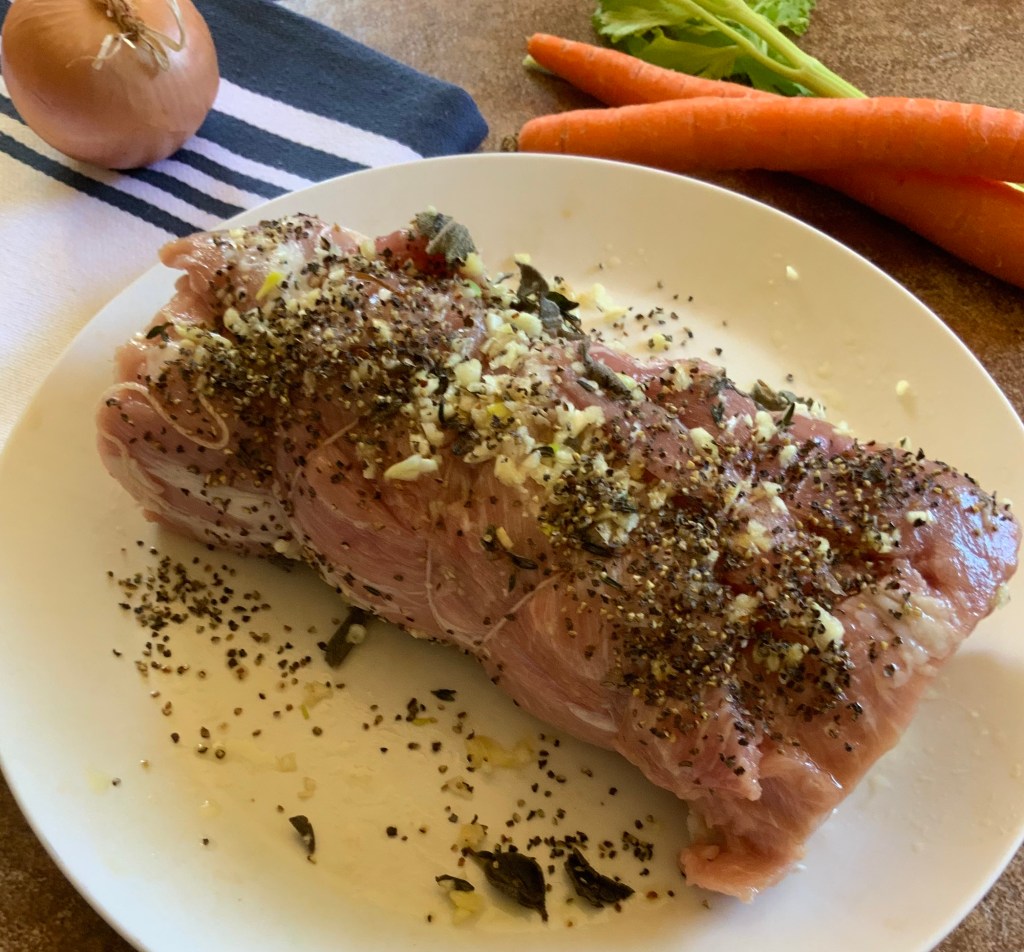
- Place the pork loin on a plate. Rub olive oil all over it and coat it with the herb and pepper mixture.
- Using a long piece of kitchen string, tie the pork tightly at intervals to hold it together during cooking. A uniform, tidy shape is not essential. Set the pork aside and prepare the vegetables.
- Pour olive oil in the pan to coat the bottom and heat it over medium heat.
- Brown the pork loin well on all sides and transfer it back to the plate temporarily while preparing the vegetables.
Preparing the Vegetables
- Skin the onions, cut them vertically in half. Turn each flat side down and slice it in thin half moons.
- Cut the carrots and celery stalks into bâtons (slender sticks). (Organic carrots need not be skinned.).
- Heat the pan again over medium heat. Add some more olive oil if needed to coat the bottom of the pan. The pork may have rendered enough fat to make additional oil unnecessary. Add the onions. Partially cover the pan and sauté them for a bit without stirring, giving them time to soften and brown on one side, before turning them. Continue to cook them in this fashion.
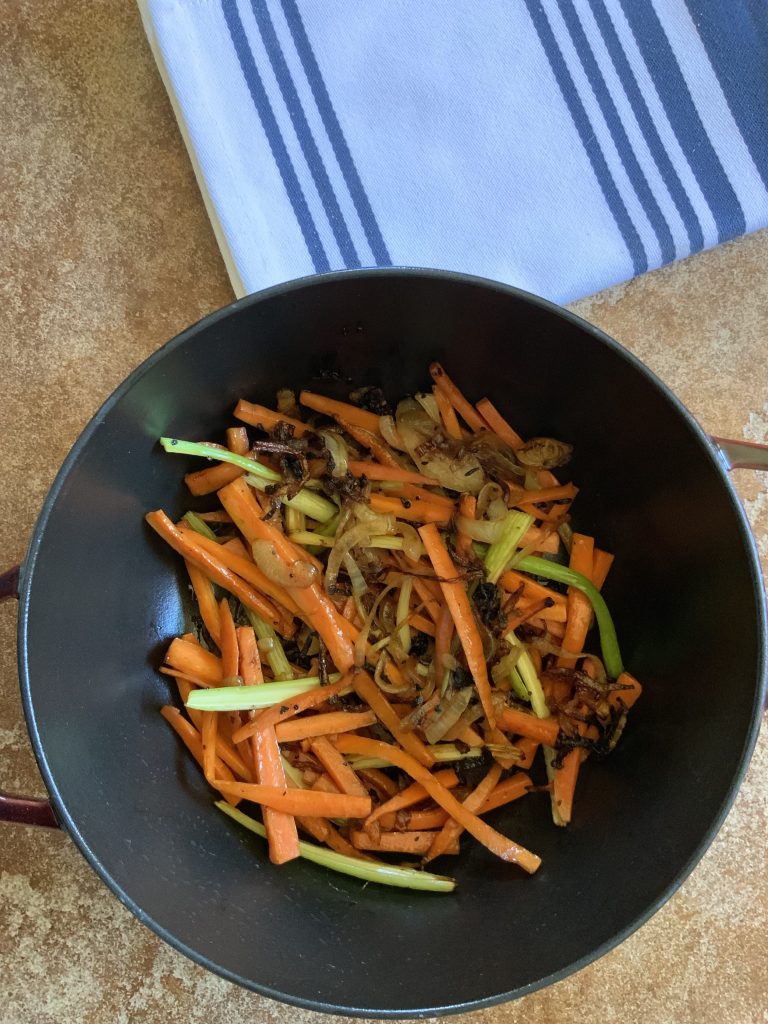
- Shortly before the onions are caramelized to a deep golden brown, add the carrot and celery bâtons. Mix them in with the onions and lightly brown them as the onions caramelize. Transfer the onions, carrots and celery with a slotted spoon to the braising pot.
- Deglaze the pan with the 2 cups (470 ml) of red wine, scraping the bottom of the pan with a spatula to blend in any browned bits and reduced juices. Add 1/8 cup (30 ml) of grappa or brandy.
- Place the pork on the bed of vegetables in the braising pot.
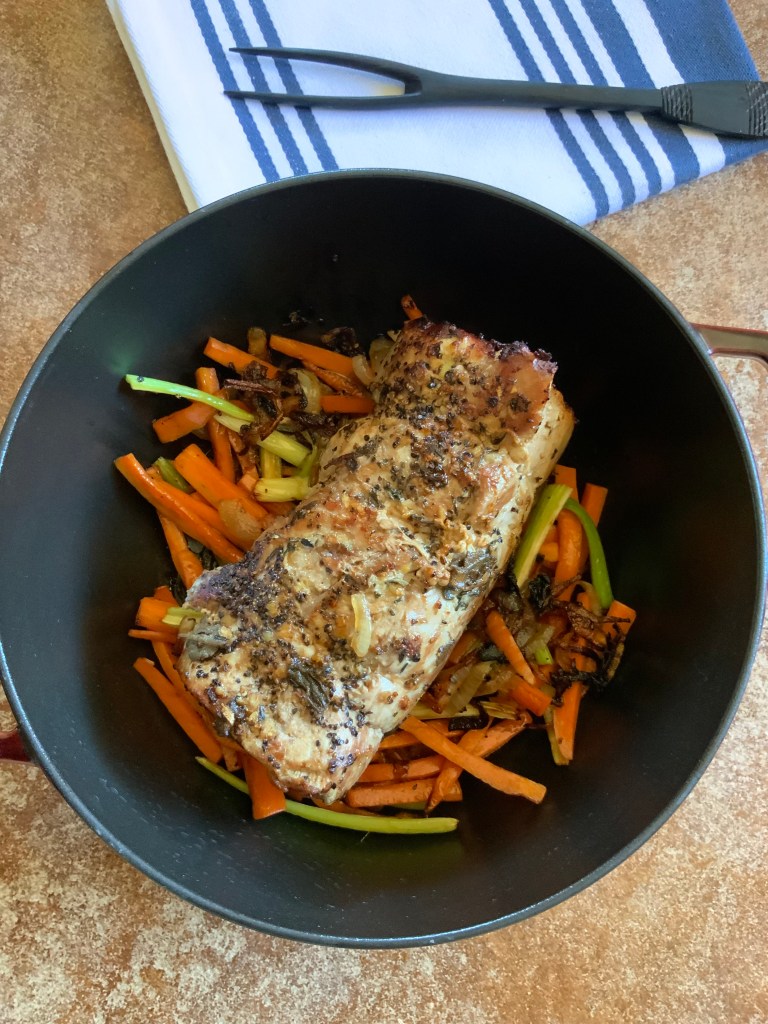
- Pour the deglazing liquid into the pot. Because the pork rests on a bed of vegetables, the liquid may not reach halfway up the sides of the meat. The pork will release juice as it cooks and, braised slowly in a covered pot, this amount of liquid will probably be sufficient.
- Place the pot on the flame tamer. Cover it and simmer the pork over low heat, keeping the braising liquid at a gentle bubble.
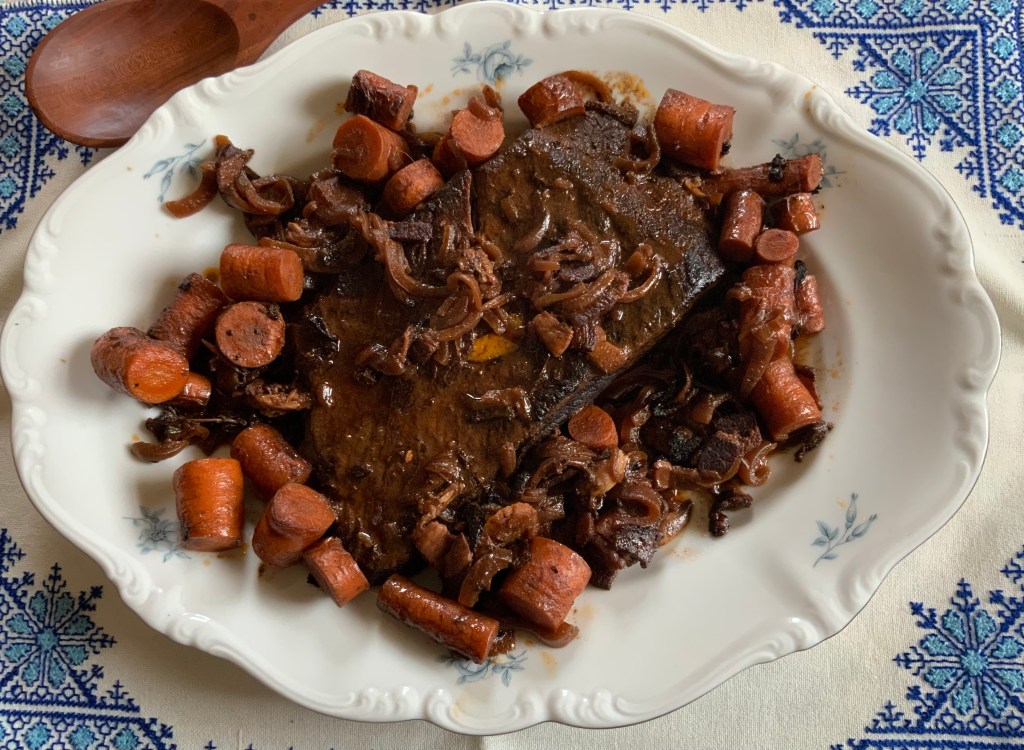
- After one hour, turn over the pork loin and continue to simmer it covered until a long skewer or knife blade pierces through the meat without resistance. At this point of doneness the pork will be very tender and will slice without falling apart. The roast in the photograph cooked for 1 and 1/2 hours.
- Remove the pork from the pot, wrap it in foil and set it aside.
- Bring the braising liquid again to a simmer, whisk in a small amount (perhaps a teaspoon) of the beurre manié. Continue simmering the sauce, checking its consistency as it thickens. Add more beurre manié as needed to form a sauce with body, smooth but not thick, that will just coat the meat.
- Place the pork loin on a cutting board and unwrap it. Remove the strings and slice the loin. Return the slices to the simmering sauce to heat them through.
- Arrange the pork and vegetables on a platter for serving or serve on individual plates. Garnish the pork with the parsley.



Leave a Reply